Why Don’t Birds Get Electrocuted on Power Lines?
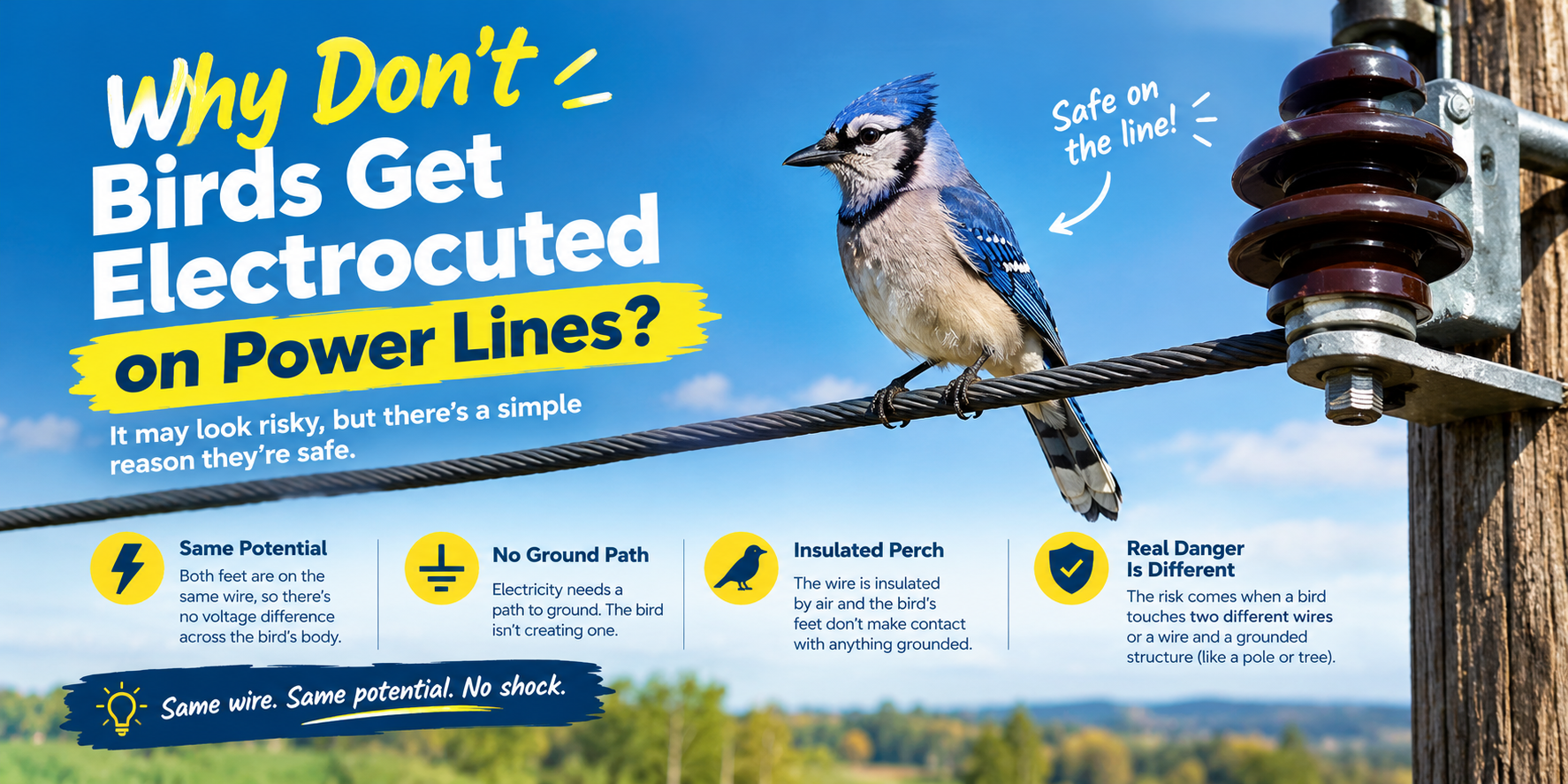
A bird sitting on a single power line isn’t electrocuted because both its feet are on the same wire at the same voltage, so there’s no voltage difference across its body and no current flows through it. Electricity only flows when there’s a difference in potential (a path from high to low). The bird would only be electrocuted if it touched two different wires at once, or a wire and something earthed (like a pole or a grounded structure) at the same time, completing a circuit. That’s why large birds, which can bridge two conductors with their wingspan, are more at risk than small birds.
It’s one of the most-asked questions about power lines: how can a bird sit on a high-voltage wire unharmed? The answer is simple physics, and it explains a lot about how electricity and power lines work. Here’s why.
The Simple Answer: No Voltage Difference, No Current
Electricity flows through something only when there’s a difference in electrical potential (voltage) across it, giving the current a path from a higher voltage to a lower one. Current takes a path through an object only if entering and leaving points are at different voltages.
A bird perched on a single wire has both feet on the same conductor, at the same voltage. There’s no voltage difference between its two feet, so no current flows through its body and it feels nothing, even on a high-voltage line. The bird and the wire are simply at the same potential together.
It’s the same reason a lineman working from an insulated bucket can touch a live line (bonded to the same potential), without a difference in voltage and a path to earth, no current flows through the body.
When Would a Bird Get Electrocuted?
A bird (or any animal) is at risk when it completes a circuit creating a voltage difference across its body:
- Touching two wires at once if a bird bridges two different conductors (at different voltages, or a phase and neutral) with its wings or body, current flows through it. This is why large birds with big wingspans (eagles, storks, vultures) are more at risk than small birds they can span two conductors.
- Touching a wire and something earthed if a bird on a live wire also touches an earthed part (a pole, a cross-arm, a grounded structure, equipment), current flows from the wire through the bird to earth.
So it’s not the voltage of the wire that’s dangerous to a perched bird it’s bridging two different potentials.
Why This Matters for Power Lines
This same physics is why overhead lines are built the way they are:
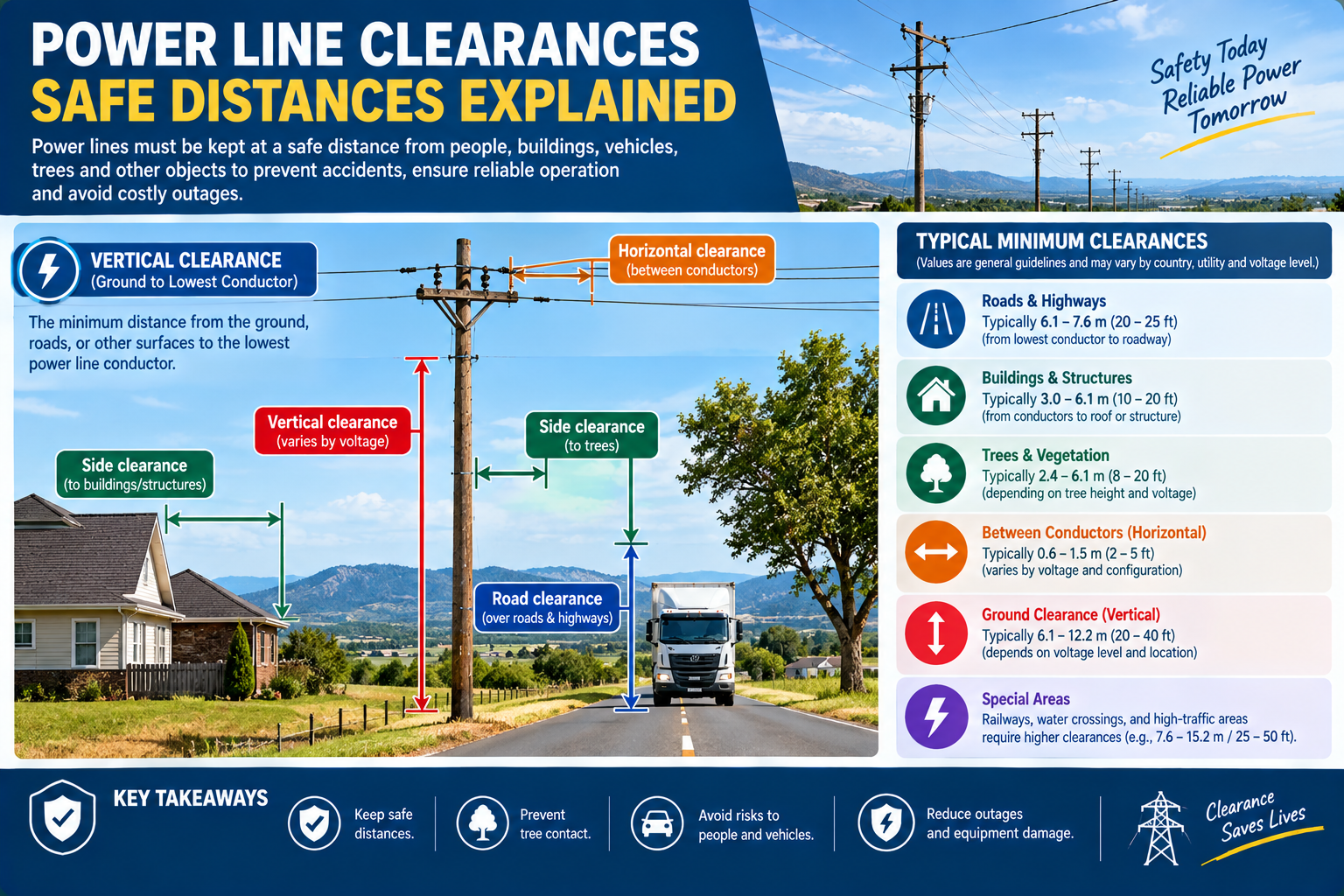
- Conductors are spaced apart far enough that birds (and anything else) can’t easily bridge two of them, and far enough for the voltage not to arc across. (See our power-line-clearances guide.)
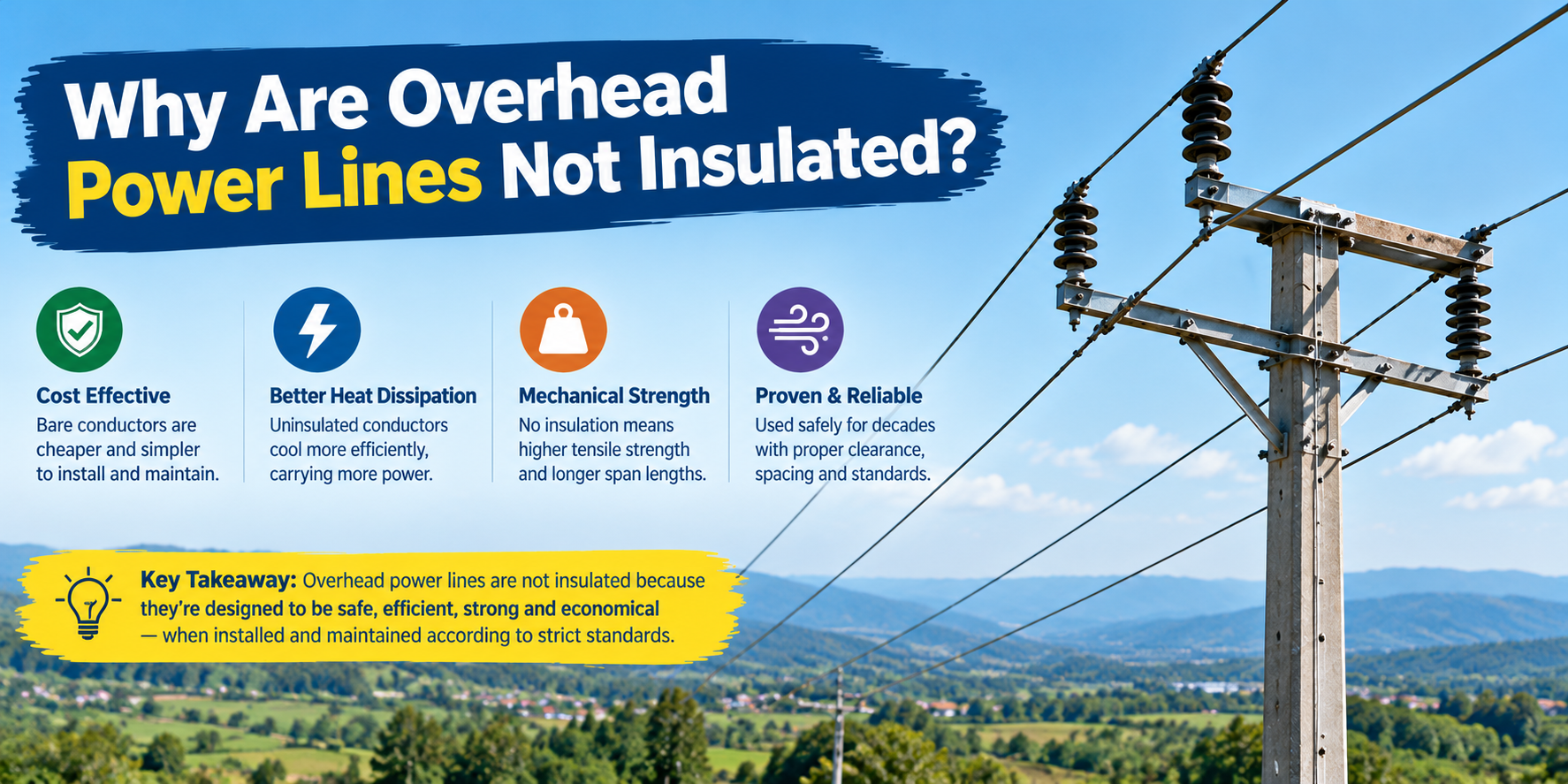
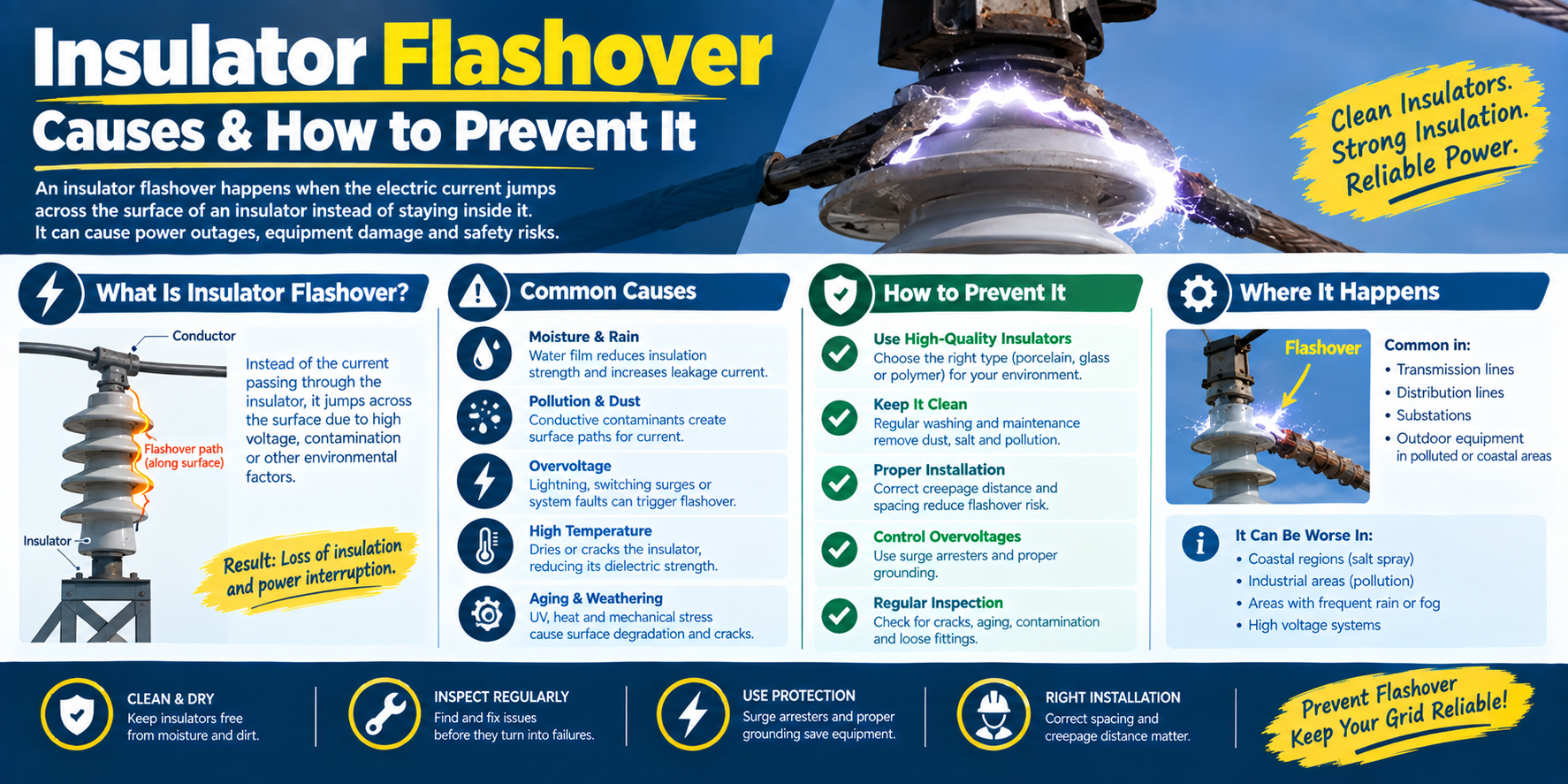
- Conductors are held on insulators so the live wire doesn’t touch the earthed structure. (See our types-of-insulators guide.)
- Larger birds and busy flight paths need protection because large birds can bridge conductors or hit lines.
Protecting Birds (and the Line): Bird Diverters
Birds matter to utilities for two reasons: bird safety (electrocution and collisions) and line reliability (bird strikes and droppings cause faults and outages). On lines where birds are at risk near wetlands, flight paths, and open country bird flight diverters are fitted to the conductors or earth wire to make the line visible, so birds see it and avoid flying into it. This reduces both bird collisions and the outages they cause.
DAPENG Power manufactures bird flight diverters for exactly this fitted to the overhead line to reduce bird collisions and the faults they cause. Along with proper conductor spacing (on the crossarm) and insulation (on insulators), they’re part of making lines safer for birds and more reliable.
Why Don’t Birds Get Electrocuted: FAQ
Why don’t birds get electrocuted sitting on power lines? Because both the bird’s feet are on the same wire at the same voltage, so there’s no voltage difference across its body and no current flows through it. Electricity only flows when there’s a difference in potential and a path to follow a bird on one wire doesn’t provide that, so it’s unharmed.
When do birds get electrocuted on power lines? When they complete a circuit: touching two different wires at once (bridging them with their wingspan), or touching a live wire and an earthed part (a pole, cross-arm, or grounded structure) at the same time. Either creates a voltage difference across the bird, so current flows through it.
Why are large birds more at risk than small birds? Because large birds with big wingspans (eagles, storks, vultures) can bridge two conductors at once, or a conductor and an earthed part, completing a circuit through their body. Small birds can’t span the gap between conductors, so they’re safer on a single wire.
Would a person be safe touching a power line like a bird? Only if they touched a single wire with nothing else connecting them to a different potential which is essentially impossible for a person standing on the ground (they’re connected to earth, a different potential). A bird in the air on one wire has no path to earth, so it’s safe. People should never touch power lines.
How are birds protected from power lines? With conductor spacing and insulation that reduce the risk of bridging, and with bird flight diverters fitted to the conductors or earth wire to make the line visible so birds avoid flying into it. Diverters reduce both bird collisions and the line outages they cause.
Do birds on power lines cause outages? Yes large birds bridging conductors, bird strikes (collisions), and bird droppings across insulators can cause faults and outages. That’s why utilities fit bird flight diverters and bird guards on at-risk lines, protecting both the birds and the line’s reliability.
The Bottom Line
A bird on a single power line isn’t electrocuted because both feet are at the same voltage no voltage difference, no current. It would only be harmed by bridging two conductors or a wire and an earthed part, which is why large birds are more at risk. The same physics is why lines use spacing and insulation and why bird diverters are fitted where birds need protection.
DAPENG Power (DP Power Fitting) manufactures bird flight diverters and the full range of overhead line hardware, insulators, crossarms, and conductor fittings that keep lines safe and reliable. Tell us your line and bird-protection needs, and we’ll specify the hardware.