Description
What Keeps Bundled Conductors From Clashing, and Parallel Cables From Meeting?
Two situations, one physics problem. On a bundled transmission line, each phase runs as two, three, or four sub-conductors that must ride in fixed formation because when wind or a fault’s electromagnetic forces throw them together, conductors clash, arc, burn strands, and scar the very surfaces the bundle exists to optimize. And on shared corridors, a communication cable running parallel to power cables or a messenger must hold its separation, because “close enough” in still air becomes contact in a gale.
Both problems have the same modest solution: the bolted cable spacer, a rigid, clamped frame that fixes the geometry between cables and keeps it fixed for decades. If your line design, jumper detail, or corridor drawing shows a spacing dimension between cables, this is the hardware that makes the drawing true in the wind.
What a Bolted Cable Spacer Is, and the Distinction That Matters
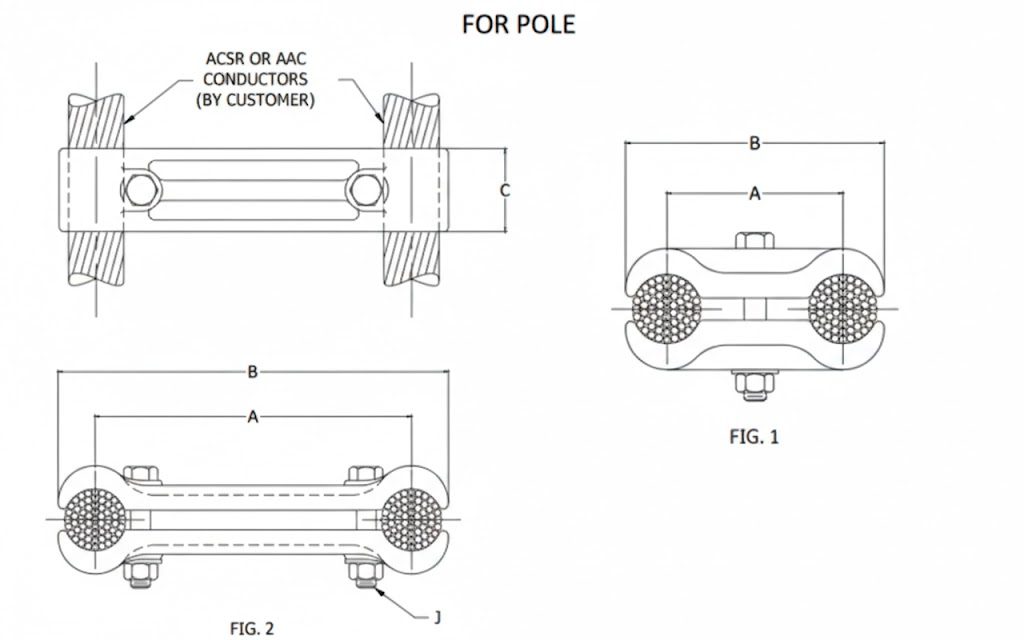
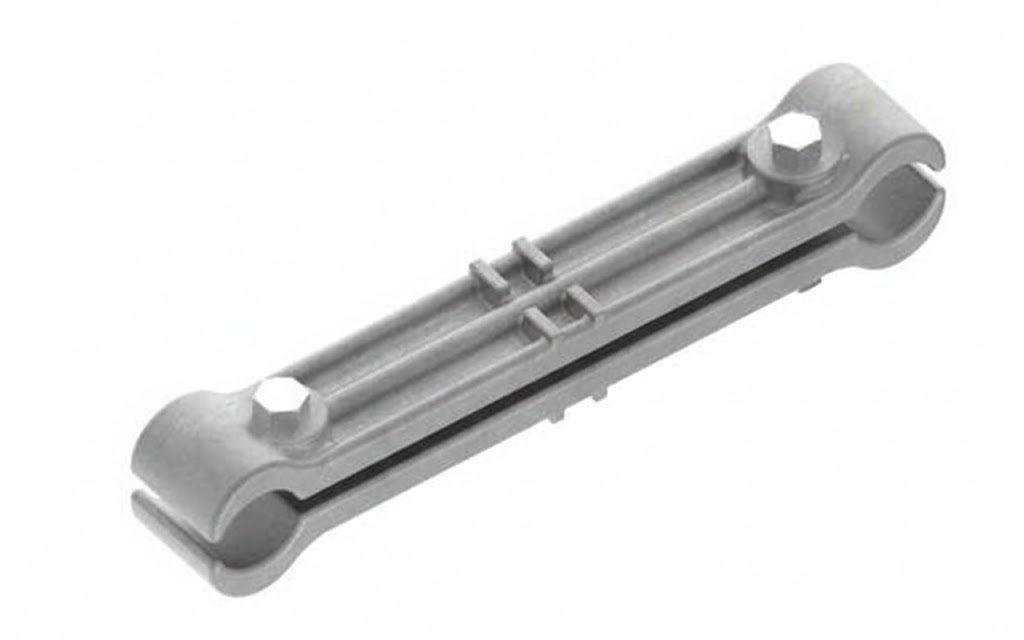
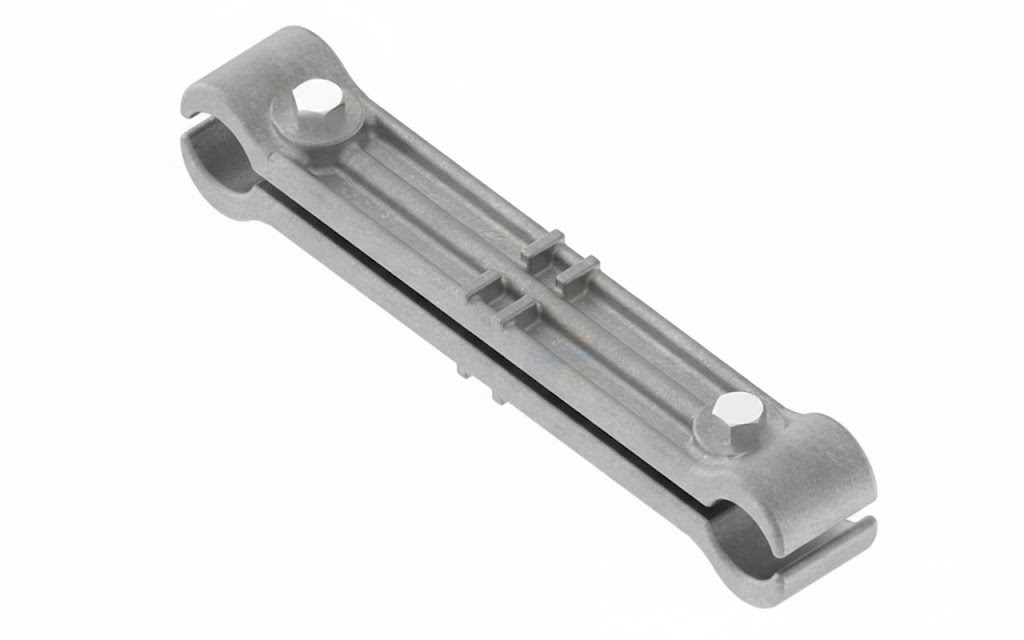
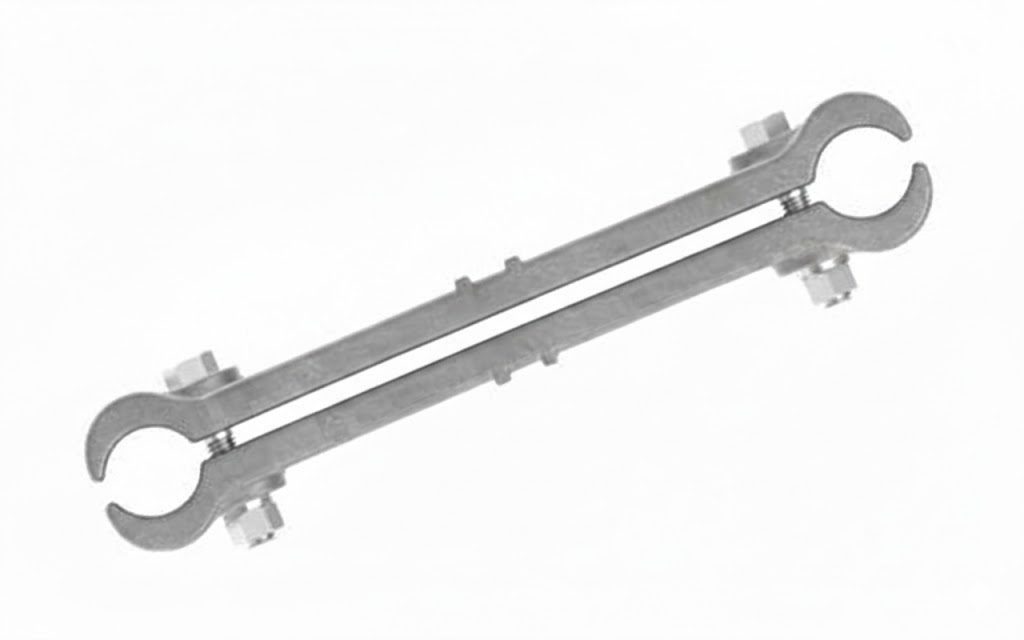
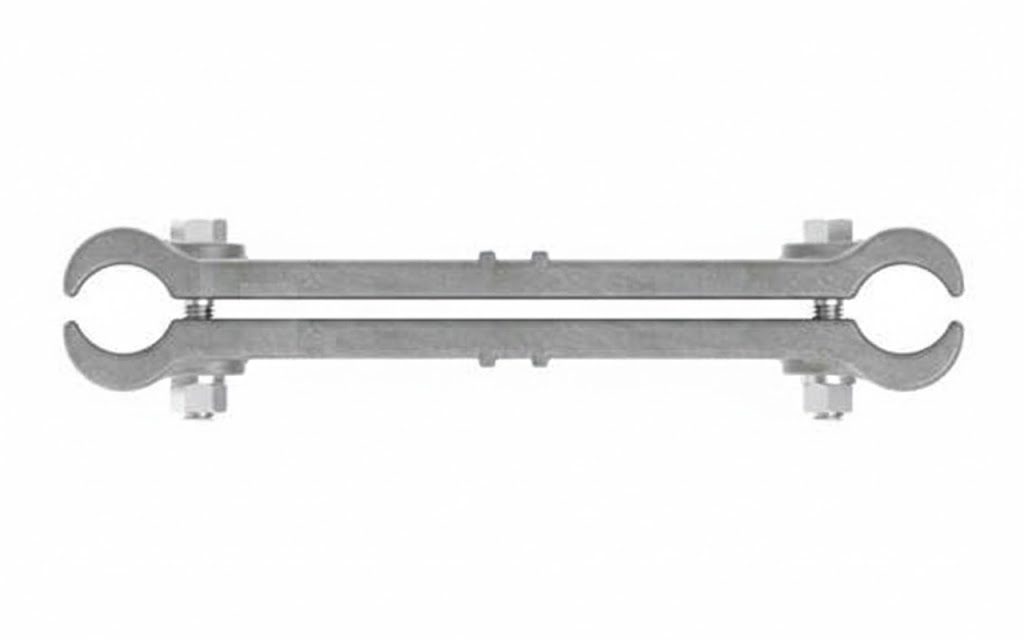
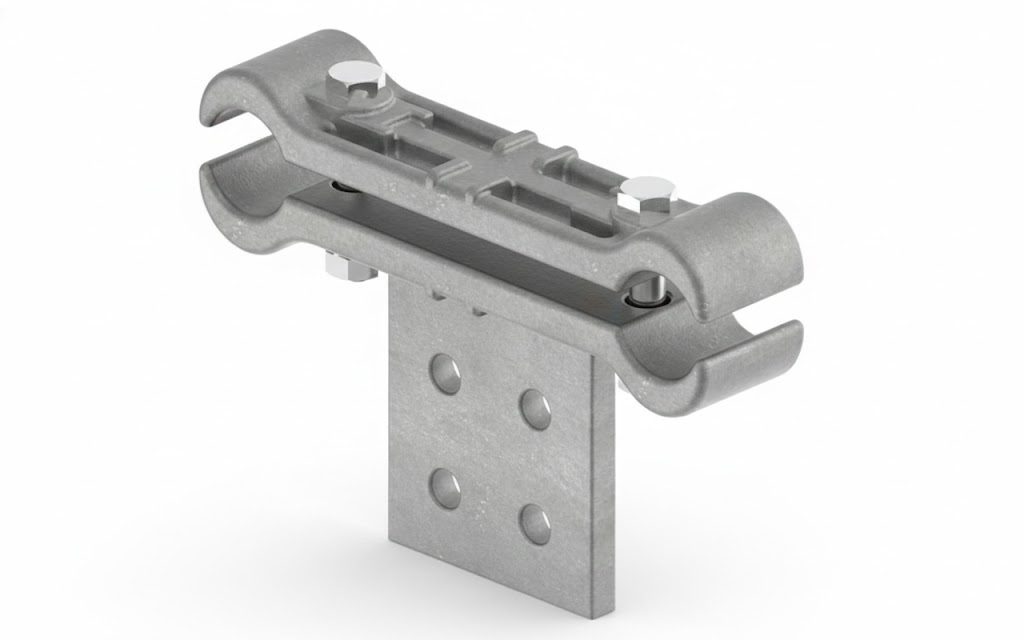
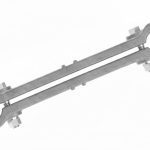
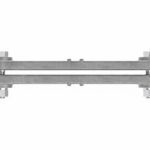
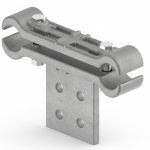
A bolted cable spacer is a rigid spacer: an aluminum-alloy body with a bolted, lined clamp at each cable position, holding two or more cables at a fixed geometric spacing. Grooves are profiled to the cable diameter; liners cushion the contact; bolts close the clamps to a defined torque.
Here is the distinction most suppliers won’t volunteer, because it sometimes sends the order to a different product, ours included: a rigid spacer holds geometry; a spacer damper holds geometry and absorbs vibration energy through elastomer-articulated arms. On long, exposed spans of bundled transmission conductors, modern practice specifies spacer dampers, because the bundle needs damping as much as spacing. Rigid bolted spacers earn their place where spacing is the requirement and damping is handled elsewhere or unneeded: jumper loops and substation connections, shorter spans, cable-separation duty in shared corridors, and distribution bundle work. Tell us the span data and we’ll tell you honestly which product your line needs, even when the answer is the other one.
Why Buyers Choose DAPENG Bolted Cable Spacers
- Geometry that stays put. The rigid frame holds the designed spacing under wind load and the electromagnetic forces of fault events, the moments the spacing was calculated for, not just the calm afternoons between them.
- Clamps that grip without gnawing. Grooves machined to the conductor diameter and cushioned with liners, closed to a specified torque, because a spacer that fretted its conductor for twenty years did more harm than the clashing it prevented. Contact care is the whole craft of this product, and it’s where cheap spacers fail invisibly.
- Aluminum alloy where it belongs. Corrosion-resistant, lightweight bodies that don’t burden the bundle, with fasteners protected for the same service life no galvanic surprises where alloy meets steel.
- Built to your bundle, not a generic pattern. Twin, triple, and quad configurations; spacing dimensions and clamp diameters to your line drawing; cable-separation patterns to your corridor detail. (Standard configuration table and rated loads)
- One factory for the span’s whole kit. Spacers ship with the suspension clamps, tension hardware, and dampers of the same spans, matched to the same conductor datasheet, kitted per structure.
Use-Case Deep Dive
Should I specify rigid bolted spacers or spacer dampers for my bundled line?
Start from the span profile. Long, wind-exposed spans of bundled transmission conductors: specify spacer dampers, the bundle needs vibration energy absorbed along the span, and the articulated damper does both jobs. Jumper loops, slack spans, substation connections, and short or sheltered spans: rigid bolted spacers are the right, simpler, more economical tool, there is little vibration energy to damp, and the job is purely geometric. Distribution bundles and cable-separation duty: rigid spacers, sized to the cables. Mixed lines order both, marked by location. Send the span schedule with the RFQ and the split comes back with the quotation, we make both products, so the recommendation has no thumb on the scale.
Can I use a bolted cable spacer to separate a communication cable from a power cable?
Yes, this is the product’s second life, and the reason it lives in our ADSS/OPGW range. Where a fiber or communication cable shares a corridor, crossing, or pole run with power cables, a bolted spacer clamped to both holds the designed separation through wind and thermal movement, protecting the fiber’s sheath from abrasion and keeping the geometry your clearance calculation assumed. Pair with crossover clamps where routes cross rather than run parallel, and with span clamps where drops leave the corridor. For the cable-facing groove, the liner and clamping pressure are chosen for the softer jacket, say which cable rides which groove and each side arrives profiled for its occupant.
Where along the span are spacers installed, and how many do I need?
Per the line design’s spacing schedule: sub-spans between spacers are set so that wind cannot drive the sub-conductors into contact or sustained oscillation between supports, typically yielding several spacers per span, spaced unevenly by design (uniform spacing can tune the bundle to a single frequency; staggered sub-spans break it up). For jumpers and separation duty, placement follows the drawing’s geometry points. Send the span lengths and bundle data; the count and placement schedule returns with the quotation, consistent with your utility’s standard.
Specifications and What They Mean for You
| Specification | What we do | What it means for the buyer |
|---|---|---|
| Body | Cast/fabricated aluminum alloy frame | Light on the bundle, immune to corrosion, strong at fault forces |
| Clamps | Bolted, groove-profiled, lined; defined torque | Decades of grip without fretting the conductor it protects |
| Configurations | Twin / triple / quad bundles; two-cable separation patterns | Your geometry, not a catalog compromise |
| Fasteners | Protected steel hardware, locking provision | The bolt that was torqued right stays torqued |
| Ratings | Mechanical ratings per configuration; batch tested | Fault-event forces carried with your safety factor intact |
| Compatibility | Sized per conductor/cable datasheet at RFQ | Groove fits cable; liner suits jacket, confirmed in writing |
Straight Answers to Common Buyer Concerns
“How do I know the clamp won’t damage the conductor over twenty years?” Because the damage mechanism is known and designed out: fretting comes from micro-movement at a hard, ill-fitting contact. Our grooves are machined to the stated conductor diameter, lined to cushion the interface, and closed to a defined torque that grips without crushing, and you can verify all three on samples before the program order. Ask for the liner material spec with the quotation; suppliers who can’t name it are telling you something.
“Rigid spacers are cheap everywhere. Why does the source matter?” Because the failure is invisible until it’s expensive: a spacer that loosens or frets doesn’t drop the line, it quietly wears strands at every clamp point until an inspection (or a fault) finds the damage on the conductor, which costs a thousand times the spacer. Batch testing, real material certs, and torque-stable fasteners are the difference, and all three come documented with our shipments, with third-party inspection (SGS/BV or your agency) welcome before dispatch.
“Our line has an unusual bundle spacing from a legacy design. Can you match it?” Send the drawing, spacing dimension, conductor diameter, bundle configuration. Non-standard geometries are routine OEM work: the frame is made to your dimension, the clamps to your conductor, and the confirmation drawing reaches you before production begins. Legacy lines deserve hardware that fits them, not “close.”
Complete the Span
- Spacer dampers – when the bundle needs damping as well as spacing
- Stockbridge vibration dampers and spiral dampers – span-end vibration control
- Crossover clamps – where cables cross instead of running parallel
- Suspension clamps and preformed tension clamps – the span hardware around the spacers
- Browse all ADSS/OPGW fittings and overhead line fittings
Get a Bundle-Matched Quote Within 24 Hours
Send the conductor datasheet, bundle configuration, spacing dimension, and span schedule, or the corridor drawing for separation duty. Our engineers confirm the configuration, propose the rigid/damper split where the line needs both, and return a factory-direct quotation, typically within one working day.
After You Order
Configuration drawings before production, batch test reports and material certificates with shipment, spacers kitted per span section so crews install to the schedule rather than the guess, and an engineering contact who stays answerable through stringing, because spacing questions arrive with the wind, not with business hours.