

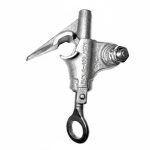
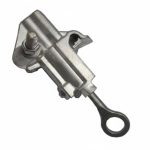
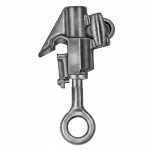
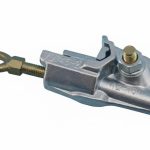
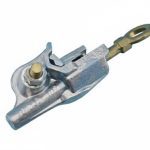
Description
How Do You Connect to a Conductor That’s Still Live?
Distribution networks can’t always be switched off to be worked on. A new tap, a temporary jumper around a repair, a connection to keep customers supplied while a crew works nearby- many of these have to be made on a conductor that is still energized.
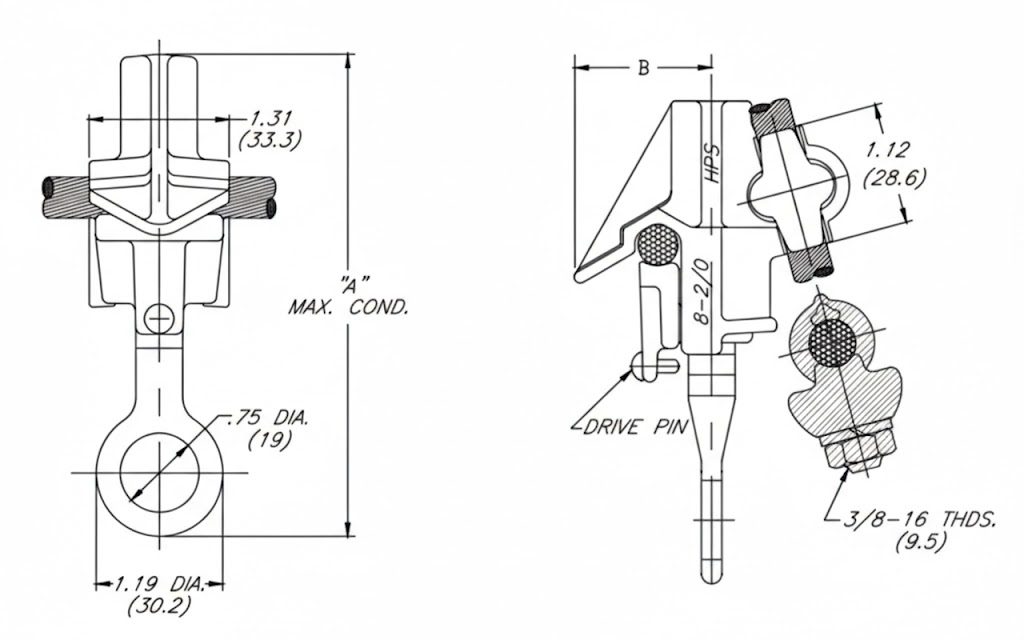
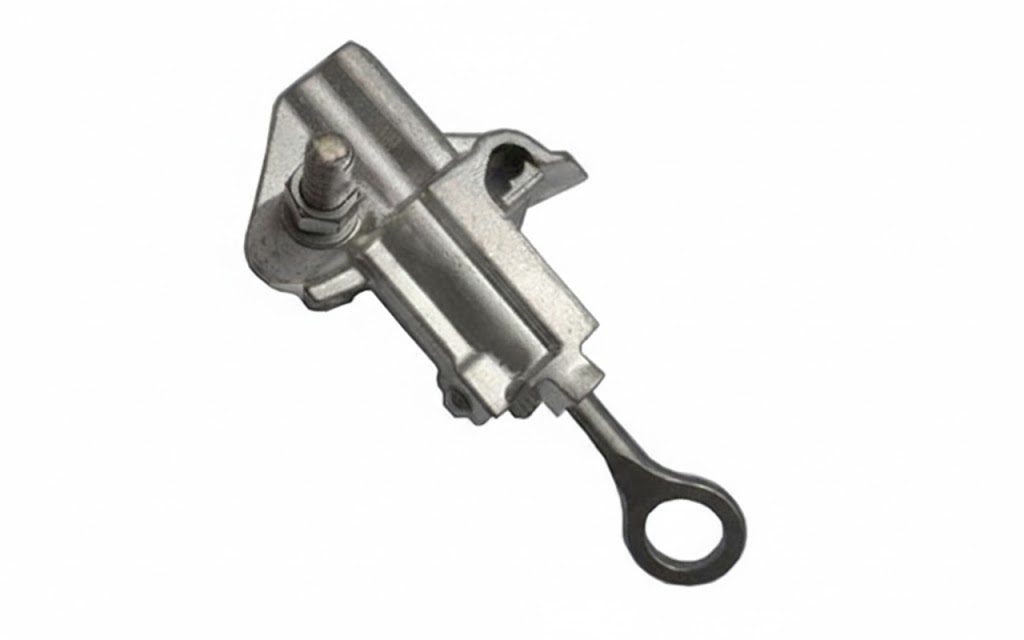
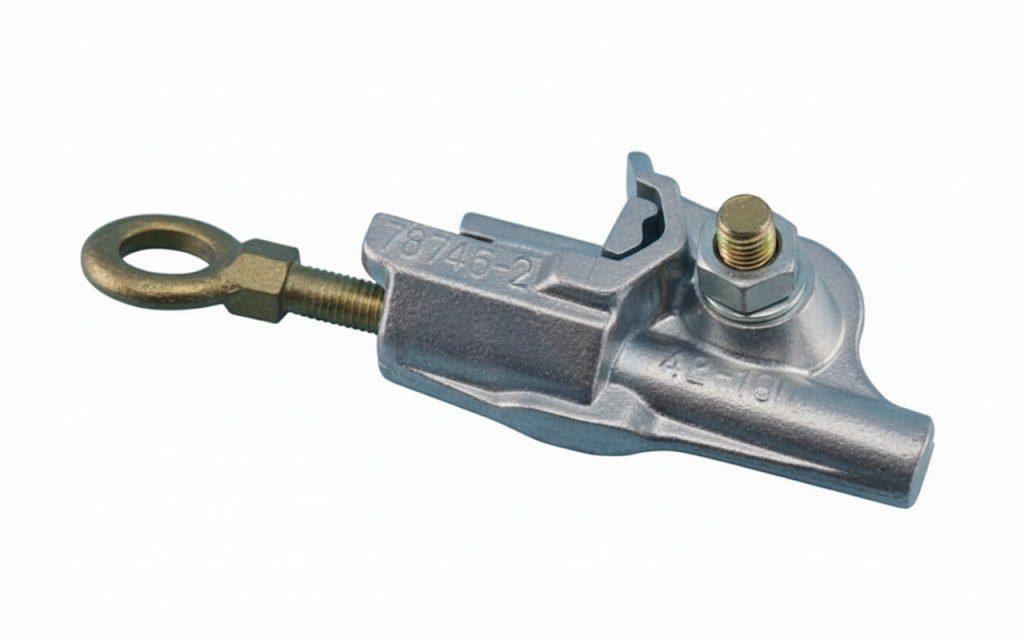
The hot line clamp is the fitting built for exactly that. Its defining feature is not how it grips- plenty of clamps grip- but how it is installed: a lineman standing clear, using an insulated hot stick, engages the clamp’s eye or operating head and tightens it onto the conductor without ever making direct contact. The connection is made live. No outage, no lost supply, no direct exposure.
If your network specification calls for connections that can be made and broken on energized conductors, this page covers what the clamp is, how to choose between it and the alternatives, and how to specify it correctly. What it does not do is teach live-line technique; that comes from your utility’s safety rules and your trained crews, and nothing here replaces them.
What Makes a Hot Line Clamp Different
An ordinary bolted connector assumes the conductor is dead and the installer’s hands are on it. A hot line clamp assumes the opposite: the conductor is live, and everything happens at the end of a hot stick.
That single assumption drives the whole design:
- A hot-stick operating interface, an eye, head, or trigger the stick engages to tighten and release the clamp from a safe working distance.
- A geometry that guides the conductor into the grip as the clamp is applied, because a lineman working at arm’s length through an insulated stick cannot fine-tune the seating by feel.
- Retention that holds under service conditions once set, so the connection stays made through wind, load cycling, and time.
The clamp is a connector rated for live installation. It is not, and this matters, a substitute for the operator’s insulation, PPE, clearances, or procedures, those protect the worker; the clamp makes the connection.
Why Buyers Choose DAPENG Hot Line Clamps
- Built for the hot stick, not adapted to it: The operating interface and jaw geometry are designed for hot-stick application, so a lineman can seat and secure the clamp cleanly at a safe distance.
- Conductor-matched, including dissimilar metals: Bimetallic options join copper and aluminum without the galvanic corrosion a plain clamp would invite at that junction, the same dissimilar-metal principle that governs our parallel groove clamps and ground rods.
- Rated and tested to your standard: Current-carrying capacity, fault-current withstand and mechanical grip verified to the standard your utility specifies.
- Corrosion-protected for outdoor service life: Materials and finishes specified for permanent exposure where the clamp is a permanent tap, and for reliable repeated use where it serves temporary duty.
- Specified with the connection kit around it: Hot line clamps quoted alongside the parallel groove clamps, insulation piercing connectors and crossover clamps of the same network, matched to one conductor schedule.
Use-Case Deep Dive
Hot line clamp or parallel groove clamp, which do I need?
The question behind the question is: does this connection need to be made or removed while the line is live, now or later?
- Yes, live installation or removal is required → hot line clamp. Its hot-stick interface is the whole reason it exists, and no bolted connector can be safely applied to an energized conductor by hand.
- No, the connection is made dead and stays permanent → a parallel groove clamp is usually the more economical choice for a permanent bolted tap on bare conductor.
- The network is insulated ABC, not bare → neither; an insulation piercing connector makes the tap through the insulation.
Hot line clamps also serve temporary connections that a PG clamp can’t easily do, jumpers around a work site, temporary supply during maintenance, precisely because they can be removed live when the work is done. Tell us the duty and we route you to the right connector; we make all three.
Is a hot line clamp used for permanent taps or temporary connections?
Both, and the specification differs. Permanent taps, the clamp stays on the conductor for years, so corrosion protection, sustained current rating, and long-term grip are what matter. Temporary connections, jumpers, bypasses, and live-work supply, where repeated reliable application and clean release matter more than decades of exposure. Some patterns suit one role better than the other; tell us which duty (or both) and we specify accordingly.
How is a hot line clamp installed safely?
Under your utility’s live-line procedures, by personnel trained and authorized for energized work, using the correct hot stick, PPE, and clearances for the voltage, and this page will not pretend to replace any of that. What a supplier can properly say is this: the clamp is designed to be applied by hot stick, so a competent crew following their own rules can make the connection without direct contact. The safe method is your safety system’s to define; the clamp’s job is to be reliably installable within it.
If you need product-specific handling detail to fold into your own procedures, our engineers will provide it against the exact pattern you order, as input to your safety planning, never as a substitute for it.
Specifications and What They Mean for You
| Specification | What we supply | What it means for the buyer |
|---|---|---|
| Installation | Hot-stick operating interface | Made and broken on energized conductors, no direct contact |
| Conductor matching | Bimetallic (CU/AL) and aluminum options | Dissimilar-metal joints that resist galvanic corrosion |
| Current & fault rating | To your specified standard | Published only from test data, never estimated on safety equipment |
| Materials & finish | Corrosion-protected for the clamp’s duty | Suits permanent taps and repeated temporary use |
| Voltage class | To your standard | Matched to the network it works on |
| Verification | Batch testing to standard, reports supplied | Ratings your safety officer can review on paper |
On live-line equipment we publish electrical and mechanical ratings from test reports only. A guessed number here is not a marketing shortcut, it is a figure a worker might rely on, and we will not print one.
Straight Answers to Common Buyer Concerns
“How do we verify the ratings on equipment our crews will trust while it’s energized?” By demanding the test evidence, which we supply: type-test and batch-test documentation to your specified standard, material certificates, and third-party inspection (SGS/BV or your nominated agency) welcome at the factory. Any supplier offering a current or fault rating on a live-line clamp without test documentation behind it is offering a number you cannot afford to trust and we would rather show you the report than ask you to take the figure on faith.
“Can you match our conductors and our standard, not just a generic size?” Send the conductor schedule (sizes, and copper or aluminum) and the standard your utility works to. Ratings, conductor ranges, and construction are matched to your specification, and where a conductor or standard is unusual, you get an engineered answer with the documentation to support it, not a nearest-equivalent substitution slipped in quietly.
“Do you provide installation guidance?” We provide product-specific handling and specification detail for your safety team to incorporate into your live-line procedures. We do not provide live-line working method, because that belongs to your utility’s safety rules and your trained, authorized crews, and a responsible supplier keeps that line bright. The clamp is designed to be hot-stick installable; the safe procedure for using it is yours to define and ours to support with accurate product information.
Complete the Connection
- Parallel groove clamps – permanent bolted taps on bare conductor
- Insulation piercing connectors – taps on insulated ABC networks
- Crossover clamps – managing conductor crossings and jumpers
- Strand ground clamps and the grounding range – earthing connections
- Browse all overhead line fittings and pole line hardware
Get a Conductor-Matched Quote Within 24 Hours
Send your conductor schedule, the duty (permanent tap or temporary connection), and the standard your utility specifies. Our engineers confirm the pattern, the conductor match, the bimetallic construction where needed, and the ratings to your standard, then return a factory-direct quotation with the supporting test documentation, typically within one working day.
After You Order
Type and rating confirmation with test documentation before production, batch test reports and material certificates with shipment, product-specific handling detail for your safety planning, and an engineering contact who answers precisely and refers procedure where procedure belongs, because on live-line hardware, the supplier a utility keeps is the one who never guesses at a number a worker will trust.