Description
Terminating the Conductor at the Pole Top the Preformed Way
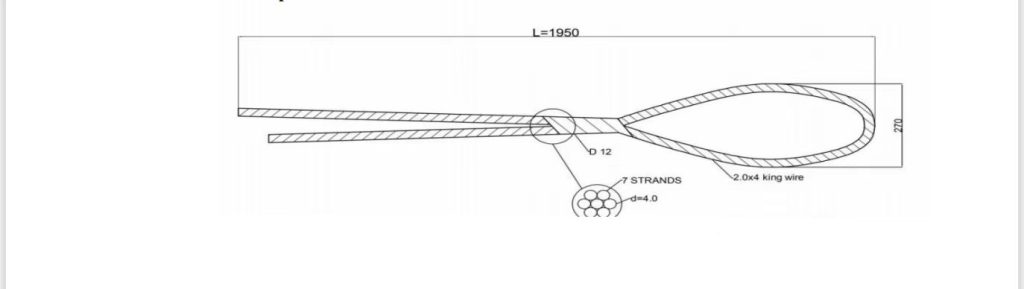
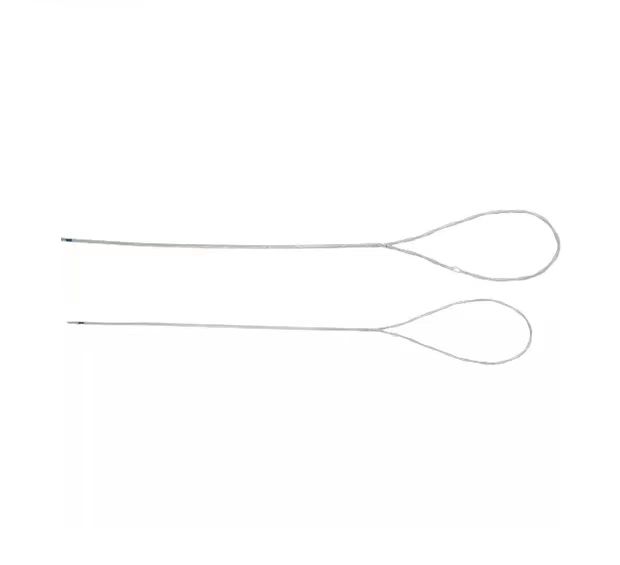
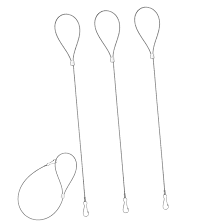
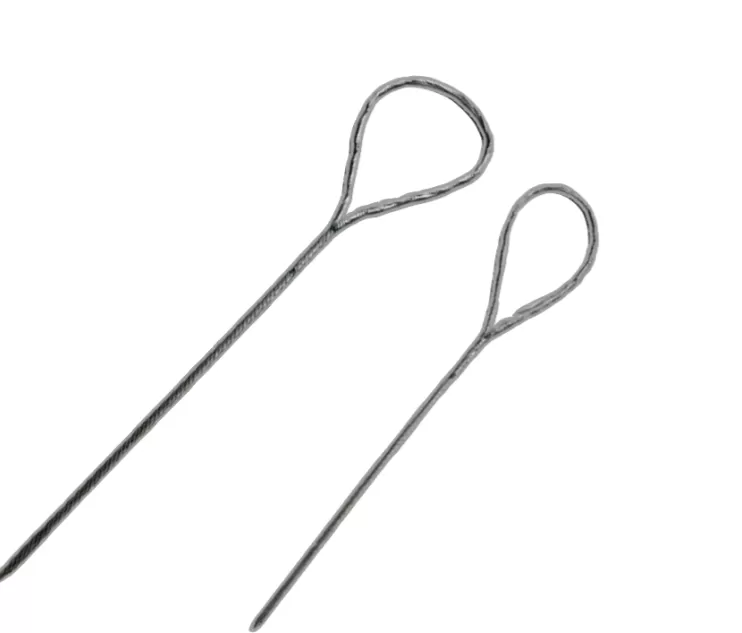
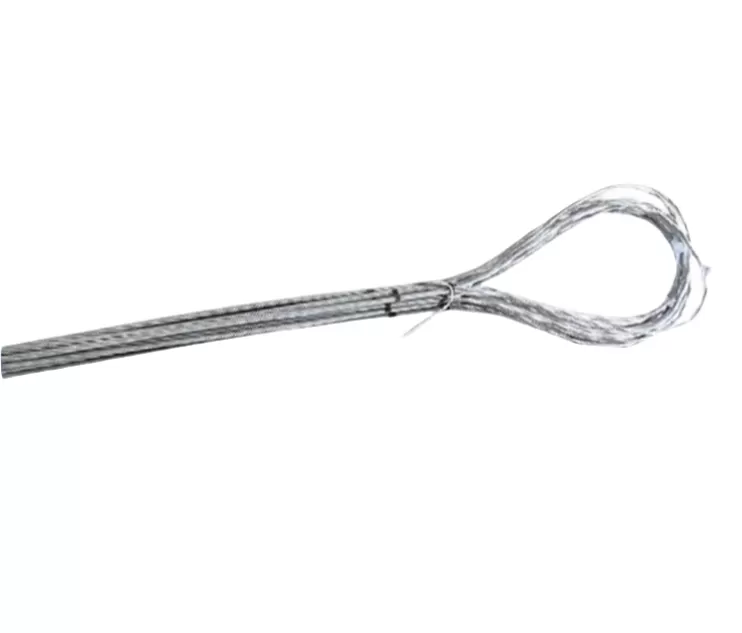
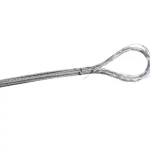
At a pole-top termination on a distribution line, the conductor has to be “made off” dead-ended, and secured at the top of the pole, with its full tension anchored and a clean connection to the pole-top hardware. A pole top make off is the preformed assembly that does it: a set of helical rods with a formed eye at one end and a gripping tail at the other. The tail wraps the conductor to develop its strength; the eye lands on the pole-top pin or insulator, anchoring the termination to the structure.
It’s the tidy, tool-free way to make off a conductor at the pole top: full-strength grip over a length, a formed eye that connects cleanly, and hand installation with no bolts. This page covers pole top make offs what “making off” means, how the assembly works, and why the conductor match is the critical spec.
What “Make Off” Means
“Make off” is distribution-construction language: to make off a conductor is to terminate (dead-end) it at a structure, securing its end and anchoring its tension. A pole top make off does this at the pole top specifically, as opposed to a dead-end on a crossarm. The term is common in Commonwealth, African, and Australian distribution practice, and if it’s new to you, think of it as a preformed pole-top dead-end: the fitting that ends the conductor run at the top of the pole and ties it to the pole-top hardware.
The pole top make off combines two jobs in one preformed assembly: grip the conductor at full strength (the tail), and connect to the structure (the formed eye).
How the Pole Top Make Off Works
The assembly is preformed, so it grips and connects the way every preformed fitting does:
- The tail helical rods pre-formed to your conductor wraps the conductor and develops its full strength over a length, with no point load. The termination is as strong as the conductor.
- The formed eye the loop at the other end lands on the pole-top pin, insulator, or pole-top bracket, anchoring the make-off to the structure.
- Tool-free the rods wrap on by hand, no bolts, no compression tool fast on distribution work where make-offs are many.
The result is a clean, full-strength pole-top termination with an integral connection to the structure one preformed assembly instead of a grip plus separate connection hardware.
Make Off or Dead-End Grip?
A pole top make off is a preformed dead-end configured for the pole top, so it’s close to the general dead-end grip family worth being clear:
- Pole top make off (this page) a preformed termination made for the pole top, with the formed eye that lands on the pole-top pin/insulator.
- Dead end grips the general preformed conductor dead-end (crossarm dead-ends, broader use).
- Distribution grips the distribution-scale conductor dead-end grip.
If you’re terminating at the pole top with a connection to the pole-top hardware, the make off is the product; a general crossarm dead-end uses a dead end grip. Tell us where and how you’re terminating and we’ll confirm the right one.
The Critical Spec: The Conductor Match
A pole top make off is formed to one conductor size its rods are pre-shaped to a specific conductor diameter and lay. So the conductor match is the spec that can’t be approximated:
- A make off for your exact conductor grips cleanly and develops full strength.
- One for a neighboring size won’t grip right it’s the wrong part.
Specifying a make off starts with the conductor: type (ACSR, AAC, AAAC, etc.), diameter, and stranding plus the pole-top hardware the eye connects to. Send both and each make off is matched before production.
Why Buyers Choose DAPENG Pole Top Make Offs
- Matched to your exact conductor: Formed to your conductor’s diameter, type, and lay confirmed at RFQ.
- Full-strength, tested: The tail develops the conductor’s rated strength over its grip length, batch-tested with documentation.
- Integral pole-top connection: The formed eye lands on your pole-top pin or insulator one assembly does grip and connection. eye/interface.)
- Corrosion-matched, tool-free: Formed wire to the conductor’s metallurgy; wrapped on by hand, error-resistant on a fast distribution build.
- The pole top complete from one source: Make offs with the pole-top pins, insulators, and ties they work with matched and kitted.
Use-Case Deep Dive
Where is a pole top make off used?
At pole-top terminations on distribution lines where a conductor run ends (or a section terminates) at the top of the pole and must be dead-ended and tied to the pole-top hardware. Common on distribution construction where the top conductor makes off at the pole tip rather than a crossarm. The make off grips the conductor at full strength and connects to the pole-top pin or insulator.
Why a preformed make off instead of a bolted dead-end plus separate connection?
Because it does both jobs in one tool-free assembly: full-strength grip on the conductor and an integral eye to the structure, wrapped on by hand. A bolted dead-end plus separate connection hardware means more parts, more install steps, and a point-load grip; the preformed make off is one matched assembly, gentler on the conductor, faster to install which adds up on a distribution build with many pole-top terminations.
Can a make off be reused?
Generally no like all preformed fittings, it’s formed to grip once; removing it distorts the rods. Order the right quantity plus an allowance. The single-use nature is the trade-off for the full-strength, tool-free, integral-connection termination.
Specifications and What They Mean for You
| Specification | What we supply | What it means for the buyer |
|---|---|---|
| Type | Preformed pole-top termination (make off) | Full-strength dead-end + integral pole-top connection |
| Conductor match | Formed to your exact conductor | Grips correctly; a size off is wrong |
| Holding value | Develops conductor strength | Termination as strong as the conductor |
| Connection | Formed eye to pole-top hardware | Lands on your pin/insulator cleanly |
| Material | Formed wire to conductor metallurgy | Ages with the conductor; no galvanic couple |
| Install | Tool-free, wrapped on | Fast, error-resistant on distribution builds |
Straight Answers to Common Buyer Concerns
“What exactly is a ‘make off’?” It’s distribution language for terminating (dead-ending) the conductor at a structure. A pole top make off does that at the pole top a preformed assembly that grips the conductor at full strength and connects to the pole-top pin or insulator. If the term is new to you, it’s a preformed pole-top dead-end; tell us the conductor and the pole-top hardware and we’ll supply the right one.
“How do I make sure it matches my conductor?” Send the conductor’s type, diameter, and stranding a make off is formed to one conductor size, so we match it exactly and confirm in writing. A make off for a neighboring conductor won’t grip correctly; the conductor match is the one spec that can’t be approximated.
“Can you supply the whole pole-top assembly?” Yes the make off with the pole-top pin, insulator, and tie it connects to, matched to the conductor and kitted, so the pole-top termination assembles complete.
Complete the Pole Top
- Pole top pins and pin insulators the pole-top hardware the make off connects to
- Insulator ties securing conductor at the pole-top insulator
- Dead end grips and distribution grips the general/crossarm conductor dead-ends
- Thimble eye bolts dead-end structure connection hardware
- Preformed line fittings the full preformed family
- Browse all overhead line fittings and pole line hardware
Get a Conductor-Matched Quote Within 24 Hours
Send your conductor (type, diameter, stranding), the pole-top hardware the make off connects to, and quantities. Our engineers confirm the make off to your conductor and return a factory-direct quotation with the pole-top hardware alongside, typically within one working day.
After You Order
Conductor-match confirmation before production, batch test reports with shipment, make offs kitted with their pole-top hardware, and an engineering contact who answers precisely because a pole top make off terminates the conductor at full strength and connects it to the structure in one assembly, and getting the conductor match right is the whole specification.