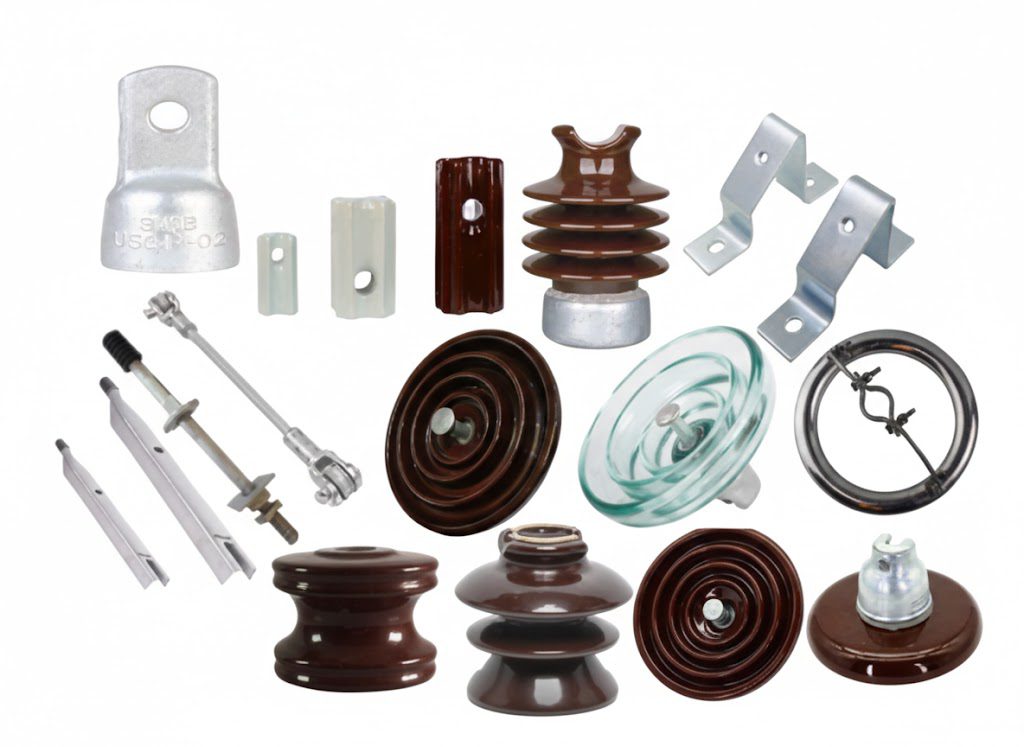
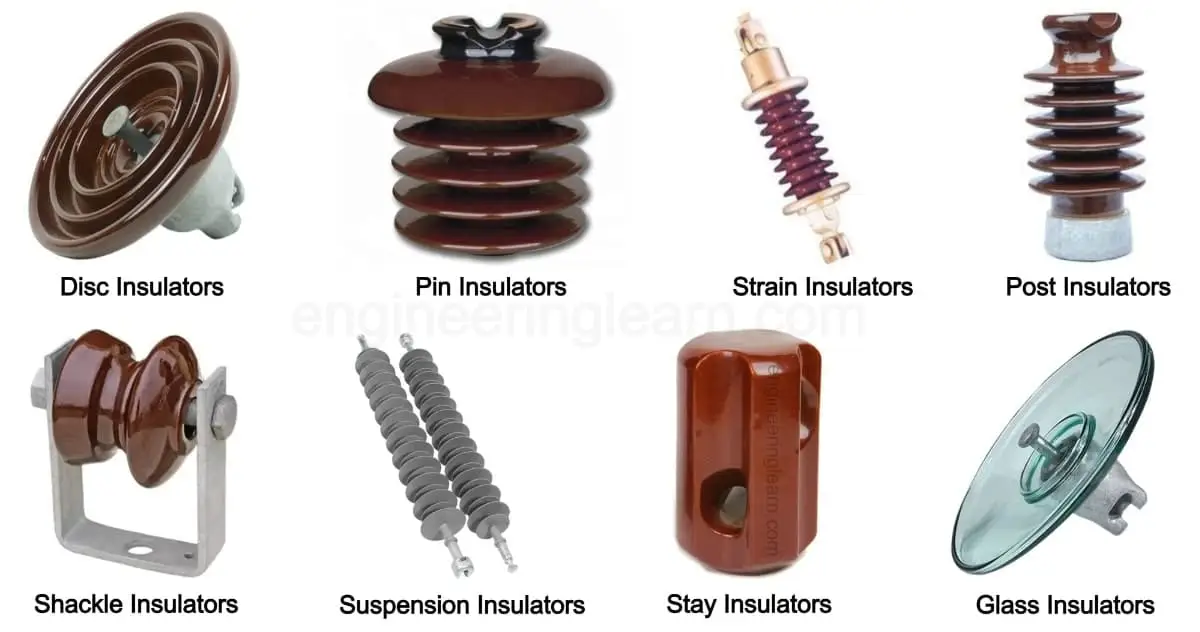
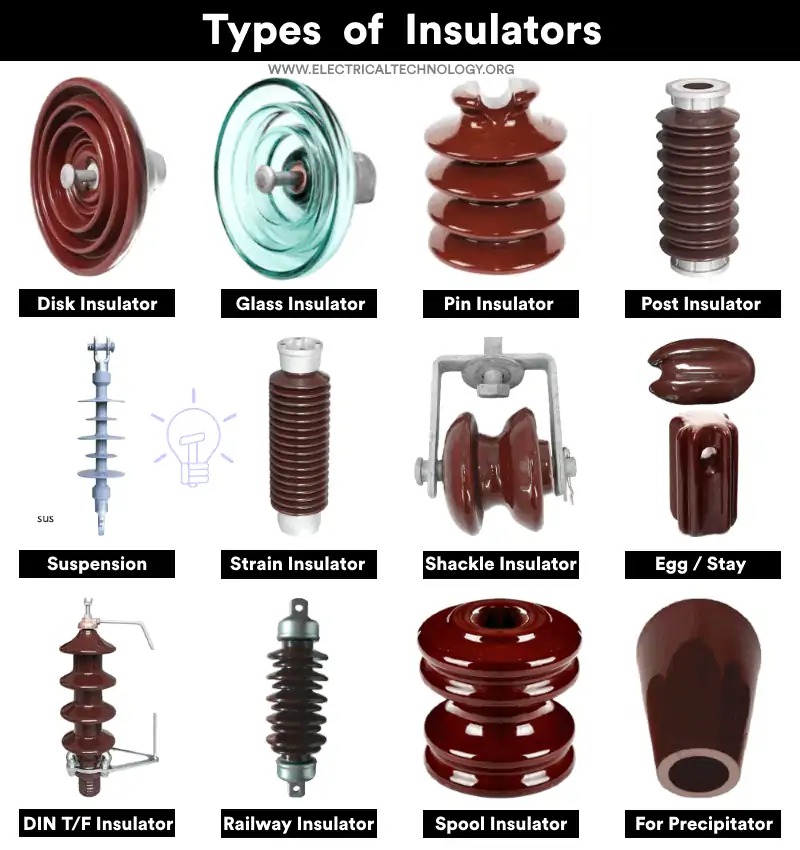
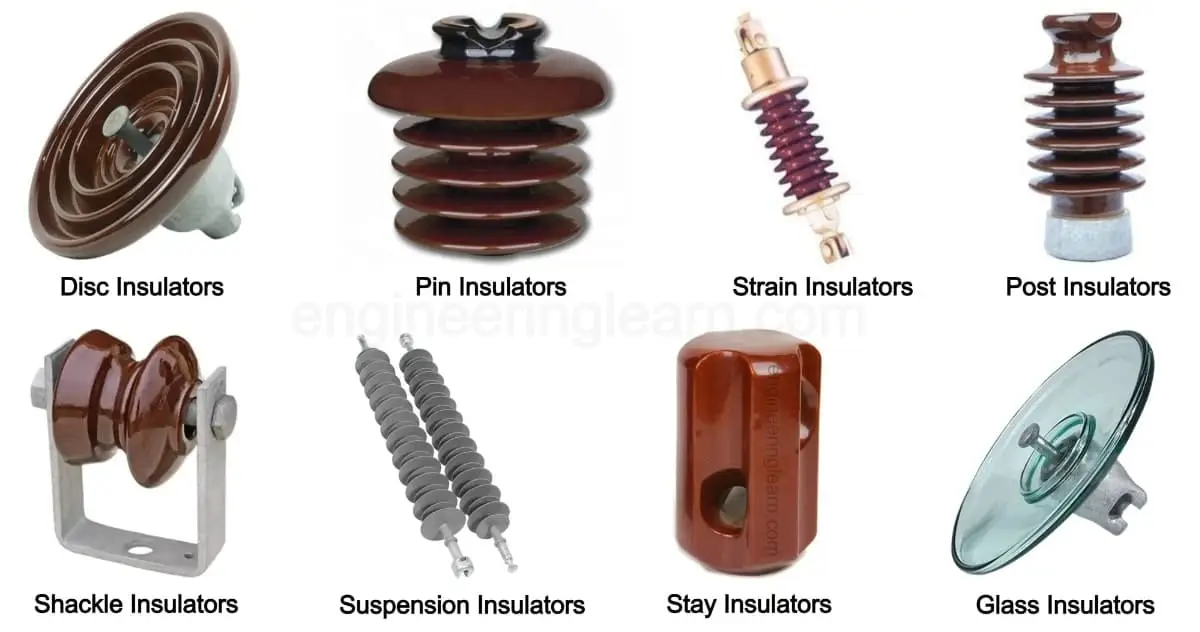
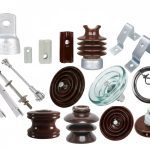
Description
The Component That Holds the Line Up and Keeps It Apart From Everything Else
Every overhead line depends on insulators to do two things at once: support the conductor mechanically and isolate it electrically holding thousands of volts away from the structure, the crossarm, and the ground, in rain, salt, dust, and ice, for decades.
Choose the right insulator and the line runs quietly for its whole design life. Choose the wrong type or the wrong material for the environment, and you get flashovers, pollution failures, or mechanical breakage at the one component that can’t afford any of them.
This page sorts the insulator family by type and job, so you can find the right one for your line and connects each to the string and support hardware that completes it.
Which Insulator Type Do You Need?
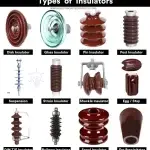
The type follows the job. Here’s the family, sorted by what each does:
| Insulator type | What it does | Typical use |
|---|---|---|
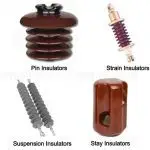
| Pin insulators | Mounts on a pin/spindle, supports the conductor on top | Distribution lines, straight runs and light angles |
| Post insulators | Rigid post supporting the conductor, bolted to structure | Distribution and sub-transmission, cleaner than pin at higher voltages |
| Suspension insulators | Disc/units assembled into a string that hangs the conductor | Transmission strings, tangent and tension |
| Spool insulators | Grooved spool for secondary and service conductors | Secondary racks, service drops |
| Stay insulators | Inserted in a guy to isolate the upper section | Guy and stay assemblies |
| Guy strain insulators | Strain-rated insulator in a guy under tension | Guy wires needing electrical isolation |
Not sure which your line calls for? Tell us the voltage, the position (support, suspension, guy, secondary), and the environment, and we’ll point you to the type — the sections below explain the main choices.
Support vs Suspension: The First Fork
The biggest division in the family is how the insulator carries the conductor:
- Support insulators pin and post types hold the conductor up, mounted rigidly on a pin or a post on the crossarm. They suit distribution and sub-transmission straight runs and lighter angles, where the conductor sits on top of the insulator. Pin insulators mount on an insulator pin or pole top pin; post insulators bolt to the structure or a post insulator bracket.
- Suspension insulators disc units and strings hang the conductor below the crossarm, assembled into an insulator string that grows longer with voltage. They’re the transmission standard, at tangent structures (the string hangs vertically) and tension structures (it takes the line’s pull). Suspension strings connect to the conductor and structure through the coupling hardware we also make ball eyes, socket clevises, suspension clamps, and strain clamps.
Voltage is the rough guide: lower distribution voltages often use pin and post; transmission voltages use suspension strings whose length scales with the kV. Your standard sets the specifics.
Guys and Secondaries: The Specialized Types
Two more types serve specific jobs:
- Stay insulators and guy strain insulators go into a guy wire to isolate the upper part of the stay electrically so a guy that runs near energized conductors doesn’t carry a hazard down to ground level. They’re strain-rated to take the guy’s tension while providing the isolation.
- Spool insulators carry secondary and service conductors on racks and at drops the lower-voltage end of the network, where a grooved spool holds the conductor simply and reliably.
Material Matters: Porcelain, Glass, or Composite
Insulators are made in three materials, and the choice affects performance and cost.
- Porcelain the traditional choice: proven, durable, high mechanical strength, long service record. Heavier, and fails by shattering when it does.
- Toughened glass visible fault detection (a failed disc shatters its shell but the string holds and the fault is visible from the ground), stable over time.
- Composite / polymer (silicone rubber) lightweight, vandal- and impact-resistant, excellent in polluted and coastal environments; increasingly specified for those conditions.
The right material depends on voltage, pollution level, mechanical load, and your utility’s standard. Coastal and heavily polluted environments often favor composite; established networks may standardize on porcelain or glass. Tell us the environment and we’ll advise honestly on the trade-offs.
Why Buyers Choose DAPENG for Insulators and the Hardware Around Them
- The type your line needs, sorted honestly: Pin, post, suspension, spool, stay, and guy-strain with guidance to the right one, not a push toward the most expensive.
- Insulators and their hardware from one source: The advantage of a line-hardware supplier: the insulators and the string couplings, pins, caps, brackets, and ties that complete them matched and kitted, so the string assembles without sourcing from three suppliers.
- Specified to your standard: Voltage class, mechanical rating, and pollution/creepage to your utility’s specification.
- Verified before shipment: Test documentation to the applicable standard, with third-party inspection welcome.
Use-Case Deep Dive
What insulator do I need for a distribution line?
Usually pin or post insulators for the conductor support at straight runs and lighter angles, on an insulator pin or bracket; spool insulators for the secondary and service conductors; and stay or guy strain insulators in the guys. At heavier angles and dead-ends, a short suspension string may be used. Send the voltage and structure types and we’ll list the insulators per position.
What insulator do I need for a transmission line?
Suspension insulator strings, their length scaling with the voltage and the pollution level. Tangent structures take a vertical string with a suspension clamp at the bottom; tension structures take a horizontal string with a strain clamp. The string connects through ball eyes, socket clevises, and on multi-string arrangements yoke plates. Give us the voltage, pollution level, and structure types and we’ll specify the strings and their hardware together.
How do I choose the material for a coastal or polluted environment?
Pollution and salt are the enemies of insulation they create a conductive film that leads to flashover. In those environments, composite/silicone-rubber insulators often perform best (hydrophobic surface, high creepage, impact resistance), and higher creepage distance is specified regardless of material. Established networks may still use porcelain or glass with anti-fog profiles and washing regimes. The right answer depends on your pollution severity and standard tell us the environment and we’ll advise on material and creepage rather than sell you a single option.
Straight Answers to Common Buyer Concerns
“Can you supply the insulators and the hardware to hang them?” Yes that’s the advantage of buying insulators from a line-hardware manufacturer. The suspension insulators and the ball eyes, socket clevises, clamps, pins, and ties come from one source, matched and kitted per structure no coordinating an insulator supplier with a separate hardware supplier and hoping the couplings match.
“How do we verify the insulators meet our voltage and pollution spec?” By the test documentation, which is supplied to the applicable standard voltage class, mechanical strength, and creepage/pollution class on the datasheet and certificate, with third-party inspection welcome. Insulators are the component where the ratings matter most; we publish them from datasheets, not estimates, and we won’t overstate a voltage class.
“Can you match a legacy insulator or a specific standard?” Send the specification, the drawing, or a sample. Matching insulators to a utility’s standard (type, voltage class, coupling designation, creepage, material) is what an export line-hardware supplier does and the coupling designation is where it connects to the string hardware we also make. Confirmation before production.
Explore the Insulator Range
- Pin insulators and post insulators conductor support
- Suspension insulators and insulator strings transmission strings
- Spool insulators secondaries and services
- Stay insulators and guy strain insulators guy isolation
- Insulator pins, pole top pins, suspension insulator caps, post insulator brackets, insulator ties mounting and finishing hardware
Complete the Assembly
- Ball eyes, ball clevises, socket eyes, socket clevises string couplings
- U shackles, yoke plates structure attachment and multi-string
- Suspension clamps, strain clamps the clamps at the ends of the string
- Browse all overhead line fittings and pole line hardware
Get an Insulator Quote Within 24 Hours
Send the voltage, the position (support, suspension, guy, secondary), the environment (pollution/coastal), and your quantities or the line specification. Our engineers confirm the insulator type, material, and rating, and quote the string and support hardware alongside, typically within one working day.
After You Order
Type and rating confirmation before production, test documentation and certificates with shipment, insulators kitted with their coupling and mounting hardware per structure, and an engineering contact who answers precisely because insulators are where support and isolation meet, and the specification is worth getting exactly right.