
Description
Rigidity From the Shape Itself
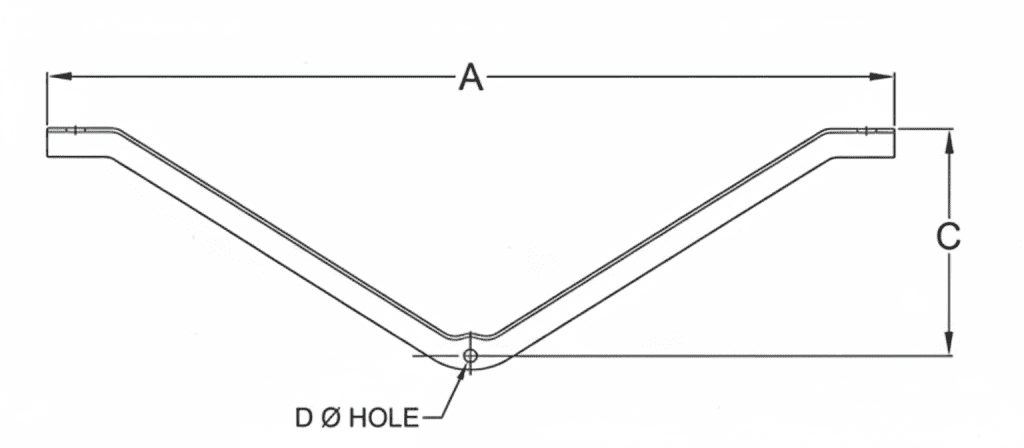
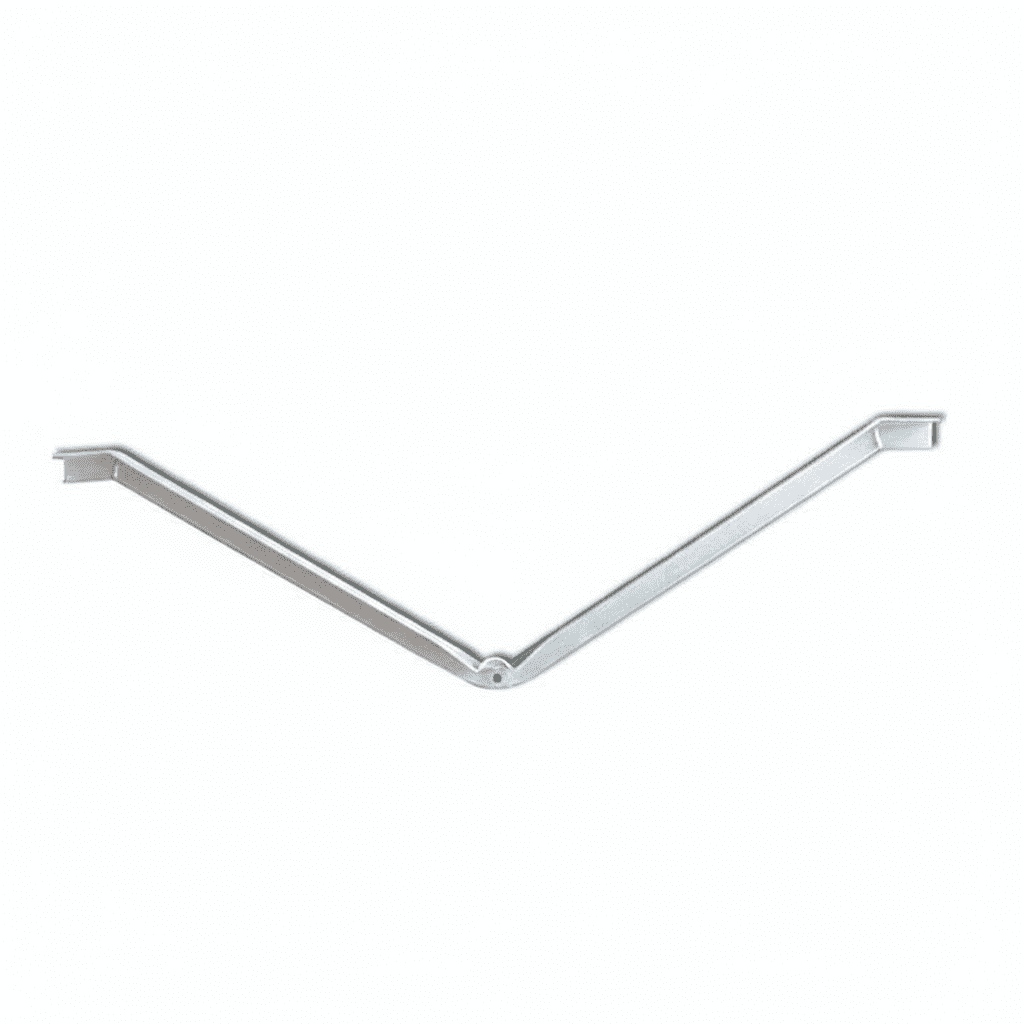
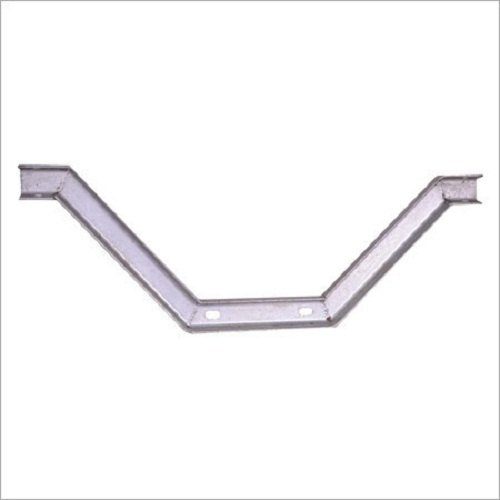
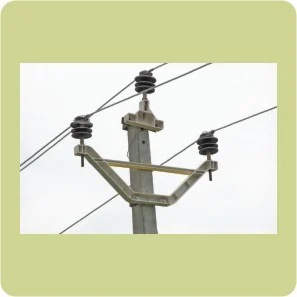
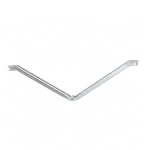
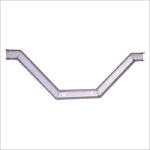
A straight crossarm needs a separate brace to hold it square; the arm carries the load, and the brace stops it from rotating and sagging. A V type cross arm builds the bracing into its own shape. Two steel arms meet at an apex to form a shallow V (or gable), mounting at the pole at the apex with feet at the outer ends, and because a triangle is rigid, the V geometry braces itself. The arm resists rotation and sag through its form, not through added straight braces.
That self-bracing shape makes the V-type arm the choice where a straight arm plus brace isn’t enough or isn’t tidy for heavier loads, angle structures, or where the extra rigidity of the V is wanted in one clean assembly. This page covers V-type cross arms: why the shape braces, when to use one, and how it mounts.
Why the V Shape Braces Itself
The V type arm works on the same principle as any brace triangulation but built into the arm:
- The two arms of the V and the pole (or the line between the mounting feet) form a triangle, and a triangle is inherently rigid.
- Load on the arm the conductors’ weight, wind, tension is carried through the V’s members in tension and compression, resisting rotation and sag without a separate brace.
- The feet at the outer ends and the apex at the pole spread and anchor the load into the structure.
The result is a rigid arm assembly in one piece the strength of a braced arm without bolting on separate straight braces. Where a straight arm relies on added braces to stay square, the V type arm is square by design.
When to Use a V Type Cross Arm
The V type earns its place where extra rigidity or a cleaner braced assembly is wanted:
- Heavier loads bigger conductors, longer arms, or more circuits, where the self-braced V is stiffer than a straight arm and simpler than a heavily-braced one.
- Angle structures where the conductor turns and the arm takes an unbalanced sideways pull, the V’s rigidity resists the twist.
- Where a tidy, integral braced assembly is preferred one V-formed piece instead of a straight arm plus separate braces and their fixings.
For standard straight runs with light loads, a straight electrical or power pole cross arm with flat braces is the economical choice. The V type steps up where the load, the angle, or the rigidity requirement calls for it. Tell us the structure and load and we’ll advise which suits.
Why Buyers Choose DAPENG V Type Cross Arms
- Self-braced rigidity: The V geometry braces the arm through its shape stiff against rotation and sag for heavier loads and angles, in one assembly.
- Sized to your structure: Arm length, V angle, and section matched to your conductor spacing, loads, and pole or to your drawing.
- Mounts clean at the pole: Apex mounting at the pole and feet at the ends, drilled to your pattern, so it bolts up ready.
- Hot-dip galvanized to ISO 1461: The same class as the bolts, insulators, and fittings it carries, so the assembly ages together.
- The structure from one source: V type arms with the insulators, mounting hardware, and bolts they carry matched and kitted.
Use-Case Deep Dive
V type or straight arm plus brace which do I need?
By the load and the structure. A straight arm (electrical / power pole) with flat braces is the economical choice for standard straight-run distribution. A V type steps up where you want more rigidity in one assembly heavier loads, angle structures, or where the integral braced form is preferred over a straight arm with separate braces. Both hold the arm square; the V does it through its shape, the straight arm through added braces. Send the load and structure and we’ll advise.
How does the V type mount to the pole?
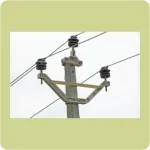
At the apex the point of the V mounts to the pole (through the mounting hardware or bolts), and the feet at the outer ends carry the insulators/conductors, with the V’s rigidity holding the whole assembly square. Because the bracing is in the shape, there are fewer separate parts to fix than a straight arm plus braces.
Can it handle an angle structure?
Yes the V type’s self-bracing rigidity is well suited to angle structures, where the conductor’s change of direction puts an unbalanced sideways pull on the arm that would twist a lightly-braced straight arm. The V resists that twist through its geometry. For the heaviest angles and dead-ends, double-arm construction (two arms) may still be used; for many angle positions the V type is the tidy, rigid single-assembly answer.
Specifications and What They Mean for You
| Specification | What we supply | What it means for the buyer |
|---|---|---|
| Form | V/gable, self-bracing | Rigid in one assembly; no separate brace |
| Section | Steel angle/bar, sized to load | Strength for heavier loads and angles |
| Length / angle | To your spacing and structure | The geometry your design needs |
| Mounting | Apex at pole, feet at ends | Bolts up clean and square |
| Coating | HDG to ISO 1461 class | Ages with the hardware it carries |
| Drilling | To your hole pattern | Fits on site; no field drilling |
Straight Answers to Common Buyer Concerns
“What’s the advantage of a V type over a straight arm with braces?” Rigidity in one integral assembly. The V’s shape braces the arm through triangulation, so it’s stiff against rotation and sag without bolting on separate straight braces fewer parts, a cleaner assembly, and extra rigidity for heavier loads and angle structures. For standard light straight runs, a straight arm with flat braces is more economical; the V type is the step up where rigidity matters. We make both and will advise which fits your structure.
“Can you size and drill it to our structure?” Yes send the conductor spacing, the loads, the pole, and the structure type (straight/angle), and we supply the V type arm in the section and geometry to suit, drilled at the apex and feet to your pattern, galvanized and ready to bolt up.
“Can you supply it complete with insulators and mounting?” Yes the V type arm with the insulators, mounting hardware, and bolts, matched and kitted per structure, so the arm mounts complete.
Complete the Structure
- Steel cross arms the crossarm category hub and type selection
- Electrical cross arms and power pole cross arms the straight crossarm types
- Flat crossarm braces braces for straight arms
- Alley arms the offset arm type
- Insulators, D brackets, pole bands, square head machine bolts what the arm carries and how it mounts
- Browse all pole line hardware and overhead line fittings
Get a Structure-Matched Quote Within 24 Hours
Send your conductor spacing, the loads, the structure type (straight/angle), the pole, and quantities or the crossarm standard drawing. Our engineers confirm the V type section, geometry, and drilling, and quote the arm complete with insulators and mounting hardware, typically within one working day.
After You Order
Section, geometry, and drilling confirmation before production, galvanizing certificates with shipment, arms drilled to fit and kitted with their insulators and mounting hardware per structure, and an engineering contact who answers precisely because the crossarm sets the conductor geometry, and the V type holds it rigid where the load and the angle demand it.