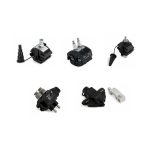
Description
How Do You Tap an Insulated Line Without Stripping It or Switching It Off?
Every LV network build and every service connection crew faces the same repeated task: branch a tap off an insulated main. The old way is slow and invasive: de-energize (or work a live bare wire), strip the insulation, fit a parallel groove clamp, re-insulate the joint, and hope the taping outlives the weather. Multiply that by every streetlight, service drop, and meter connection on a network, and the labor cost dwarfs the hardware.
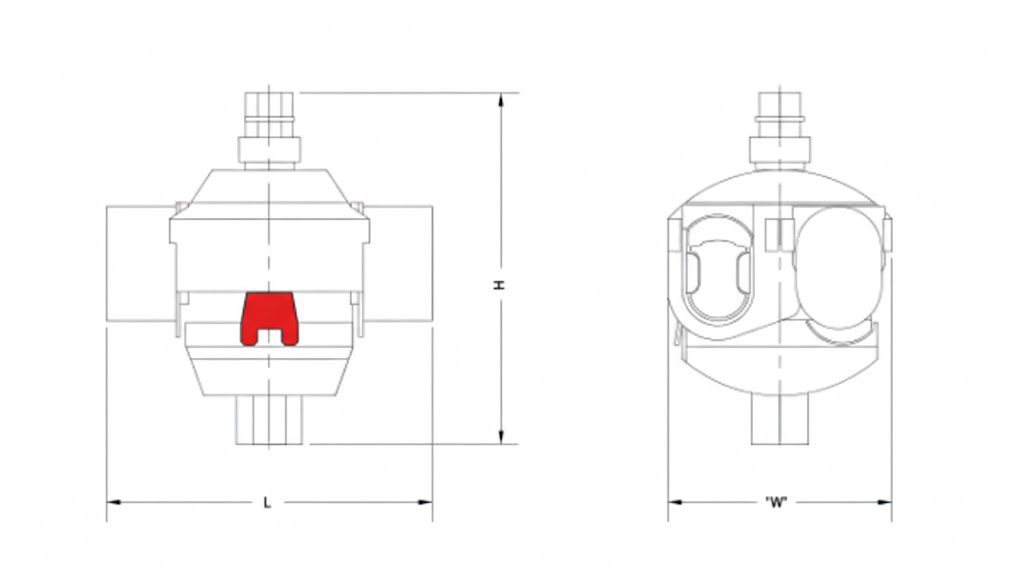
The insulation piercing connector (IPC) collapses that whole procedure into one torque of a wrench. Its contact teeth pierce the conductor insulation through to the metal as the bolt is tightened, with no stripping, no re-insulation, and on ABC (aerial bundled cable) networks, no outage: taps are routinely made on energized LV lines with insulated tools. The connection seals itself as it’s made.
If your project is an ABC distribution build, a streetlight network, or a service-connection program asking how to make hundreds of insulated taps quickly, safely, and identically, the IPC is the answer, and the mechanism below is why it works every time.
The Mechanism That Makes Every Installation Correct: The Shear-Head Bolt
Here is the detail that separates an IPC from an ordinary clamp, and separates informed suppliers from catalog-copiers:
The IPC’s bolt carries a torque-limiting shear head. The installer tightens with an ordinary tool; at exactly the design torque, the head shears off cleanly and the job is done. Under-tightening (a poor contact that heats and fails) becomes impossible to walk away from, the head is still on. Over-tightening (crushed strands, damaged insulation) becomes impossible to reach, the head is gone before you get there.
The correct installation torque is not written in a manual the crew may not read. It is built into the hardware. On a network with ten thousand taps made by dozens of crews across two rainy seasons, that single feature is worth more than every adjective on this page.
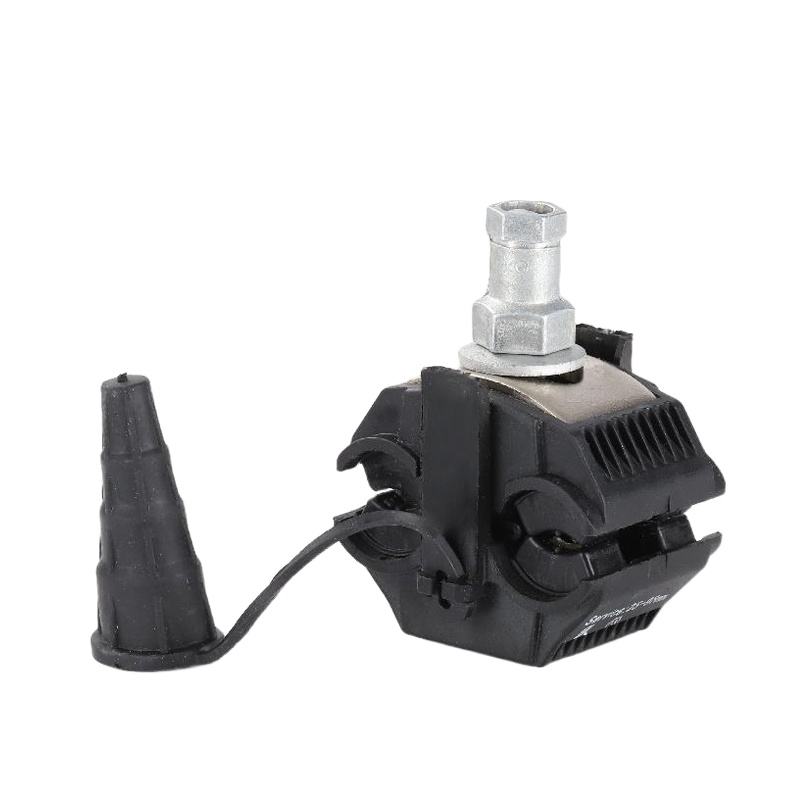
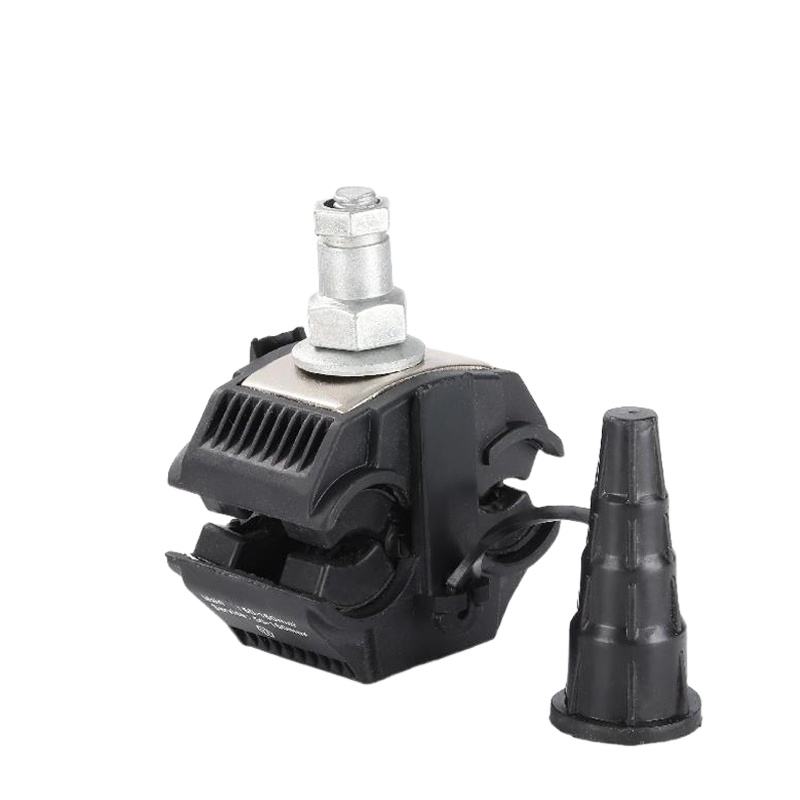
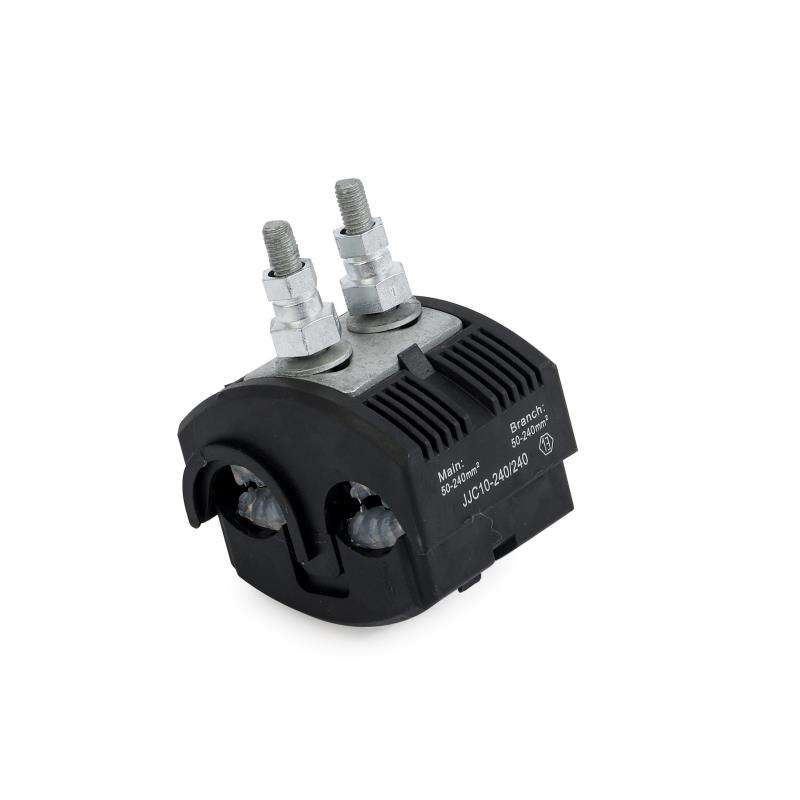
Around that bolt, the rest of the design completes the job: hardened contact teeth profiled to pierce insulation and bite multi-strand aluminum or copper conductor; an insulated, UV-stabilized polymer body; factory-filled contact grease that seals the pierced points against moisture for the life of the connection; and separate main and tap ports so one connector handles the through-conductor and the branch in a single operation.
Why Buyers Choose DAPENG Insulation Piercing Connectors
- Live-line productivity, quantified. A trained crew makes an IPC tap in minutes, energized, from a ladder or bucket, the reason ABC networks specify IPCs by the thousand. Your connection program’s cost lives in labor hours; this is the hardware that cuts them.
- Engineered to LV ABC practice. Designed and tested in line with EN 50483 practice for low-voltage aerial bundled cable accessories, the standard your specification review will ask about. (Core range: 0.6/1 kV class for LV ABC networks. Medium-voltage piercing connectors for covered-conductor systems are a separate, differently rated family, ask, and we’ll quote the right one rather than blur the two.)
- Main and tap ranges, stated per model. Typical families cover main conductors from small service sizes up to large ABC mains, with tap ports for service and lighting conductors, each model marked with its exact mm² ranges.
- Weather-sealed by design, not by taping. Grease-filled contact chambers and end caps mean the connection you make in year one is the connection the network still has in year twenty, with no re-insulation step to age, crack, and leak.
- The ABC system from one factory. IPCs ship alongside the anchoring clamps and suspension clamps that carry the ABC cable, the drop wire clamps and span clamps of the service drops, and the pole bands and banding straps that mount it all, matched, kitted, and documented together.
Use-Case Deep Dive
Can I connect a streetlight to an ABC main with an insulation piercing connector?
Yes, this is one of the IPC’s defining applications. Position the connector on the phase and neutral of the ABC main at the pole, insert the lighting cable tap, torque to shear, and the luminaire is fed, typically without interrupting supply to a single customer. For municipal lighting programs, the math is decisive: no outage notifications, no stripping, no joint re-insulation, and an identical, sealed connection at every pole. Order IPCs with the lighting program’s pole bands and brackets and the whole pole kit arrives together.
How does an IPC compare with stripping the cable and using a parallel groove clamp?
A parallel groove clamp remains the right tool for joining bare conductors, that is its territory, and we manufacture them for it. But on an insulated network, stripping to fit a PG clamp means outage or live bare-metal work, a re-insulation step whose quality depends on the installer’s patience, and a joint that reopens the insulation the network paid for. The IPC makes the connection through the insulation and seals as it clamps: faster per tap, consistent by mechanism, and reversible only by design. On bare MV/HV networks, the live-work tool is different again, see hot line clamps, and matching connector to network type is a review we’re glad to do on your BOM.
What sizes and combinations do I need for a service-connection program?
Count your combinations, not your customers: each distinct pairing of main conductor size and tap conductor size is one IPC model. A typical program needs only two to four models, mains-to-service, mains-to-lighting, and occasionally mains-to-mains for network extension. Send your ABC cable schedule and service cable sizes; we return the model list with exact ranges, quantities per your connection targets, and cartons marked so stores issue the right model every time. (Mixed legacy networks with unusual conductor sizes: send the sizes anyway, range coverage is a table lookup for us and a costly guess for a crew.)
Specifications and What They Mean for You
| Specification | What we do | What it means for the buyer |
|---|---|---|
| Rating class | 0.6/1 kV LV ABC family (EN 50483 practice); MV covered-conductor family quoted separately | The right connector for the network, never a blurred rating on a live component |
| Installation | Torque-limiting shear-head bolt | Correct torque achieved by every installer, every time, quality built into the hardware |
| Contact system | Hardened piercing teeth, grease-filled chamber | Gas-tight, moisture-sealed contact for the connection’s whole life |
| Body | UV-stabilized insulated polymer | Decades aloft in sun and rain without embrittlement |
| Conductor ranges | Main and tap ranges marked per model | One connector per combination; no field improvisation |
| Live working | Suitable for energized LV installation with appropriate tools/procedures | Taps without outages, the feature your program’s economics are built on |
| Testing | Batch electrical and mechanical verification; reports supplied | Your spec review passes on documents, not assurances |
Straight Answers to Common Buyer Concerns
“A connector that pierces insulation sounds like a future fault point. Why isn’t it?” Because of what happens inside at the moment of installation: the teeth make a defined, grease-sealed, gas-tight contact at a torque the shear head guarantees, and the insulation around the pierce is compressed and sealed by the body, not left open like a stripped-and-taped joint. Decades of ABC network practice under EN 50483-class testing exist precisely because this connection outlasts the stripped alternative. The fault point isn’t the pierce; it’s the joint made wrong, and the shear head removes “wrong” from the options.
“How do I verify quality before ten thousand of them are on my network?” By batch and by sample: electrical (contact resistance) and mechanical verification per production batch with reports supplied, pre-shipment third-party inspection (SGS/BV or your agency) welcome, and samples available for your own lab or field trial before the program order. We would rather you test fifty than doubt ten thousand.
“Can one supplier really match connectors to our exact ABC cables?” That’s a datasheet exercise, and it’s free: send the ABC cable spec (or the utility standard it’s built to) and your service/lighting cable sizes. The quotation returns with each model’s range confirmation in writing, mis-specification caught at RFQ costs nothing.
Complete the ABC Network
- Anchoring clamps and suspension clamps – carrying the ABC cable pole to pole
- Drop wire clamps and span clamps – the service-drop hardware the IPC feeds
- Pole bands and stainless steel banding straps – mounting it all to the pole
- Browse all overhead line fittings from one factory
Get a Range-Matched Quote Within 24 Hours
Send your ABC cable schedule, service cable sizes, and connection targets, or simply the utility standard you build to. Our engineers confirm every main/tap range and return a factory-direct quotation, typically within one working day, with production batched to your program calendar.
After You Order
Range-confirmation sheet before production, batch test reports with every shipment, cartons marked by model for error-free store issue, and an engineering contact who answers the field’s questions in service-connection time, hours, not weeks, because a connection program that stops waiting on an email is a program losing money.