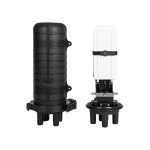
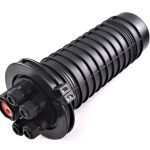
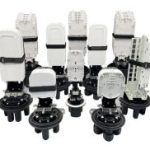
Description
What Protects a Fiber Splice for Thirty Years, Outdoors, Under Water, or Up a Tower?
Every fiber network, however advanced, comes down to the same physical fact: somewhere, two hair-thin glass strands are fused, and that joint must survive everything the outdoors can do to it. Moisture wicking along a cable. A decade of freeze-thaw. UV, dust, vibration, and the day- it always comes- when a technician must open the joint again to add a customer or repair a cut.
The fiber optic splice closure is the engineered answer: a sealed, organized, re-enterable enclosure that turns a network’s most fragile point into its most protected one. If your project- an FTTH rollout, an ADSS distribution route, or an OPGW backbone- is asking which closure type, what capacity, and how it mounts at the pole or tower, this page covers the selection, and our factory supplies the closure together with every piece of hardware around it.
Dome or Inline: The First Decision, Explained Properly
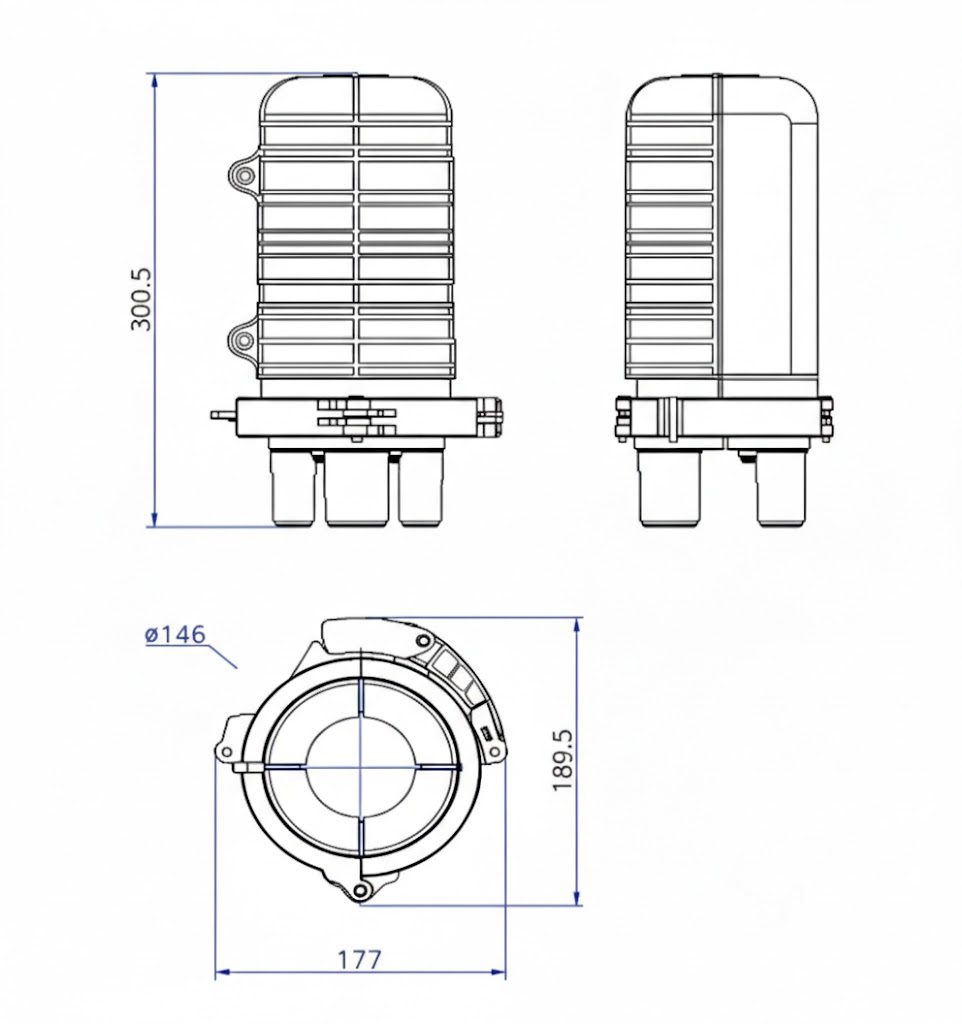
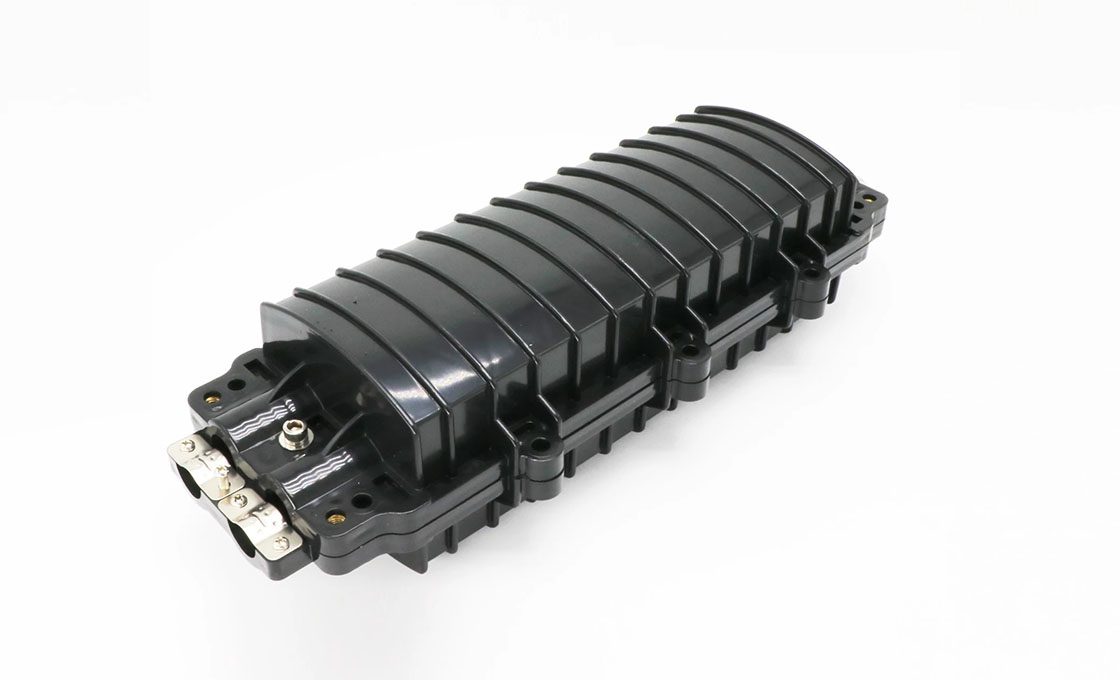
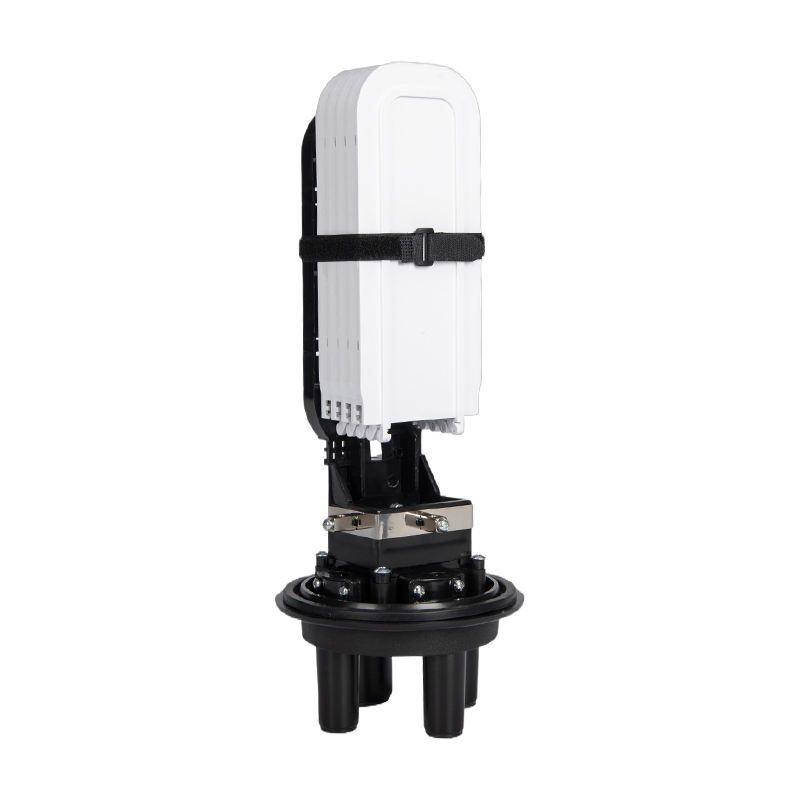
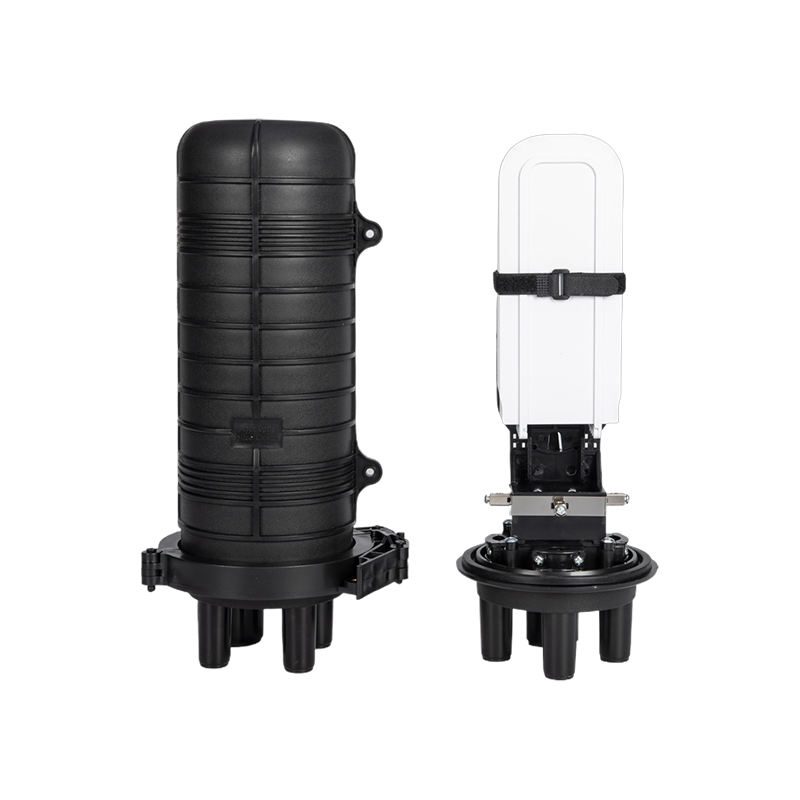
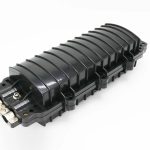
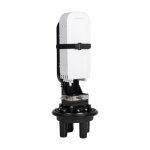
Dome (vertical) closures bring all cables in through one end, with the sealed dome above. The geometry is the point: every entry port faces down, so gravity works for the seal, water runs away from the entries, not into them. Domes carry the higher splice capacities and the richer port options, which is why they dominate FTTH distribution points, aerial loops, and underground chambers.
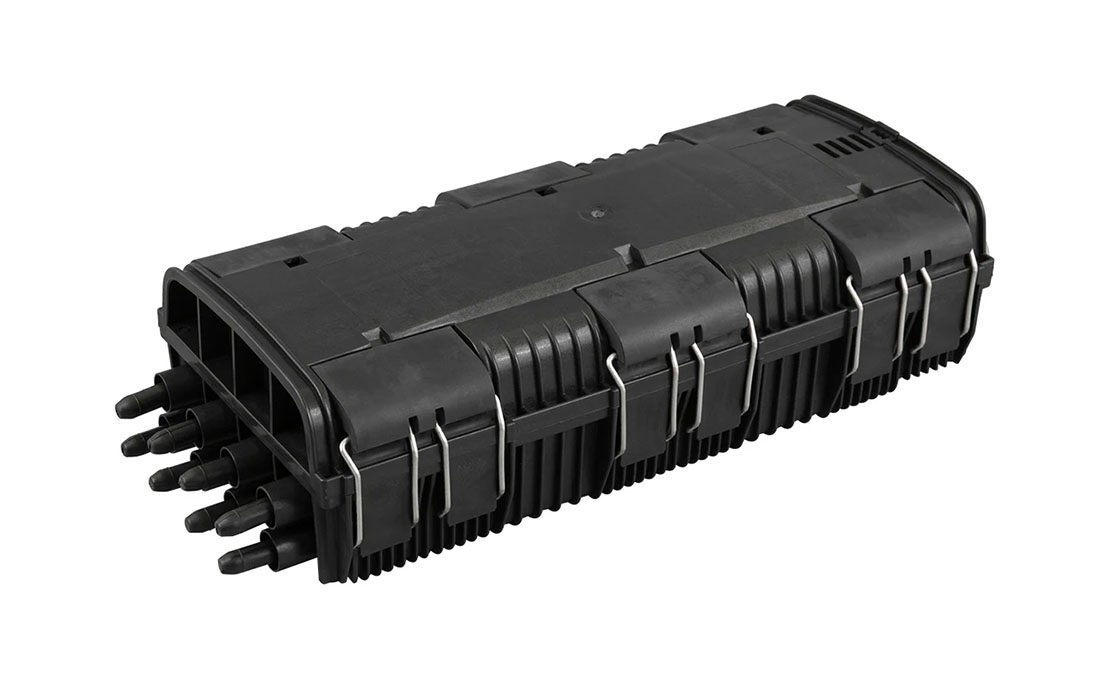
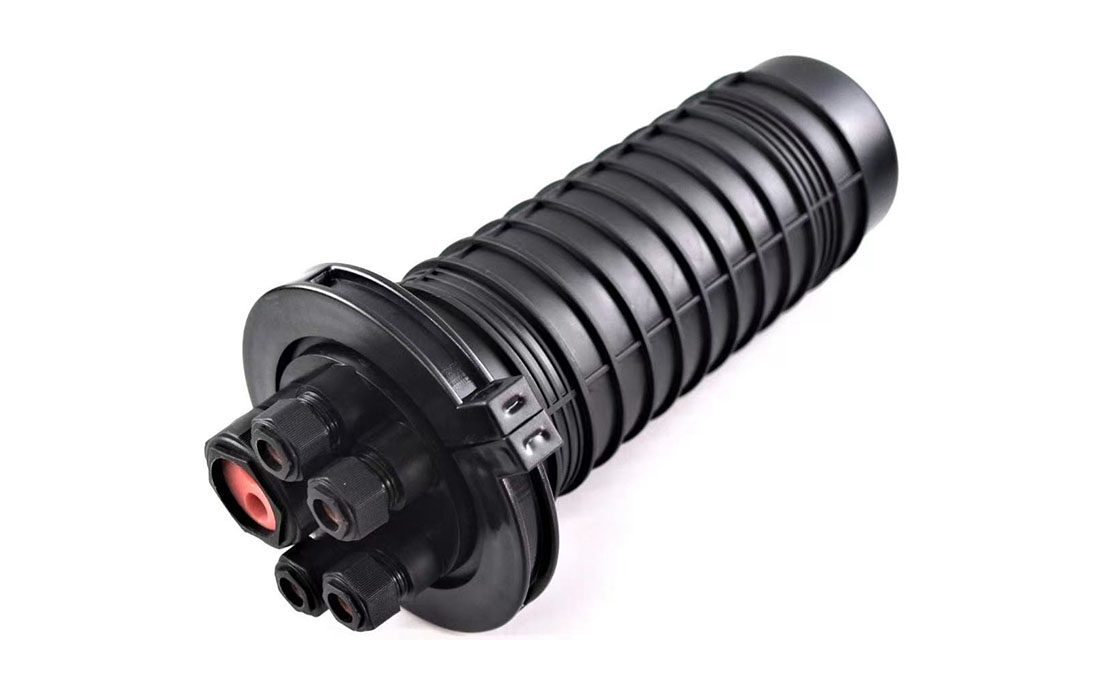
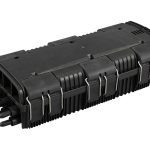
Inline (horizontal) closures run the cable straight through, entry ports at both ends, the natural shape for joining two cable ends on a route: repairs after a cable cut, reel-end joints on long pulls, and straight-line extensions. Compact along the cable, simpler where the job is simply “connect A to B.”
| Factor | Dome Closure | Inline Closure |
|---|---|---|
| Geometry | All entries at one (downward) end | Straight-through, both ends |
| Typical use | FTTH distribution, aerial loops, chambers | Route repairs, reel-end joints |
| Capacity range | Higher (multi-tray stacks) | Low to medium |
| Port flexibility | Oval + multiple round/drop ports | End entries |
| Mounting | Pole, strand, wall, chamber | In-line on the route |
Both families seal to IP68 class, continuous submersion protection, via mechanical (gel/gasket) or heat-shrink entry sealing, and both are re-enterable: the closure opens for maintenance and reseals without replacement. (Exact tray counts and maximum core capacities per model)
Why Buyers Choose DAPENG Fiber Optic Closures
- The powerline-fiber advantage no fiber brand offers. An OPGW splice point isn’t just a closure, it’s the closure, the ADSS/OPGW metal junction box at the tower, the down lead clamps routing the cable to it, and the suspension and anchoring hardware holding the route. We manufacture all of it. One order, one compatibility review, one container.
- Mid-span access that makes ADSS architectures work. The oval entry port accepts an uncut cable loop, express fibers pass through untouched while only the tubes you need are opened and spliced. Your backbone stays intact; your distribution taps happen anyway. (More on why this matters below.)
- Sealed like the spec says, provably. IP68-class sealing verified in production; entry systems matched to your cable diameters so the seal you get is the seal that was tested, not a gland stretched around the wrong cable.
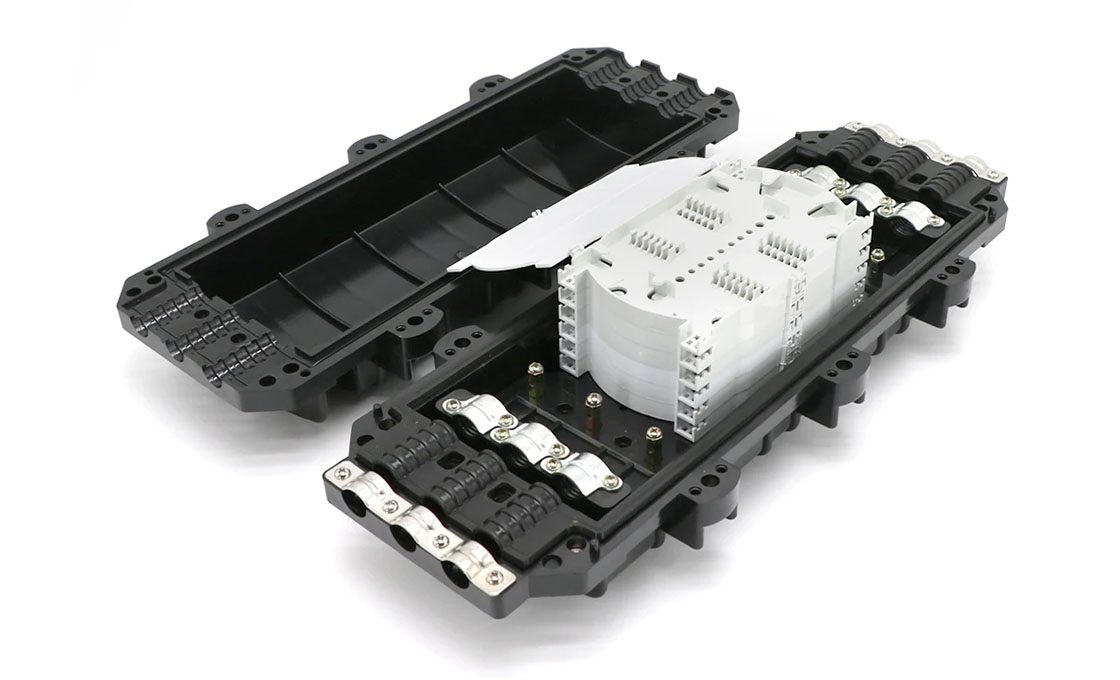
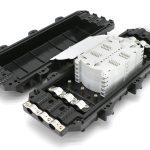
- Organized for the splicer, not just the catalog photo. Trays that hold bend radius, routing paths that don’t fight the technician’s hands, strength-member and sheath fixings that take the mechanical load off the fibers, and grounding provision for armored and metallic-element cables.
- Rollout-scale supply. FTTH programs consume closures by the hundred; production batches align to your activation calendar, cartons marked for store-level issue, verified capacity labels on every unit.
Use-Case Deep Dive
What is mid-span access, and why does my ADSS route need it?
Mid-span access means opening a closure onto a cable without cutting it. The uncut cable enters through the oval port as a loop; inside, only the buffer tubes carrying the fibers you need are opened and spliced to the drop or distribution cable; every other fiber passes through untouched. The alternative, cutting the whole cable at every tap point, splices every fiber at every closure, adding loss, labor, and failure points along the entire backbone. If your ADSS or aerial distribution design taps customers along the route (rather than only at the ends), specify dome closures with oval-port mid-span capability, and say so at RFQ, because it determines the port configuration we build.
Which closure do I need at an OPGW joint on a transmission tower?
The standard arrangement: the OPGW terminates or loops at the tower; down lead clamps route it down the structure; and the splice lives in a closure, either directly, or housed within a tower-mounted metal junction box where the utility’s standard requires the extra mechanical enclosure. Grounding provision matters here (OPGW is a metallic, current-carrying cable), as does working slack: order the joint kit, closure, junction box, downleads, and banding straps for mounting, as one item and the tower crew installs one coherent system instead of reconciling four vendors’ assumptions at height.
How do I choose closure capacity for an FTTH rollout?
Count three numbers per site class: fibers spliced today, fibers reserved for growth, and drop ports needed over the closure’s life. Then standardize on as few models as possible, typically one high-count dome for distribution points and one compact closure for drops/repairs, because in a rollout, the cost of an oversized closure is cents, while the cost of a full one is a truck roll and a re-splice. Send your network architecture (splitter ratios, homes per distribution point) and we’ll return the model pair that covers it, with drop-cable hardware and span clamps for the aerial plant in the same quotation.
Specifications and What They Mean for You
| Specification | What we do | What it means for the buyer |
|---|---|---|
| Sealing | IP68-class; mechanical (gel/gasket) or heat-shrink entries | Splices stay dry through submersion, storm, and seasons |
| Re-entry | Tool-openable, re-sealable closure systems | Maintenance and expansion without replacing the closure |
| Ports | Oval (uncut/mid-span) + round cable and drop ports per model | The architecture you designed is the one you can build |
| Trays | Stackable splice trays, bend-radius-controlled routing | Low-loss splices that a technician can actually work on |
| Mechanical | Strength-member fixing, sheath retention, grounding provision | Cable loads land on the closure body, never on the glass |
| Materials | Engineering plastics, UV-stabilized for aerial service | Decades outdoors, pole, strand, tower, or chamber |
| Capacity | Model families from drop-count to high-count backbone | Publish real tray/core numbers, not template figures |
Straight Answers to Common Buyer Concerns
“Closures all claim IP68. How do I know the seal is real?” Three ways before you commit a network to it: production sealing verification per batch with reports supplied; samples available for your own pressure/immersion testing before the program order; and third-party pre-shipment inspection (SGS/BV or your agency) welcome. A closure’s seal is cheap to verify and ruinous to assume.
“Why buy closures from a line-hardware factory instead of a fiber brand?” If you’re buying only closures for a duct network, a fiber brand serves you fine. But if your fiber rides poles and towers, ADSS, OPGW, aerial FTTH, the closure is one line item among clamps, downleads, junction boxes, and mounting steel, and splitting that BOM across vendors is how mismatches, delays, and finger-pointing enter a project. One factory, one matched kit, one accountable supplier: that’s the argument, and it’s strongest exactly where our catalog is deepest.
“Can your closures accept our existing cable types?” Send the cable datasheets, diameters, construction, strength members. Entry seals and fixings are matched per cable at RFQ, in writing. Loose tube, the common ADSS constructions, and OPGW arrangements are routine; unusual builds get an engineering answer, not a shrug.
Complete the Splice Point
- ADSS/OPGW metal junction boxes – tower-standard mechanical housing for the joint
- Down lead clamps – routing the cable to the closure
- Drop wire clamps and span clamps – the aerial drops your FTTH closures feed
- Browse all ADSS/OPGW fittings for the complete route hardware
Get a Route-Matched Quote Within 24 Hours
Send your network architecture, cable datasheets, and site counts, or simply the route drawings. Our engineers confirm closure models, port configurations, and every piece of mounting hardware around them, and return a factory-direct quotation, typically within one working day.
After You Order
Configuration confirmation before production, batch sealing-verification reports with shipment, cartons marked by model and site class, and engineers who answer while the splicer is still on site, because a closure question at the tower can’t wait for tomorrow’s email.