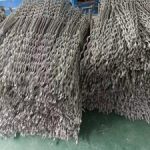
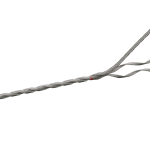
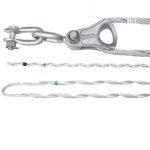
Description
Terminating the Line at Full Strength, the Preformed Way
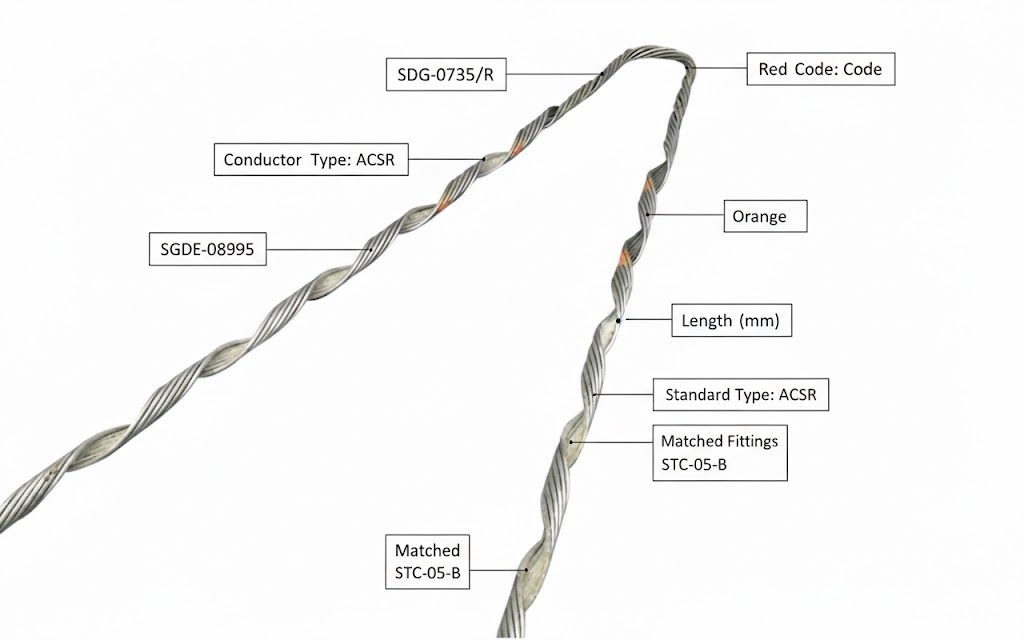
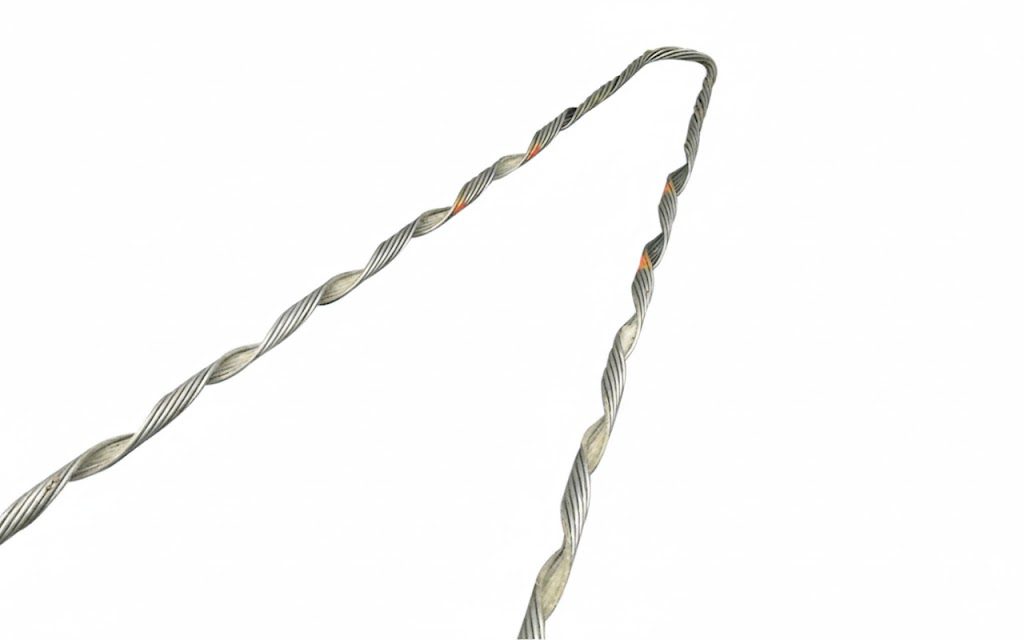
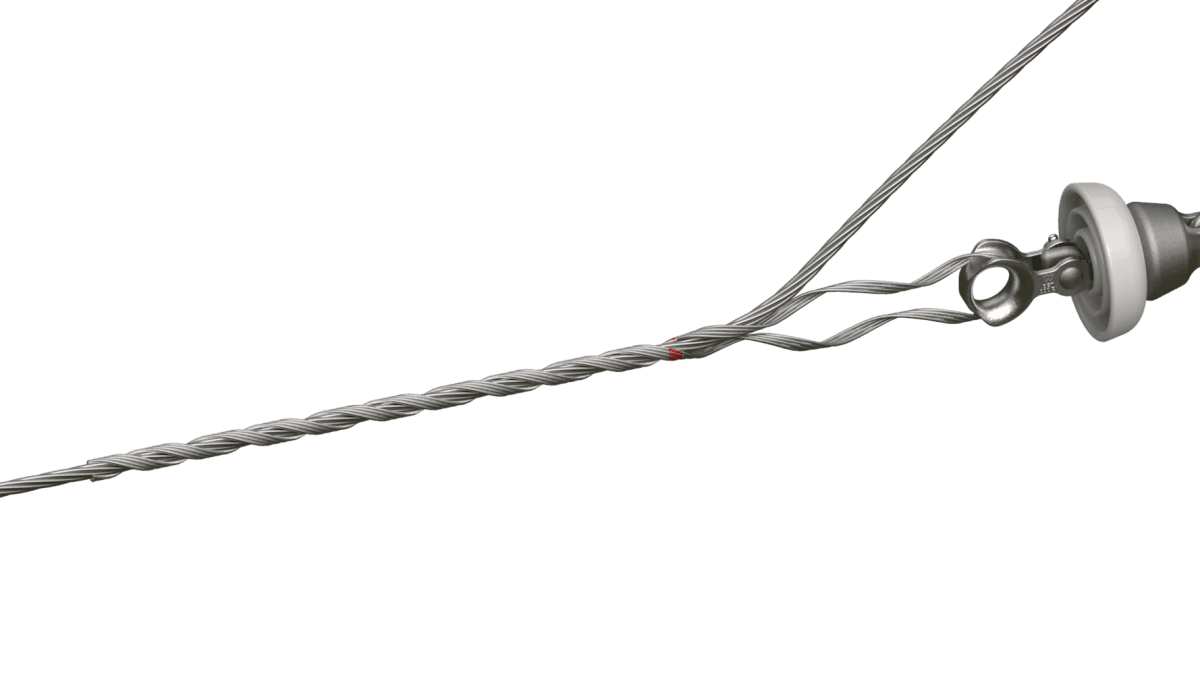
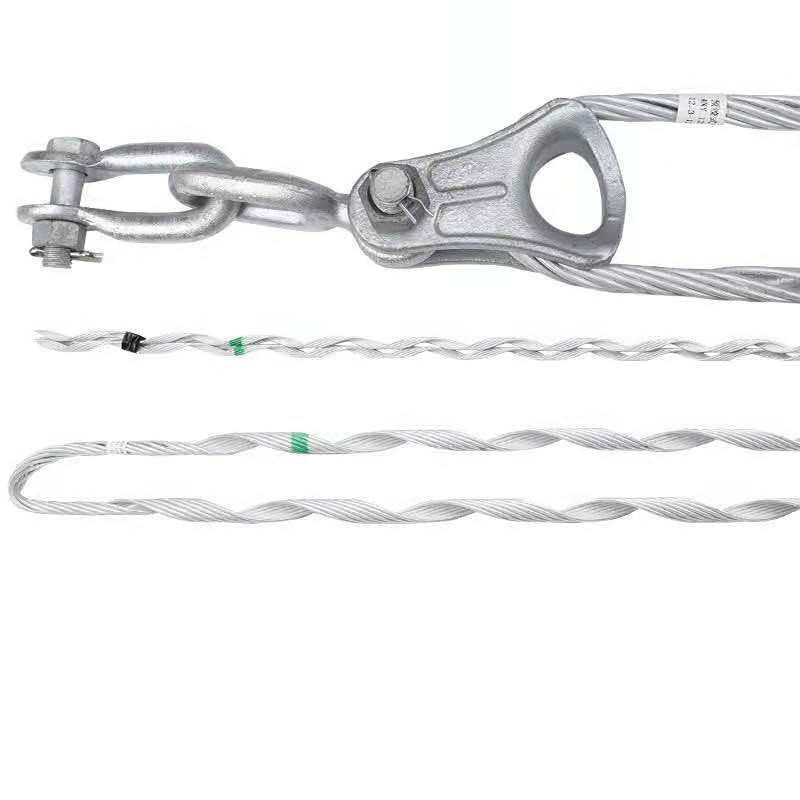
Wherever an overhead line ends at a dead-end pole, an angle, or a section break, the conductor has to be anchored at its full strength and connected cleanly to the structure. A dead end grips does it the preformed way: a set of helical rods, formed to your conductor’s exact size, that grip along a length of the conductor and terminate in a formed loop that connects to the anchor or dead-end hardware. Full strength, no bolts, no point load; the conductor’s termination is as strong as the conductor itself.
It’s the preformed alternative to a bolted dead-end, and the parent of a family of dead-end grips sized and configured for different jobs. This page covers dead end grips: how the preformed dead-end works, which member fits your job, and why the conductor match is everything.
The Preformed Dead-End Advantage
A dead end grip terminates the conductor the way every preformed fitting grips and it’s why utilities choose it over a bolted dead-end:
- Full strength over length: The helical rods develop the conductor’s rated strength along the grip length, not at a single clamped point so the termination holds the full line tension without necking or crushing the conductor.
- No point load: Distributed grip means no concentrated clamping stress on the conductor at the dead-end.
- Formed loop to the structure: The grip terminates in a loop or eye that connects straight to the dead-end hardware grip and connection in one fitting.
- Tool-free: Formed to the conductor’s lay and diameter, the rods wrap on by hand no torque wrench, no compression tool.
Like all preformed fittings, a dead end grip is made for one conductor size and generally isn’t reusable which is why the conductor match matters so much (below).
Which Dead-End Grip? Routing the Family
“Dead end grip” is the broad term; the right member depends on the line and where you’re terminating:
| Product | For | Where |
|---|---|---|
| Dead end grips (this page) | Conductor, general | Distribution & transmission dead-ends |
| Distribution grips | Distribution conductor | Distribution dead-ends specifically |
| Pole top make off | Conductor at the pole top | Pole-top terminations (integral eye to pole-top hardware) |
| Preformed tension clamps | OPGW / heavier conductor | Transmission tension, OPGW |
| Guy grips | Guy strand (not conductor) | Guy/stay dead-ends |
If you’re terminating a conductor at a general dead-end, this is the product. For a distribution-specific dead-end, the distribution grip; at the pole top, the make off; for OPGW/heavy transmission, the preformed tension clamp; for a guy strand, a guy grip. Tell us what and where you’re terminating and we’ll route you to the exact member.
Dead End Grip or Bolted Strain Clamp?
The real choice at a dead-end is preformed grip versus bolted clamp:
- Preformed dead end grip full strength over length, no point load, tool-free, gentle on the conductor, single-use. Ideal where you want a permanent, conductor-friendly, fast termination.
- Bolt-type tension / strain clamps bolted, re-openable, re-tension able, inspectable, reusable at the cost of a point-load grip and more install effort.
Choose the preformed grip for a permanent, conductor-friendly, quick dead-end; the bolted clamp where re-openability or inspection is required. We make both and will advise by your line and preference.
The Critical Spec: The Conductor Match
A dead end grip is formed to one conductor size the rods are pre-shaped to a specific conductor diameter and lay. The conductor match is the spec that can’t be approximated:
- A grip made for your exact conductor grips cleanly and develops full strength.
- A grip for a neighboring size won’t grip right it’s the wrong part.
Specifying a dead end grip starts with the conductor: type (ACSR, AAC, AAAC, etc.), diameter, and stranding. Send the conductor and each grip is matched before production the spec we confirm in writing.
Why Buyers Choose DAPENG Dead End Grips
- Matched to your exact conductor: Formed to your conductor’s diameter, type, and lay confirmed at RFQ.
- Full-strength, tested: Develops the conductor’s rated strength over the grip length, batch-tested with documentation.
- Formed loop to your hardware: Terminates in a loop/eye matched to your dead-end hardware.
- Corrosion-matched, tool-free: Formed wire to the conductor’s metallurgy; wrapped on by hand, error-resistant.
- The dead-end complete: Grips with the thimble/eye and structure hardware matched and kitted per structure.
Use-Case Deep Dive
Is a preformed dead-end as strong as the conductor?
Yes a dead end grip develops the conductor’s full rated strength over its grip length, batch-tested and documented, so the termination holds the full line tension and isn’t a weak point. That’s the design intent of a full-tension preformed dead-end. And because the grip is distributed over a length rather than clamped at a point, it’s gentler on the conductor than a bolted grip. Send the conductor and we confirm the grip and its holding value.
How does it connect to the structure?
Through the formed loop at the top of the grip, which connects to the dead-end hardware on the structure a thimble eye bolt, dead-end bracket, or (via a strain clamp assembly) the tower. The grip does the conductor termination; the structure hardware takes it to the pole or tower. We supply the grip with the connecting hardware matched, so the dead-end assembles complete.
Can a dead end grip be reused?
Generally no like all preformed fittings, it’s formed to grip once; removing it distorts the rods. Order the right quantity plus an allowance. If re-openability is required, a bolted dead-end is the better choice. The single-use nature is the trade-off for the full-strength, tool-free, point-load-free termination.
Specifications and What They Mean for You
| Specification | What we supply | What it means for the buyer |
|---|---|---|
| Type | Preformed helical conductor dead-end | Full-strength, tool-free termination |
| Conductor match | Formed to your exact conductor | Grips correctly; a size off is wrong |
| Holding value | Develops conductor strength | Termination as strong as the conductor |
| Loop/connection | To your dead-end hardware | Connects to the structure cleanly |
| Material | Formed wire to conductor metallurgy | Ages with the conductor; no galvanic couple |
| Install | Tool-free, wrapped on | Fast, error-resistant |
Straight Answers to Common Buyer Concerns
“Which dead-end grip do we need?” By the conductor and where you’re terminating: this general dead end grip for a standard conductor dead-end; a distribution grip for distribution-specific; a pole top make off at the pole top; a preformed tension clamp for OPGW/heavy transmission; a guy grip for guy strand. Send the conductor and the location and we’ll point you to the exact member.
“Preformed grip or bolted dead-end?” Preformed for a permanent, full-strength, conductor-friendly, tool-free dead-end; bolted where you need to re-open, re-tension, or inspect the termination. Both develop the required strength; the difference is re-openability vs conductor-friendliness and speed. We make both and will advise.
“How do I match it to my conductor?” Send the conductor’s type, diameter, and stranding a dead end grip is formed to one conductor size, so we match it exactly and confirm in writing. A grip for a neighboring conductor won’t grip correctly; the conductor match is the one spec that can’t be approximated.
Complete the Dead-End
- Distribution grips, pole top make off, preformed tension clamps the specialized dead-end members
- Guy grips and strand splices for guy strand
- Thimble eye bolts the dead-end structure connection
- Bolt-type tension clamps, strain clamps the bolted dead-end alternatives
- Armor rods conductor protection at supports
- Preformed line fittings the full preformed family
- Browse all overhead line fittings and pole line hardware
Get a Conductor-Matched Quote Within 24 Hours
Send your conductor (type, diameter, stranding), the dead-end hardware you connect to, and quantities. Our engineers confirm the grip to your conductor and return a factory-direct quotation with the dead-end hardware alongside, typically within one working day.
After You Order
Conductor-match confirmation before production, batch test reports with shipment, grips kitted with their dead-end hardware, and an engineering contact who answers precisely because a dead end grip terminates the line at full strength, and getting the conductor match right is the whole specification.