
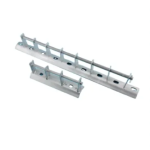
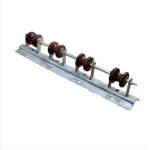
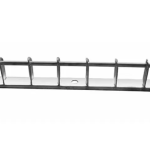
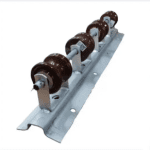
Description
Carrying the Secondary Conductors Down the Pole
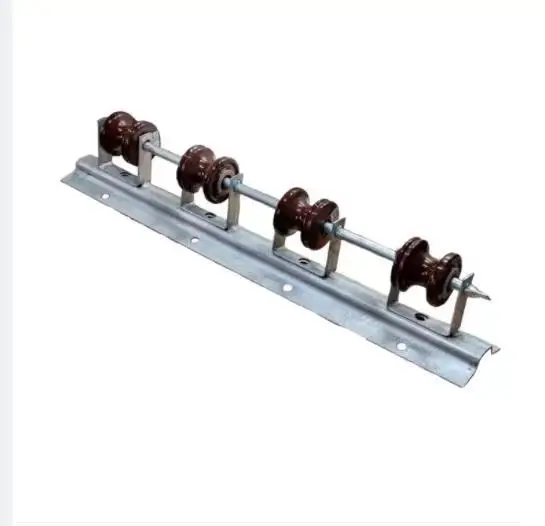
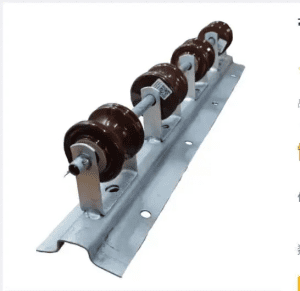
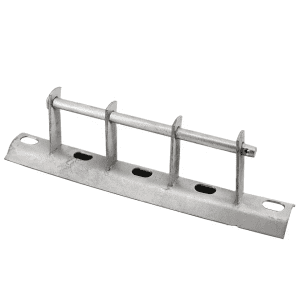
Below the primary line, the secondary and service conductors the lower-voltage wires that run to premises have to be carried on the pole too, spaced apart and insulated. Where the primary uses crossarms and pin or post insulators, the secondary commonly uses a tidier, more compact arrangement: a secondary rack. It’s a steel bracket that mounts vertically on the pole and holds a row of spool insulators, each carrying one secondary conductor, stacking the wires neatly down the pole instead of spreading them across an arm.
The rack is the holder; the spools are the insulators. Together they support the secondary conductors compactly and cheaply, which is why the rack-and-spool arrangement is the standard for secondary and service work. This page covers secondary racks: what they carry, how to pick the number of positions, and how they pair with the spools.
Rack and Spool: The Holder and the Insulator
It’s worth being clear on the two parts, because they’re searched and sold together and easily confused:
- Secondary rack (this page) the steel bracket that mounts to the pole and provides the positions (the holes/clevises) for the insulators. It’s structural it holds the spools and takes the conductor load into the pole.
- Spool insulators the insulators that sit in the rack’s positions, each carrying one secondary conductor tied into its groove. They do the insulating.
So a working secondary support is a rack + its spools: the rack provides the positions, a spool goes in each, a conductor on each spool. We supply the rack sized to take standard spools, with or without the spools fitted.
How Many Positions? Match to the Conductors
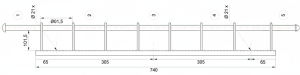
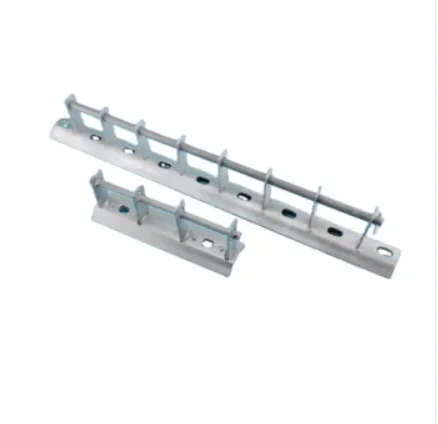
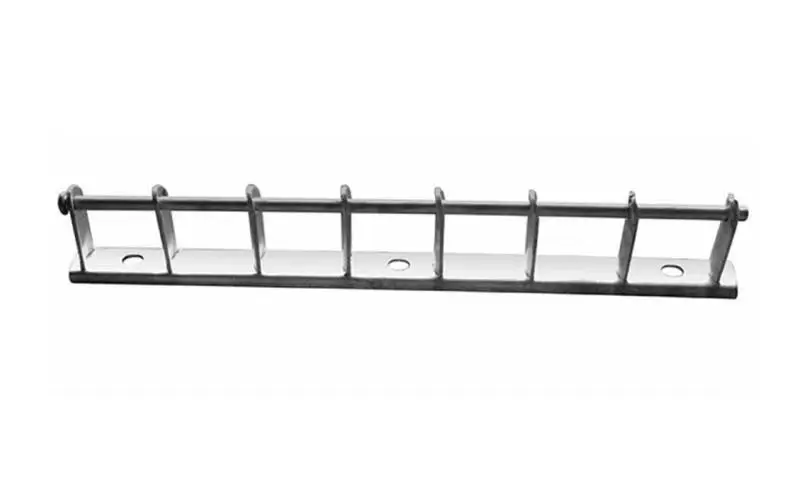
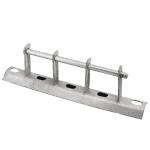
A secondary rack comes in a number of positions (ways) the image shows about six and you pick by how many conductors you’re carrying:
- A 2-way rack for two conductors, a 3-way for three, up to multi-way (6-way as shown) for more.
- The rack’s positions are spaced to keep the secondary conductors properly apart down the pole.
Match the number of positions to your secondary/service conductor count: a simple service drop may need only 2 or 3 ways; a fuller secondary may use more. Tell us how many conductors and we’ll supply the right rack.
Why Buyers Choose DAPENG Secondary Racks
- The positions you need: 2-way to multi-way (6-way shown), matched to your secondary/service conductor count.
- Sized for standard spools: The rack takes standard spool insulators, supplied with or without the spools.
- Compact, tidy secondary support: Stacks the conductors down the pole neatly, spaced to keep them apart the standard secondary arrangement.
- Hot-dip galvanized: Galvanized for outdoor life, matched to the pole hardware.
- Mounts to your pole: Bolted or banded to the pole with the mounting hardware.
Use-Case Deep Dive
Rack or crossarm for the secondary?
A secondary rack is the compact, economical way to carry secondary/service conductors it stacks them vertically down the pole on spools, taking little space and few parts. A crossarm spreads conductors horizontally and is more common for the primary or where the secondary is carried on an arm. For most secondary and service work, the rack is tidier and cheaper; for a horizontal secondary arrangement, an arm. Tell us the layout and we’ll advise.
How do I pick the number of ways?
By the number of secondary/service conductors: one position (spool) per conductor. Two conductors → 2-way, three → 3-way, and so on up to the multi-way racks. If you’re not sure, tell us the service (single-phase, three-phase-plus-neutral, etc.) and we’ll advise the position count.
Does it come with the spools?
Either way the rack takes standard spool insulators, and we can supply the rack with the spools fitted or without (if you’re using your own spools). Tell us which, and the spool size, and we’ll match them so the spools seat correctly in the rack’s positions.
Specifications and What They Mean for You
| Specification | What we supply | What it means for the buyer |
|---|---|---|
| Function | Holds spools for secondary conductors | Compact vertical secondary support |
| Positions | 2-way to multi-way | One per secondary conductor |
| Spool fit | Standard spools, with/without | Takes your spool insulators |
| Spacing | Keeps conductors apart | Proper secondary separation |
| Coating | HDG | Outdoor life, matched hardware |
| Mounting | Bolted/banded to pole | Mounts to your pole |
Straight Answers to Common Buyer Concerns
“How many ways do we need?” One position per secondary/service conductor 2-way for two conductors, 3-way for three, up to the multi-way racks (6-way as shown). Tell us the number of conductors (or the service type) and we’ll supply the right rack.
“Does the rack include the spool insulators?” It can we supply the rack with spools fitted or without, to take standard spool insulators. Tell us which you want and the spool size, and we’ll match them so the spools seat properly. The rack is the holder; the spools are the insulators.
“Can you supply it to mount on our poles?” Yes the rack mounts bolted or banded to the pole; send the pole and mounting you use and we supply the rack with the mounting hardware to fit.
Complete the Secondary
- Spool insulators the insulators the rack holds
- Drop wire clamps service-drop termination
- Pole bands and D brackets the pole mounting
- Steel cross arms the horizontal alternative
- Insulators the full insulator range
- Browse all pole line hardware and overhead line fittings
Get a Secondary-Matched Quote Within 24 Hours
Send the number of secondary/service conductors (or the service type), whether you want spools included, the spool size, the pole/mounting, and quantities. Our team confirms the rack positions, spool fit, and mounting, and returns a factory-direct quotation, typically within one working day.
After You Order
Positions, spool fit, and mounting confirmation before production, galvanizing documentation with shipment, racks matched to your spools and pole and kitted, and a contact who answers precisely because the secondary rack carries the service conductors down the pole, and getting the positions and the spool fit right is what supports them tidily and safely.