
Description
The Fitting That Anchors the Conductor Where the Line Ends or Turns
Where a line terminates, or turns through a heavy angle, or breaks into tensioned sections, the conductor stops running through and starts pulling away the full tension of the span concentrated at one point, delivered into the structure through the insulator string. The fitting that takes that load is the strain clamp (also called a tension clamp or dead-end clamp), and it is the most heavily loaded fitting on the structure.
“Strain clamp” is the family name. Within it are two main types, chosen by conductor and duty, and getting that choice right is what this page is for. Below: what a strain clamp does, how to pick the type your line needs, and how to size it.
Strain, Tension, Dead-End One Family, Several Names
First, the terminology, because it trips people up. Strain clamp, tension clamp, and dead-end clamp all name the same class of fitting: the one that anchors a conductor under full tension at a terminal or angle structure. Regional usage differs “strain clamp” is common in Commonwealth and IEC-standard networks; “dead-end” in North American usage but the job is identical.
Within the family, the types differ by how they grip:
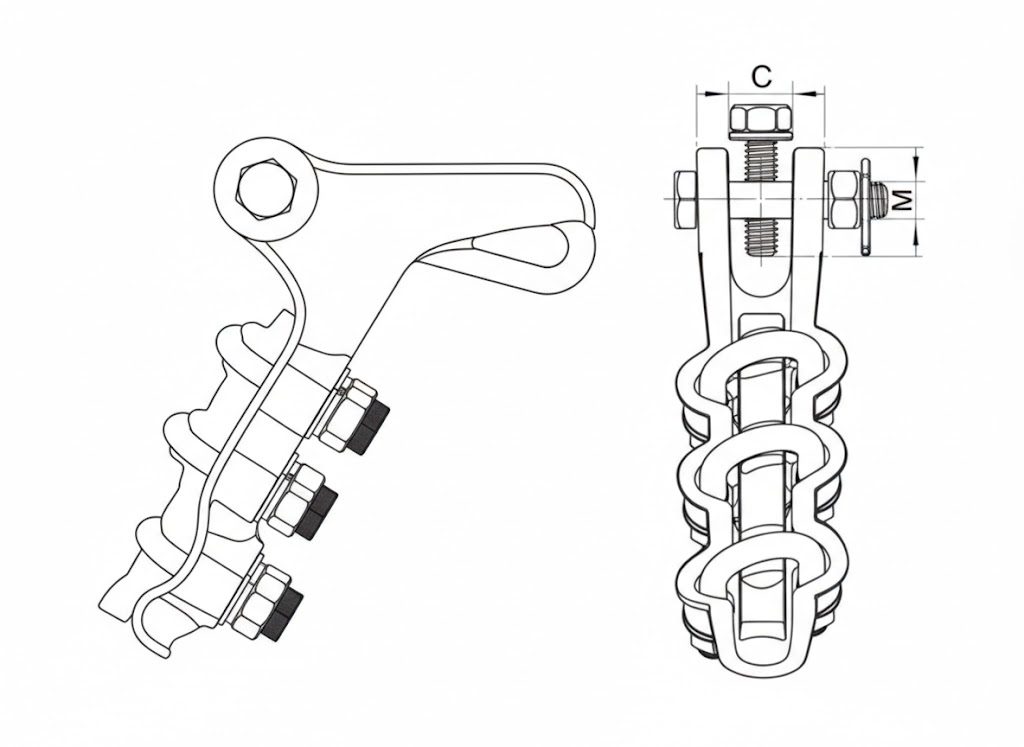
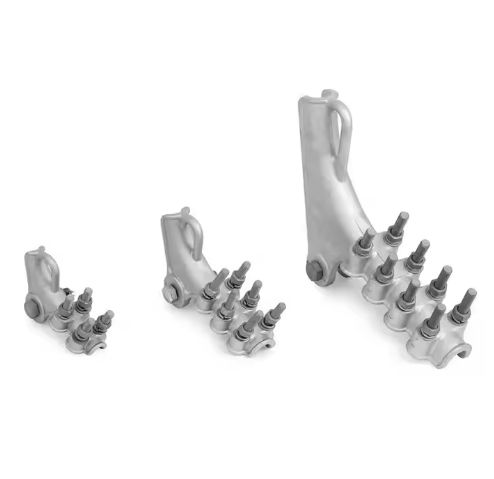
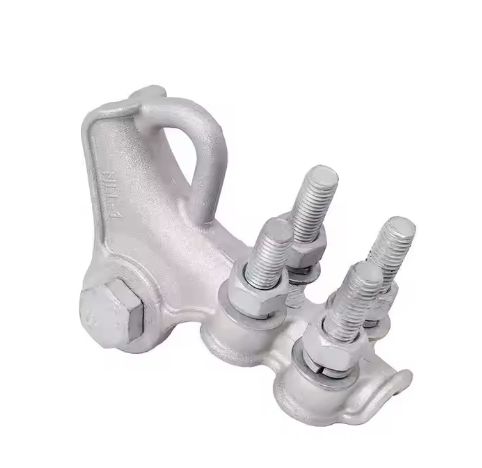
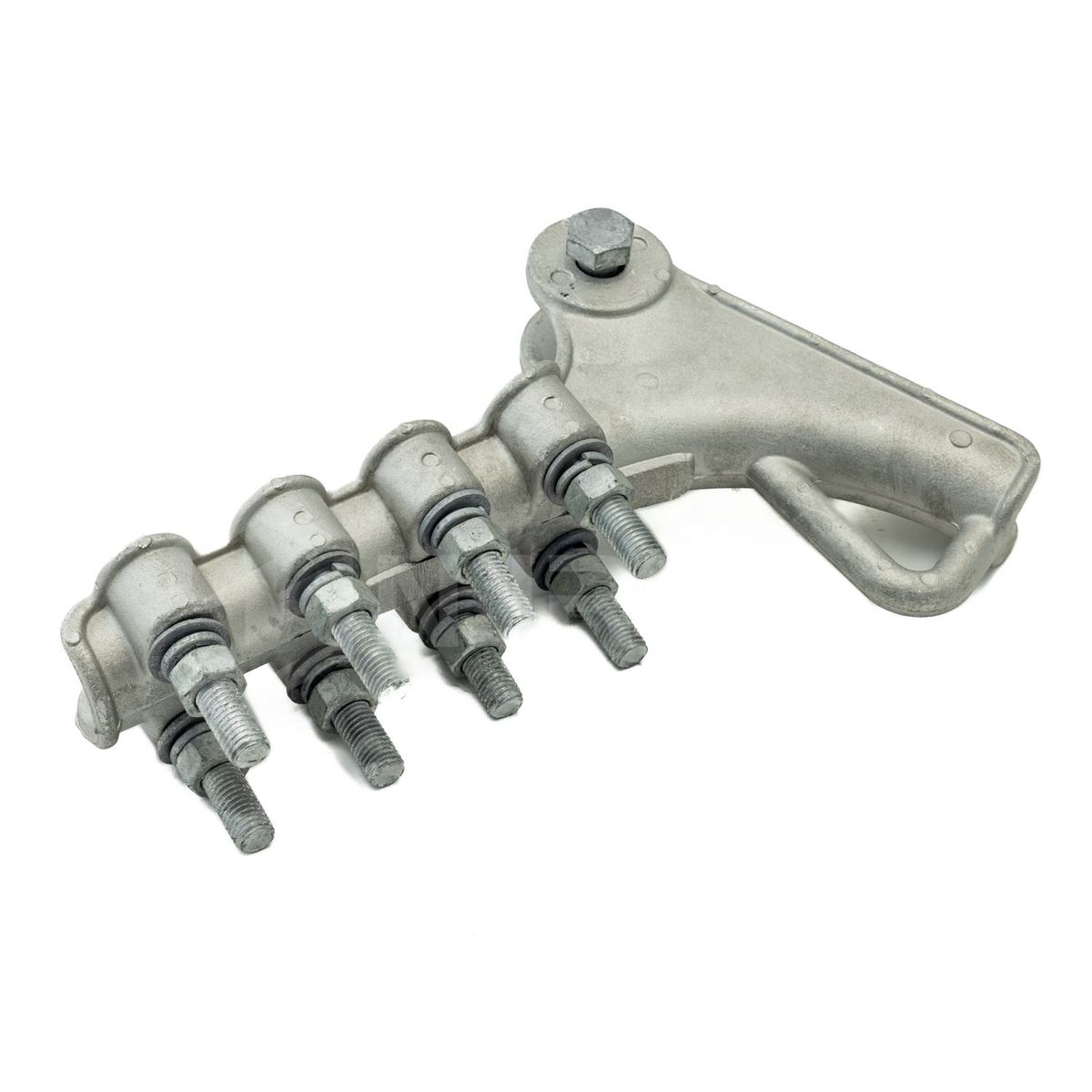
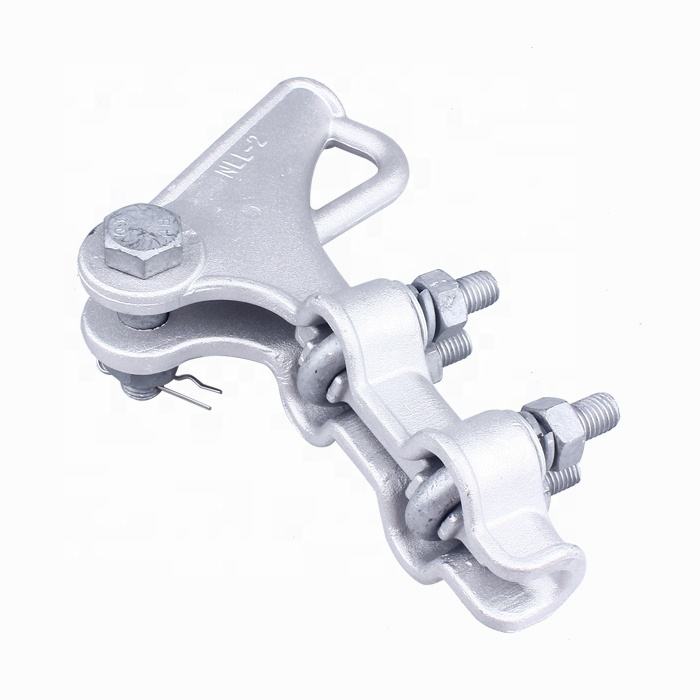
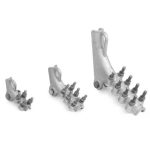
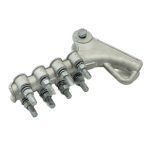
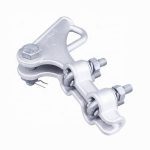
- Bolt type tension clamp (bolted pistol-grip) a bolted keeper grips the conductor. Re-openable, inspectable, re-torturable, hand-tool installable. Our NLL range covers conductors from 5.0 mm to 23.0 mm at rated failure loads from 40 kN to 90 kN.
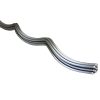
- Preformed tension clamp (helical dead-end) helical rods develop the conductor’s strength over a long grip length, bolt-free and vibration-friendly; the standard choice for OPGW and where a full-strength formed termination is wanted.
- Compression / other strain types for the heaviest transmission conductors, where a compression fitting develops full rated strength.
Choose by conductor type, the strength you must develop, whether the termination needs re-opening, and your utility’s standard. The rest of this page helps you decide.
Which Strain Clamp Type Do You Need?
| If your line is… | The type that usually fits | Why |
|---|---|---|
| Distribution / sub-transmission, bare conductor, needs inspecting or re-tensioning | Bolt type | Re-openable, hand-tool install, inspectable |
| OPGW, earth wire, or a full-strength bolt-free termination | Preformed | Develops conductor strength over length, no point load |
| Heaviest transmission conductors at full rated strength | Compression / other | Full-strength termination for large conductors |
| ADSS / dielectric cable | Anchoring clamp (wedge/preformed for cable) | Grips the sheath without crushing it |
The deciding factors are always the same four: conductor type, strength to develop, re-openability, and standard. Send the conductor and duty and we route you to the right type we make the family, so the recommendation is about fit, not about selling one product.
How to Size a Strain Clamp
Whichever type, the sizing logic is consistent:
- Conductor diameter find the clamp whose conductor range covers your conductor’s overall diameter.
- Rated failure load vs conductor strength the clamp’s RFL must exceed your conductor’s rated tensile strength by your standard’s margin. The termination should develop the conductor’s strength; the clamp must never be the weak point. On the bolt-type NLL range, for example, RFL climbs from 40 kN to 90 kN across the conductor bands for exactly this reason.
- String interface the clamp’s tongue or eye must mate with the coupling fittings of the insulator string above it.
Send the conductor (type, diameter, rated strength) and the design tension, and we confirm the type, the size, and the rating together.
Why Buyers Choose DAPENG Strain Clamps
- The whole family, one factory. Bolt-type, preformed, and compression strain clamps so the recommendation you get is the right type for your line, not the only type a supplier stocks.
- Grips that hold without damaging the conductor. Whether bolted or helical, the grip develops holding strength over a length rather than pinching at a point the difference between a termination that lasts and one that necks the conductor.
- Rated loads that are tested. RFL marked per type, batch load-tested, reports supplied, so the termination’s safety factor rests on tested figures.
- Hot-dip galvanized for the dead-end’s life. Galvanized steel components to ISO 1461 / ASTM A153 class coatings, at fittings that carry full tension permanently.
- Matched into the tension string. Strain clamps connect through the coupling fittings we make to matched load classes socket clevises, ball eyes (70-420 kN), U shackles (70-170 kN), yoke plates (100-600 kN) so the whole tension assembly comes matched and kitted.
Use-Case Deep Dive
Where are strain clamps used?
At dead-end (terminal) structures, where the line begins or ends and full one-sided tension is anchored; at heavy angle structures, where the conductor is effectively terminated and re-tensioned on each side of the turn; and at section points, where a long line is divided into tensioned sections. In each case the strain clamp delivers the span’s full tension into the structure through the insulator string. The type (bolt, preformed, compression) follows the conductor and standard the position is the same.
Bolt type or preformed the most common decision
For bare distribution and sub-transmission conductors where crews value a termination they can inspect and re-tension, the bolt type is the practical workhorse. For OPGW, earth wires, and full-strength bolt-free terminations, the preformed type is favored helical rods develop the strength over length with no point loading and better vibration behavior. If re-openability matters, bolt-type; if a formed full-strength termination is the goal, preformed. Send the conductor and duty and we confirm which.
How does the strain clamp connect to the structure?
Through the insulator string. A tension assembly runs: structure attachment → U shackle → ball eye → insulator string → socket clevis → strain clamp → conductor. On twin-string or bundled dead-ends, a yoke plate distributes the load. The clamp’s tongue or eye must match the coupling below the string send the drawing and every connection is confirmed in matched class before production.
Specifications and What They Mean for You
| Specification | What we supply | What it means for the buyer |
|---|---|---|
| Types | Bolt-type, preformed, compression | The right dead-end for your conductor and duty |
| Conductor range | Bolt-type NLL 5.0-23.0 mm; others to conductor | Matched to your conductor across the family |
| Rated failure loads | NLL 40–90 kN; higher classes by type | Set above conductor rated strength with your margin |
| Coating | HDG to ISO 1461 / ASTM A153 class | Decades at a full-tension dead-end |
| String interface | Tongue/eye to your coupling fittings | Matches into the insulator string cleanly |
| Verification | Batch load testing, reports supplied | Termination safety factor on tested figures |
Straight Answers to Common Buyer Concerns
“Strain clamp, tension clamp, dead-end are these different products?” No, they’re regional names for the same class of fitting: the one that anchors a conductor under full tension. What differs is the type within that class bolt, preformed, or compression chosen by your conductor and standard. Tell us the conductor and duty and we’ll name the exact type you need; the terminology varies, the engineering doesn’t.
“How do we know it will hold the full span tension?” Match the rated failure load to your conductor’s rated strength with your standard’s margin the family’s ranges and our engineers make that straightforward and verify on tested figures: RFL is batch-verified with reports supplied, third-party inspection welcome. The termination is designed to develop the conductor’s strength, and the clamp’s rating is the number that proves it.
“Can you supply the whole tension assembly?” Yes, the strain clamp is one end of a matched-class assembly (coupling fittings, insulators, yoke plates on multi-string), and we quote and kit the whole thing per structure so nothing in the load path is mismatched. Send the assembly drawing and it comes back as a complete tension structure.
Complete the Tension Assembly
- Bolt type tension clamps – the bolted pistol-grip dead-end (NLL series)
- Preformed tension clamps – the helical dead-end, and the OPGW choice
- Anchoring clamps – the wedge/preformed dead-end for ADSS and jacketed cable
- Socket clevises, ball eyes, U shackles, yoke plates – the string couplings above the clamp
- Suspension clamps – the tangent-structure counterpart
- Stockbridge dampers – vibration control on the spans the dead-end anchors
- Browse all overhead line fittings and pole line hardware
Get a Conductor-Matched Quote Within 24 Hours
Send your conductor schedule types, diameters, rated strengths the design tensions, and the count of dead-end and angle structures. Our engineers confirm the strain clamp type and rating against your conductors, route you to bolt-type or preformed as the duty requires, and return a factory-direct quotation with the string couplings quoted alongside, typically within one working day.
After You Order
Confirmation of type and rating before production, batch load-test reports and galvanizing certificates with shipment, clamps kitted with their string couplings per structure, and engineering support that stays reachable through stringing because dead-ends are where a line’s tension lives, and the termination choice shouldn’t be a guess.