

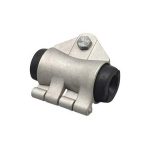
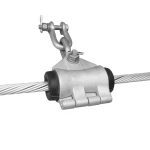
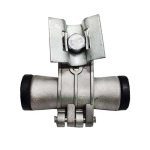
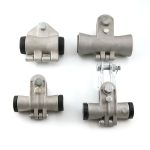
Description
Why Do Conductors Break at the Suspension Point, and What Prevents It?
Walk a line inspection report and one location repeats: the suspension clamp. Not the span, not the dead end, the tangent support, where the cable is held while the wind works on it. Aeolian vibration sends millions of small bending cycles into the cable each season, and every one of them concentrates in the few centimetres where a bolted clamp grips: a hard metal mouth, a tight exit radius, and a short contact length carrying it all.
Strands crack there first. On ADSS cable, the dielectric sheath abrades and eventually tracks there first. It is the most predictable failure location on an overhead line, which means it is also the most preventable.
Armor grip suspension is the assembly engineered to prevent it. If your tangent-structure specification asks how to support a conductor or ADSS cable without creating a fatigue point, this is the answer, and the mechanism below is the reason it works.
What Is an Armor Grip Suspension Assembly?
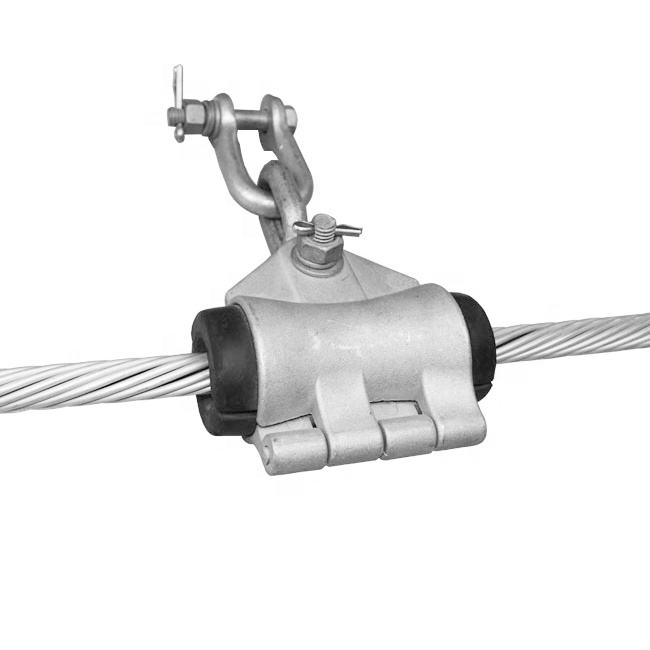
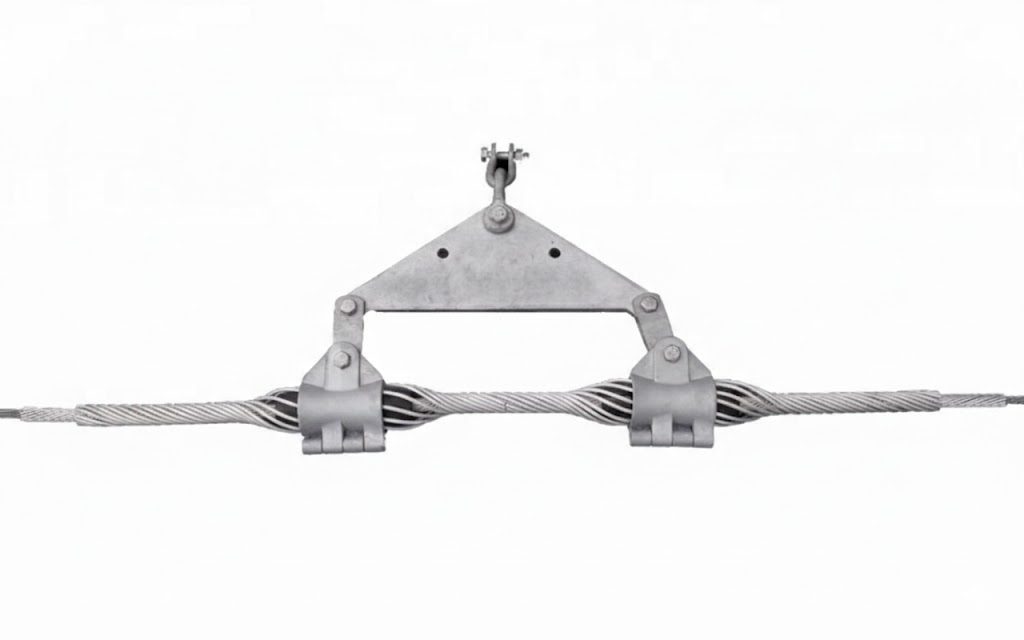
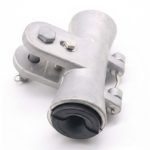
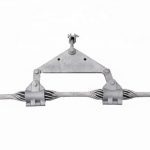
An armor grip suspension is a preformed suspension system in which helical rods are wrapped around the cable at the support point, an elastomer insert cushions the rods inside a metal housing, and a keeper closes the housing to the structure attachment. Instead of clamping the cable at one short metal contact, it distributes support over a long length, damps movement, and lets the cable leave the support on a large, gentle radius.
Three components, three cooperating jobs:
- The helical rods – formed wire rods applied around the cable, spreading grip and reinforcing the cable exactly where the bending happens. They increase the effective cross-section at the support and take the abrasion the cable would otherwise take.
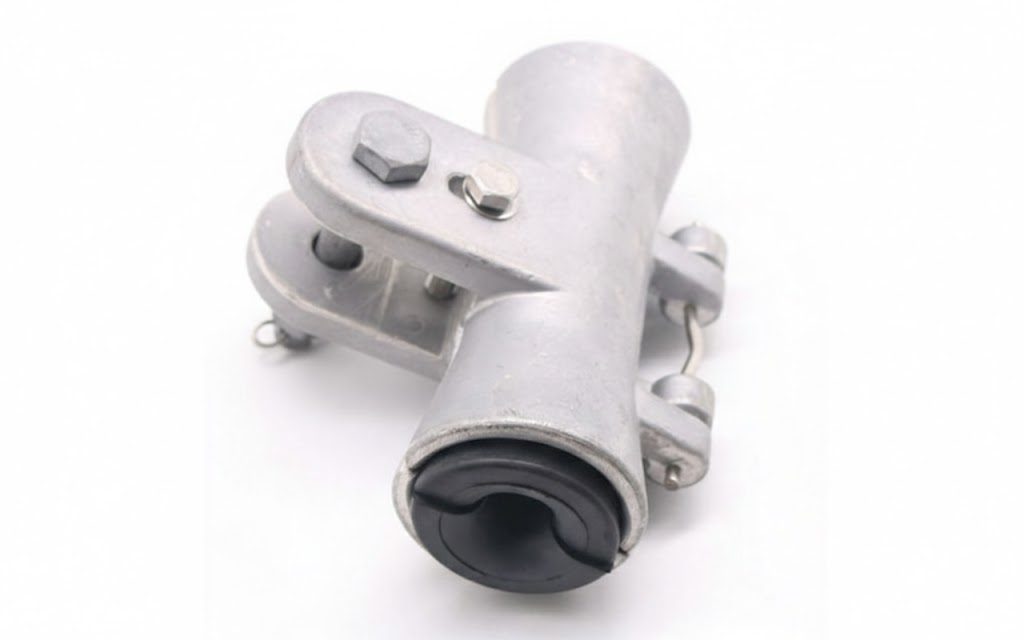
- The elastomer insert – a resilient sleeve (commonly neoprene-class rubber) seated between rods and housing. It cushions the grip, absorbs vibration energy at the support, and prevents metal from ever touching the cable.
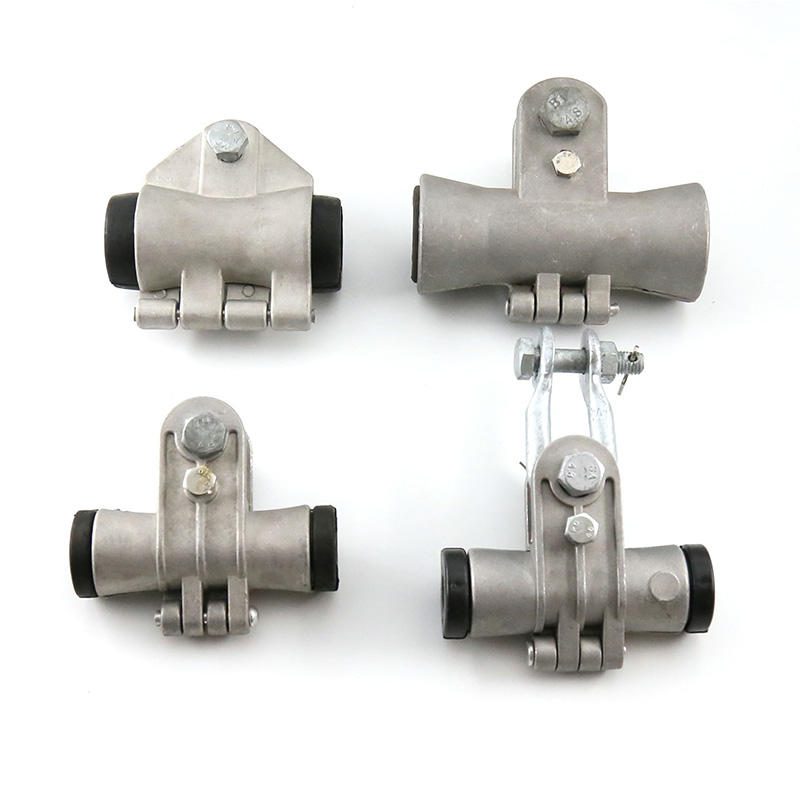
- The housing and keeper – the metal body that carries the assembly’s load into the structure via your standard attachment: ball-and-socket, clevis, U-bolt, or eye, depending on the insulator string above it.
The result is a suspension that holds firmly enough to resist longitudinal movement, softly enough to protect the cable, and long enough that no single point takes the whole bending duty.
Why Buyers Choose DAPENG Armor Grip Suspension
- Fatigue moved out of the equation, not managed within it. Load spread across the rod length and a bending radius set by geometry rather than by a clamp edge, the difference between a support that ages the cable and one that protects it.
- Damping at the point that needs it most. The elastomer insert absorbs vibration energy right at the structure, complementing (never replacing) the span’s Stockbridge or spiral dampers. Support damping and span damping do different jobs; a well-specified line has both.
- Right for dielectric cable. ADSS sheaths cannot be point-clamped without long-term consequences. Distributed, cushioned support is why armour grip assemblies are standard practice at ADSS tangent structures rather than an upgrade option.
- Matched to your cable, exactly. Rod sets are diameter-specific, a rod set for a neighbouring cable size is not “close enough,” it is a wrong part. Send the cable datasheet (diameter, construction, sheath type) and the assembly is confirmed against it in writing before production.
- Supplied with the whole tangent structure kit. Assemblies ship alongside the ball eyes, socket clevises, U shackles, yoke plates, and insulators of the same structure, one drawing review, one container, one accountable supplier.
Use-Case Deep Dive
Do I need armor grip suspension, or is a standard suspension clamp enough?
Both are correct answers in different places, and we manufacture both, so here is the honest split.
Specify armour grip suspension when: the cable is ADSS or another dielectric/jacketed type; the span is long or wind-exposed; the line crosses open, flat, or water terrain where Aeolian vibration is severe; the conductor is one whose fatigue history you already know; or the utility standard calls for reinforced tangent support.
A conventional aluminium suspension clamp is the right, more economical tool when: spans are short and sheltered; the line is distribution-class with modest tension; or the utility standard specifies it. Dapeng’s aluminium suspension clamp range covers conductors from 5.1 mm to 28.0 mm, for a great many distribution structures it is exactly the correct part, and specifying an armour grip assembly instead would add cost without adding protection.
Send the span schedule, conductor data, and terrain description; the recommendation comes back per structure class, including where the cheaper part is the better engineering.
Can armor grip suspension be used on ADSS cable?
Yes, and on dielectric cable it is the preferred practice rather than an option. An ADSS sheath is a polymer carrying its own aramid strength members; a hard metal clamp mouth compresses it, and compression plus long-term vibration is how sheath damage and fibre attenuation begin. The armour grip assembly distributes the support across the rod length and isolates the sheath from metal entirely with the elastomer insert.
Specify it alongside the rest of the ADSS route hardware: anchoring clamps at tension points (Dapeng’s PAL series covers 10–150 mm² cross-sections with messenger diameters from 5 to 18 mm and breaking loads from 10 to 15 kN; the PA series covers 4–15 mm cable diameters at 2.5–10 kN), spiral vibration dampers on exposed spans, down lead clamps at splice structures, and junction boxes where the fibre terminates.
How do I select and order the right assembly?
Four inputs, and only four:
- Cable diameter and construction – from the datasheet, not from memory. This fixes the rod set.
- Cable type – dielectric ADSS, OPGW, or bare conductor. This fixes the insert and housing specification.
- Structure attachment – ball-and-socket size, clevis, U-bolt, or eye, taken from the insulator string above. Dapeng’s ball-and-socket couplings run in standard designated sizes (16, 20, 24, 28 mm) across the ball eye and socket clevis ranges, with rated failing loads from 70 kN to 420 kN, quote the size your insulators use and the whole string matches.
- Span and terrain data – which tells us whether the structure also needs span damping, and how many dampers per span end.
Send those four and the quotation returns as a per-structure assembly list rather than a line item, with any mismatch in your existing bill of materials flagged before production.
Specifications and What They Mean for You
| Specification | What it means for the buyer |
|---|---|
| Helical rod set, cable-diameter specific | Support spread over length; the cable reinforced where it bends |
| Elastomer insert (neoprene-class) | Metal never touches cable; vibration damped at the support |
| Housing and keeper, corrosion-protected | Decades outdoors at the one point on the span that carries every cycle |
| Structure attachment: ball-socket / clevis / U-bolt / eye | Mates with the insulator string you already specified |
| Rated slip and failure loads | Longitudinal restraint and safety factors on tested numbers |
| Cable compatibility: ADSS, OPGW, bare conductor variants | The insert and rod set suit the surface they hold |
A note on this table: We publish rated loads and size ranges only from factory test data, never indicative figures copied from another supplier’s catalogue. Send the spec sheet and this table becomes the most useful page on the topic in your markets; publish it half-guessed and it becomes the reason an engineer stops trusting the other ninety pages.
Straight Answers to Common Buyer Concerns
“Is this worth the premium over a plain suspension clamp?” Where fatigue duty is real, long spans, exposed terrain, dielectric cable, yes, decisively: the assembly costs a fraction of one conductor repair, and the repair happens at height on an energised line. Where fatigue duty is light, no, and we will tell you so and quote the simpler clamp instead. Any supplier who recommends the premium part for every structure is quoting a catalogue, not reading your line.
“How do I verify quality on an assembly with three different materials?” Component by component: metal coating class checkable with a gauge on arrival, elastomer samples available for your own aging and hardness assessment, rod-set dimensions measurable against the confirmation drawing, and batch test reports supplied with shipment. Third-party pre-shipment inspection (SGS/BV or your nominated agency) is welcome at the factory before dispatch.
“Our line already has dampers. Do we still need cushioned suspension?” They solve the same problem at different places. Span dampers absorb vibration energy travelling along the span; the suspension assembly protects the cable at the support where that energy concentrates into bending. Well-specified lines carry both, and if your span damping is already correctly placed, that is an argument for matching the support hardware to it, not for skipping it.
Complete the Tangent Structure
- Suspension clamps – the conventional aluminium alloy range, 5.1–28.0 mm conductors
- Ball eyes, socket clevises, U shackles, yoke plates – the string above the clamp
- Stockbridge and spiral vibration dampers – span-end vibration control
- Anchoring clamps and preformed tension clamps – the tension structures on the same route
- Browse all ADSS/OPGW fittings and overhead line fittings
Get a Per-Structure Quote Within 24 Hours
Send the cable datasheet, insulator coupling size, span schedule, and structure counts. Our engineers confirm the assembly against your cable, flag any coupling mismatch in your existing bill of materials, and return a factory-direct quotation, typically within one working day, with the string hardware and span dampers quoted alongside if you want the structure as one kit.
After You Order
Confirmation drawings before production, batch test reports and coating certificates with shipment, assemblies kitted per structure so a crew carries one bag up one tower, and engineering support that stays reachable through stringing, because suspension questions arrive with the conductor, not with office hours.