All Blog
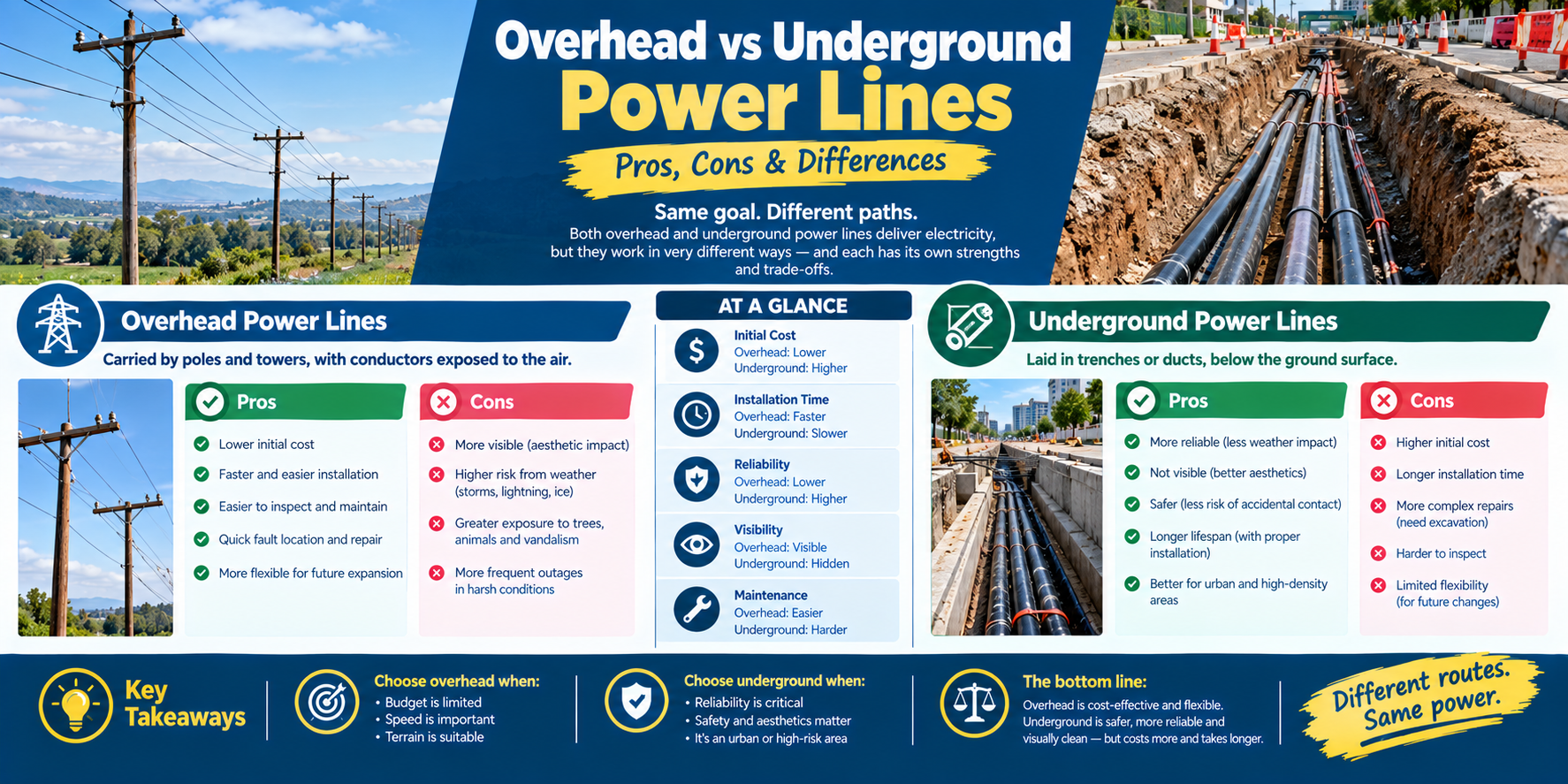
Overhead vs Underground Power Lines: Pros, Cons & Differences Overhead power lines run on poles and towers above ground; underground lines are buried cables. Overhead

Overhead vs Underground Power Lines: Pros, Cons & Differences Overhead power lines run on poles and towers above ground; underground lines are buried cables. Overhead
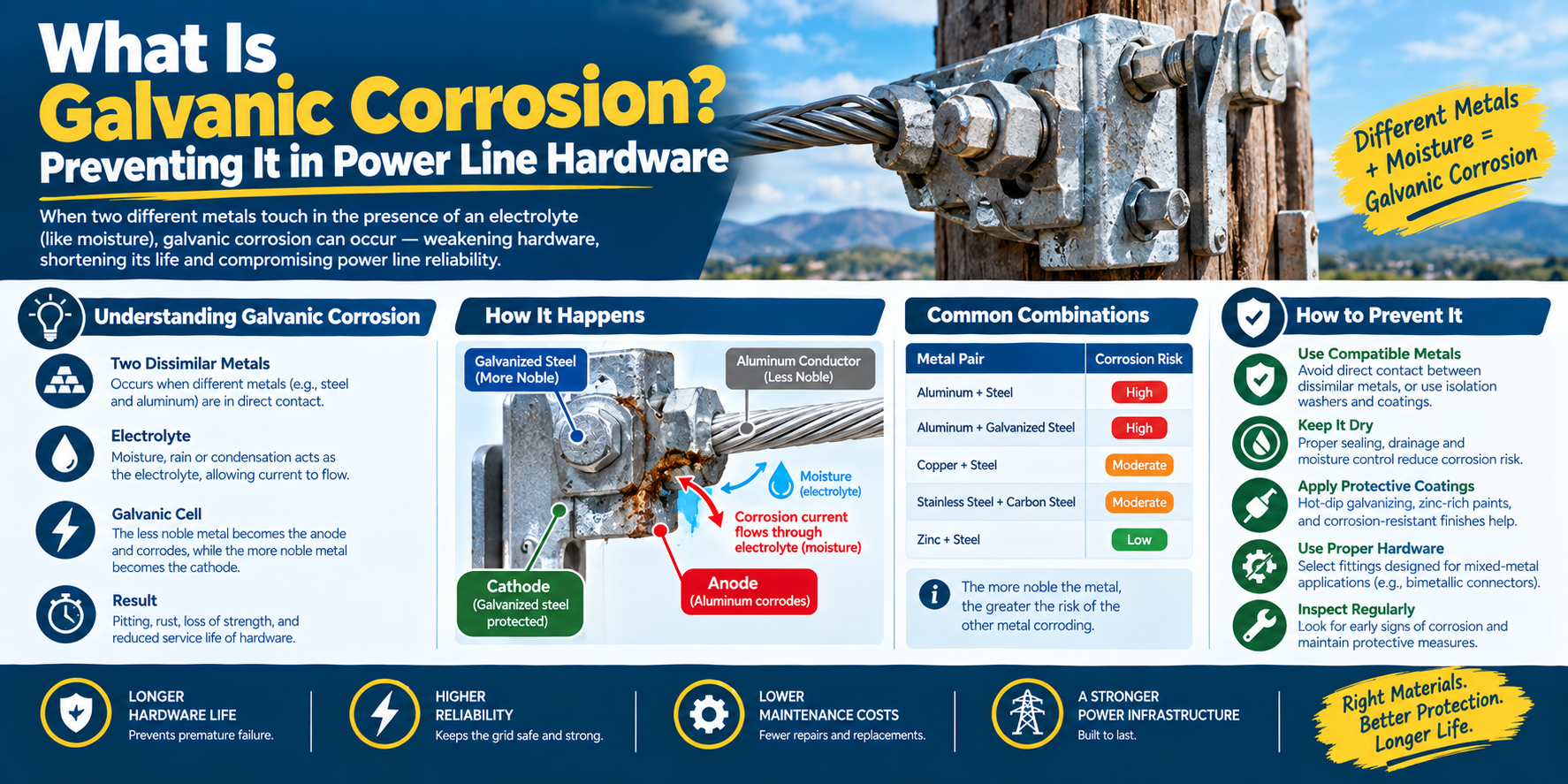
What Is Galvanic Corrosion? Preventing It in Power Line Hardware Galvanic corrosion happens when two dissimilar metals are in electrical contact in the presence of
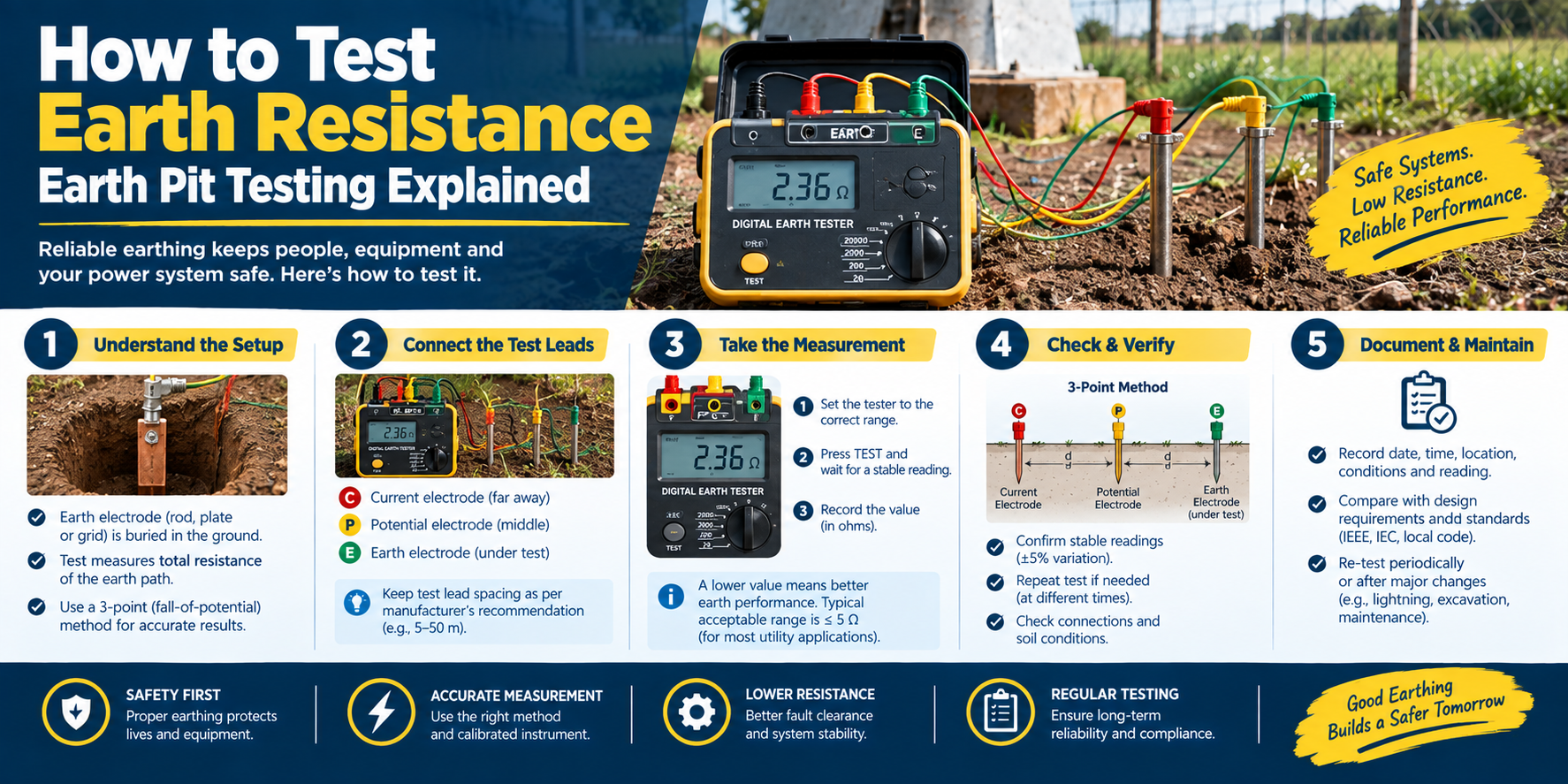
How to Test Earth Resistance: Earth Pit Testing Explained To test earth resistance, use an earth resistance tester (earth megger) with the fall-of-potential method: disconnect
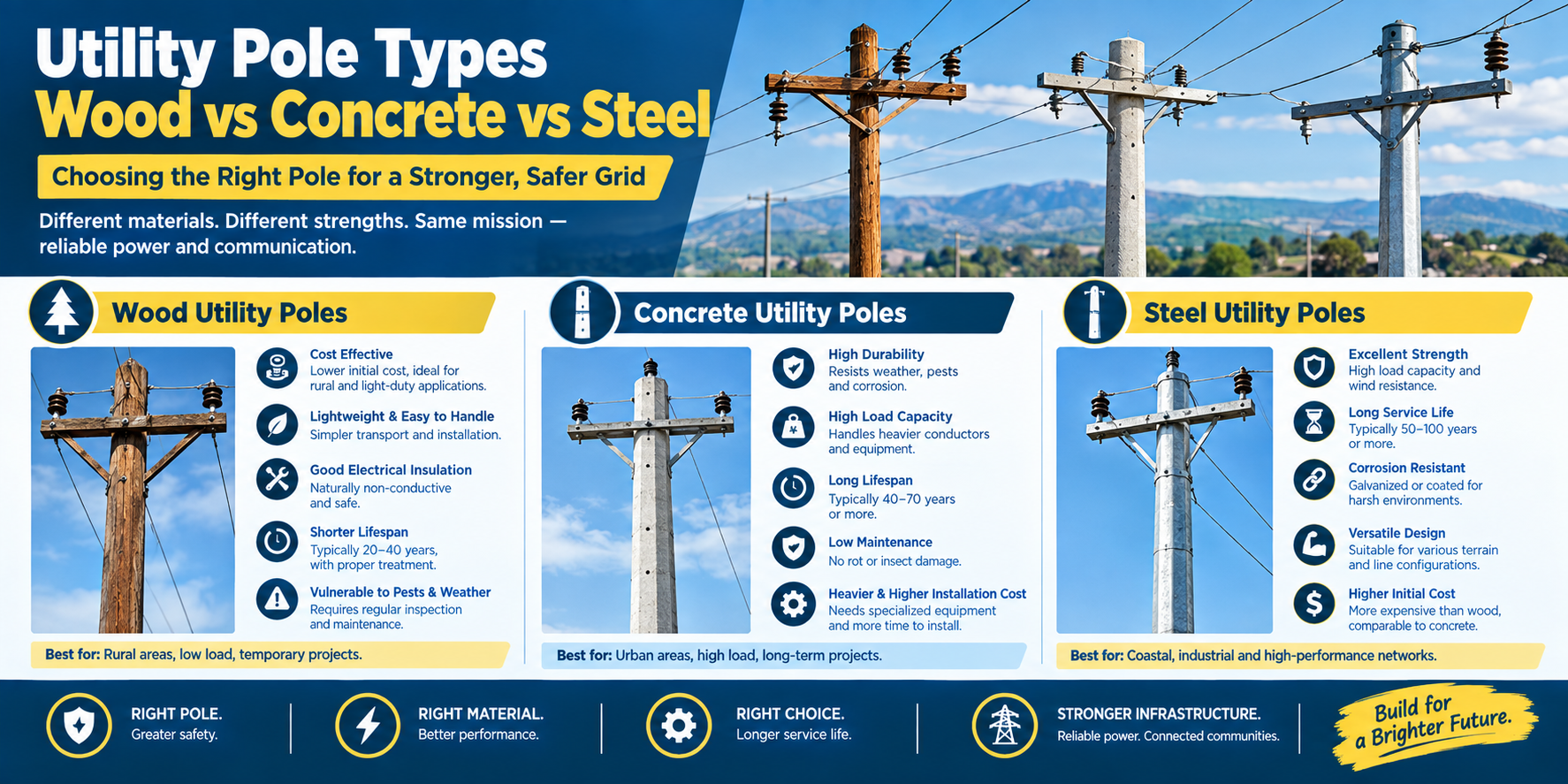
Utility Pole Types: Wood vs Concrete vs Steel The main utility pole types are wood (traditional, economical, easy to work with but needs treatment and
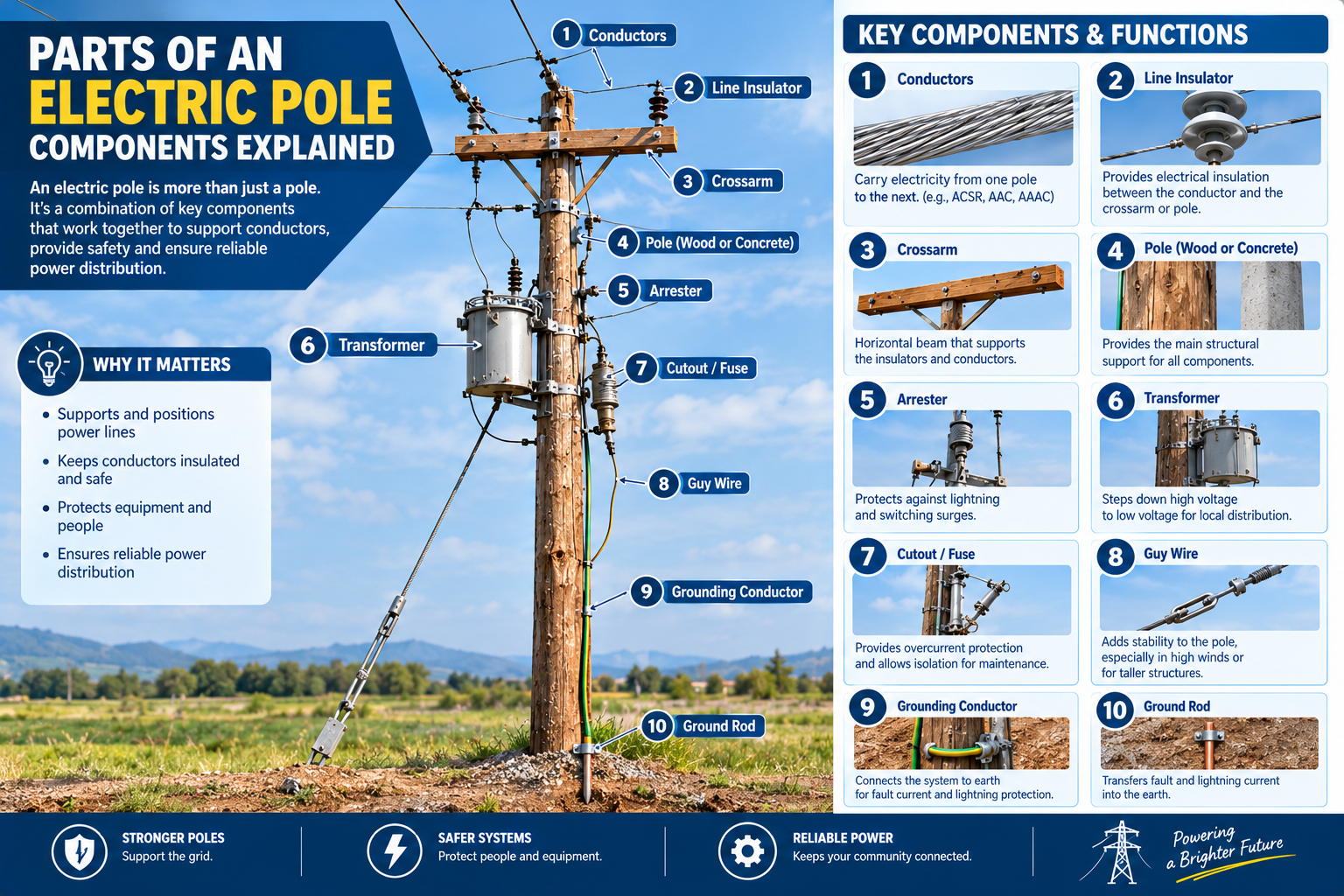
Parts of an Electric Pole: Components Explained The main parts of an electric (utility) pole are the pole itself, the crossarm that holds the conductors
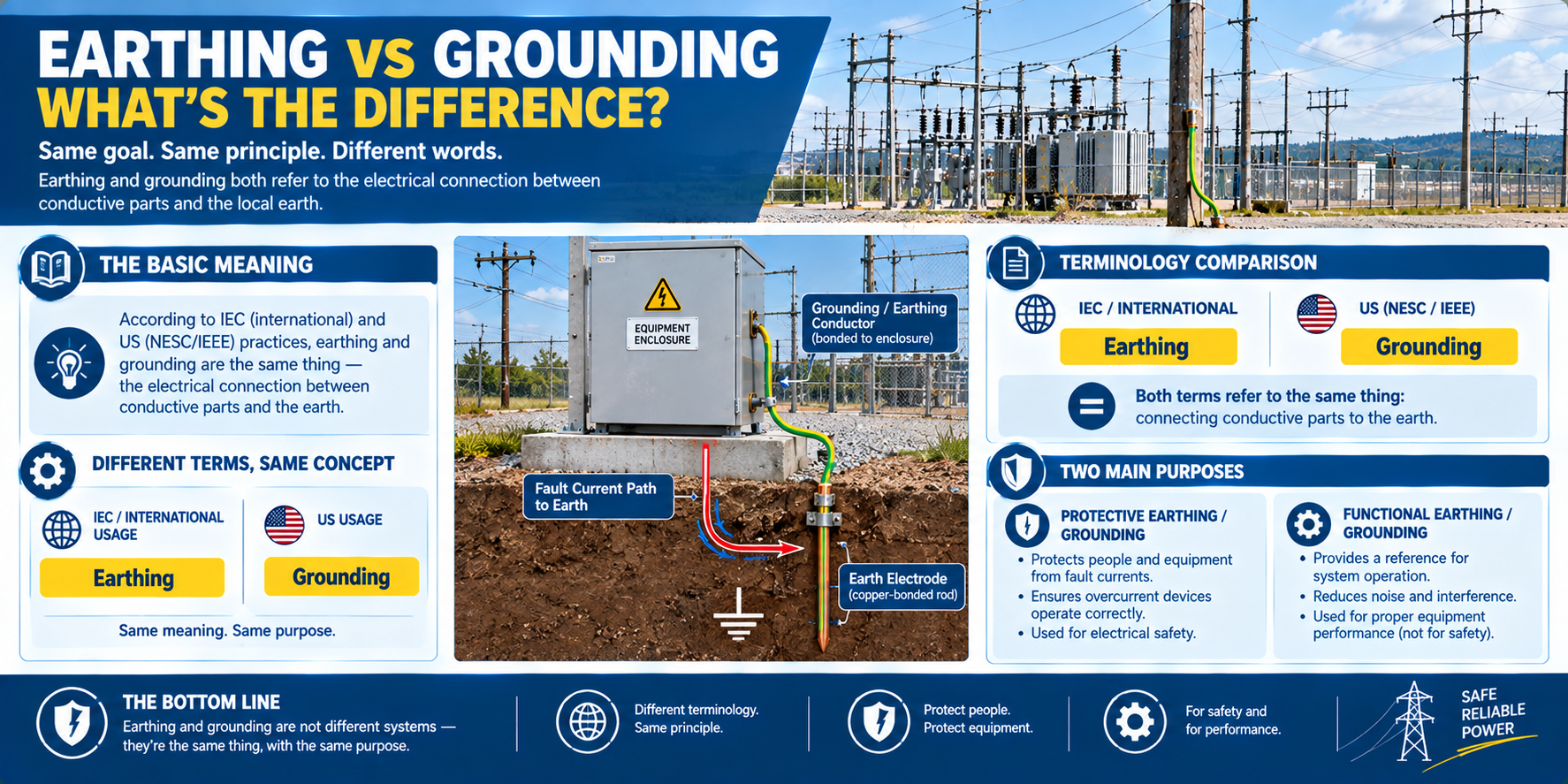
Earthing vs Grounding: What’s the Difference? Earthing and grounding refer to essentially the same thing, connecting electrical systems and equipment to the earth for safety,
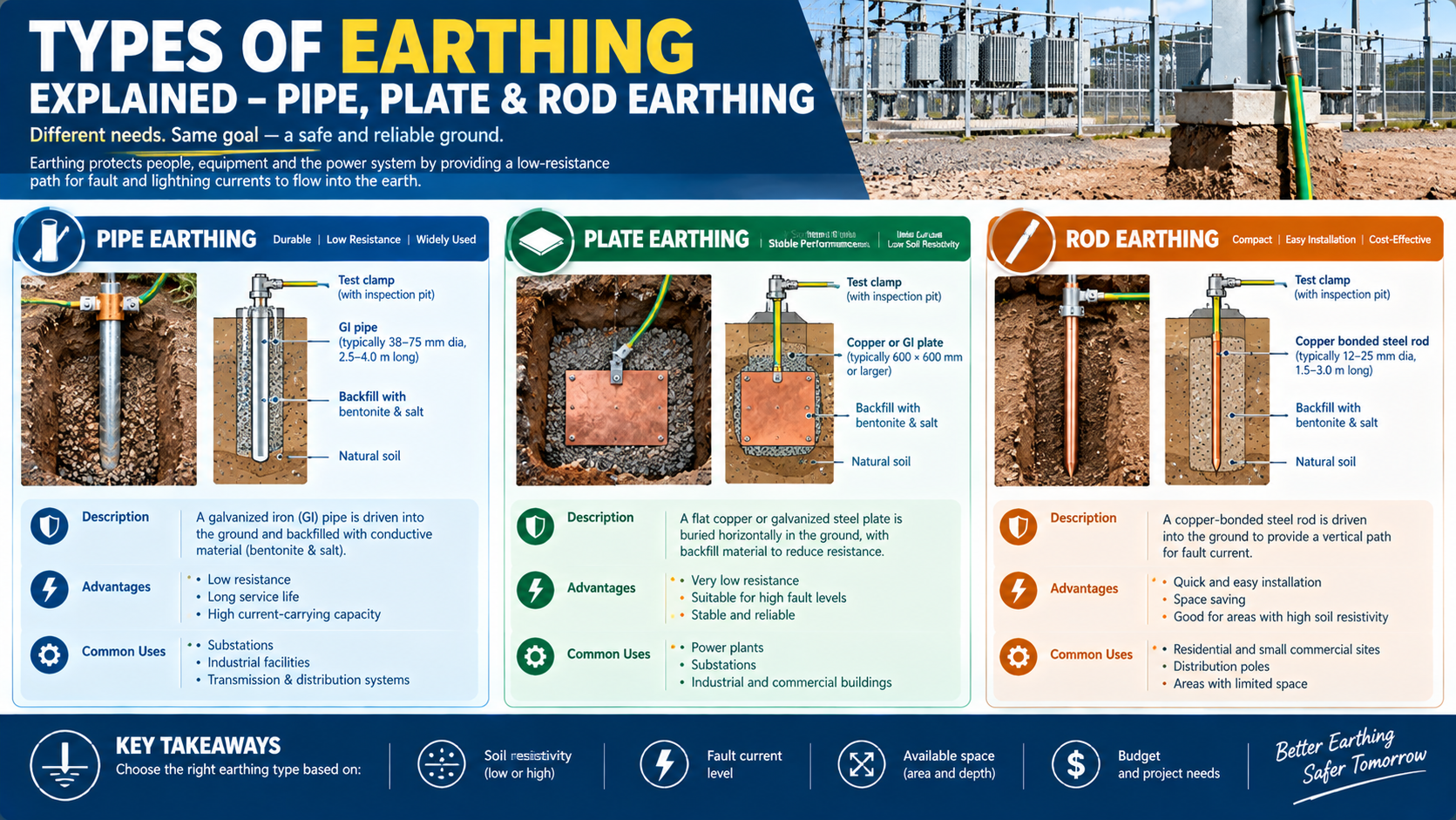
Types of Earthing Explained: Pipe, Plate & Rod Earthing The main types of earthing are pipe earthing (a GI pipe buried vertically), plate earthing (a
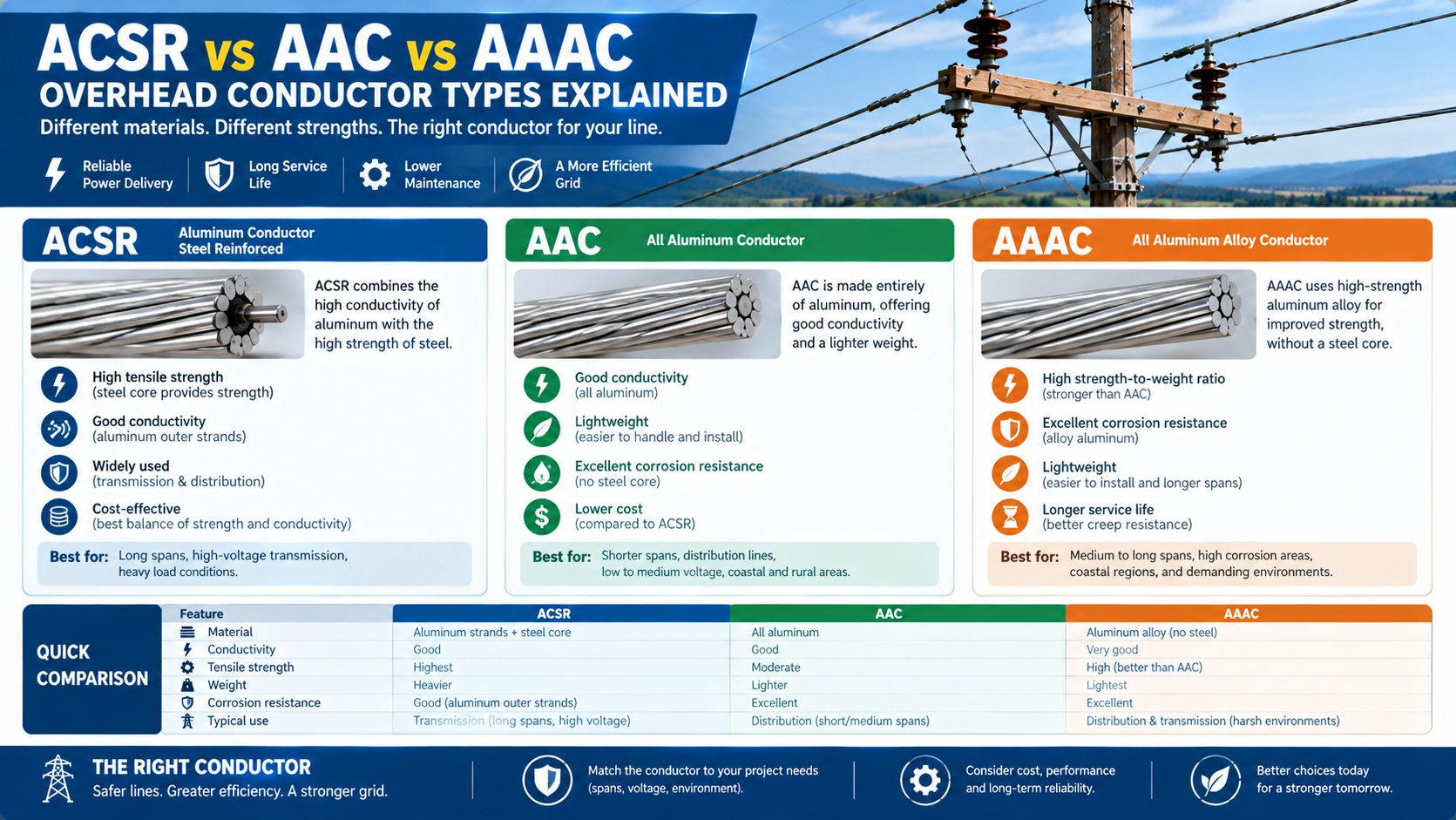
ACSR vs AAC vs AAAC: Overhead Conductor Types Explained ACSR (Aluminum Conductor Steel Reinforced) has aluminum strands around a steel core, giving high strength for
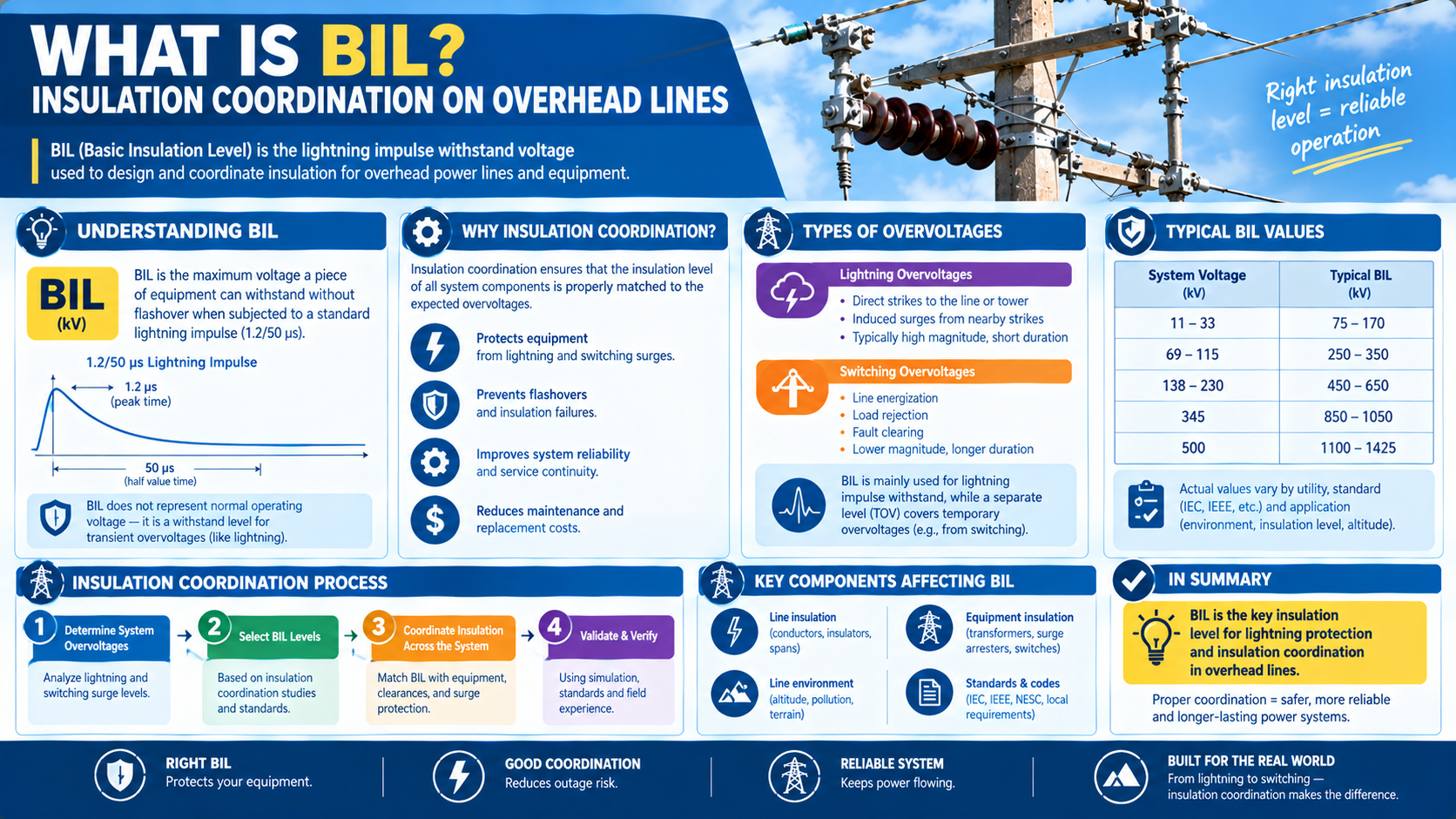
What Is BIL? Insulation Coordination on Overhead Lines BIL stands for Basic Insulation Level, the standard lightning-impulse voltage that insulation is designed to withstand without
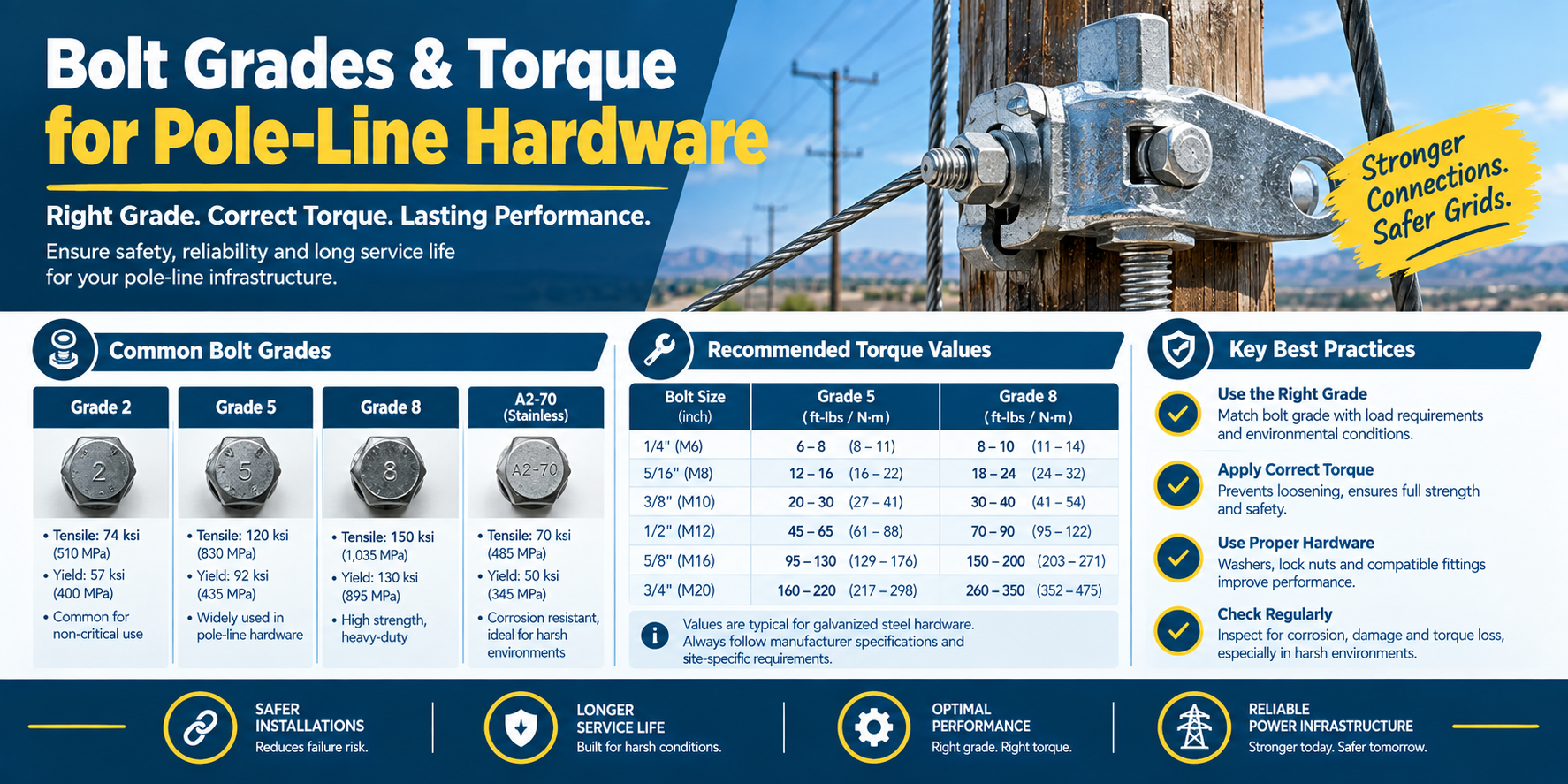
Bolt Grades & Torque for Pole-Line Hardware A bolt’s grade (or property class) tells you its strength how much tension and shear it can carry.