Description
The Long-Life, High-Conductivity Earth Electrode
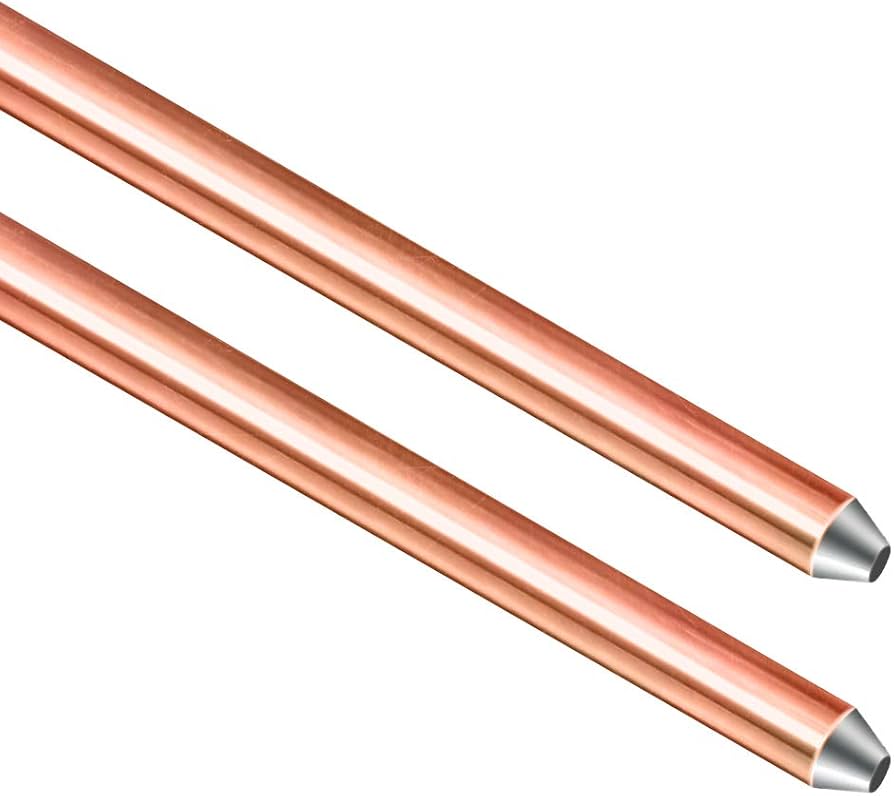
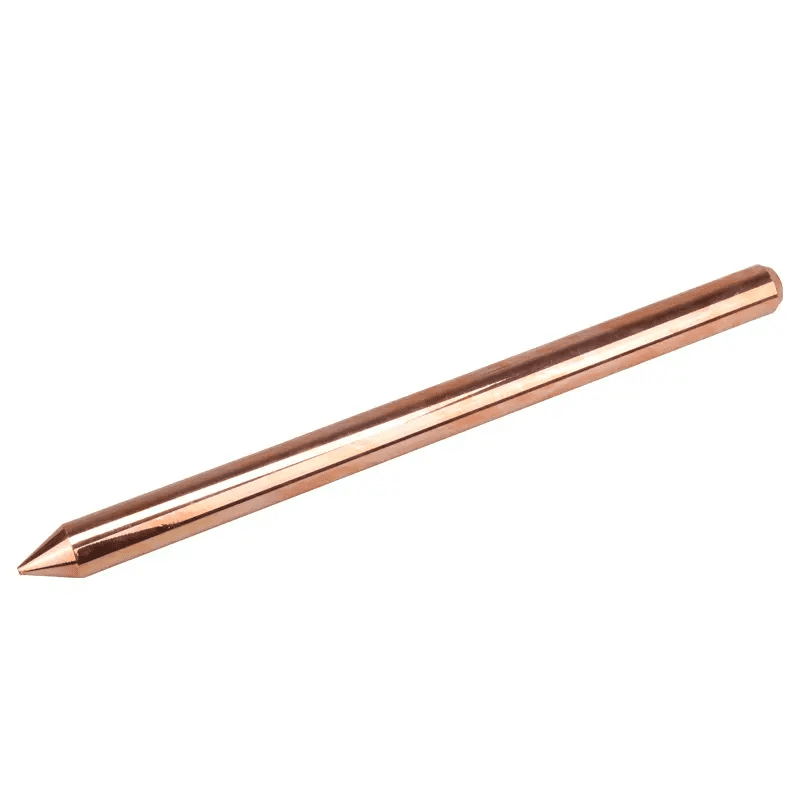
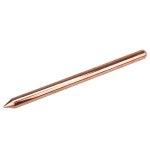
Where an earthing installation needs the longest service life and the best conductivity a long-design-life asset, aggressive soil, or a standard that demands it the copper grounding rod is the premium choice. It’s a copper-bonded steel rod: a steel core that gives the strength to drive, wrapped in a copper layer that carries current well and resists corrosion far longer than bare or galvanized steel. You get the drivability of steel, the earthing performance, and the longevity of copper in one electrode.
That combination is why copper-bonded rods are specified for the earths that have to last: substations, important structures, aggressive-soil sites, and anywhere the design life outruns what a galvanized rod would give. This page covers copper grounding rods, why copper lasts, the grade distinction that determines quality, and how to choose between copper and HDG.
Why Copper: Conductivity and Corrosion Life
Copper earns the premium for two reasons:
- Conductivity copper carries fault and lightning current better than steel, so a copper rod makes an efficient electrode.
- Corrosion life copper is far more corrosion-resistant in soil than steel, so a copper-bonded rod lasts much longer than a galvanized one before the electrode degrades. In aggressive soils especially, where a galvanized coat would be consumed relatively quickly, copper’s resistance is decisive.
The copper does the earthing work and the surviving; the steel core does the driving. For the earths that must last decades, that’s why copper is chosen.
The Grade That Determines Quality: Bonded vs Plated
Here is the point that matters most on a copper ground rod, and the one buyers get burned on so we’re explicit about it:
Not all “copper” rods are equal. The copper’s thickness and how it’s applied determine the rod’s real service life:
- Copper-bonded (copper-clad): a thick copper layer molecularly bonded to the steel the industry standard is a substantial copper thickness (commonly around 250 µm / 0.010″ to UL 467). This is the genuine long-life copper rod.
- Copper-electroplated: a thin electroplated copper flash much thinner, not bonded the same way. It looks similar but the thin plating wears and corrodes through far sooner, exposing the steel and shortening the rod’s life dramatically. It is a different, cheaper, shorter-lived product.
A rod’s longevity claim only holds if the copper is genuinely bonded and thick enough. So the specification to pin down is the copper thickness and bonding method not just “copper.” We state our rod’s actual copper grade and thickness, and we don’t claim a bonded/UL-467 rod unless that’s what it is.
Copper or HDG? The Honest Choice
The earthing-rod decision is copper versus HDG (galvanized steel):
- Copper grounding rod longest life, best conductivity, at a higher cost. Best for long-design-life installations, aggressive soils, high-conductivity requirements, or where the standard specifies copper.
- HDG grounding rod economical, good service life from a heavy zinc coat, strong and easy to drive. Best where galvanized steel meets the required life and the budget matters which is many installations.
Choose copper where longevity or conductivity or the standard demands it; HDG where galvanized serves at lower cost. We make both and advise honestly by your design life, soil, budget, and standard. (For the full comparison, see our copper-vs-galvanized ground rod guide.)
Why Buyers Choose DAPENG Copper Grounding Rods
- Long life and high conductivity: The copper layer carries current well and resists corrosion for a long service life the premium earth electrode.
- Honestly graded: We state the actual copper thickness and bonding method bonded vs the exact figure rather than blur it, so you know the real service life you’re buying.
- Steel core to drive: A steel core gives the strength to drive the rod cleanly, with a pointed tip.
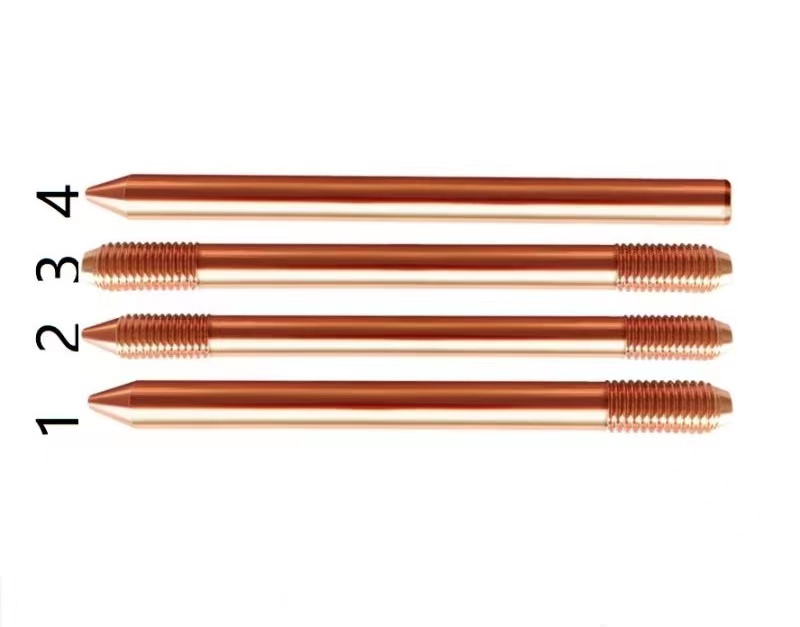
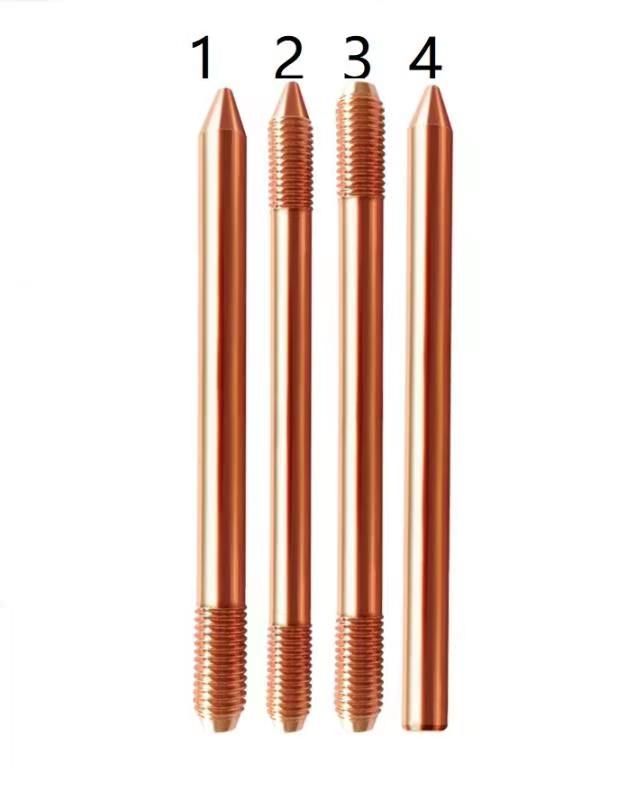
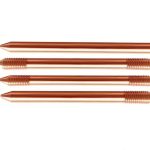
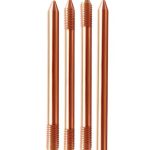
- Threaded to couple deeper; Where specified, threaded to couple rods for a deeper, lower-resistance earth.
- The earthing set from one source: Copper rods with the rod clamps (copper-alloy, compatible), couplings, and bonding clamps matched and kitted.
Use-Case Deep Dive
When is copper worth the extra cost over HDG?
When the service life required exceeds what galvanized gives, when the soil is aggressive (low-resistivity, high-chloride, or otherwise corrosive, which consumes a zinc coat faster), when conductivity is prioritized, or when the standard specifies copper. For a substation or a long-design-life asset in difficult ground, copper’s longevity and conductivity justify the cost; for a routine earth in benign soil on a tighter budget, HDG may serve just as well. Tell us the design life, soil, and standard and we’ll advise honestly. (See the copper-vs-galvanized guide.)
How do I know I’m getting a real copper-bonded rod, not a plated one?
By the copper thickness and bonding method the spec to pin down. A genuine copper-bonded rod has a thick, molecularly bonded copper layer (commonly ~250 µm / 0.010″ to UL 467); an electroplated rod has a thin flash that wears through far sooner. Ask for the copper thickness figure and the bonding method in writing a supplier who’s vague about it may be selling plated as bonded. We state our actual grade, and we won’t call a rod “copper-bonded” or “UL 467” unless it is.
Can copper rods be coupled and driven deep?
Yes where threaded, copper rods couple and drive deep the same as any rod, for a low-resistance earth. The steel core gives the driving strength; the coupling and driving stud let you add rods to reach depth. Tell us the target resistance and soil and we’ll advise the rod, couplings, and quantity.
Specifications and What They Mean for You
| Specification | What we supply | What it means for the buyer |
|---|---|---|
| Type | Copper-bonded steel rod | Steel drivability + copper life/conductivity |
| Copper grade | Thickness + bonding method | Determines real service life the key spec |
| Steel core | Diameter to your design | Strength to drive |
| Length | To your design | Reaches the earth resistance needed |
| Coupling | Threaded where specified | Couple deeper for lower resistance |
| Rating | Carries earth current | The earth-fault duty (tested) |
Straight Answers to Common Buyer Concerns
“Is this solid copper or copper-bonded?” Copper-bonded steel a steel core for driving strength with a copper layer for conductivity and corrosion life. That’s the standard for driven copper rods (solid copper is rare and far pricier). The number that matters is the copper thickness and bonding method, which sets the service life we state ours, and we don’t claim a grade the rod isn’t.
“How do I avoid getting a thin electroplated rod sold as copper-bonded?” Ask for the copper thickness and bonding method in writing. A genuine copper-bonded rod has a thick, bonded copper layer (commonly ~250 µm / 0.010″ to UL 467); an electroplated rod has a thin flash that corrodes through much sooner. A vague answer is a warning sign. We’re explicit about our actual grade because a rod’s whole value is its real copper thickness.
“Copper or HDG for our installation?” Copper for the longest life, aggressive soils, high conductivity, or where the standard specifies it; HDG for an economical earth where galvanized serves. We make both and advise by your design life, soil, budget, and standard honestly, without pushing copper where HDG would do. (See our copper-vs-galvanized guide.)
Complete the Earthing System
- Ground rods the earthing hub and rod selection
- HDG grounding rods the economical galvanized alternative
- Ground rod clamps bond the earth conductor to the rod (copper-alloy, compatible)
- Ground coupling rods join rods to drive deeper
- I-beam grounding clamps and strand ground clamps bonding to steel and strand
- Browse all pole line hardware and overhead line fittings
Get an Earth-Matched Quote Within 24 Hours
Send your target earth resistance (or rod length/diameter), the soil, your standard (and any copper-grade/UL requirement), whether you need coupling for depth, and quantities. Our team confirms the copper rod, its grade, and any couplings, and returns a factory-direct quotation with the earthing hardware alongside, typically within one working day.
After You Order
Grade, size, and any coupling confirmation before production, material documentation with shipment, rods matched to your earthing system and kitted with the compatible clamps and couplings, and an engineering contact who answers precisely because the copper rod is the long-life earth, and the copper thickness and bonding are what deliver that life honestly.