What Is Conductor Galloping? Causes & Control
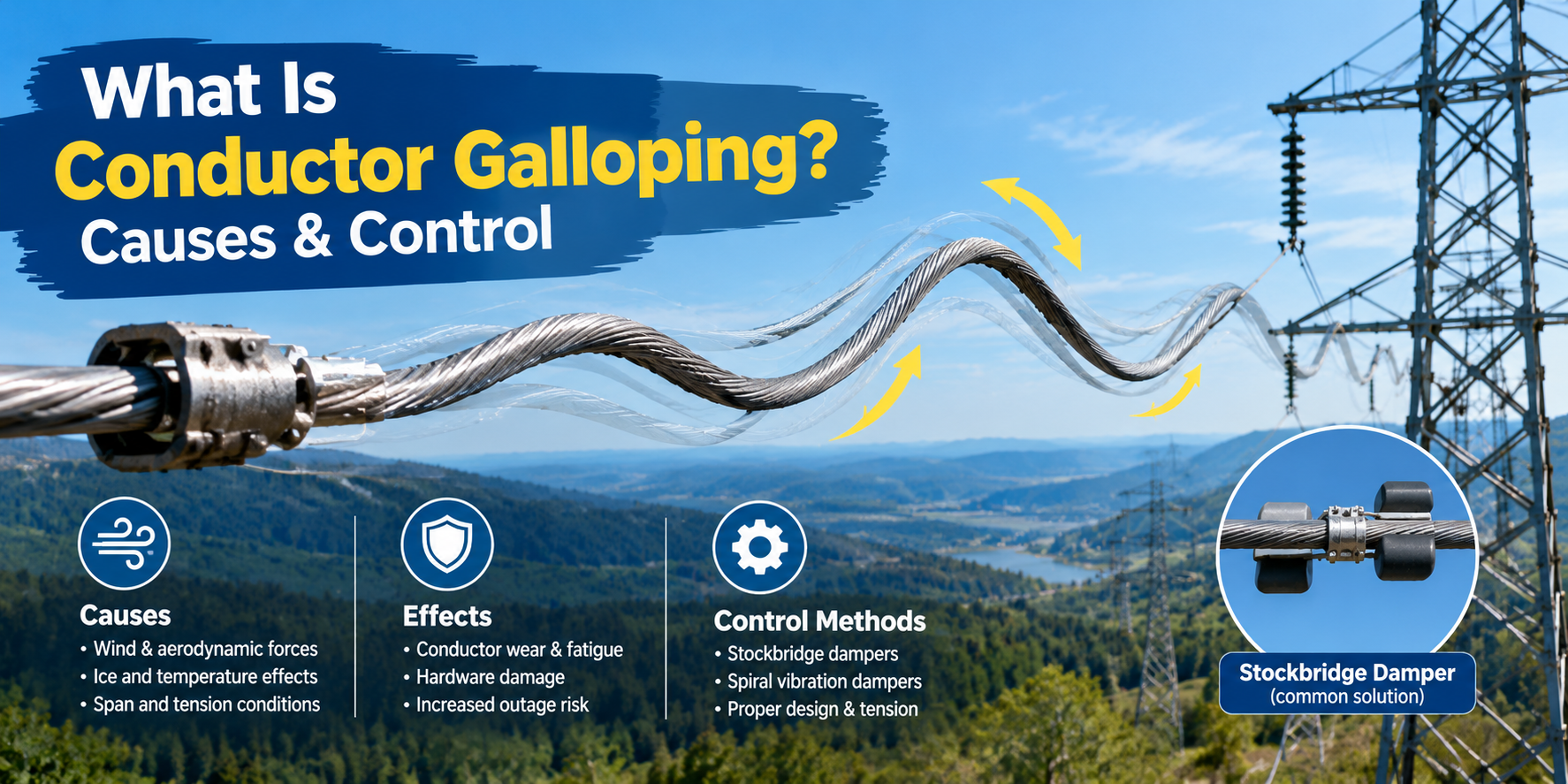
Conductor galloping is a large, slow, up-and-down sway of an overhead conductor, usually caused by wind blowing across a conductor with an uneven ice or frost coating on one side. Ice changes the conductor’s shape so the wind lifts it like an aerofoil, causing large oscillations, sometimes several meters of movement. Unlike aeolian vibration (small and fast), galloping is large (high amplitude) and slow (low frequency), and it can cause conductors to clash, flashover, and damage hardware and structures. It’s controlled with anti-galloping devices, spacers, and line design.
Galloping is one of the more dramatic things that can happen to a power line, with whole spans swaying meters up and down. It’s distinct from the small aeolian vibration, and it’s a real hazard. This guide explains what conductor galloping is and how it’s controlled.
What Is Conductor Galloping?
Conductor galloping is a large-amplitude, low-frequency oscillation of an overhead conductor the conductor sways up and down (and sometimes in a looping motion) across a wide range, sometimes several meters, slowly (a fraction of a cycle per second to a few cycles per second). It usually affects a whole span, moving as one or two big loops.
It’s called “galloping” because the conductor’s motion resembles a galloping horse large, rhythmic, and energetic. It’s dramatic and potentially damaging, unlike the small, barely-visible aeolian vibration.
What Causes Galloping?
Galloping is caused by wind acting on an iced conductor:
- Ice or frost forms unevenly on the conductor typically a ridge on one side in freezing, wet conditions.
- The ice changes the conductor’s cross-sectional shape from round to an irregular, aerofoil-like profile.
- Wind blowing across this shaped conductor generates lift (like an aircraft wing), and under the right wind speed and angle, the lift varies with the conductor’s position in a way that feeds energy into an oscillation.
- The conductor begins to gallop swaying up and down in large loops.
So galloping needs two things together: an ice/frost coating and a steady crosswind. It’s most common in cold climates with freezing rain or wet snow followed by wind. (Some galloping can occur on bare conductors in special conditions, but iced conductors are the classic cause.)
Galloping vs Aeolian Vibration
These two wind-induced conductor motions are very different:
| Galloping | Aeolian Vibration | |
|---|---|---|
| Amplitude | Large (up to meters) | Small (millimeters) |
| Frequency | Low (slow) | High (fast) |
| Cause | Wind + ice (aerofoil lift) | Steady wind (vortex shedding) |
| Visibility | Very visible | Hard to see |
| Main damage | Clashing, flashover, hardware/structure | Fatigue at supports |
| Control | Anti-galloping devices, spacers, design | Dampers, armor rods |
So galloping is big, slow, and ice-driven; aeolian vibration is small, fast, and steady-wind-driven. They need different control measures. (See our aeolian-vibration guide.)
Why Galloping Is a Problem
Galloping can cause serious damage:
- Conductor clashing swaying conductors can swing into each other, causing flashovers, faults, and outages, and burning or damaging the conductors.
- Flashover reduced clearances during the swing can cause phase-to-phase or phase-to-earth flashover.
- Hardware and structure damage the large cyclic loads stress the clamps, insulators, crossarms, and structures, and can loosen or break fittings over time.
- Conductor and fitting fatigue repeated large movements fatigue the hardware.
Because it affects whole spans with large forces, galloping is a hazard that line designers in cold climates plan for.
How Galloping Is Controlled
Galloping is harder to damp than aeolian vibration (the energy is much greater), so control uses several approaches:
- Anti-galloping devices specialized devices (such as detuning pendulums or interphase spacers) that disrupt or detune the galloping motion.
- Spacers on bundled conductors spacer-dampers and spacers hold the sub-conductors of a bundle apart, which helps control bundle galloping and prevents sub-conductor clashing. (See our bundled-conductors guide.)
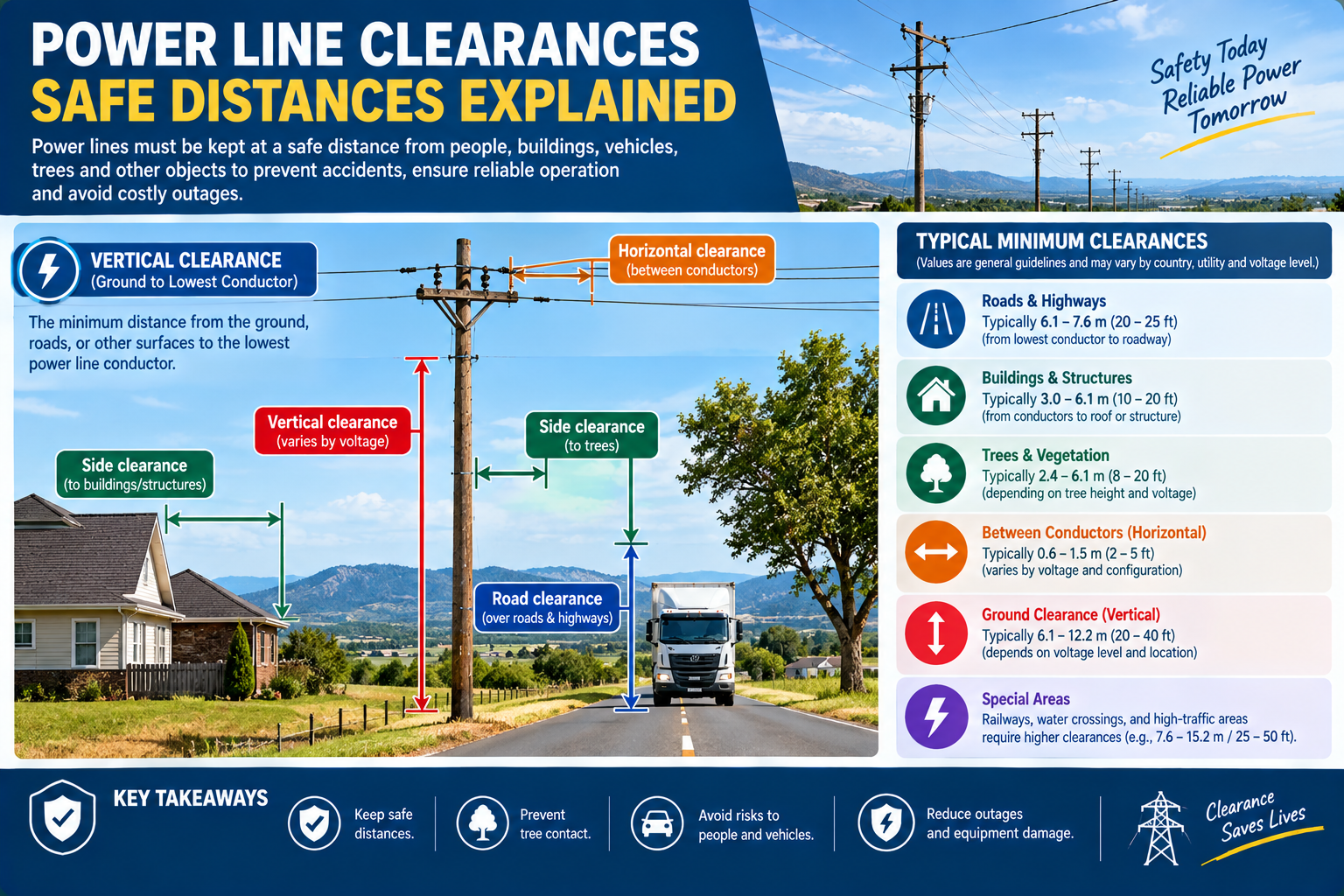
- Increased clearances and phase spacing designing wider spacing on the crossarm or structure so that even if the conductors gallop, they don’t clash.
- Robust hardware using fittings and structures rated for the extra cyclic loads, with strong suspension and dead-end terminations.
In cold climates, galloping control is part of the line design, from the phase spacing to the anti-galloping hardware.
What Is Conductor Galloping: FAQ
What is conductor galloping? Conductor galloping is a large-amplitude, low-frequency up-and-down swaying of an overhead conductor, often moving a whole span by several meters, usually caused by wind blowing across a conductor with an uneven ice coating. The ice makes the conductor act like an aerofoil, and the wind lifts it into big oscillations.
What causes conductor galloping? Wind acting on an iced conductor. Ice or frost forms unevenly on the conductor, changing its shape to an aerofoil-like profile; a steady crosswind then generates lift that feeds a large up-and-down oscillation. It needs both an ice/frost coating and a steady crosswind together, common in cold climates.
What is the difference between galloping and vibration? Galloping is large (up to meters) and slow (low frequency), caused by wind plus ice. Aeolian vibration is small (millimeters) and fast (high frequency), caused by steady wind alone. Galloping causes clashing and flashover; vibration causes fatigue at supports. They need different control measures.
Why is galloping dangerous? Because the large swaying can make conductors clash into each other (causing flashovers, faults, and outages), reduce clearances enough to flash over, and stress or damage the clamps, insulators, crossarms, and structures with large cyclic loads. It affects whole spans with significant force.
How is conductor galloping controlled? With anti-galloping devices (detuning pendulums, interphase spacers), spacers on bundled conductors, wider phase spacing and clearances so conductors don’t clash if they gallop, and robust hardware rated for the extra loads. Because galloping energy is large, control combines several measures.
Does galloping only happen with ice? Iced conductors are the classic cause the ice shapes the conductor into an aero foil that the wind lifts. Some galloping can occur on bare conductors in special conditions, but the typical, severe galloping that line designers plan for is driven by an uneven ice or frost coating plus wind.
The Bottom Line
Conductor galloping is a large, slow, ice-and-wind-driven swaying of an overhead conductor distinct from the small, fast aeolian vibration. It can cause conductors to clash, flash over, and damage hardware and structures. It’s controlled with anti-galloping devices, spacers, wider spacing, and robust hardware, especially in cold climates where ice and wind combine.
DAPENG Power (DP Power Fitting) manufactures the hardware for galloping-prone lines spacer-dampers and spacers for bundles, robust suspension and dead-end terminations, and crossarms sized for the spacing within the overhead line fittings range. Tell us your climate, conductor, and span, and we’ll specify galloping-resistant hardware.