Suspension vs Tension Structures: How Conductors Are Supported & Terminated
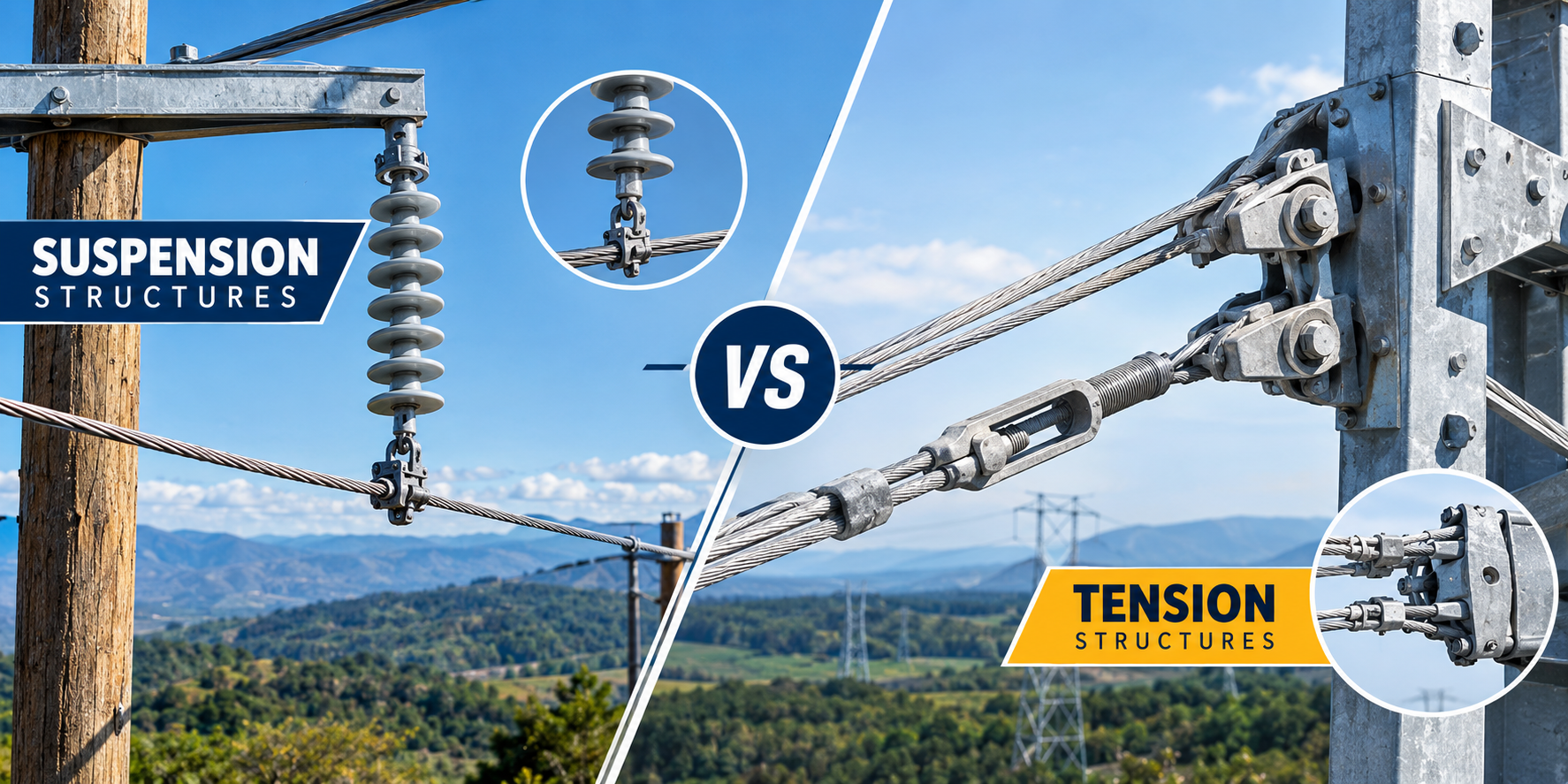
Overhead-line structures do one of two jobs with the conductor. A suspension (tangent) structure supports the conductor on a straight run, carrying its weight while letting it hang, using a suspension clamp on a vertically hanging insulator. A tension (strain/dead-end) structure terminates the conductor taking the full line tension at an angle, a dead-end, or a section end, using a strain clamp on an in-line insulator string. The two need different hardware: suspension for support, tension/strain for termination. Knowing which structure you have tells you which fittings to specify.
Every overhead line alternates between two kinds of structure, and each handles the conductor completely differently. Get the structure type clear and the hardware follows. This guide explains the two, and the fittings each needs.
The Two Jobs a Structure Does
Suspension (tangent) structures support
On a straight run of line, most structures simply support the conductor as it passes carrying its weight and holding it at the right height and clearance, while allowing it to hang and move. These are tangent or suspension structures. The conductor isn’t gripped tightly or terminated here; it’s cradled and supported. Because they don’t take the line tension (only the vertical weight and some transverse wind load), suspension structures are lighter and more numerous — most structures on a straight line are tangent.
Tension (strain / dead-end) structures terminate
Where the line changes direction (an angle), ends (a dead-end), or is sectioned, the conductor’s full tension must be taken by the structure. These are tension, strain, or dead-end structures. The conductor is terminated gripped fully and its tension carried into the structure. Because they take the full line pull, tension structures are stronger and often guyed or braced.
How the Hardware Differs
The structure type determines the conductor hardware:
At suspension structures
- The insulator (or string) hangs vertically a suspension arrangement.
- The conductor is held by a suspension clamp that cradles it, allowing movement.
- On transmission, armor rods reinforce the conductor at the clamp against vibration, and armor-grip suspension is used for severe vibration duty.
- The insulator is a rigid pin/post (distribution) or a vertical suspension string (transmission).
At tension structures
- The insulator (or string) is in line with the conductor a strain/tension arrangement.
- The conductor is terminated by a strain clamp, a bolt-type tension clamp, or a preformed dead-end grip (see our preformed-vs-bolted guide).
- The insulator is a strain string of suspension insulators taking the tension.
- Angle/dead-end structures are often guyed to hold them against the pull (see our guy/stay guide).
Why It Matters for Specifying Hardware
If you know a structure is tangent (suspension), you specify support hardware a suspension clamp and a hanging insulator. If it’s angle or dead-end (tension), you specify termination hardware a strain/dead-end clamp and an in-line string, plus likely a guy. Confusing the two means the wrong fitting: a suspension clamp can’t terminate a conductor, and a dead-end clamp isn’t how you support a straight run. So the first question in specifying conductor hardware is always: is this structure supporting or terminating the conductor?
The Whole Line as a Pattern
A real line is a pattern: long runs of tangent (suspension) structures between occasional tension (strain/dead-end) structures at angles, section ends, and terminations. You specify the bulk of the line with suspension hardware and the tension points with termination hardware. Both draw on the same overhead line fittings and insulator ranges just different members of them for the two jobs.
Suspension vs Tension Structures: FAQ
What is the difference between a suspension and a tension structure? A suspension (tangent) structure supports the conductor on a straight run, carrying its weight while it hangs. A tension (strain/dead-end) structure terminates the conductor, taking the full line tension at an angle, dead-end, or section end. Support vs terminate is the core difference.
What is a tangent structure? A tangent structure is a suspension structure on a straight run of line it supports the conductor as it passes, carrying the weight and holding clearance while letting the conductor hang and move. Most structures on a straight line are tangent.
What hardware does a suspension structure use? A suspension clamp that cradles the conductor (allowing movement) on a vertically hanging insulator or string, with armor rods for vibration reinforcement on transmission. The insulator is a rigid pin/post (distribution) or a vertical suspension string (transmission).
What hardware does a tension/dead-end structure use? A termination a strain clamp, bolt-type tension clamp, or preformed dead-end grip — on an in-line insulator string that takes the full tension. Angle and dead-end structures are often guyed to hold them against the pull.
How do I know which hardware to specify? Determine whether the structure supports the conductor (tangent/suspension → support hardware, a suspension clamp) or terminates it (angle/dead-end/section → termination hardware, a strain/dead-end clamp). The structure’s job dictates the fitting.
Are most structures on a line suspension or tension? Most are suspension (tangent) they support the conductor along straight runs. Tension (strain/dead-end) structures occur at angles, section ends, and terminations, and are stronger and often guyed. A line is long runs of suspension structures with occasional tension structures.
The Bottom Line
Overhead-line structures either support the conductor (suspension/tangent) or terminate it (tension/strain/dead-end) and the two need different hardware: a suspension clamp and hanging insulator for support, a strain/dead-end clamp and in-line string for termination. Identify which job the structure does, and the correct fittings follow.
DAPENG Power (DP Power Fitting) manufactures the hardware for both suspension clamps, armor rods, and armor-grip suspension for support; strain clamps, bolt-type tension clamps, and preformed dead-ends for termination; plus the insulators, strings, and guy hardware that complete each structure. Tell us your structure types and conductor, and we’ll specify the hardware for each.