What Is Galvanic Corrosion? Preventing It in Power Line Hardware
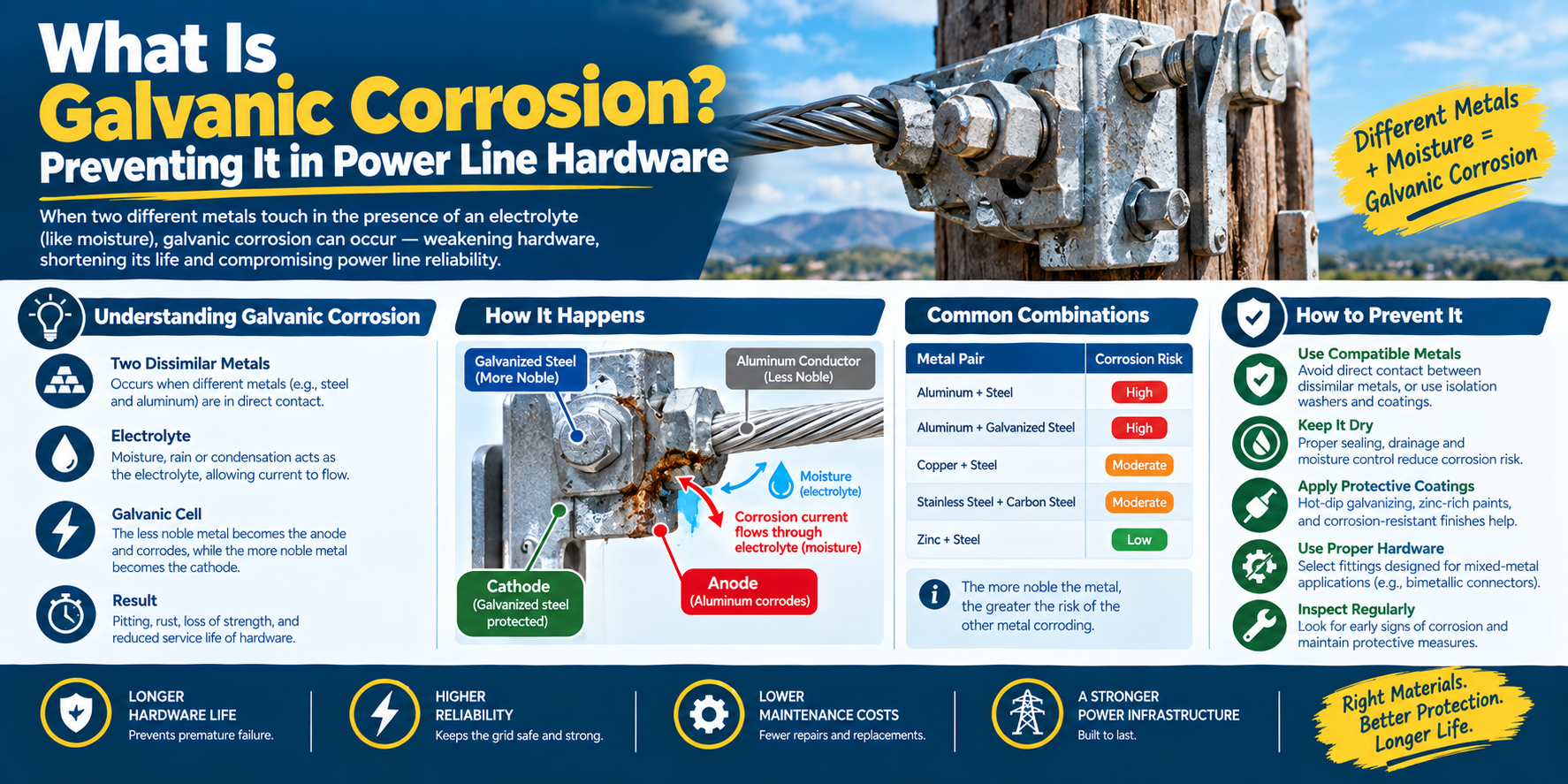
Galvanic corrosion happens when two dissimilar metals are in electrical contact in the presence of moisture (an electrolyte). They form a galvanic cell, like a battery, and the more reactive (less noble) metal corrodes faster while the other is protected. In power line hardware, this is why connecting copper to bare aluminum or galvanized steel causes the connection to corrode over time. The fix is to avoid dissimilar-metal contact; use matched metals or a bimetallic connector designed for the junction so you don’t build a corrosion cell that shortens the hardware’s life.
Galvanic corrosion is one of the most important and most overlooked causes of failure in power line hardware and earthing systems. It works invisibly, at the joints, over years. This guide explains what it is and how to prevent it.
What Is Galvanic Corrosion?
Galvanic corrosion (also called dissimilar-metal or bimetallic corrosion) occurs when two different metals are in electrical contact, and both are exposed to an electrolyte (moisture rain, humidity, damp soil). These three conditions form a galvanic cell, essentially a battery:
- The less noble (more reactive) metal becomes the anode and corrodes faster than it would alone.
- The more noble (less reactive) metal becomes the cathode and is protected (corrodes slower).
So one metal is sacrificed to protect the other which is useful when it’s deliberate (like the zinc coating on galvanized steel), but damaging when it’s accidental (like a copper conductor eating away a steel connection).
The Galvanic Series
Metals can be ranked in a galvanic series from most noble (cathodic, protected) to least noble (anodic, corrodes). The further apart two metals are in the series, the stronger the galvanic corrosion when they’re joined. For example:
- Copper is relatively noble.
- Aluminum and zinc/galvanized steel are less noble.
So joining copper to aluminum or copper to galvanized steel in a wet environment drives corrosion of the aluminum or zinc/steel a common problem at power line connections.
Why It Matters in Power Line Hardware
Power line hardware and earthing systems are full of potential dissimilar-metal joints, exposed to weather and soil:
- Copper conductor to a galvanized clamp the galvanized steel corrodes, and the connection’s resistance rises. This is critical in earthing, where a corroded bond quietly raises the earth resistance until the protection fails, underground where no one sees it.
- Copper to aluminum conductors a direct connection corrodes at the junction.
- Dissimilar metals at any bolted or clamped joint in a wet environment.
Because these joints are often buried or exposed for decades, galvanic corrosion is a slow, invisible failure mode which is exactly why it’s so often missed.
How to Prevent Galvanic Corrosion
The fix is to avoid or manage dissimilar-metal contact:
1. Match the metals
The simplest prevention: use galvanically compatible metals throughout a connection. For a copper earthing system, use a copper-bonded rod with copper-alloy clamps. For a zinc/steel system, use galvanized hardware throughout. Same-metal joints don’t form a galvanic cell.
2. Use bimetallic connectors
Where dissimilar metals must meet (copper conductor to aluminum, for instance), use a bimetallic connector designed for the junction it separates the metals correctly or provides a transition so the corrosion cell doesn’t form. This is standard for copper-aluminum connections. (See our how-to-tap-a-conductor guide.)
3. Choose the right finish
Hot-dip galvanizing protects steel hardware and, being a sacrificial zinc coating, is itself a controlled galvanic system (the zinc protects the steel). Matching finishes across a connection avoids accidental couples. (See our HDG-vs-electro-galvanized guide.)
4. Break the circuit or the electrolyte
Where practical, isolate dissimilar metals (insulating washers/sleeves) or keep the joint dry removing the electrical contact or the electrolyte stops the cell. In buried earthing this is often impractical, so matching metals is the main defense.
What Is Galvanic Corrosion: FAQ
What is galvanic corrosion? Galvanic corrosion is the accelerated corrosion of the more reactive of two dissimilar metals when they’re in electrical contact in the presence of moisture. The metals form a galvanic cell (a battery); the less noble metal corrodes faster while the more noble one is protected.
What causes galvanic corrosion? Three conditions together: two dissimilar metals, electrical contact between them, and an electrolyte (moisture rain, humidity, damp soil). Remove any one and the galvanic cell can’t form. The further apart the metals are in the galvanic series, the stronger the corrosion.
How do you prevent galvanic corrosion? Match the metals across a connection (same or galvanically compatible metals), use a bimetallic connector where dissimilar metals must meet, choose matching finishes, or isolate the metals / keep the joint dry. In power line hardware, matching the metals is the main defense, especially for buried earthing.
Why does copper corrode aluminum or galvanized steel? Because copper is more noble (less reactive) than aluminum or zinc/galvanized steel. When joined in a wet environment, the copper becomes the protected cathode and the aluminum or zinc/steel becomes the corroding anode. So a copper conductor on a bare galvanized clamp corrodes the clamp over time.
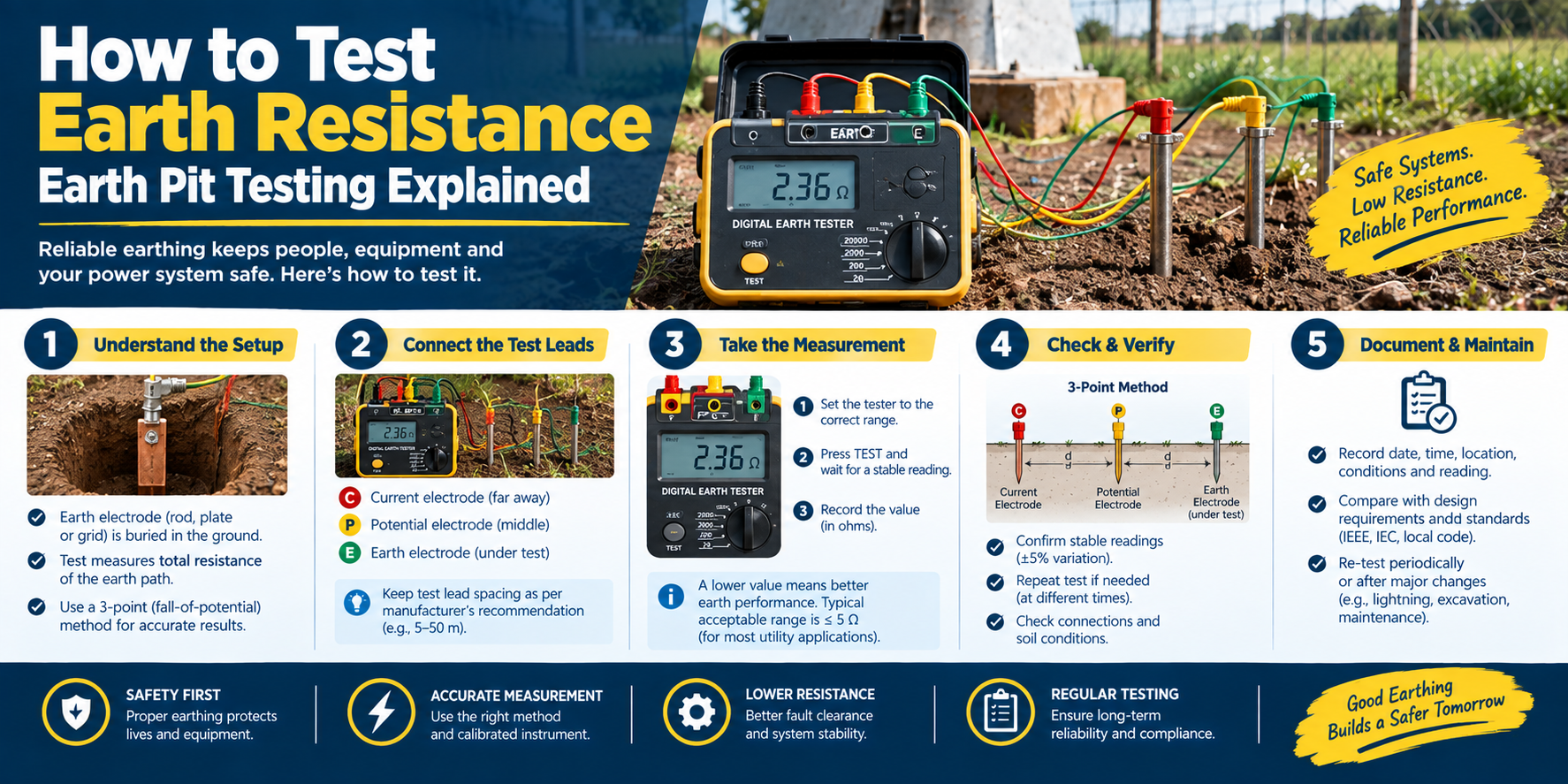
Why is galvanic corrosion a problem in earthing systems? Because earthing bonds are often buried in soil (a strong electrolyte) for decades, and a galvanically mismatched bond (e.g. copper conductor on galvanized steel) corrodes and raises the earth resistance over time invisibly, underground until the protection is compromised. Matching metals keeps the earth low-resistance for the long term.
What is a bimetallic connector? A bimetallic connector joins two dissimilar metals (typically copper and aluminum) while managing the junction so galvanic corrosion doesn’t form by separating the metals or providing a compatible transition. It’s the standard way to connect copper to aluminum conductors reliably.
The Bottom Line
Galvanic corrosion is the accelerated corrosion of the less noble of two dissimilar metals joined in the presence of moisture a hidden failure mode at power line and earthing connections. Prevent it by matching the metals, using bimetallic connectors where dissimilar metals must meet, choosing matched finishes, and in earthing especially never pairing copper with bare galvanized steel. Getting the metals right keeps hardware and earths working for decades.
DAPENG Power (DP Power Fitting) builds galvanic compatibility into its hardware matched copper and galvanized earthing systems, copper-alloy bonding clamps, and connectors specified to your conductor metals and we’ll flag any dissimilar-metal concern rather than ship a joint that will corrode. Tell us your conductor and earth metals, and we’ll match the hardware.