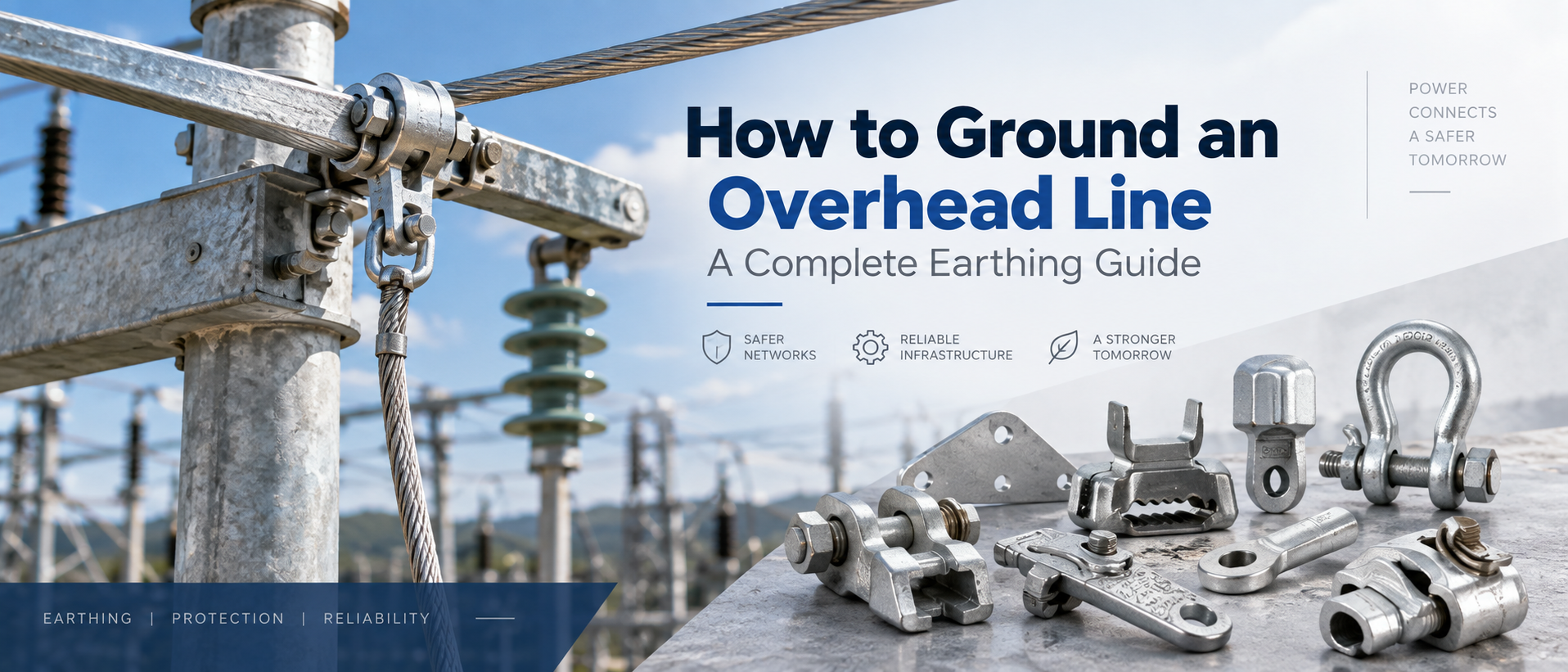
How to Ground an Overhead Line: A Complete Earthing Guide
Grounding (earthing) an overhead line means giving fault and lightning current a safe, low-resistance path into the earth. It has three parts: an electrode (a ground rod driven into the soil), bonding (clamps connecting the earth conductor to the rod, to structural steel, and to strands), and achieving a low enough earth resistance (often by driving deeper or coupling rods). The single most important discipline throughout is matching metals using galvanically compatible materials so the connections don’t corrode and quietly raise the resistance over time.
A grounding system is safety-critical: it protects people and equipment by carrying fault and lightning energy safely to earth. Yet it’s often the least-inspected part of a line, buried where problems hide. This guide explains how to ground an overhead line properly: the components, the resistance goal, and the material discipline that keeps it working for decades.
Why Grounding Matters
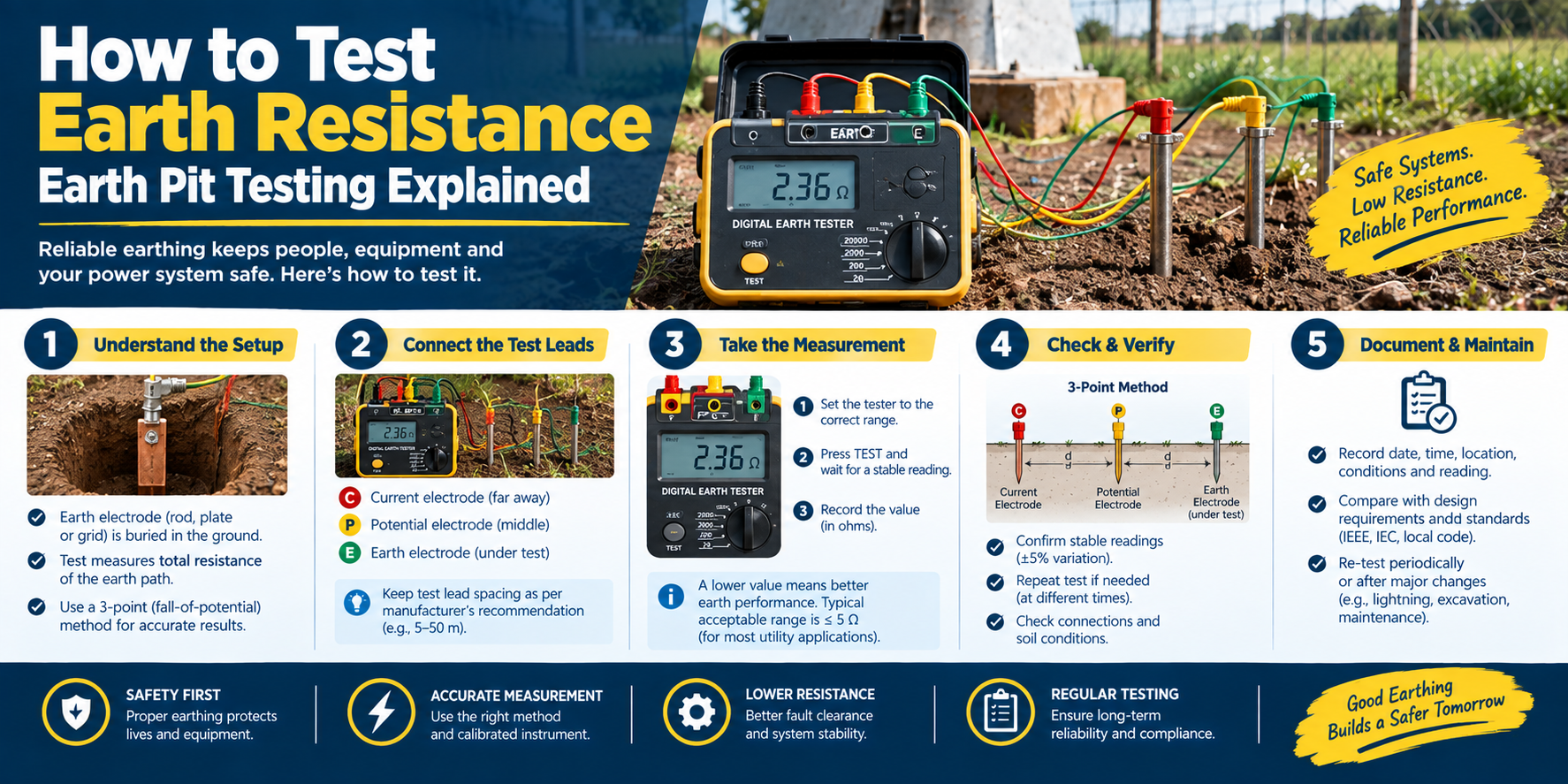
When lightning strikes or a fault occurs, large currents must go somewhere safe into the earth, not through people or equipment. The grounding system provides that path. If the path has too much resistance, or if a connection has corroded, the current can’t dissipate as designed, and the protection fails. So a good earth is about a continuous, low-resistance, durable path from the conductor to the soil. Every part of the system serves that goal.
Part 1: The Electrode (Ground Rod)
The earth electrode is usually a ground rod driven into the soil. Two main types:
- Copper-bonded ground rod – a steel core with a thick bonded copper layer, for long life and high conductivity, especially with copper earthing systems.
- Hot-dip galvanized ground rod – a zinc-coated steel rod, the economical electrode for shorter design lives or zinc/steel systems.
Choose the rod by design life, soil, and the metal of your earthing system (see our copper-vs-galvanized guide). Both are part of the ground-rod range.
Part 2: Achieving Low Earth Resistance
The rod must reach a low enough earth resistance for the design and resistance falls as you go deeper, into moister, more conductive soil. When a single rod can’t reach the target (common in dry, rocky, or high-resistivity ground), you have options:
- Drive deeper reach the moist soil that lowers resistance.
- Couple rods join rods end-to-end with a ground coupling rod and drive them as one continuous electrode to depth.
- Multiple electrodes use several rods, spaced and bonded together, where one can’t achieve the target.
The right approach depends on the soil and the resistance target a design calculation. The coupling makes deep-driven earths practical without a single impossibly long rod.
Part 3: Bonding Connecting Everything to Earth
An electrode is only useful if the earth conductors and structures are bonded to it. The bonding clamp follows the surface being bonded:
- Ground rod clamp bonds the earth conductor to the ground rod (usually copper-alloy, often direct-burial rated).
- I-beam grounding clamp bonds an earth conductor to structural steel (a tower member or beam) without drilling.
- Strand ground clamp bonds an earth conductor to a strand/wire (an overhead earth wire, messenger, or guy).
Each makes a solid metal-to-metal connection so current flows freely from the conductor or structure into the electrode. The teeth or contact must reach clean bare metal (through paint or galvanizing), or the bond isn’t a real earth connection.
The Discipline That Runs Through It All: Match the Metals
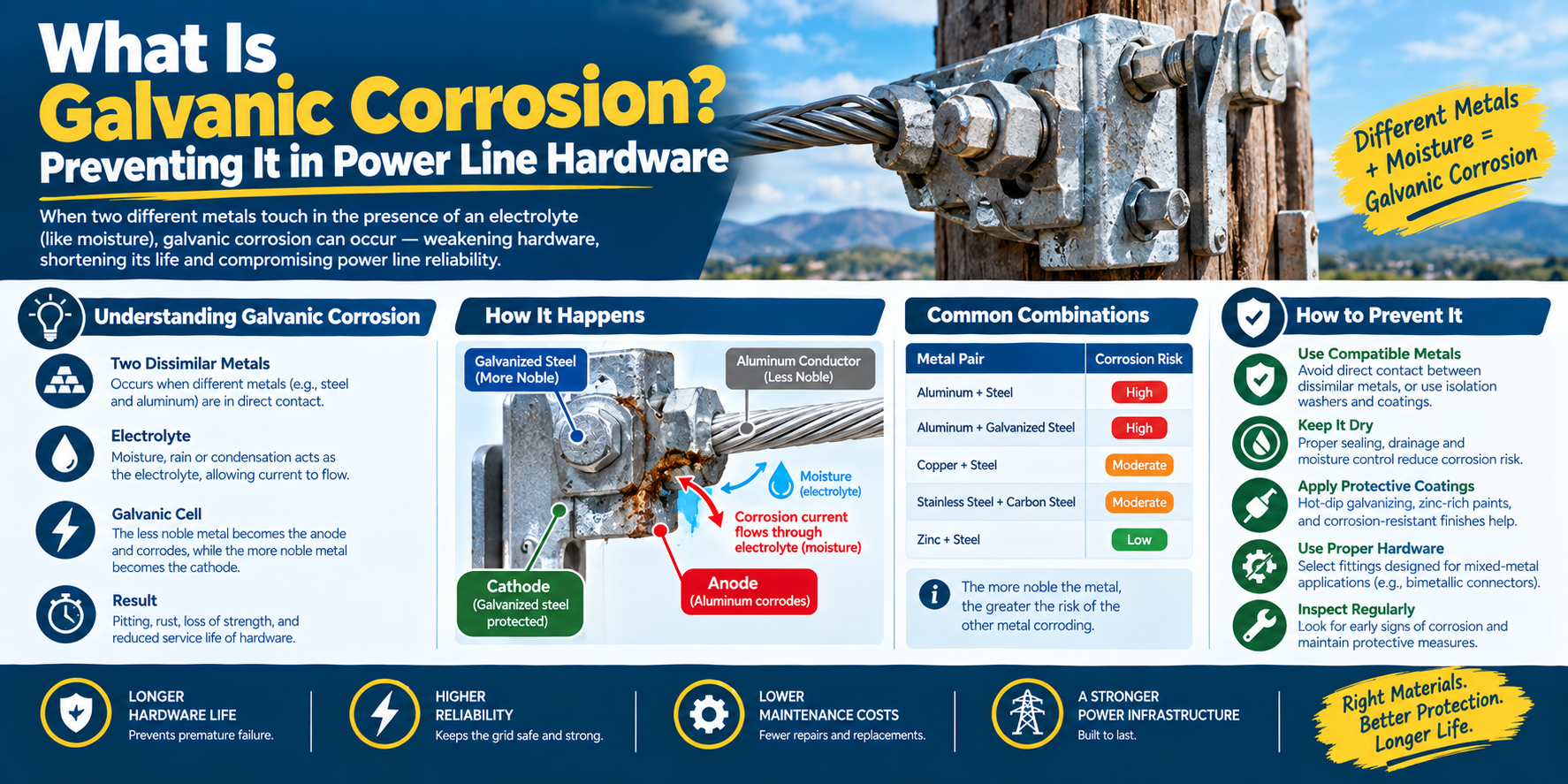
Here is the single most important thing about grounding, and the one most often missed: galvanic compatibility. When you connect dissimilar metals in the soil, you create a galvanic cell, and one metal corrodes preferentially quietly raising the connection’s resistance until the earth no longer protects as designed, all where no one can see it.
So throughout the system, match the metals:
- Copper earthing system → copper-bonded rod, copper-alloy clamps.
- Zinc/steel system → galvanized rod and compatible clamps.
- Where dissimilar metals must meet, use appropriate bimetallic connectors.
A grounding bond that looks fine but pairs copper with bare galvanized steel will corrode. Matching metals is not a finish preference — on an earth path, it’s a safety matter.
Putting It Together: A Grounding Checklist
- Choose the electrode copper-bonded or galvanized rod, by design life, soil, and system metal.
- Reach the resistance target drive deep, couple rods, or use multiple electrodes as the soil requires.
- Bond everything the right clamp for each surface (rod, steel, strand), biting to clean metal.
- Match the metals galvanically compatible materials throughout, so nothing corrodes.
- Confirm the ratings fault-current and resistance requirements are design figures; confirm the hardware and rods meet them for your system. (Never assume a safety-critical rating.)
How to Ground an Overhead Line: FAQ
What are the main parts of an earthing system? An electrode (a ground rod driven into the soil), the bonding clamps that connect earth conductors and structures to it, and the means of reaching a low earth resistance (driving deeper, coupling rods, or multiple electrodes). Matching compatible metals throughout keeps it durable.
How do I lower earth resistance? Reach deeper, moister, more conductive soil by driving the rod deeper, coupling rods to drive as one, or using multiple bonded electrodes. Deeper soil generally has lower resistivity, so depth is the main lever. The target and method are set by a design calculation for your soil.
What clamp do I use to bond to a ground rod / steel / strand? Use a ground rod clamp for the rod, an I-beam grounding clamp for structural steel, and a strand ground clamp for a strand or wire. Each is matched to its surface and must bite to clean bare metal to make a real earth connection.
Why does matching metals matter in grounding? Because dissimilar metals in soil form a galvanic cell that corrodes one of them, quietly raising the connection’s resistance until the earth fails invisibly, underground. Match compatible metals (copper with copper-alloy, zinc/steel with galvanized) so the bonds stay conductive for decades.
Copper-bonded or galvanized ground rod for earthing? Copper-bonded for long life, high conductivity, aggressive soils, or copper earthing systems; galvanized for shorter design lives, benign soils, or zinc/steel systems. Match the rod to the system metal to avoid galvanic corrosion. (See our copper-vs-galvanized guide.)
How deep should a ground rod go? Deep enough to reach the earth resistance the design requires, which depends on the soil in poor soil that can mean driving deep or coupling rods. There’s no universal depth; it’s set by the soil and the resistance target for your installation.
The Bottom Line
Grounding an overhead line is a three-part job a durable electrode, a low enough earth resistance, and solid bonding of conductors and structures to earth held together by one discipline: match the metals so nothing corrodes. Get all four right and the line has a safe, lasting path to earth.
DAPENG Power (DP Power Fitting) manufactures the complete earthing system copper and galvanized ground rods, coupling rods, and the rod, I-beam, and strand bonding clamps all in compatible materials. Tell us your soil, design life, earth-conductor metal, and resistance target, and we’ll specify a coordinated earthing kit.