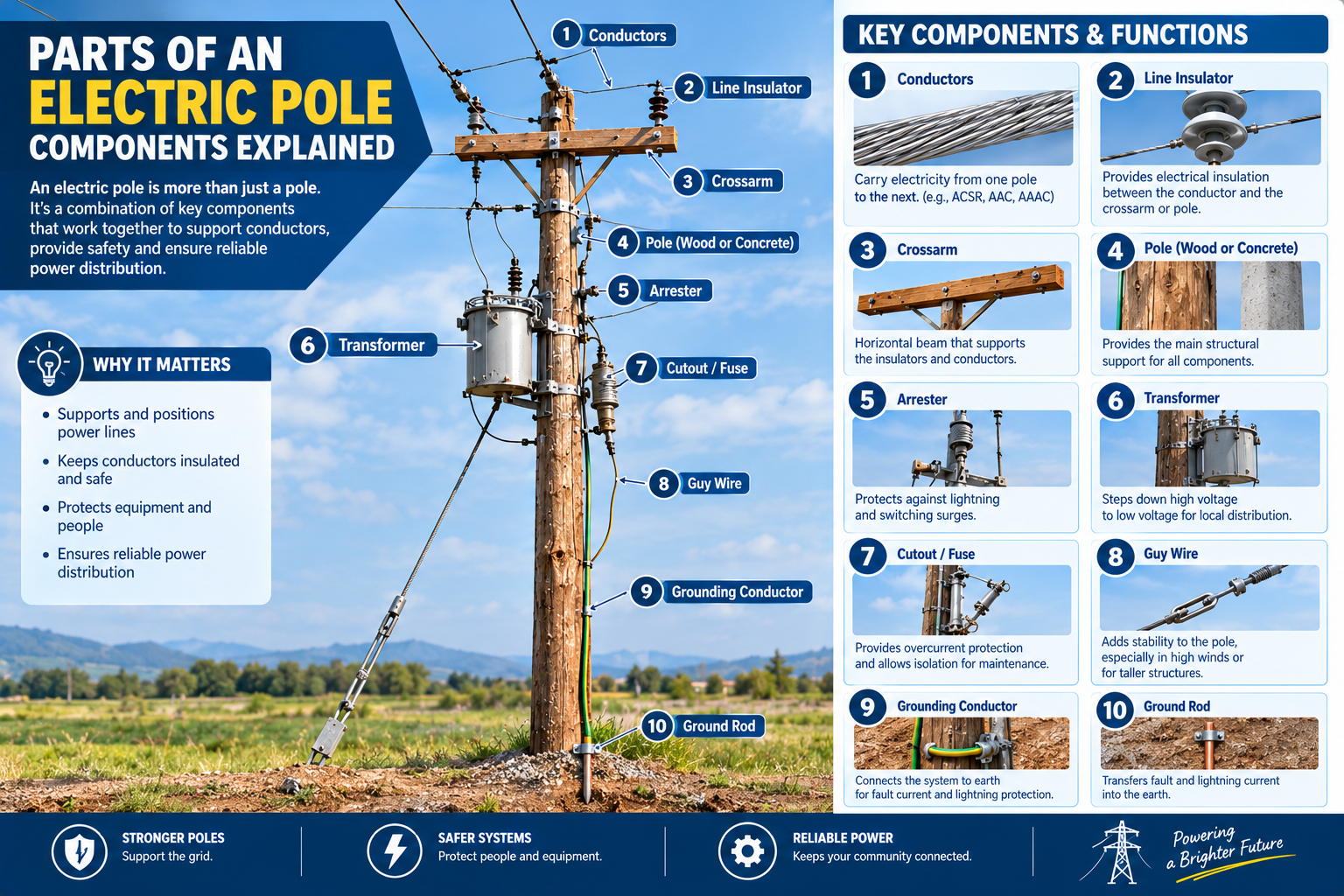

Utilities and engineers use U bolts as essential fasteners in utility pole hardware, power transmission lines, and industrial structures. Their unique U-shaped design allows them to securely clamp pipes, crossarms, cables, and other components to poles or beams.
In overhead power line systems, U bolts stabilize crossarms and other hardware, ensuring the safe and reliable operation of electrical and telecommunications infrastructure.
This guide explains U bolts, their types, materials, specifications, applications, and installation processes, helping readers choose the right U bolt for their projects.
What Is a U Bolt?
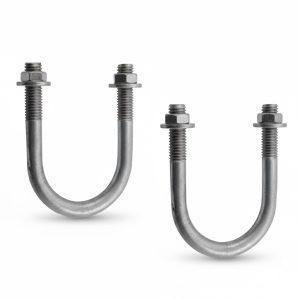
A U bolt is a threaded fastener shaped like the letter “U”, with threads on both ends that allow nuts and washers to secure the bolt in place.
The curved portion of the bolt fits around objects such as pipes, poles, crossarms, or beams, while the threaded ends pass through mounting holes and are tightened using nuts.
Key Features of U Bolts
-
U-shaped design for clamping round or square objects
-
Threaded ends for secure fastening
-
Compatible with nuts, washers, and mounting plates
-
High strength and corrosion resistance
-
Available in different sizes and materials
U bolts are widely used in utility pole hardware, construction, mechanical systems, and automotive applications.
Types of U Bolts
Different projects require different U bolt designs. The most common types include the following.
Round U Bolts
Round U bolts are designed to clamp circular objects such as pipes, tubing, and round poles.
Common applications include:
-
Pipe support systems
-
Cable trays
-
Utility pole attachments
-
Mechanical equipment mounting
Square U Bolts
Square U bolts have a 90-degree bend and are used to secure square or rectangular structures.
They are commonly used for:
-
Fastening crossarms on utility poles
-
Securing metal beams
-
Clamping rectangular pipes or frames
Semi-Round U Bolts
Semi-round U bolts are similar to round bolts but have a slightly flatter curve. Technicians use them for structures that have partially round or irregular shapes.
Custom U Bolts
Manufacturers can produce custom U bolts based on specific project requirements, including:
-
Special dimensions
-
Custom thread length
-
Unique shapes
-
Different coatings
Custom U bolts are often used in power transmission and telecommunications infrastructure.
Materials Used to Manufacture U Bolts
The strength and durability of a U bolt depend largely on the material used.
Common materials include:
Carbon Steel
Carbon steel U bolts offer high strength and load capacity, making them ideal for heavy-duty applications.
Stainless Steel
Stainless steel provides excellent corrosion resistance, making it suitable for marine environments and outdoor installations.
Alloy Steel
Alloy steel U bolts are used in high-stress industrial applications because they offer superior mechanical strength.
Aluminum
Aluminum U bolts are lightweight and corrosion-resistant but are generally used for light-duty applications.
Surface Treatments for U Bolts
Surface coatings improve corrosion resistance and durability.
Common treatments include:
Hot Dip Galvanizing
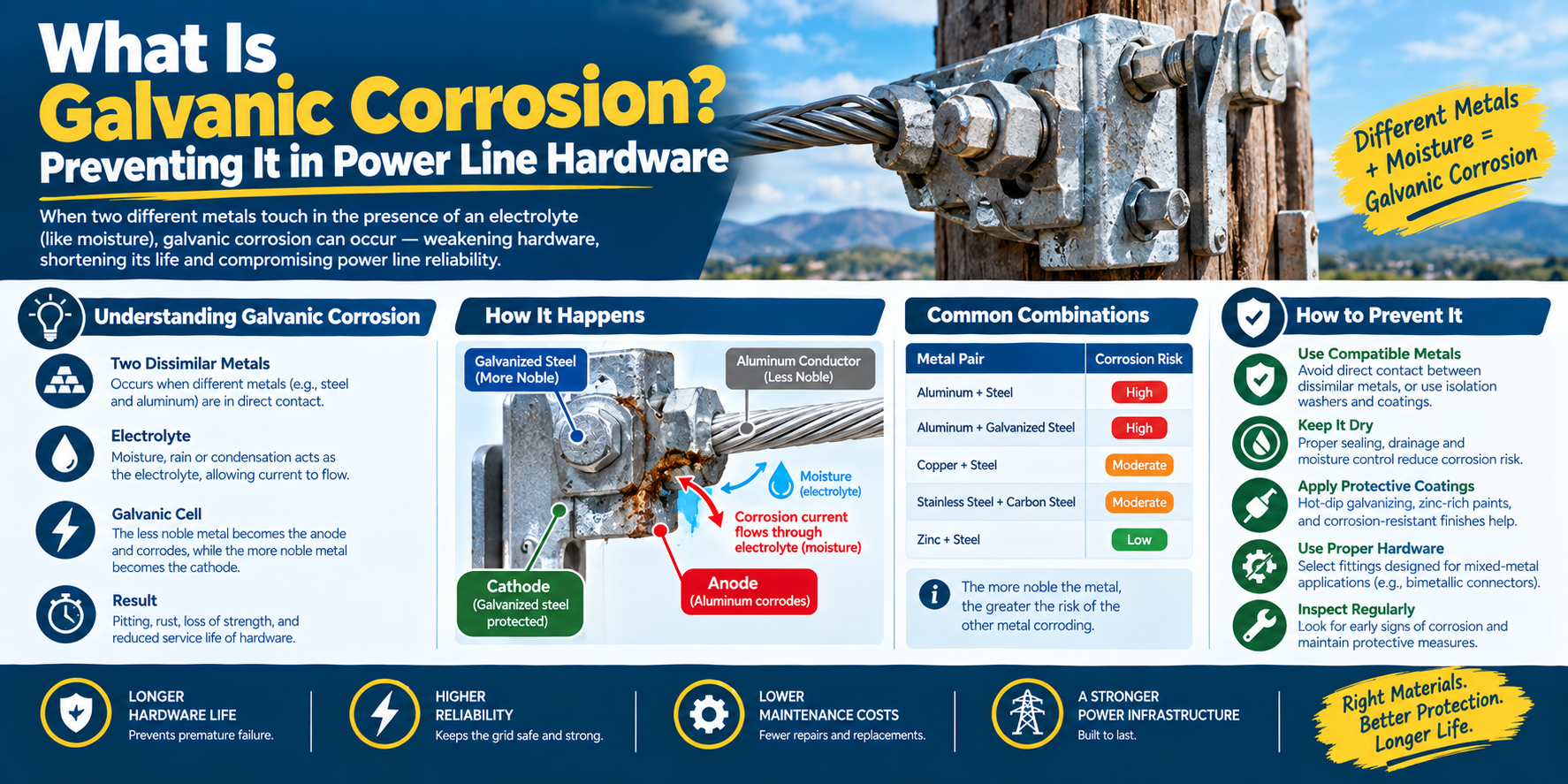
Hot dip galvanizing coats the bolt in molten zinc, creating a thick protective layer that prevents rust and corrosion.
Zinc Plating
Zinc plating provides a thinner protective coating that improves corrosion resistance.
Powder Coating
Powder coating enhances both durability and appearance.
Hot-dip galvanized U bolts are commonly used in power transmission lines and utility pole installations because they can withstand harsh outdoor conditions.
Applications of U Bolts
U bolts are used across multiple industries because of their simple design and strong clamping ability.
Utility Pole Hardware
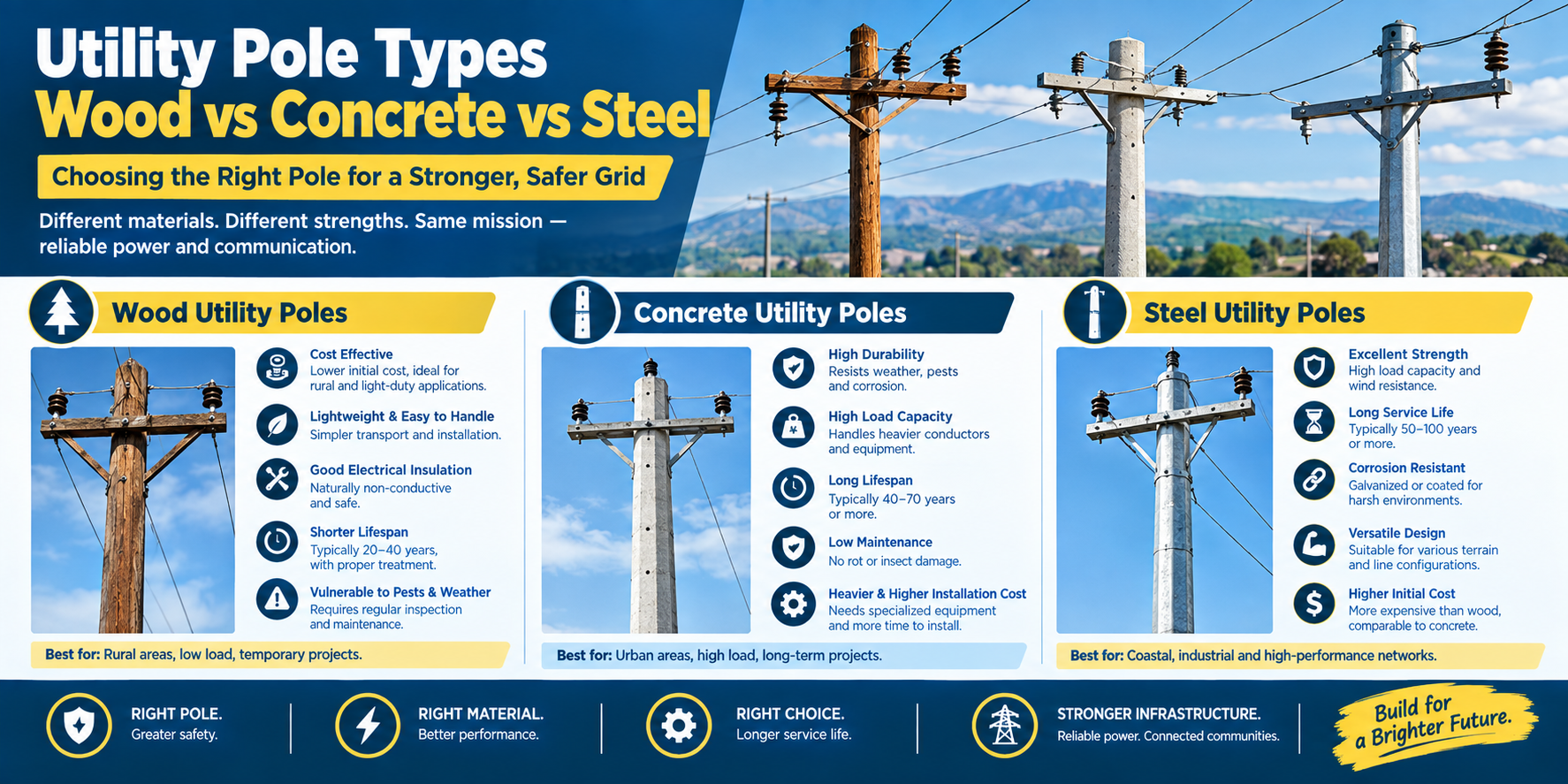
U bolts secure crossarms, brackets, and other hardware on utility poles.
Power Transmission Lines
They help fasten electrical components and cable supports.
Pipe Support Systems
U bolts hold pipes firmly in place while allowing slight movement for expansion.
Construction Industry
They are used to fasten structural components in buildings and infrastructure.
Automotive Industry
U bolts secure leaf springs in vehicle suspension systems.
Technical Specifications of U Bolts
Before selecting a U bolt, it is important to understand its specifications.
Key Specifications Include:
-
Bolt diameter (½”, ⅝”, ¾”, etc.)
-
Thread size
-
Thread length
-
Inside width
-
Inside height
-
Material type
-
Surface treatment
Correct specifications ensure that the U bolt fits the intended application and provides adequate load capacity.
How to Measure a U Bolt
Accurate measurement is essential when replacing or purchasing U bolts.
Important Dimensions to Measure
Thread Diameter
Measure the thickness of the threaded section.
Inside Width
The distance between the two legs of the U bolt.
Inside Height
Distance from the base of the U to the end of the legs.
Thread Length
The threaded section allows technicians to install nuts for secure fastening.
Using proper tools such as calipers or micrometers ensures accurate measurements.
U Bolt Manufacturing Process
Manufacturing high-quality U bolts requires several precise steps.
Step 1: Material Selection
High-quality steel is chosen to ensure strength and durability.
Step 2: Cutting and Bending
Steel rods are cut to length and bent into the U shape using specialized machines.
Step 3: Thread Rolling
Threads are formed on both ends of the bolt using thread-rolling equipment.
Step 4: Heat Treatment
Some U bolts undergo heat treatment to increase strength.
Step 5: Surface Coating
The bolts are coated using hot-dip galvanization or zinc plating for corrosion protection.
How to Install a U Bolt on a Utility Pole
Installing U bolts correctly ensures structural stability and safety.
Installation Steps
-
Position the component (such as a crossarm) against the utility pole.
-
Drill mounting holes if necessary.
-
Place the U bolt around the pole or structure.
-
Insert the threaded ends through the mounting holes.
-
Install washers and nuts on both ends.
-
Tighten the nuts evenly using appropriate tools.
Proper installation prevents vibration, movement, and structural failure.
Advantages of U Bolts
U bolts offer several important benefits.
-
Simple and reliable fastening design
-
High load-bearing capacity
-
Suitable for many industrial applications
-
Easy installation and maintenance
-
Excellent durability with corrosion-resistant coatings
These advantages make U bolts one of the most widely used fasteners in pole line hardware systems.
Frequently Asked Questions (FAQs)
What is a U bolt used for?
A U bolt is used to clamp pipes, poles, or structural components securely in place.
What materials are U bolts made from?
Common materials include carbon steel, stainless steel, alloy steel, and aluminum.
What coating is used for U bolts?
Hot dip galvanizing and zinc plating are commonly used to protect U bolts from corrosion.
How strong are U bolts?
The strength of a U bolt depends on its material, diameter, and manufacturing process.
How do I choose the right U bolt size?
Select a size based on load requirements, object diameter, and thread specifications.
Conclusion
Engineers and technicians use U bolts as essential fastening components in utility pole hardware, power transmission lines, construction, and industrial systems. Their simple yet effective design allows them to securely clamp pipes, cables, crossarms, and structural components.
By understanding the types, materials, specifications, and installation methods of U bolts, you can select the best solution for your project and ensure reliable structural support.