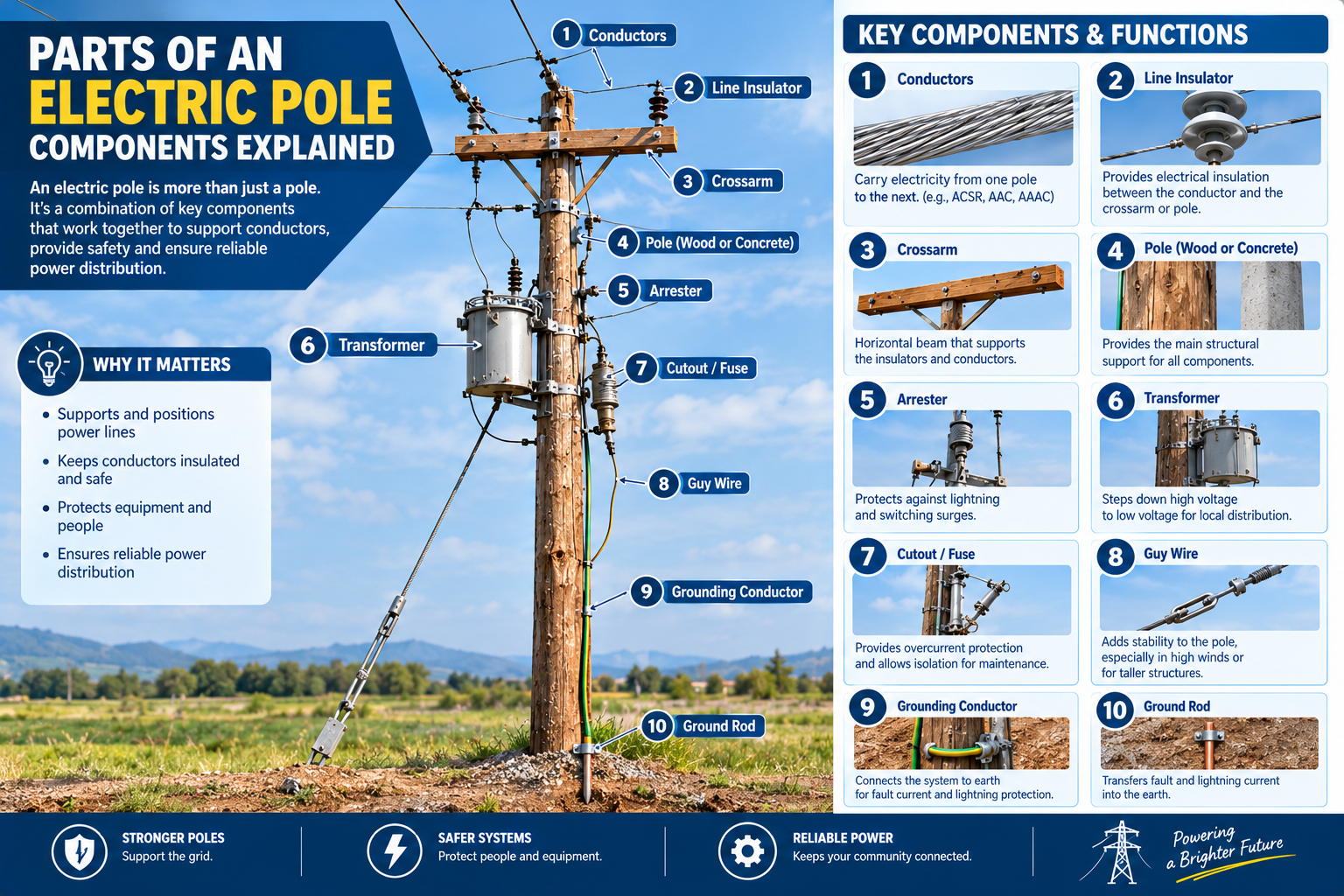

Engineers use pin insulators as one of the most important components in overhead power transmission and distribution systems. They design these insulators to support electrical conductors while preventing electric current from flowing from the conductor to supporting structures such as utility poles or transmission towers. By providing both mechanical support and electrical insulation, pin insulators ensure the safe and reliable operation of power lines.
Power utilities widely use pin insulators in distribution networks operating at voltages up to 33 kV, making them essential equipment in medium-voltage transmission systems. Technicians typically mount them on a metal pin or spindle attached to the cross-arm of a pole, where they place the conductor in the groove at the top of the insulator and secure it with binding wire.
Since overhead lines operate in harsh environmental conditions such as wind, rain, pollution, and temperature variations, manufacturers produce pin insulators using materials that provide high dielectric strength and strong mechanical durability.
What is a Pin Insulator?
A pin insulator is a type of electrical insulator installed directly on the cross-arm of a utility pole. Its main function is to isolate the energized conductor from the grounded pole or tower while supporting the mechanical load of the conductor.
Technicians place the conductor in the groove at the top of the insulator and secure it using binding wire. Meanwhile, they mount the insulator on a galvanized steel pin, which provides a stable connection between the insulator and the supporting structure.
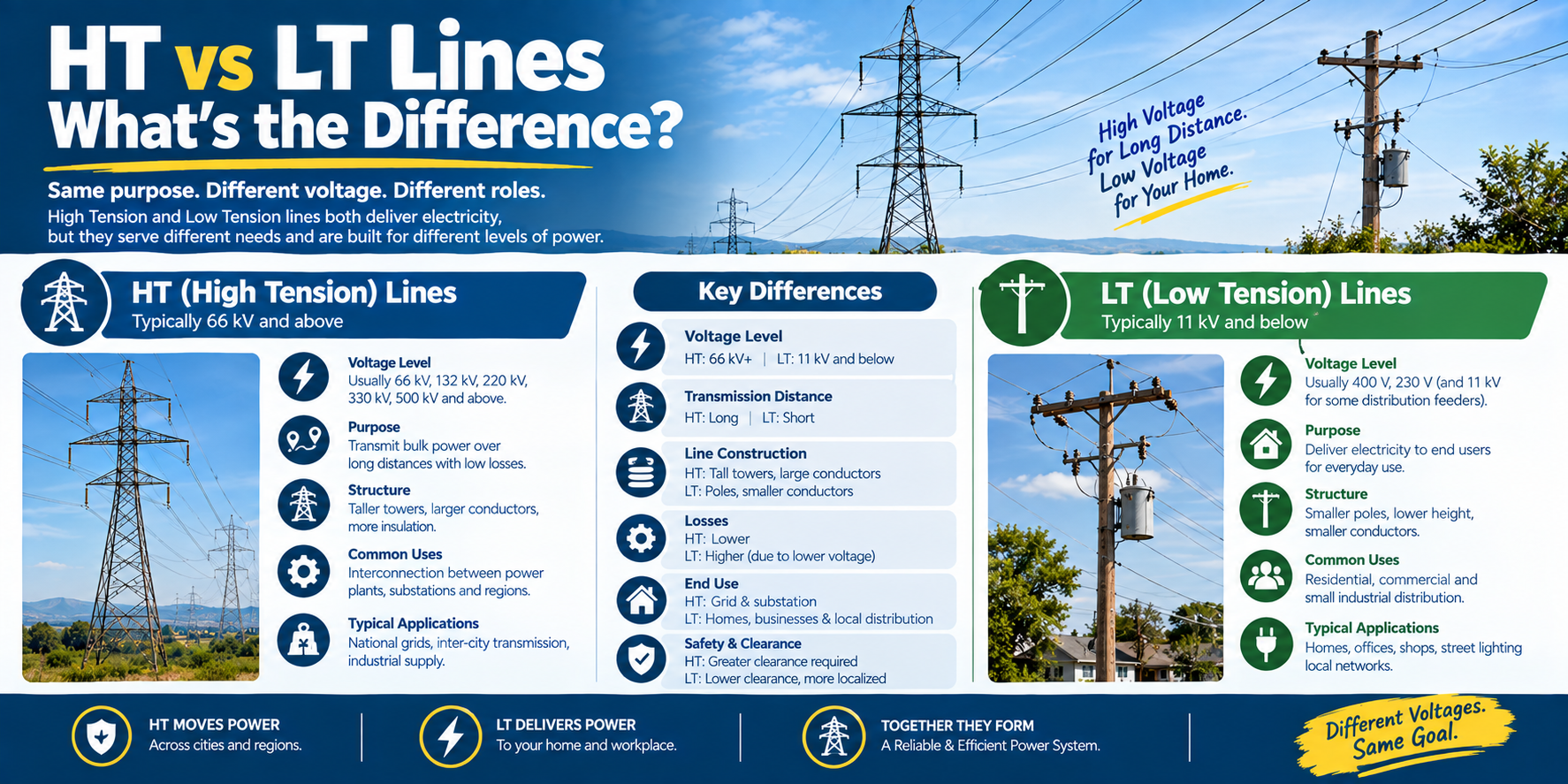
Power utilities commonly use pin insulators in overhead transmission and distribution lines ranging from 11 kV to 33 kV. For higher voltage systems, engineers generally use other types of insulators such as suspension insulators.
Working Principle of a Pin Insulator
The working principle of a pin insulator is based on electrical insulation and mechanical support.
When electricity flows through a power line conductor, the conductor carries high voltage while the pole or tower remains grounded. If technicians attach the conductor directly to the pole, electricity flows to the ground and causes short circuits, power loss, or safety hazards.
A pin insulator prevents this by acting as a dielectric barrier between the conductor and the support structure.
The design of the insulator includes ridges or sheds, which increase the creepage distance. Creepage distance is the path along the surface of the insulator between the conductor and the grounded structure. Increasing this distance helps prevent flashover or leakage currents, especially during rainy or polluted conditions.
Key Components of a Pin Insulator
A typical pin insulator consists of several important components that work together to ensure efficient insulation and structural stability.
Insulator Body
The body is the main insulating part of the device. It is usually made from porcelain, glass, or polymer materials that provide excellent electrical resistance and mechanical strength.
Metal Pin or Spindle
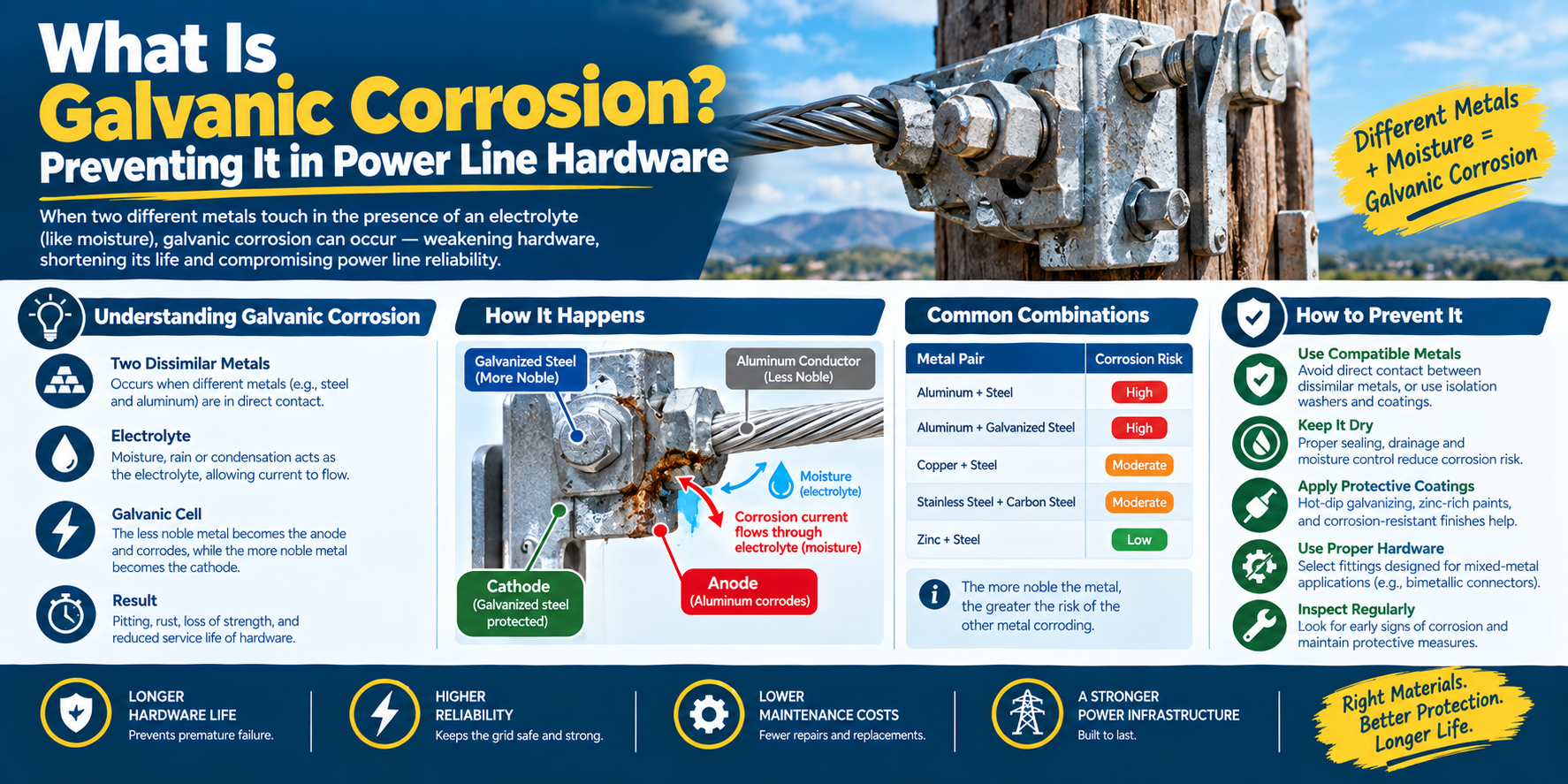
The metal pin, often made from galvanized steel, supports the insulator and attaches it to the cross-arm of the pole. It provides mechanical stability and ensures the insulator remains firmly mounted.
Groove
The groove located at the top of the insulator holds the electrical conductor securely in place.
Petticoats or Ribs
These are the umbrella-shaped ridges along the insulator body that increase the creepage distance and improve insulation performance during wet weather.
Cement Joint
Cement is used to fix the metal pin securely inside the insulator body, ensuring long-term mechanical stability.
Metal Cap
Some pin insulators include a protective metal cap that prevents moisture and environmental damage.
Types of Pin Insulators
Different types of pin insulators are used depending on the voltage level, mechanical load, and environmental conditions.
Single-Piece Pin Insulator
This is the simplest type, typically used for distribution lines up to 11 kV. It consists of a single porcelain or glass unit.
Two-Piece Pin Insulator
This design consists of two cemented parts and can handle voltages up to 22 kV. It provides improved mechanical strength and insulation.
Three-Piece Pin Insulator
Engineers use three-piece insulators in systems up to 33 kV because they provide greater creepage distance and mechanical durability.
Porcelain Pin Insulator
Utilities use porcelain insulators most widely because they provide excellent dielectric strength and resist environmental stress.
Glass Pin Insulator
Glass insulators allow easy visual inspection and have high dielectric properties.
Composite Pin Insulator
Modern composite insulators are made from fiberglass cores with silicone rubber housing. They are lightweight and perform well in polluted or coastal environments.

But, it’s not just about carrying soup (or electric currents). It’s about doing it efficiently, safely, and with a bit of style.
Advantages of Pin Insulators
Pin insulators offer several benefits in overhead power systems.
Reliable Electrical Insulation
They effectively prevent leakage current and protect the power system from ground faults.
High Mechanical Strength
Pin insulators can withstand mechanical loads caused by wind, conductor weight, and vibration.
Cost-Effective Solution
Compared with other types of insulators, pin insulators are relatively affordable and widely available.
Easy Installation
The simple design allows quick installation on cross-arms using insulator pins.
Long Service Life
Materials such as porcelain and polymer provide strong resistance to UV radiation, moisture, and pollution.
Limitations of Pin Insulators
Despite their advantages, pin insulators also have some limitations.
Voltage Limitations
They are generally suitable only for medium-voltage systems up to 33 kV.
Maintenance Requirements
Dust, pollution, or moisture accumulation can reduce insulation performance and require periodic cleaning.
Mechanical Damage
Severe mechanical stress or impact may cause cracking or breakage.
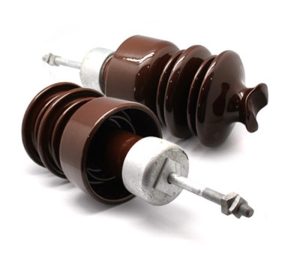
Pin insulators work because they are made from materials that don’t conduct electricity. This non-conductive nature means they can support the wire, guiding the electrical current, and preventing it from straying off course. At Dapeng power, we like to think of them as the loyal shepherd dogs guiding a flock of sheep (current) safely home.
Applications of Pin Insulators
Pin insulators are widely used in many electrical infrastructure projects.
Common applications include:
-
Overhead power transmission lines
-
Electrical distribution networks
-
Rural electrification projects
-
Railway signal power lines
-
Renewable energy transmission systems
-
Utility poles in urban and rural power grids
They are particularly useful for intermediate poles on straight runs of transmission lines, where mechanical tension is moderate.
Importance of Pin Insulators in Power Systems
Pin insulators play a vital role in maintaining the safety, reliability, and efficiency of electrical power networks. By preventing electrical leakage and supporting overhead conductors, they help maintain uninterrupted electricity supply.
High-quality pin insulators also reduce the risk of electrical faults, equipment damage, and power outages. Their ability to withstand harsh weather conditions makes them essential components in modern power distribution infrastructure.

Conclusion
There you have it. The humble pin insulator: small in size, but mighty in impact. From ensuring safety to boosting efficiency, these little wonders keep our electrified world running smoothly. Here’s to pin insulators, the unsung heroes that deserve their moment in the limelight.
FAQs
What is the best pin insulator for power lines?
The best pin insulator for power lines is usually porcelain or polymer, as they offer high mechanical strength, durability, and reliable insulation for distribution lines up to 33 kV.
Where can I buy pin insulators for power lines near me?
Pin insulators can be purchased from power line hardware manufacturers, electrical suppliers, or utility equipment distributors. Many companies supply them globally for transmission and distribution projects.
What is a glass pin insulator used for?
A glass pin insulator supports and insulates electrical conductors on overhead power lines while providing high dielectric strength and easy visual inspection.
What is an 11kV pin insulator?
An 11kV pin insulator is designed for medium-voltage distribution lines. It mounts on a pole-top pin and holds the conductor while preventing current leakage to the pole.
What is a crossarm insulator pin?
A crossarm insulator pin is a galvanized steel pin used to mount pin insulators securely on the cross-arm of a utility pole.
What is a pole top pin insulator?
Electric utilities install a pole top pin insulator on the top of a utility pole to support and isolate overhead conductors in power distribution systems.
Where can I find a pin type insulator PDF?
Manufacturers and engineering platforms provide pin type insulator PDFs on their websites, product catalogs, and electrical engineering resources, where users can find specifications and installation details.
What is a polymer pin insulator?
Manufacturers produce polymer pin insulators using fiberglass and silicone rubber, creating lightweight insulators that provide strong electrical insulation and excellent resistance to pollution and weather.