Lightning Protection for Overhead Power Lines
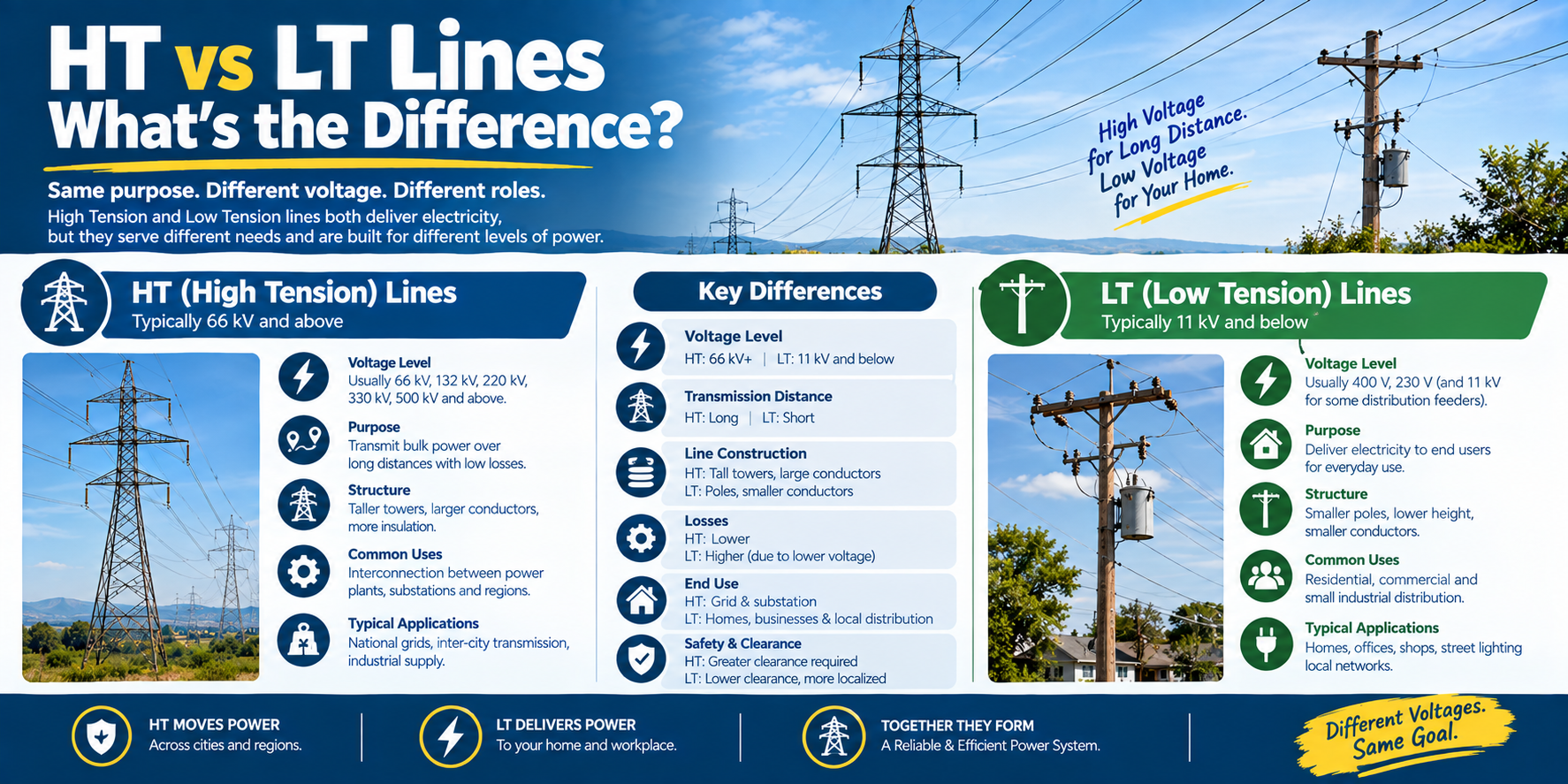
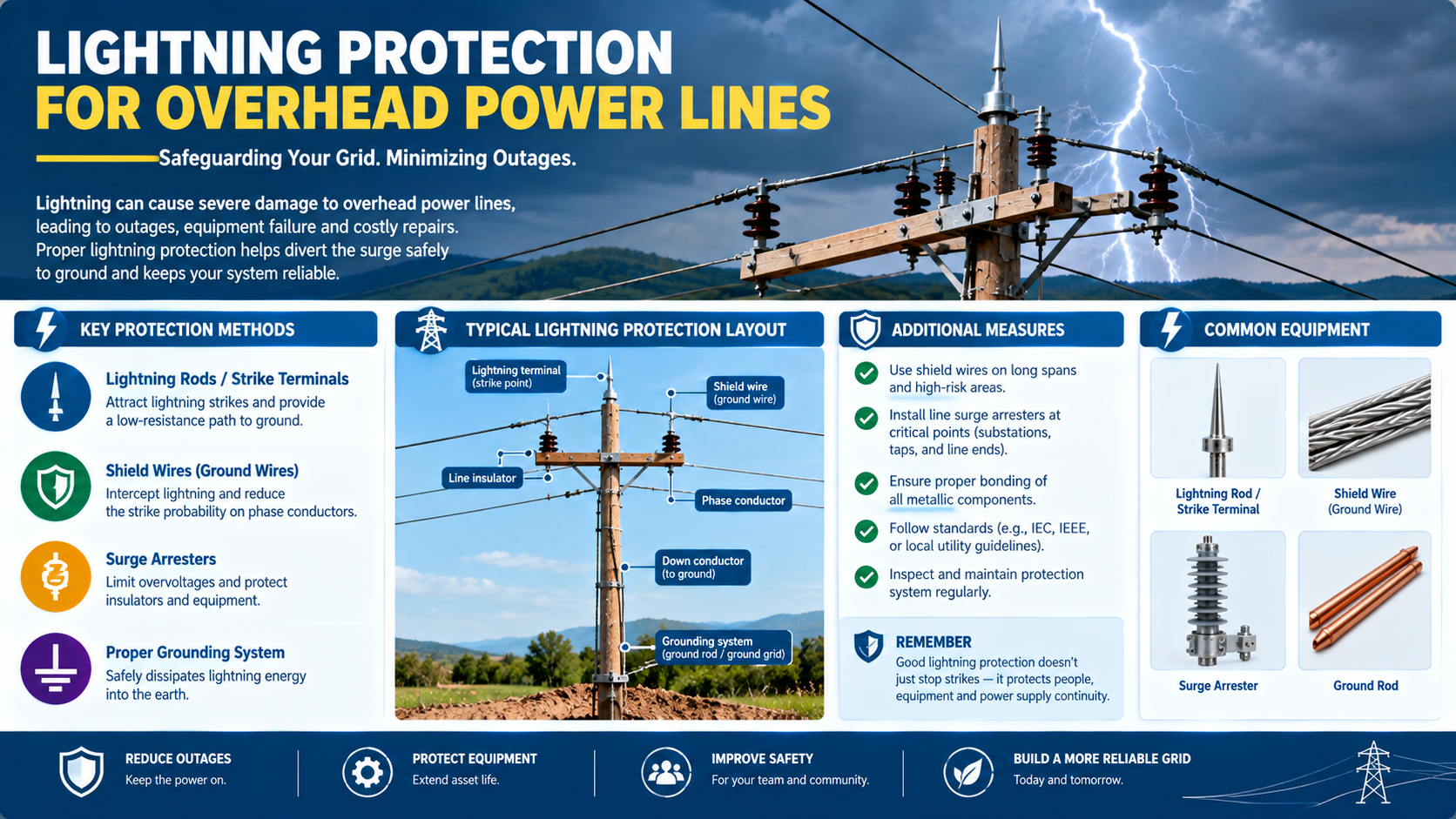
Overhead power lines are protected from lightning by three layers: a shield (earth) wire strung above the conductors to intercept strikes; a low-resistance earthing system at each structure to carry the lightning current safely into the ground; and surge arresters that limit the overvoltage reaching equipment. The shield wire only works if the structure is well earthed; a high earth resistance lets the lightning voltage rise and flash back to the conductors. So good lightning protection is really good earthing plus a shield wire.
Lightning is a leading cause of overhead line faults and equipment damage. Protecting a line means intercepting strikes, getting the current safely to earth, and limiting the surge, and earthing is the part that most often lets a line down. This guide explains how overhead lines are protected from lightning.
The Problem: What Lightning Does to a Line
A lightning strike injects an enormous, fast current into whatever it hits. If it strikes a conductor directly, it causes a huge overvoltage that can flash over insulators and damage equipment. Even a strike to the structure or shield wire can cause a back-flashover to the conductors if the current can’t get to earth quickly. So lightning protection has to both intercept strikes and drain their current safely away.
Layer 1: The Shield (Earth) Wire
A shield wire (also called an earth wire, ground wire, or overhead earth wire) is a conductor strung above the phase conductors, along the top of the towers. Its job is to intercept lightning before it reaches the phase conductors the strike hits the shield wire instead, which is bonded to earth, so the current flows to ground rather than into the live line.
On modern lines, the shield wire is often OPGW (Optical Ground Wire) a shield wire with optical fibers inside, giving lightning protection and communications in one cable. OPGW needs its own hardware suspension/tension assemblies, down-lead clamps, and earthing coordinated with the structure’s bonding. (See our OPGW-installation-hardware and ADSS-vs-OPGW guides.)
Layer 2: Low-Resistance Earthing (the Critical Part)
A shield wire only works if the structure is well earthed. When lightning hits the shield wire, the current has to flow down the structure and into the ground. If the earth resistance is high, the voltage at the structure rises sharply and can flash back across the insulators to the phase conductors (a back-flashover), causing exactly the fault the shield wire was meant to prevent.
So the earthing is the make-or-break part:
- A ground rod (copper-bonded or HDG) or several at each structure, driven deep enough for a low resistance.
- Coupling rods to drive deeper in poor soil.
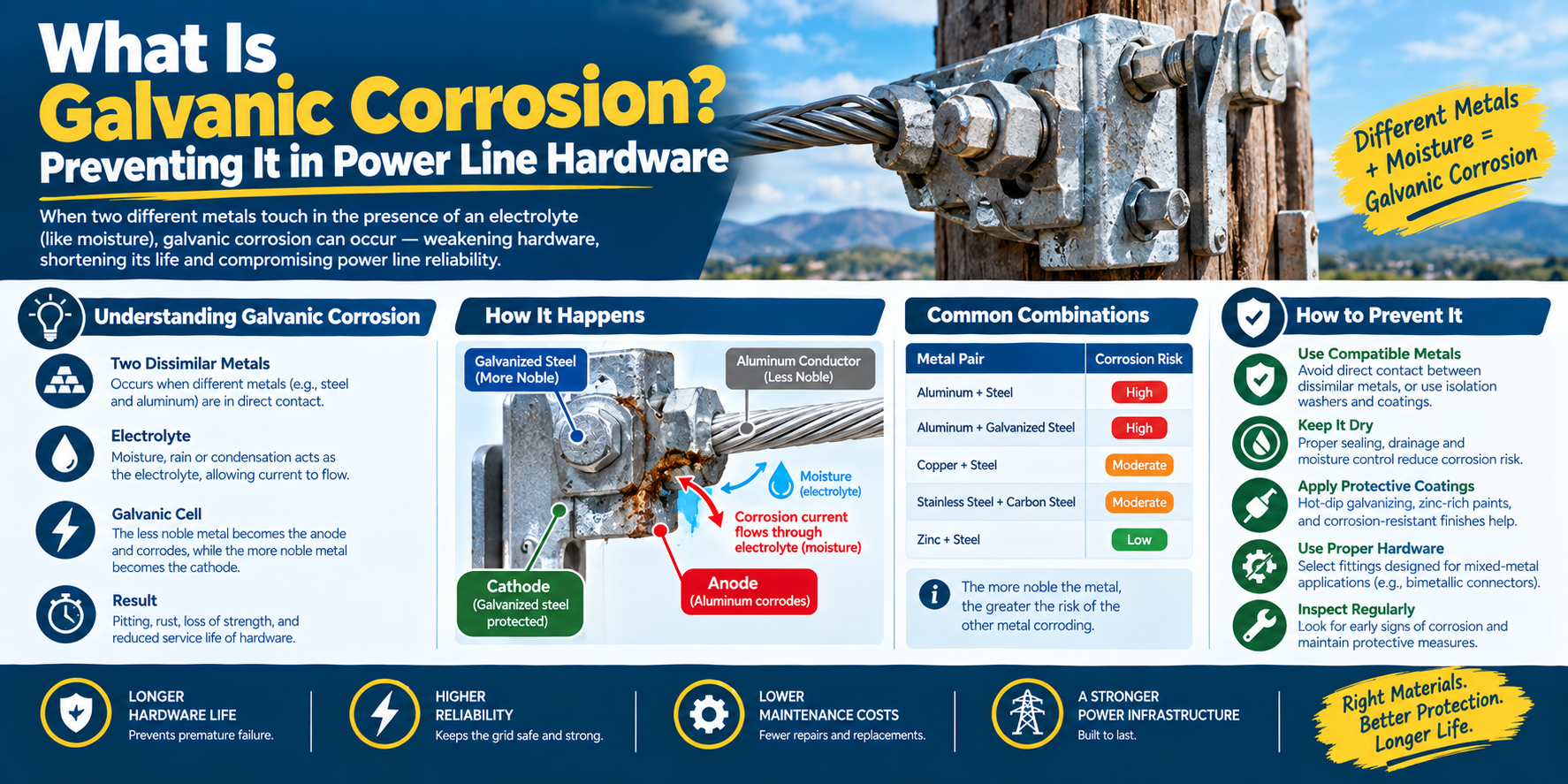
- Solid bonding of the shield wire and structure to the electrode with the right clamps rod, strand, and I-beam grounding clamps all in matched metals to avoid corrosion.
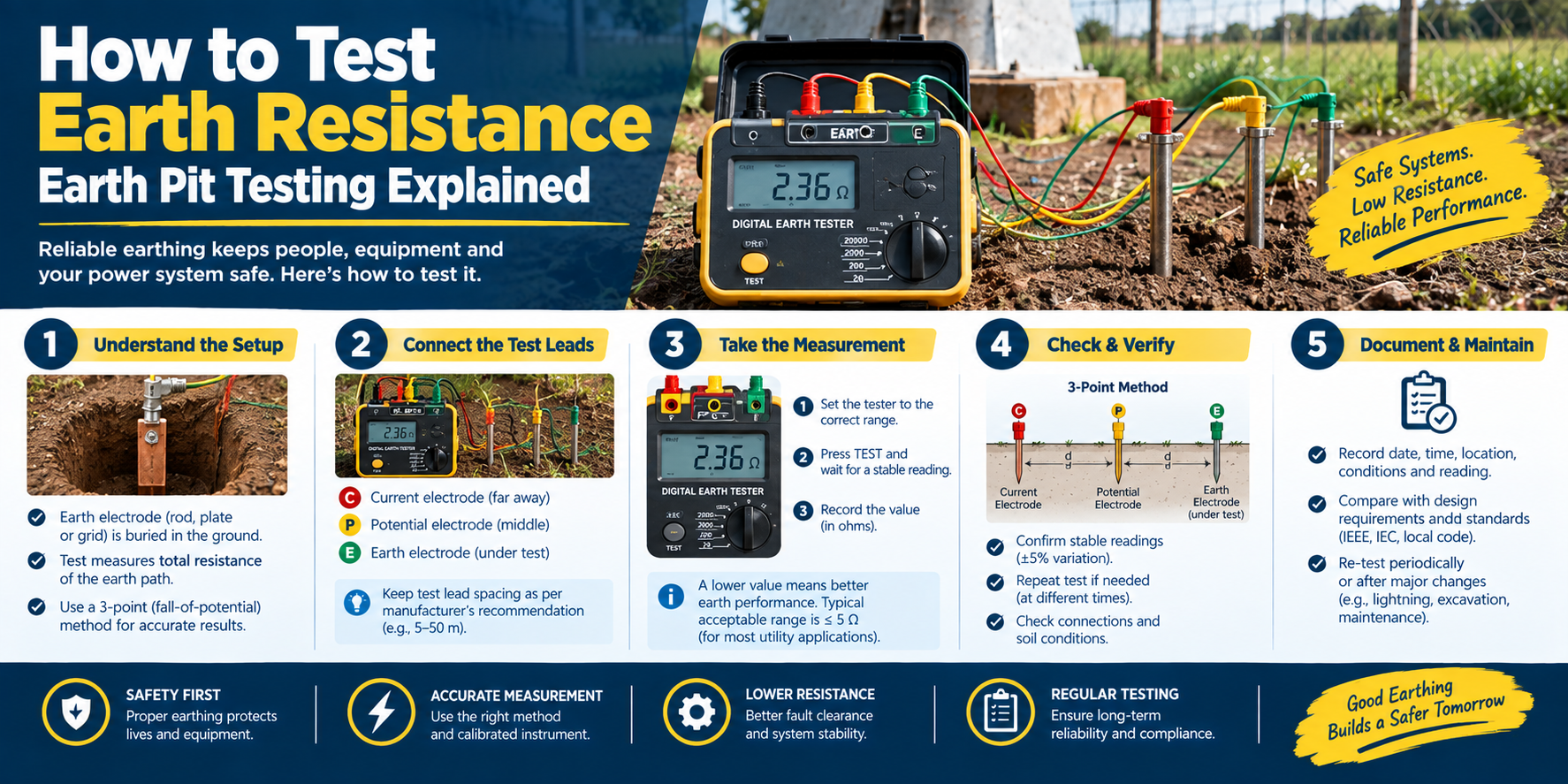
Getting the earth resistance low is the single most important thing for lightning performance. (See our how-to-ground-an-overhead-line and how-to-reduce-earth-resistance guides.)
Layer 3: Surge Arresters
Surge arresters are protective devices connected between the line and earth that limit the overvoltage reaching equipment. When a surge (from lightning or switching) exceeds a threshold, the arrester conducts, clamping the voltage and diverting the surge to earth, then returns to blocking normal voltage. Arresters are used especially to protect equipment (transformers, substations) and at vulnerable points on distribution lines. They too rely on a good earth connection to work.
The Three Layers Work Together
| Layer | Role | Depends on |
|---|---|---|
| Shield/earth wire | Intercepts strikes | Good earthing |
| Earthing system | Drains current to ground | Low earth resistance |
| Surge arresters | Limit overvoltage to equipment | Good earthing |
Notice that all three depend on good earthing the shield wire and arresters only protect if the current can reach earth without the voltage rising. That’s why lightning protection is, at its core, an earthing problem.
Lightning Protection for Power Lines: FAQ
How are overhead power lines protected from lightning? By three layers: a shield (earth) wire above the conductors to intercept strikes, a low-resistance earthing system at each structure to carry the current to ground, and surge arresters to limit the overvoltage to equipment. All three rely on good earthing to work.
What is a shield wire on a transmission line? A shield wire (earth/ground wire) is a conductor strung above the phase conductors to intercept lightning before it hits the live line. It’s bonded to earth so the strike current flows to ground. On modern lines it’s often OPGW, which adds optical fibers for communications.
Why does earthing matter for lightning protection? Because when lightning hits the shield wire, the current must reach earth quickly. If the earth resistance is high, the structure voltage rises and can flash back across the insulators to the conductors (back-flashover) causing the fault the shield wire was meant to prevent. Low earth resistance is essential.
What is a back-flashover? A back-flashover happens when lightning strikes the shield wire or structure, but the earth resistance is too high to drain the current fast enough, so the structure voltage rises and flashes over the insulators to the phase conductors. Good earthing prevents it.
What does a surge arrester do? A surge arrester limits the overvoltage from lightning or switching that reaches equipment. When the voltage exceeds a threshold, it conducts and diverts the surge to earth, clamping the voltage, then returns to blocking normal voltage. It protects transformers, substations, and vulnerable line points.
How do I lower earth resistance for lightning protection? Drive the ground rod deeper (coupling rods reach moist, low-resistivity soil), add spaced and bonded rods, and use corrosion-resistant, matched-metal bonding. Low earth resistance is the most important factor for lightning performance. (See our how-to-reduce-earth-resistance guide.)
The Bottom Line
Lightning protection for overhead lines has three layers a shield/earth wire to intercept strikes, a low-resistance earthing system to drain the current, and surge arresters to limit overvoltage and all three depend on good earthing. A shield wire above a poorly-earthed structure can still cause back-flashovers, so getting the earth resistance low is the heart of lightning protection.
DAPENG Power (DP Power Fitting) manufactures the earthing hardware that makes lightning protection work copper and galvanized ground rods, coupling rods, matched bonding clamps, and OPGW/shield-wire hardware. Tell us your structures, soil, and resistance target, and we’ll specify the earthing and shield-wire hardware.