How to Choose a Power Line Hardware Manufacturer in China
To choose a power line hardware manufacturer in China, verify five things: standards compliance (IEC, ASTM, ANSI, DIN, matched to your project), testing and certification (type-test reports and material certificates), factory-direct vs. trader (a real factory gives better price control, quality traceability, and OEM flexibility), quality systems (ISO, in-house galvanizing and testing), and communication and lead time (responsive engineering support, clear MOQ and delivery). Ask for test reports and factory evidence up front, a qualified manufacturer provides them readily.
China is a major source of overhead line fittings, insulators, and pole-line hardware, but suppliers vary enormously, from world-class factories to traders reselling unverified product. Choosing well protects your project’s quality, budget, and timeline. This guide gives you a practical framework for evaluating a Chinese power line hardware manufacturer.
Why the Manufacturer Choice Matters
Power line hardware is safety-critical it holds conductors, insulates voltage, and anchors structures. A fitting that fails the standard, corrodes early, or doesn’t meet its rated load puts the line at risk. And because much of this hardware is bought internationally and installed far from the factory, you often can’t inspect before it ships. So the manufacturer’s verifiable quality matters more than the headline price. The framework below is how professional buyers separate qualified manufacturers from risky ones.
1. Standards Compliance
The first filter: does the manufacturer build to the standards your project requires? Overhead line hardware follows international standards IEC (widely used globally), ASTM/ANSI (North America), DIN/EN (Europe), and national utility standards. A qualified manufacturer:
- States which standards each product meets.
- Can build to your specified standard, not just their default.
- Provides documentation proving compliance.
Ask early: “Can you supply this to [your standard], with documentation?” A vague answer is a warning sign.
2. Testing and Certification
Standards mean little without test evidence. A qualified manufacturer provides:
- Type-test reports (from accredited labs) for the product’s electrical and mechanical performance.
- Material certificates (e.g. steel grade, galvanizing thickness).
- Routine/sample test data for the batch you’re buying.
For safety-critical ratings insulator M&E strength, anchor holding capacity, conductor-fitting slip strength insist on test-backed figures, not just catalogue claims. A manufacturer that tests and documents is one you can trust with a safety-critical order.
3. Factory-Direct vs Trader
A crucial distinction in China sourcing: are you buying from the actual factory or a trading company reselling it?
- Factory-direct gives you better price control (no middleman margin), quality traceability (they made it), OEM/ODM flexibility (custom sizes, drilling, marking), and direct engineering support.
- Traders can add value in logistics but obscure who actually made the product and to what quality.
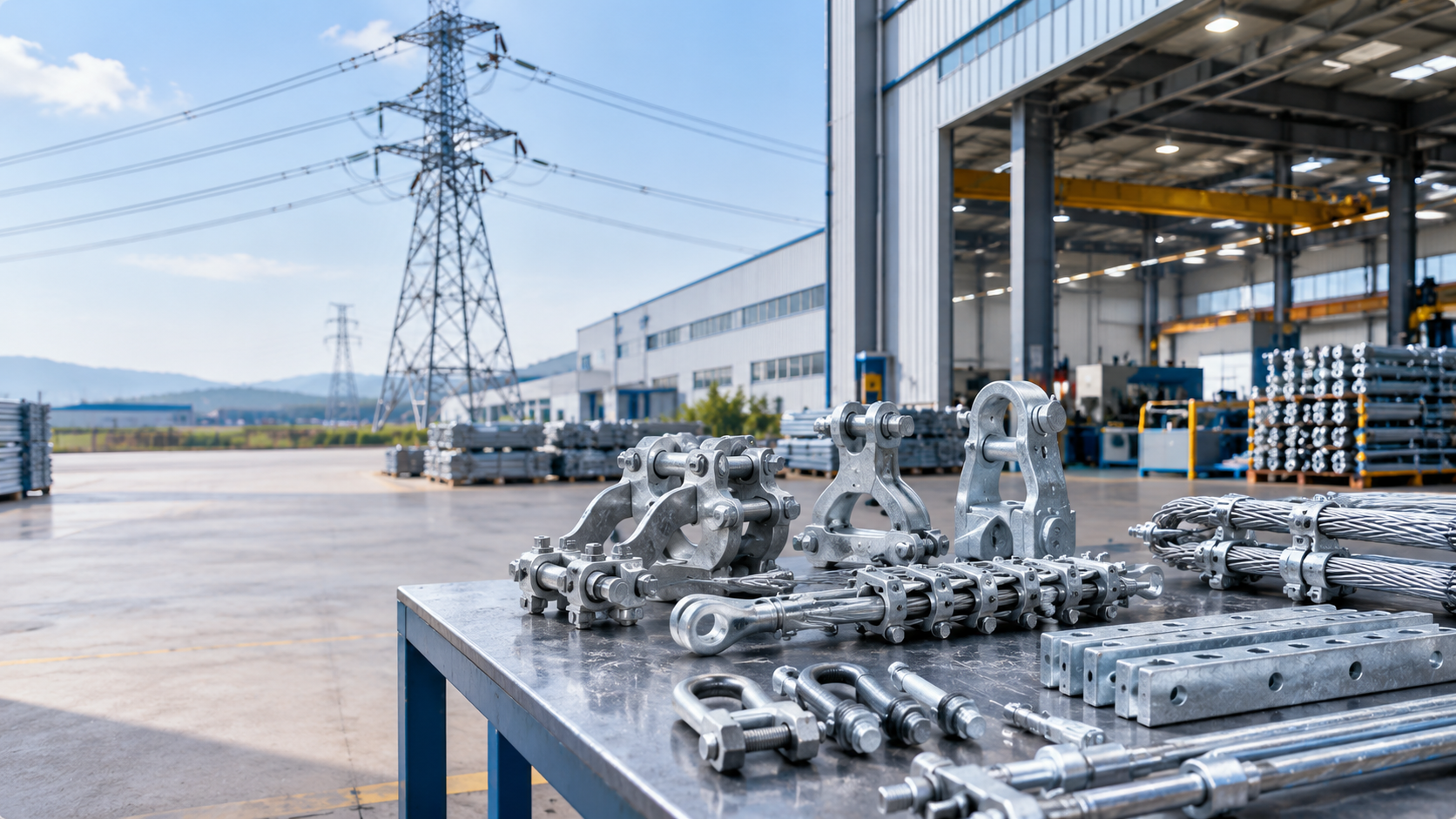
Verify the factory is real: ask for factory details, production capability, and where possible a factory audit or video tour. A genuine manufacturer is transparent about its facility. (DAPENG Power, for example, is a factory-direct manufacturer with in-house production.)
4. Quality Systems
Beyond individual test reports, look at the quality system:
- ISO 9001 (or equivalent) quality management.
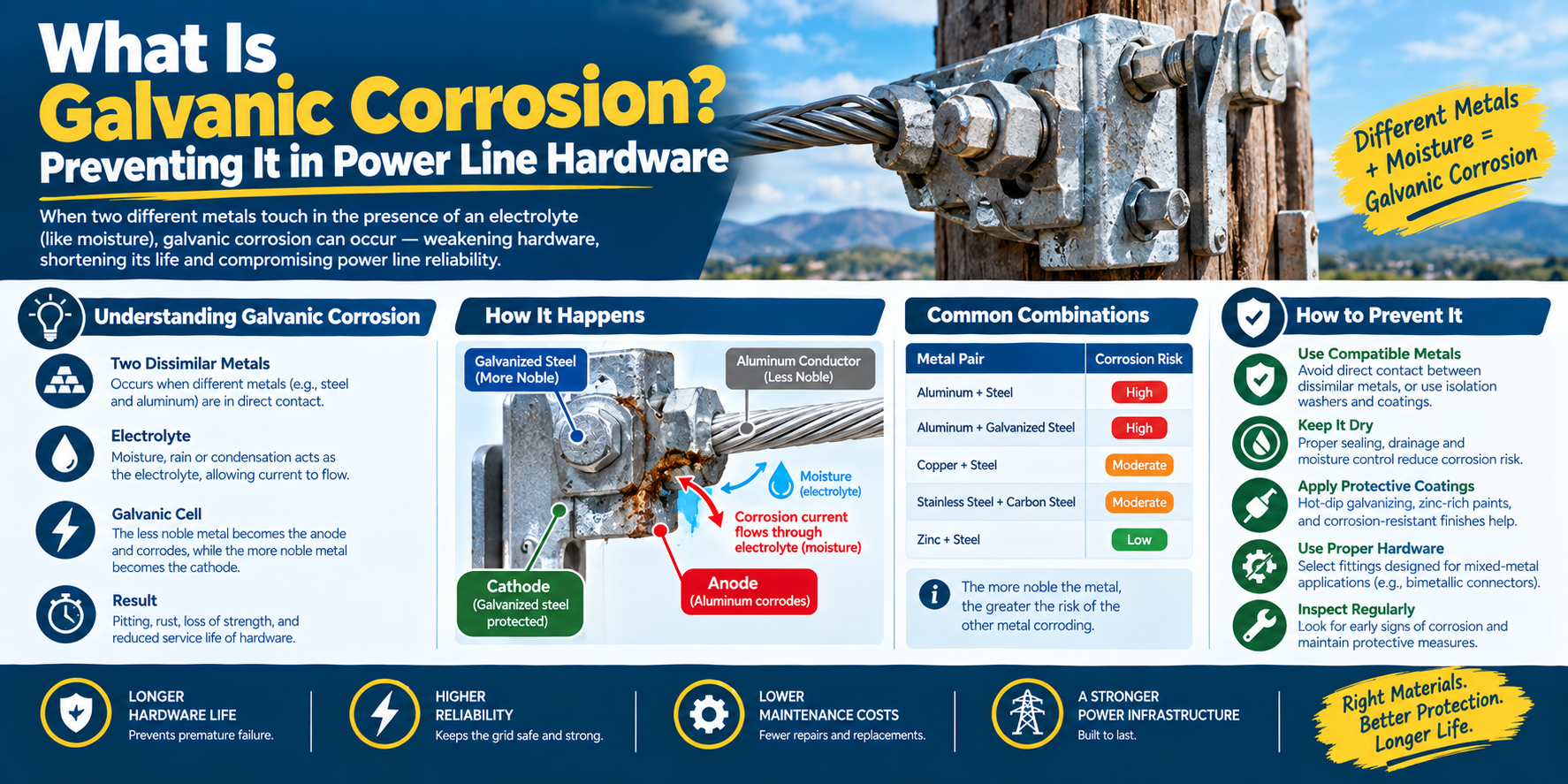
- In-house galvanizing hot-dip galvanizing to ISO 1461 done in-house gives better control than outsourced coating (and the coating is the corrosion life of most hardware see our finish guide).
- In-house testing the ability to test what they make.
- Consistency evidence of repeatable quality, not one good sample.
A manufacturer that controls its own galvanizing and testing controls its own quality.
5. Communication, MOQ & Lead Time
Finally, the practical relationship:
- Responsive engineering support can they answer technical questions precisely and quickly? This predicts how the whole order will go.
- Clear MOQ minimum order quantities that fit your project.
- Realistic lead time honest delivery estimates, and the capacity to meet them.
- After-sales documentation, certificates, and support with the shipment.
Slow, vague pre-sales communication usually predicts slow, vague delivery. Test it before you commit.
A Manufacturer Evaluation Checklist
| Check | What to ask for |
|---|---|
| Standards | Which standards each product meets; can they build to yours |
| Testing | Type-test reports, material certificates, batch data |
| Factory-direct | Factory details, capability, audit/tour |
| Quality system | ISO 9001, in-house galvanizing & testing |
| Commercial | MOQ, lead time, responsiveness, after-sales |
Run every candidate through this, and the qualified manufacturers separate themselves quickly.
Choosing a Power Line Hardware Manufacturer: FAQ
How do I verify a Chinese power line hardware manufacturer is legitimate? Ask for factory details and production capability, request a factory audit or video tour, and require standards documentation and test reports. A genuine manufacturer is transparent about its facility and provides evidence readily; evasiveness about the factory or test data is a warning sign.
What standards should power line hardware meet? The standards your project requires commonly IEC (global), ASTM/ANSI (North America), DIN/EN (Europe), and your utility’s national standard. A qualified manufacturer states which standards each product meets and can build to your specified standard with documentation.
Is it better to buy factory-direct or through a trader? Factory-direct usually gives better price control, quality traceability, OEM flexibility, and direct engineering support, because you’re dealing with the company that actually makes the product. Traders can help with logistics but obscure who made it and to what quality. Verify you’re dealing with a real factory.
What test documents should I request? Type-test reports from accredited labs for electrical and mechanical performance, material certificates (steel grade, galvanizing thickness), and batch/sample test data for your order. For safety-critical ratings, insist on test-backed figures rather than catalogue claims.
Why does in-house galvanizing matter? Because hot-dip galvanizing is the corrosion life of most steel hardware, and in-house galvanizing (to ISO 1461) gives the manufacturer direct control over that critical coating, rather than relying on an outside coater. It’s a sign of a manufacturer that controls its own quality end-to-end.
How do I judge a manufacturer before ordering? Test their pre-sales communication: ask a precise technical question and see how quickly and accurately they answer, confirm MOQ and lead time, and request documentation. Responsive, precise, transparent pre-sales behavior predicts a smooth order; slow or vague responses predict problems.
The Bottom Line
Choosing a power line hardware manufacturer in China comes down to verifiable quality: standards compliance, test evidence, a real factory (not a trader), a controlled quality system, and responsive commercial support. Ask for the documentation and factory evidence up front qualified manufacturers provide it readily, and that transparency is itself the strongest signal.
DAPENG Power (DP Power Fitting) is a factory-direct manufacturer of overhead line fittings, insulators, grounding, anchors, and pole-line hardware, building to IEC, ASTM, ANSI, and DIN standards with in-house production. Browse our product range from overhead line fittings and insulators to grounding and anchors and put us through the checklist above. Send your specification and standard, and we’ll respond with documentation and a quote.