HDG vs Electro-Galvanized vs Stainless: Choosing the Finish for Line Hardware
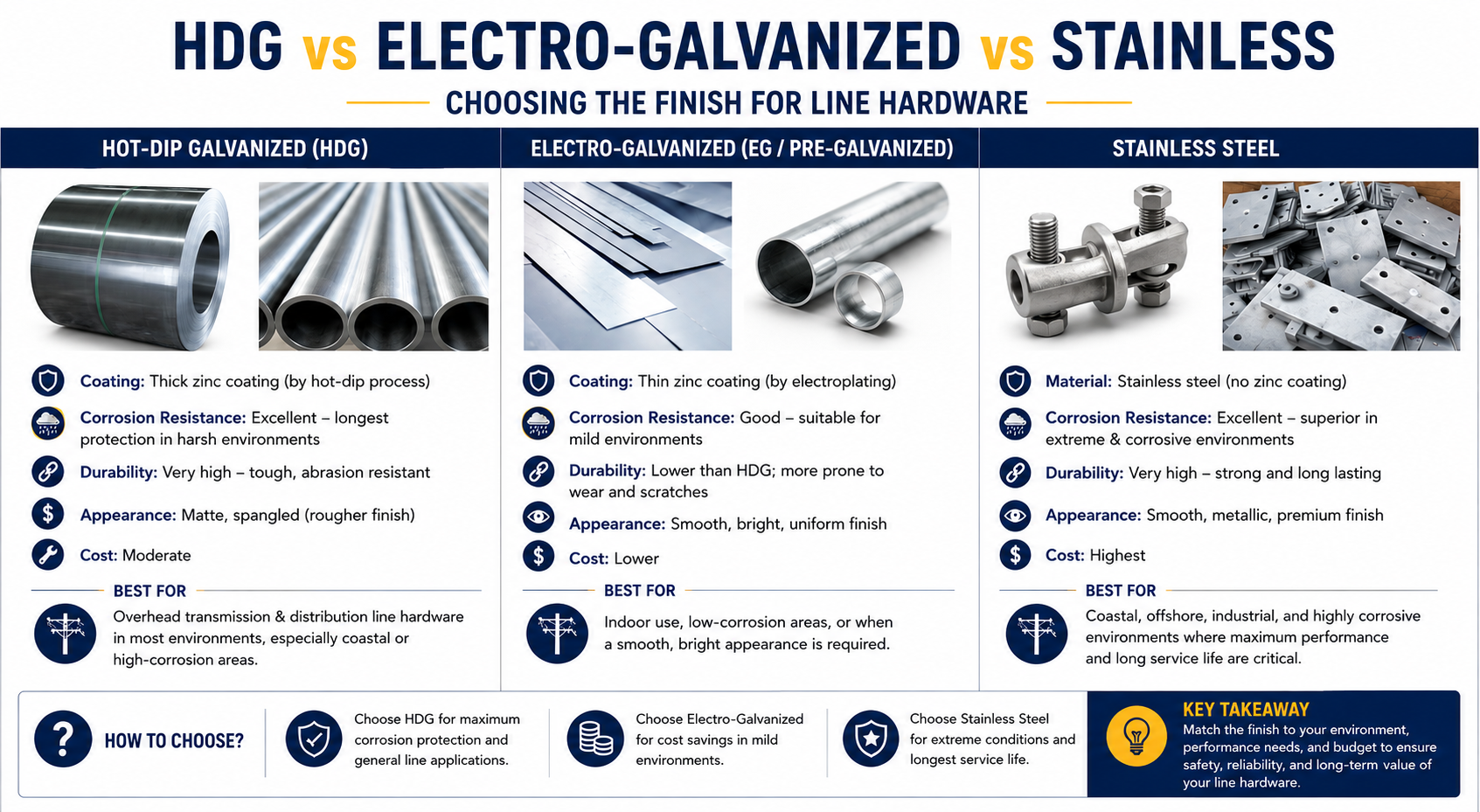
For most outdoor pole-line and transmission hardware, hot-dip galvanized (HDG) steel, a thick zinc coating applied to standards such as ISO 1461, is the standard finish, giving long corrosion life at reasonable cost. Electro-galvanized steel has a much thinner zinc coating; it’s fine for indoor or short-life uses but corrodes far sooner outdoors, so it’s usually the wrong choice for line hardware. Stainless steel resists corrosion without a coating and is chosen for the harshest environments (coastal, chemical) or where the highest longevity is required, at a higher cost. Match the finish to the environment and the design life.
Every piece of steel line hardware needs corrosion protection, and the finish you choose largely determines how long it lasts outdoors. Three finishes dominate, and confusing them especially hot-dip vs electro-galvanized is a costly mistake. This guide explains the difference and how to choose.
Why the Finish Matters
Bare steel corrodes outdoors. The finish is what stops it and how long it lasts depends heavily on which finish and how thick. A fitting that’s correct in every other respect will still fail early if its coating is too thin for the environment. Because line hardware is expected to last for decades in the weather, the finish isn’t a detail it’s a primary specification.
Hot-Dip Galvanized (HDG)
Hot-dip galvanizing dips the steel in molten zinc, bonding a thick zinc coating to it. The zinc protects the steel two ways: as a barrier, and sacrificially (the zinc corrodes first, sparing the steel even at scratches). HDG is applied to standards such as ISO 1461, which specifies the coating thickness by section.
HDG is the standard finish for outdoor line hardware crossarms, bolts, clamps, ground rods, anchors because its thick coating gives a long service life in most environments at a reasonable cost. When a spec says “galvanized” for line hardware, it almost always means hot-dip.
Electro-Galvanized
Electro-galvanizing deposits zinc electrically, producing a much thinner, brighter coating than hot-dip. That thin coating is fine for indoor, low-corrosion, or short-life applications, and it looks clean but outdoors it wears and corrodes through far sooner than hot-dip, exposing the steel.
For outdoor line hardware, electro-galvanized is usually the wrong choice it looks similar to HDG but doesn’t last. This is exactly the trap to watch for: a bright, cheap “galvanized” fitting may be electro-galvanized, not hot-dip. Always confirm which. (This is the same reason we flag the finish on fittings like the galvanized thimble a bright finish should be confirmed as HDG, electro-galv, or stainless before you rely on it outdoors.)
Stainless Steel
Stainless steel resists corrosion through its own alloy chemistry no coating to wear through. It’s chosen for the harshest environments (coastal salt spray, chemical/industrial atmospheres) and where the highest longevity is required, and for certain hardware like some banding straps and buckles where stainless is standard. The trade-off is higher cost, so stainless is used where the environment or design life justifies it, not as a default.
HDG vs Electro-Galvanized vs Stainless: Comparison
| Hot-Dip Galvanized | Electro-Galvanized | Stainless Steel | |
|---|---|---|---|
| Coating | Thick zinc (ISO 1461) | Thin zinc | None – alloy resists |
| Outdoor life | Long | Short | Longest |
| Cost | Moderate | Low | High |
| Best for | Most outdoor line hardware | Indoor/short-life only | Harsh environments, max longevity |
| Watch out | – | Looks like HDG, fails early outdoors | Cost |
How Do I Choose?
1. Default to hot-dip galvanized for outdoor line hardware
For the great majority of pole-line and transmission fittings, HDG is the correct, cost-effective finish long life, sacrificial protection, ISO 1461 standard. Specify HDG unless there’s a reason not to.
2. Step up to stainless for the harshest environments
In coastal, marine, or chemical environments or where the longest possible life is required stainless justifies its cost. Also use stainless where it’s the standard for the item (e.g. certain banding).
3. Avoid electro-galvanized outdoors
Reserve electro-galvanized for indoor or short-life uses. For outdoor line hardware, don’t accept a thin electro-galvanized coating in place of hot-dip confirm the finish, because they can look alike.
4. Watch dissimilar-metal (galvanic) contact
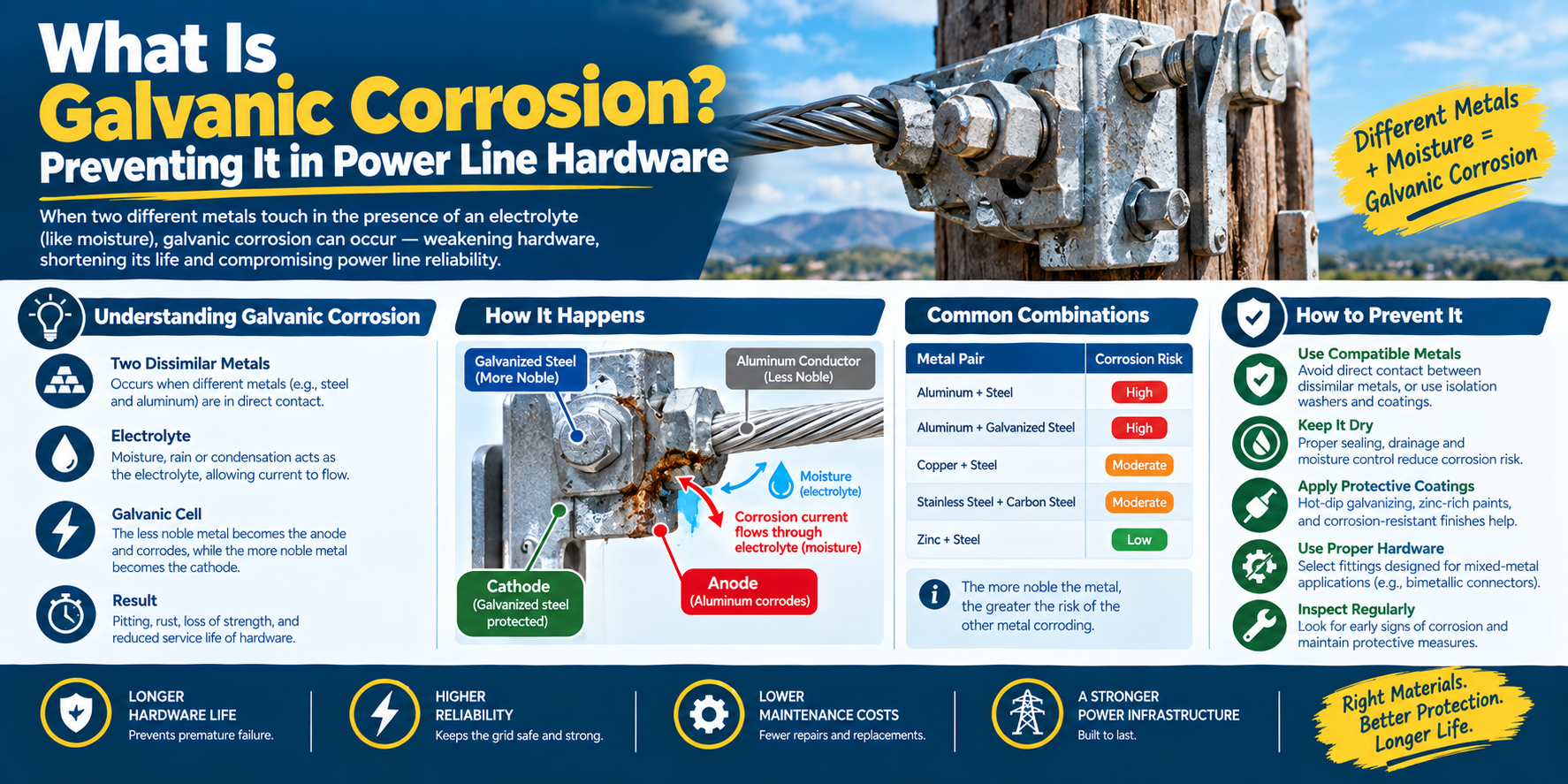
When you mix metals a stainless bolt in galvanized steel, or copper hardware against zinc consider the galvanic couple. In aggressive/wet environments, dissimilar metals in contact can accelerate corrosion of the less noble metal. Coordinate the metals across a connection, especially in earthing systems where a galvanic mismatch quietly raises resistance over time.
Choosing a Finish: FAQ
What is the difference between hot-dip and electro-galvanized? Hot-dip galvanizing bonds a thick zinc coating by dipping steel in molten zinc (to standards like ISO 1461); electro-galvanizing deposits a much thinner zinc coating electrically. Hot-dip lasts far longer outdoors; electro-galvanized is for indoor or short-life uses and corrodes sooner outside.
Which galvanizing is best for outdoor line hardware? Hot-dip galvanizing. Its thick, sacrificial zinc coating gives long outdoor life at reasonable cost, which is why it’s the standard for crossarms, bolts, clamps, rods, and anchors. Electro-galvanized is usually too thin for outdoor line hardware.
When should I use stainless steel instead of galvanized? In the harshest environments coastal salt, marine, or chemical atmospheres or where the longest possible service life is required, and for items where stainless is standard (like certain banding). Stainless resists corrosion without a coating but costs more, so it’s used where the environment or design life justifies it.
How can I tell if a fitting is hot-dip or electro-galvanized? Hot-dip coatings are thicker and often have a characteristic matte/spangled look; electro-galvanized is thinner and brighter. Because they can look similar, confirm the finish and standard (e.g. ISO 1461 for HDG) with the supplier rather than judging by appearance the difference in outdoor life is large.
What is ISO 1461? ISO 1461 is the international standard for hot-dip galvanized coatings on fabricated steel, specifying coating thickness by section. Specifying HDG to ISO 1461 sets a known, verifiable coating quality for outdoor durability.
Does mixing metals cause corrosion? It can dissimilar metals in contact in a wet or aggressive environment form a galvanic couple that accelerates corrosion of the less noble metal. Coordinate metals across a connection (and especially in earthing systems) to avoid galvanic corrosion; use compatible materials or bimetallic connectors where metals must meet.
The Bottom Line
The finish is a primary specification for line hardware. Hot-dip galvanized (ISO 1461) is the standard for most outdoor fittings long life, good value. Stainless steel is for the harshest environments and maximum longevity, at higher cost. Electro-galvanized is thin and belongs indoors don’t accept it outdoors in place of hot-dip. Match the finish to the environment and design life, and coordinate metals to avoid galvanic corrosion.
DAPENG Power (DP Power Fitting) hot-dip galvanizes its steel line hardware and supplies stainless where the environment or the item calls for it from crossarms and bolts to ground rods, anchors, and stainless banding. Tell us your environment and design life, and we’ll confirm the right finish and coating standard for every part.