Stay Plate vs Disk Anchor: Which Bearing Anchor?
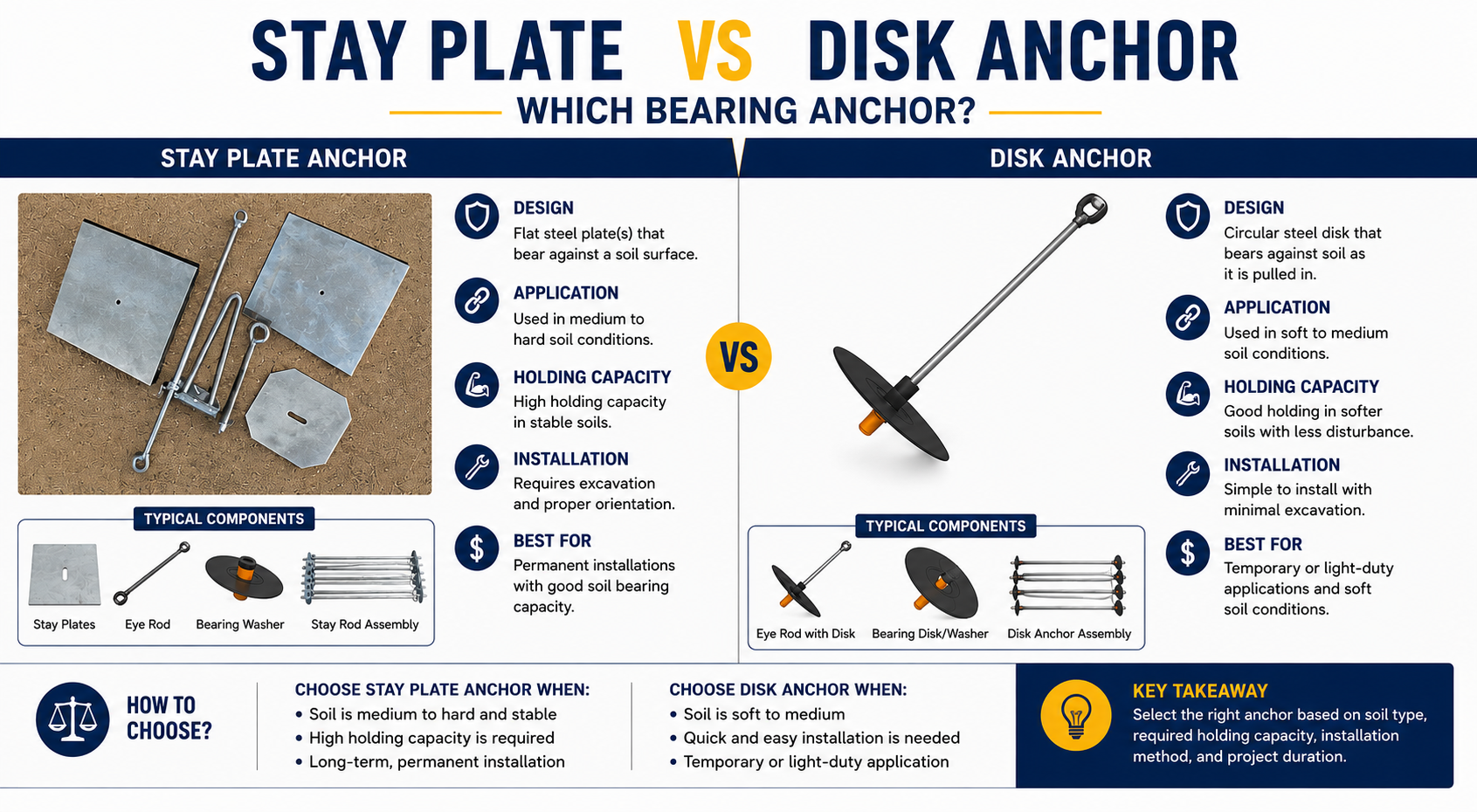
Both hold a guy by bearing area against the soil, but they’re assembled differently. A stay plate is a flat bearing plate that pairs with a separate stay rod and is dug into an excavation and backfilled a component-based, traditional plate anchor. A disk anchor is a complete manufactured disk-and-rod unit. Same bearing principle; the choice is dug-in components vs a complete unit, by your installation method and preference, both for soft to medium soils.
Two anchors work the same way: a plate or disk bearing against soil, yet they’re bought and installed differently, which confuses. This guide draws the line clearly so you order the right one.
Both Hold by Bearing Area
First, the shared principle. A bearing anchor resists the guy’s pull by making the soil do the work: the plate or disk must be pushed through a column of soil before the anchor can move. The bigger the bearing area and the deeper it’s set, the more soil it mobilizes, so the more it holds. Both the stay plate and the disk anchor develop their capacity this way, and both suit soft to medium soils where bearing area is effective. So the mechanism isn’t the difference the form is.
Stay Plate Dug-In Components
A stay plate is a flat steel bearing plate with a central hole. It’s used with a separate stay rod (or anchor rod) threaded through it, and it’s typically dug in: excavate a hole, set the plate against undisturbed soil, run the rod up to the surface, and backfill.
It’s the traditional, economical, component-based approach you assemble the plate and rod on site. It suits situations where excavation is easy and a dug-in plate is the practical route, and where buying the plate and rod separately fits the workflow.
Disk Anchor Complete Manufactured Unit
A disk anchor is a complete manufactured unit a bearing disk on a rod, supplied as one item. It uses the same bearing principle but comes ready as a unit rather than as a plate and rod to assemble on site.
It suits situations where you want a complete factory unit to install, with the disk and rod already matched, rather than assembling components in the field.
Stay Plate vs Disk Anchor: Comparison
| Stay Plate | Disk Anchor | |
|---|---|---|
| Mechanism | Bearing area against soil | Bearing area against soil |
| Form | Plate + separate rod | Complete disk-and-rod unit |
| Install | Dug in (excavate + backfill) | Set as a unit |
| Supply | Component-based | Complete factory unit |
| Best soil | Soft to medium | Soft to medium |
| Best for | Easy-excavation, component workflow | Complete-unit preference |
How Do I Choose?
The mechanism is the same, so choose by how you want to install and buy it:
- Stay plate if you’re building a dug-in plate anchor on site (excavate, set plate, run rod, backfill), want the economical component-based approach, and excavation is straightforward.
- Disk anchor if you want a complete manufactured unit with the disk and rod already matched, to install without assembling components.
Both need the holding capacity sized above the guy’s working tension for your specific soil, with your safety margin a datasheet figure to confirm, since bearing capacity varies with soil strength. And both connect to the guy the same way: rod to the surface, guy terminated with a grip or clamp, and the anchor sits within the ground-anchor family.
Where They Sit Among the Anchors
Stay plates and disk anchors are the bearing members of the anchor family, for soft-to-medium soils. For other ground you’d choose a different anchor: a drive/plate anchor for most soils, an expanding rock anchor for rock, or a screw anchor for turn able soils. Choose the anchor by the soil first, then within the bearing type — stay plate or disk anchor by your install preference.
Stay Plate vs Disk Anchor: FAQ
What is the difference between a stay plate and a disk anchor? Both hold a guy by bearing against the soil. A stay plate is a flat plate paired with a separate rod and dug into an excavation a component-based, traditional anchor. A disk anchor is a complete manufactured disk-and-rod unit. Same principle; the difference is component-based vs complete unit.
Do stay plates and disk anchors hold the same way? Yes both develop their holding capacity from bearing area against the soil: the plate or disk must be pushed through a column of soil before the anchor moves. Larger area and deeper setting mean more hold. Both suit soft-to-medium soils.
Which is better, a stay plate or a disk anchor? Neither is universally better they use the same mechanism. Choose a stay plate for a dug-in, component-based install where excavation is easy; choose a disk anchor for a complete manufactured unit. Base the choice on your install method and preference.
What soil are bearing anchors for? Stay plates and disk anchors work best in soft-to-medium soils where bearing area develops the hold. For rock use a rock anchor; for most common soils a drive anchor; for turn able soils a screw anchor. Match the anchor type to the soil first.
How much holding capacity do they need? Enough to exceed the guy’s working tension with your safety margin, in your specific soil. Because bearing capacity varies with soil strength, it’s confirmed on the datasheet for your ground, not estimated. Tell your supplier the guy tension and soil.
Does a stay plate come with the rod? The stay plate is the bearing plate; it pairs with a stay/anchor rod through its central hole. It can be supplied matched to your rod, or as a plate-and-rod set. A disk anchor, by contrast, comes as a complete disk-and-rod unit.
The Bottom Line
Stay plates and disk anchors both hold a guy by bearing against soft-to-medium soil the difference is assembly: the stay plate is a dug-in plate paired with a separate rod (component-based, traditional), while the disk anchor is a complete manufactured unit. Choose by your install method, size the capacity to the guy tension and soil, and select the anchor type by the soil first.
DAPENG Power (DP Power Fitting) makes both stay plates (with matching stay and anchor rods) and disk anchors within the full ground-anchor range. Tell us your soil, guy tension, and install preference, and we’ll recommend the bearing anchor and confirm its capacity.