How to Tap or Join a Conductor: PG Clamp vs Hot-Line Clamp vs IPC
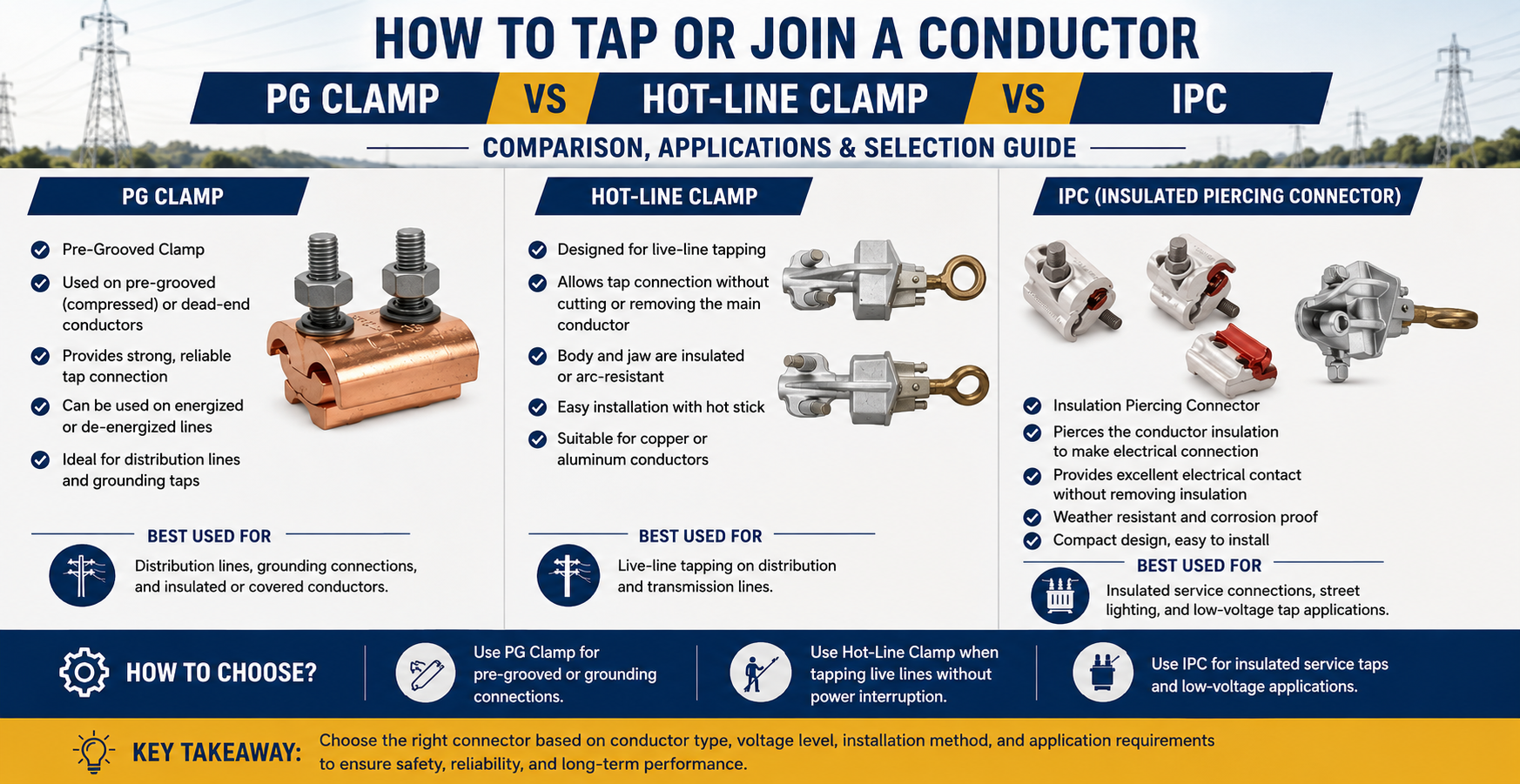
To connect or tap one conductor to another, you have three common tools. A parallel-groove (PG) clamp bolts two bare conductors together side by side as a permanent mechanical tap or joint. A hot-line clamp makes a connection you can attach and detach on an energized conductor with a hot stick used for live work and temporary connections. An insulation-piercing connector (IPC) taps an insulated conductor by piercing through the insulation to the core; no stripping needed. Choose based on whether the conductor is bare or insulated, and whether the connection is permanent or live-workable.
Making a reliable connection between conductors is routine but important; a poor connection overheats and fails. The right connector depends on the conductor and the situation. This guide compares the three you’ll use most.
Parallel-Groove (PG) Clamp Bolted Tap on Bare Conductors
A parallel-groove clamp holds two bare conductors side by side in parallel grooves, clamped together by bolts. It makes a permanent mechanical and electrical connection a tap (branching one conductor off another) or a joint. PG clamps are simple, robust, and widely used wherever a solid bolted tap is needed on bare conductors.
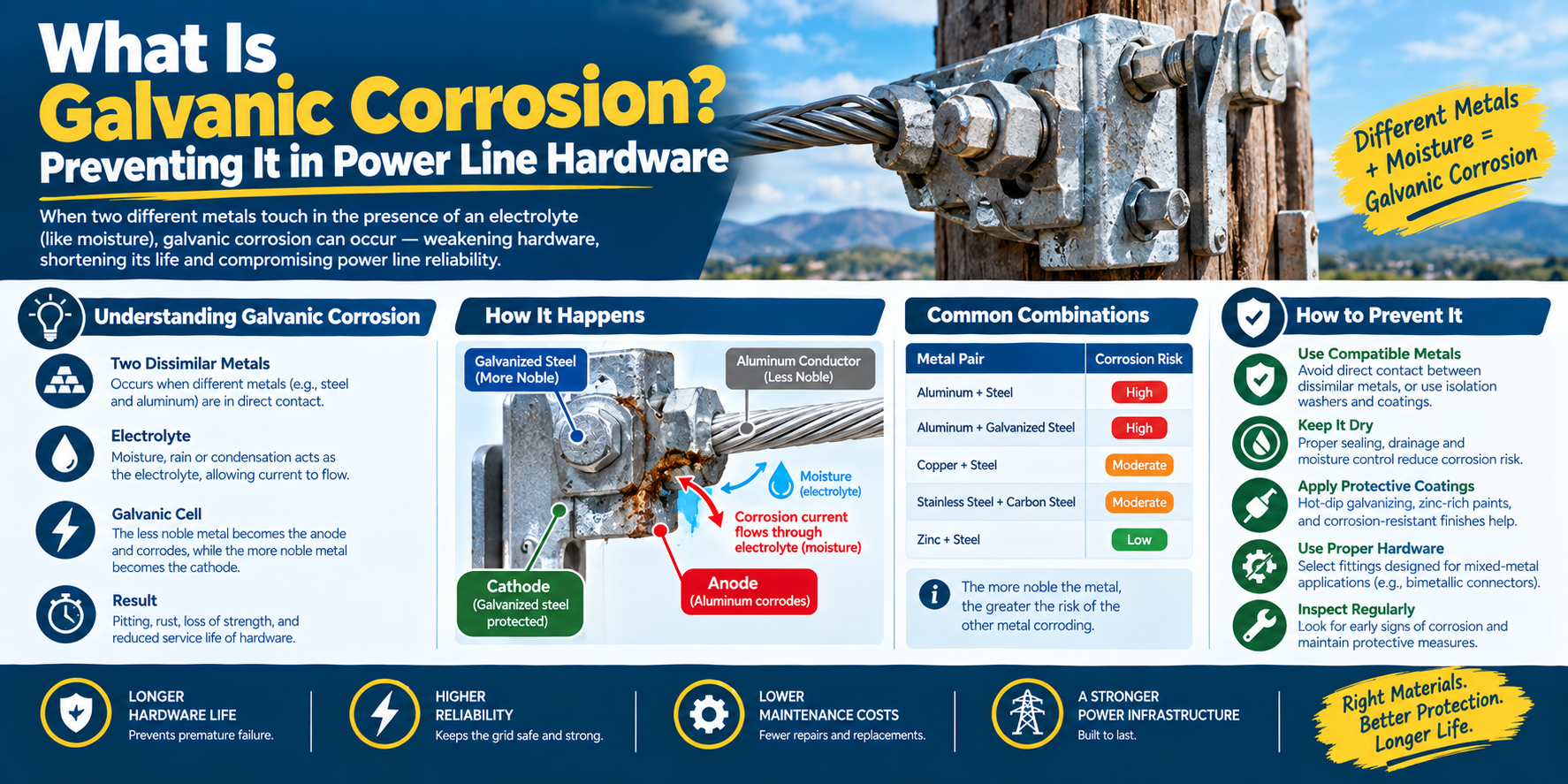
Key point dissimilar metals: if you’re connecting copper to aluminum, you need a bimetallic PG clamp designed for that junction. Joining copper and aluminum directly creates a galvanic couple that corrodes the connection; a bimetallic clamp (or the correct material) prevents it. Always match the clamp material to the conductors this is the difference between a joint that lasts and one that corrodes.
Hot-Line Clamp Live-Workable Connection
A hot-line clamp is designed to be attached and detached on an energized conductor using an insulated hot stick, without de-energizing the line. It’s used for live work and for temporary or switchable connections grounding leads, temporary jumpers, test connections where a permanent bolted clamp isn’t wanted.
The value is working safely on a live line: the clamp’s design lets a lineman make or break the connection at a distance with a stick. Where a connection must be made live, or removed and remade, the hot-line clamp is the tool.
Insulation-Piercing Connector (IPC) Tap Without Stripping
An insulation-piercing connector taps an insulated conductor (such as aerial bundled cable) by piercing teeth that penetrate the insulation and contact the core when the connector is tightened no stripping of the insulation required. As it’s tightened, the connector both pierces to make contact and seals around the piercing point.
IPCs are fast, reliable, and avoid the exposed connection a stripped tap would leave the standard way to tap insulated/bundled conductors. They’re sized to the main and tap conductor ranges.
PG Clamp vs Hot-Line Clamp vs IPC: Comparison
| PG Clamp | Hot-Line Clamp | IPC | |
|---|---|---|---|
| Conductor | Bare | Bare (energized) | Insulated |
| Connection | Permanent bolted | Live-workable, temporary/switchable | Pierces insulation, sealed |
| Stripping needed | Conductor already bare | Bare | No |
| Typical use | Bolted taps/joints | Live work, jumpers, grounds | Tapping ABC/insulated cable |
| Install | Bolted | Hot stick | Bolted, self-piercing |
How Do I Choose?
1. Is the conductor bare or insulated?
- Insulated (aerial bundled cable, etc.) → IPC (taps without stripping).
- Bare → PG clamp or hot-line clamp, depending on the next question.
2. Permanent, or live-workable/temporary?
- Permanent bolted tap/joint on bare conductor → PG clamp.
- Live work, or a connection you’ll make/break → hot-line clamp.
3. Same metal or dissimilar?
For copper-to-aluminum connections, use a bimetallic connector (or the correct material) to avoid galvanic corrosion. This applies especially to PG clamps and any permanent joint match the material to the conductors.
A Note on Span and Support Connectors
Tapping/joining is different from supporting a conductor. Holding a conductor at a span or crossing uses a span clamp or crossover clamp, and bundled sub-conductors are spaced with a bolted cable spacer. Those are support/spacing jobs, not electrical taps don’t confuse them with the connectors above. All are part of the overhead line fittings range.
Tapping or Joining a Conductor: FAQ
What is a parallel-groove clamp used for? A parallel-groove (PG) clamp bolts two bare conductors together side by side to make a permanent mechanical and electrical tap or joint. It’s widely used for bolted taps on bare conductors. For copper-to-aluminum connections, use a bimetallic version to avoid galvanic corrosion.
What is a hot-line clamp? A hot-line clamp is designed to be attached and detached on an energized conductor using an insulated hot stick, without de-energizing the line. It’s used for live work and for temporary or switchable connections like jumpers and grounding leads.
What is an insulation-piercing connector? An IPC taps an insulated conductor by piercing teeth that penetrate the insulation to contact the core when tightened no stripping required. It’s the standard way to tap insulated or aerial bundled cable, making a sealed connection.
How do I tap an insulated cable without stripping it? Use an insulation-piercing connector (IPC). Its teeth pierce the insulation to reach the conductor core as you tighten it, and it seals around the piercing point so you tap the cable without exposing or stripping the insulation.
Can I connect copper and aluminum conductors directly? No connecting copper and aluminum directly creates a galvanic couple that corrodes the connection. Use a bimetallic connector designed for the dissimilar-metal junction (or the correct material) so the joint lasts. This is essential for reliable copper-to-aluminum connections.
What’s the difference between a PG clamp and a hot-line clamp? A PG clamp makes a permanent bolted connection on bare conductors. A hot-line clamp is made to be attached and detached on an energized conductor with a hot stick for live work and temporary/switchable connections. Permanent vs live-workable is the key difference.
The Bottom Line
Choose the conductor connector by the conductor and the situation: PG clamp for a permanent bolted tap on bare conductors, hot-line clamp for live-workable or temporary connections on energized bare conductors, and IPC to tap insulated cable without stripping. And for any dissimilar-metal (copper-aluminum) joint, use a bimetallic connector to avoid galvanic corrosion.
DAPENG Power (DP Power Fitting) manufactures the connector range parallel-groove clamps, hot-line clamps, and insulation-piercing connectors plus the span and crossover clamps and spacers that support conductors, all within the overhead line fittings range. Tell us your conductor (bare/insulated, material, size) and the connection, and we’ll recommend the right connector.