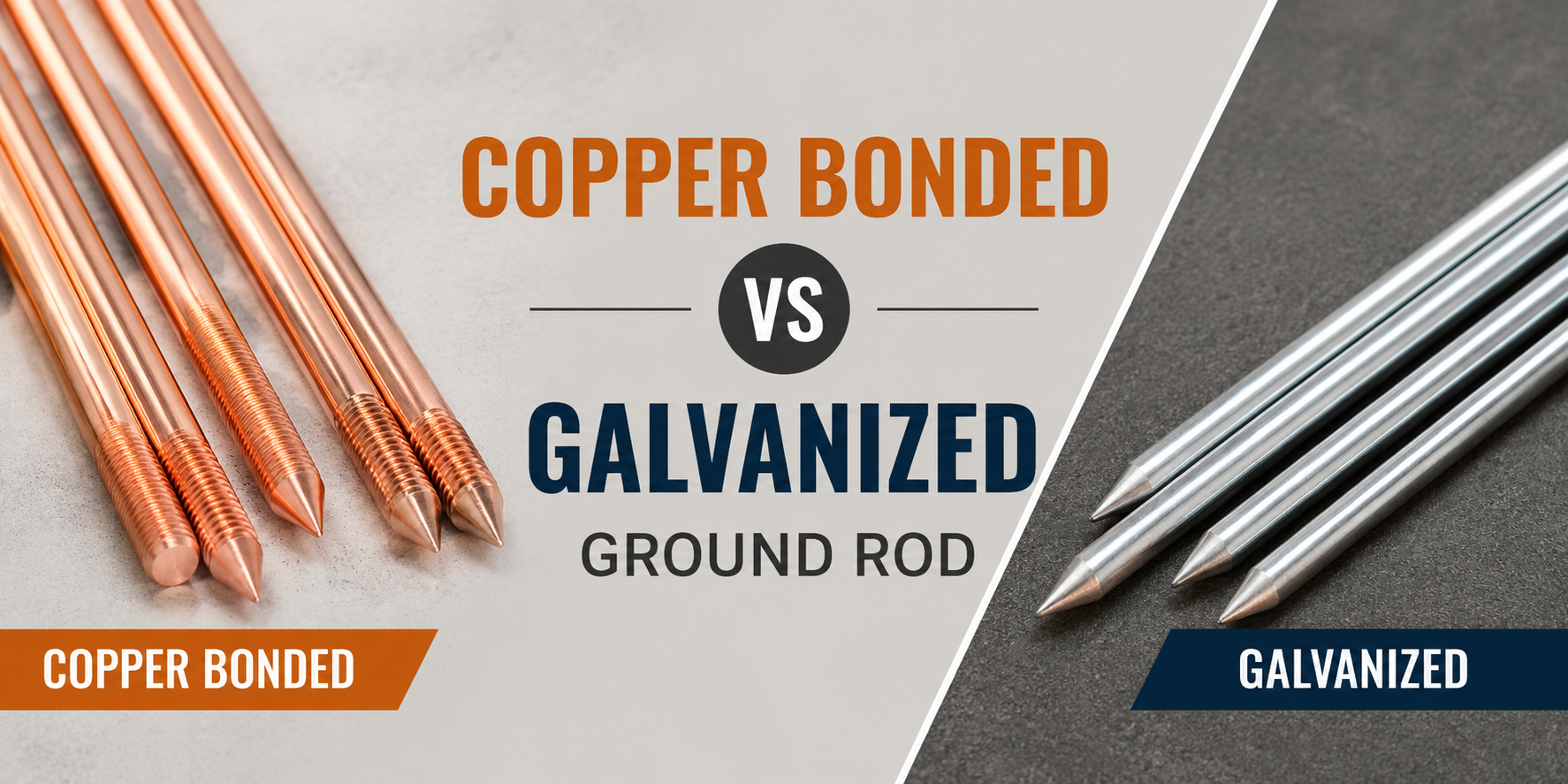
Copper Bonded vs Galvanized Ground Rod: Which Should You Use?
A copper-bonded ground rod (a steel core with a thick, molecularly bonded copper layer) lasts longer in most soils and is the standard for permanent, long-life earthing especially where the earth conductors are copper. A galvanized (hot-dip zinc-coated) ground rod is more economical and works well where the design life is shorter or the surrounding earthing metal is zinc/steel. The decisive factor is often galvanic corrosion: match the rod metal to your earth conductor so you don’t build a corrosion cell in the soil. And beware a hidden trap a thin copper-electroplated rod is not the same as a copper-bonded rod, and it fails far sooner.
Choosing a ground rod looks simple until you realize the wrong choice corrodes underground, silently, where no one inspects it until the earthing system no longer protects as designed. This guide compares copper-bonded and galvanized rods honestly: service life, the galvanic-corrosion trap, cost over the life of the installation, and the one specification that separates a good copper rod from a cheap one.
What Is a Copper Bonded Ground Rod?
A copper-bonded ground rod (sometimes called copper-clad) is a steel core with a copper layer bonded to its surface. It combines two properties:
- The steel core gives the rod the strength to be driven into the ground.
- The copper layer carries fault and lightning current well and resists corrosion in soil far better than bare or galvanized steel.
You get the drivability of steel and the conductivity and corrosion resistance of copper in one electrode. For genuine copper-bonded rods, the industry standard is a substantial copper thickness commonly around 250 microns (0.010 inch), applied to standards such as UL 467. That thickness is what gives the rod its long service life.
What Is a Galvanized Ground Rod?
A galvanized ground rod is a steel rod coated in zinc by hot-dip galvanizing. The zinc protects the steel underneath: it corrodes first, sacrificially, sparing the steel so the rod’s life depends on how thick the zinc coating is and how aggressive the soil is.
Galvanized rods are strong, economical, and reliable for a great many installations. Where galvanized steel meets the required service life and the earth resistance target, a galvanized rod is often the correct, cost-effective choice you don’t always need the longevity of copper.
Copper Bonded vs Galvanized: The Comparison
| Copper Bonded | Galvanized | |
|---|---|---|
| Construction | Steel core + bonded copper layer | Steel rod + zinc coating |
| Service life | Longer in most soils | Good; depends on zinc thickness & soil |
| Conductivity | Higher (copper surface) | Lower (steel) |
| Corrosion resistance in soil | Higher | Moderate; zinc is sacrificial |
| Cost | Higher | Lower |
| Best for | Long-life, permanent earths; copper earthing systems | Shorter design life; zinc/steel earthing systems; tighter budgets |
| Galvanic match with copper conductor | Compatible | Mismatch corrosion risk |
How Do I Choose Between Copper Bonded and Galvanized?
The decision usually comes down to four things:
1. Design life
If the installation must last decades a substation earth, a critical structure, a long-design-life asset the copper-bonded rod’s longer life usually justifies its cost. For a shorter design life, galvanized may serve just as well at lower cost.
2. Soil aggressiveness
Aggressive soils low-resistivity, high-chloride (coastal), or otherwise corrosive consume a zinc coating faster, shortening a galvanized rod’s life. In those conditions, copper-bonded’s superior corrosion resistance often wins. In benign soils, galvanized lasts longer and the gap narrows.
3. Conductivity requirement
Where conductivity is prioritized (carrying high fault or lightning current efficiently), the copper surface of a copper-bonded rod is an advantage.
4. Galvanic compatibility the factor people forget
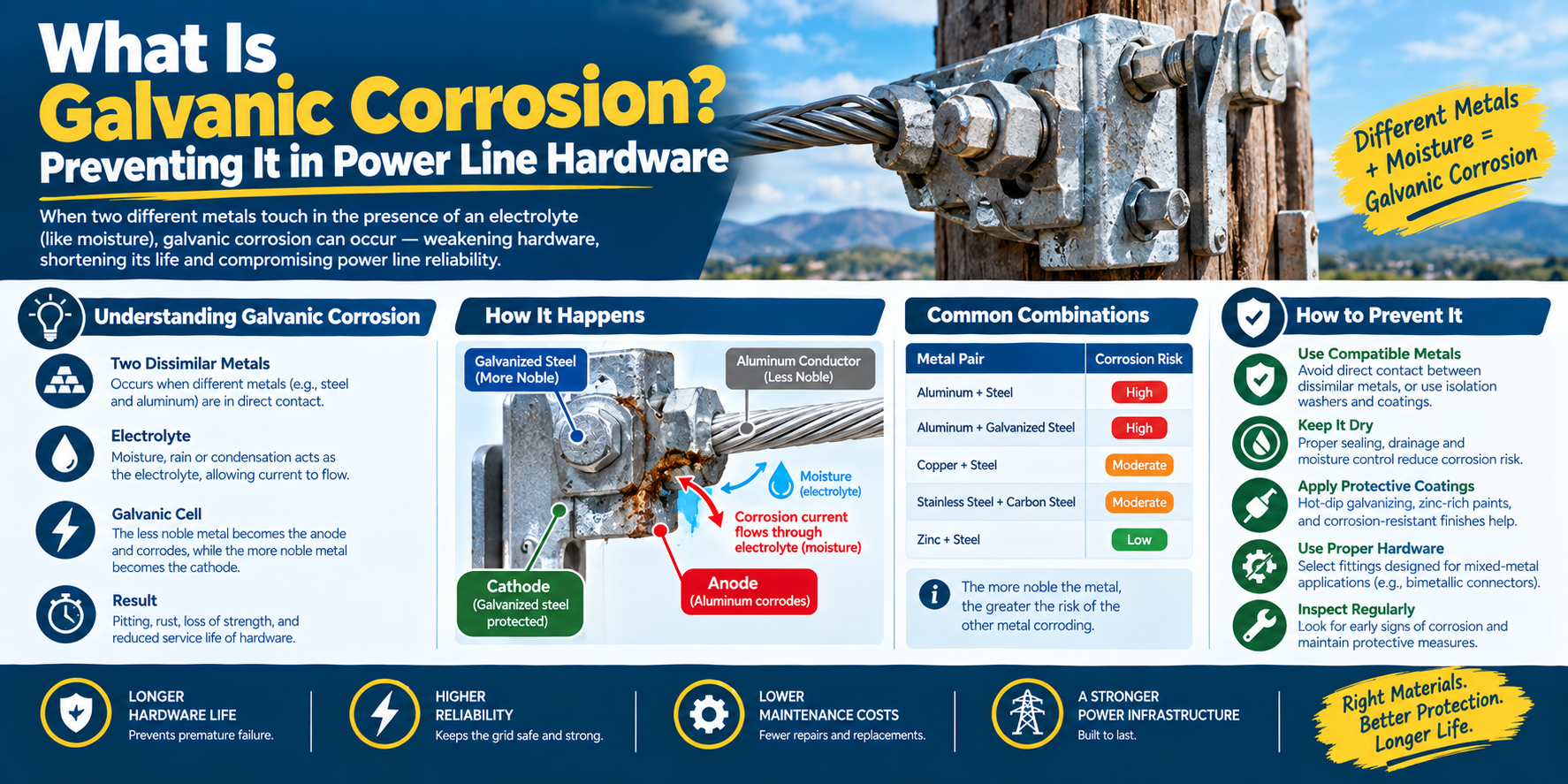
This is the one that quietly ruins earthing systems. When you connect dissimilar metals in the soil, you build a galvanic cell a battery and one metal corrodes preferentially. If your earth conductors and connections are copper, pairing them with a galvanized (zinc/steel) rod creates a galvanic couple that corrodes the connection over time and raises the earth resistance. Match the rod metal to your earthing system’s metal: copper conductors → copper-bonded rod; zinc/steel system → galvanized rod. Getting this wrong is a common, expensive, invisible mistake.
The short rule: copper-bonded for long-life, high-conductivity, aggressive-soil, or copper-conductor systems; galvanized for shorter design life, benign soil, zinc/steel systems, or tighter budgets and always match the metals to avoid galvanic corrosion.
The Hidden Trap: Copper Bonded vs Copper Electroplated
Here is the part that catches buyers out, and the reason to read a spec sheet carefully rather than just the word “copper.”
Not every “copper” ground rod is a copper-bonded rod. There are two very different products that can look almost identical:
- Copper-bonded (copper-clad): a thick copper layer, molecularly bonded to the steel typically around 250µm / 0.010″ to UL 467. This is the genuine long-life rod.
- Copper-electroplated: a thin electroplated copper flash often just tens of microns not bonded the same way. It looks similar, costs less, and wears and corrodes through far sooner, exposing the steel and dramatically shortening the rod’s life.
A rod’s longevity claim only holds if the copper is genuinely bonded and thick enough. So the specification to pin down is the copper thickness and the bonding method not just the word “copper.” If a supplier is vague about the copper thickness or bonding method, treat that as a warning sign: you may be buying a thin electroplated rod described as a copper-bonded one.
What to ask for, in writing:
- The copper thickness (in microns or thousandths of an inch).
- The bonding method (molecularly bonded / copper-clad vs electroplated).
- The standard it’s made to (e.g. UL 467 for copper-bonded).
An honest supplier states these plainly. At DAPENG Power we believe the buyer should know exactly which grade they’re getting because on an earthing electrode that will sit buried for decades, the copper thickness is the value.
Cost Over the Life of the Installation
A ground rod’s price is not its cost. A cheaper rod that corrodes and has to be supplemented or replaced or worse, that quietly raises earth resistance until the protection is compromised costs far more than its purchase price. When comparing copper-bonded and galvanized (and especially when a “copper” rod is suspiciously cheap), compare service life against the installation’s design life:
- If the rod outlasts the installation, you paid once.
- If the rod corrodes first, you pay again in labor, in re-testing, and potentially in a failed earth.
For long-life assets in aggressive soils, copper-bonded’s higher purchase price is often the lower lifetime cost. For shorter-life or benign-soil installations, galvanized’s lower price is genuinely economical. The wrong choice is a thin electroplated rod sold as if it were copper-bonded that’s the option that looks cheapest and costs most.
Copper Bonded vs Galvanized Ground Rod: FAQ
Which lasts longer, copper bonded or galvanized ground rod? A genuine copper-bonded rod (thick bonded copper) generally lasts longer than a galvanized rod in most soils, especially aggressive ones, because copper resists soil corrosion better than a sacrificial zinc coating. In benign soils with a shorter design life, a galvanized rod can last long enough at lower cost.
What is the difference between copper bonded and copper electroplated ground rods? Copper-bonded rods have a thick copper layer (commonly ~250µm/0.010″ to UL 467) molecularly bonded to the steel. Copper-electroplated rods have only a thin copper flash that wears through much sooner. They can look identical, but the electroplated rod is a different, inferior, shorter-lived product. Always confirm the copper thickness and bonding method.
Can I use a galvanized ground rod with copper earth conductors? It’s not ideal. Connecting a zinc/steel galvanized rod to copper conductors in soil creates a galvanic couple that corrodes the connection over time and raises earth resistance. For a copper earthing system, a copper-bonded rod is the compatible choice. Match the metals to avoid galvanic corrosion.
Is a copper bonded ground rod worth the extra cost? For long-life installations, aggressive soils, high-conductivity requirements, or copper earthing systems — usually yes, because its longer life makes it the lower lifetime cost. For shorter design lives or benign soils on a tighter budget, a galvanized rod may be the better value. Compare service life to the installation’s design life.
How thick should the copper be on a copper bonded ground rod? The industry standard for genuine copper-bonded rods is a substantial copper layer, commonly around 250 microns (0.010 inch), made to standards such as UL 467. A much thinner copper thickness usually indicates an electroplated rod, which will not last as long. Ask for the thickness in writing.
How do I stop galvanic corrosion in my earthing system? Match metals: use rods, clamps, and conductors that are galvanically compatible (e.g. all-copper, or all zinc/steel), so you don’t create a dissimilar-metal cell in the soil. Where dissimilar metals must meet, use appropriate bimetallic connectors. The most common mistake is a galvanized rod on a copper conductor.
The Bottom Line
Both copper-bonded and galvanized ground rods are legitimate, useful electrodes for different situations. Copper-bonded rods give longer life and better conductivity for permanent, high-value, aggressive-soil, or copper-conductor systems. Galvanized rods are economical and reliable for shorter-life, benign-soil, or zinc/steel systems. Match the metal to your earth conductor to avoid galvanic corrosion, and above all make sure a “copper” rod is genuinely copper-bonded and thick enough, not a thin electroplated substitute.
DAPENG Power (DP Power Fitting) manufactures earthing electrodes and the hardware around them copper grounding rods, hot-dip galvanized grounding rods, coupling rods, and the rod, strand, and I-beam bonding clamps and we’ll tell you exactly which grade and coating you’re getting. Send us your design life, soil, and earth-conductor metal, and we’ll recommend the rod that’s genuinely right, not just the one that’s cheapest.