ADSS vs OPGW: Which Fiber Optic Cable Is Right for Your Project?
OPGW (Optical Ground Wire) combines a fiber-optic core with an earth wire and is usually chosen for new or rebuilt transmission lines, where it doubles as the shield wire. ADSS (All-Dielectric Self-Supporting) cable contains no metal, is strung below the conductors, and is usually chosen for existing, energized lines and distribution networks where you can’t take the line out of service to install a ground wire. The right choice depends on whether the line is new or live, the span lengths, the voltage, and the maintenance approach and each cable needs its own family of fittings.
If you are planning fiber on a power line, “ADSS or OPGW” is one of the first real decisions you make, and it shapes everything downstream: the structures, the installation method, the outage planning, and the hardware you buy. This guide explains the genuine difference between the two, gives you a practical decision framework, and covers the one thing most comparisons skip entirely the fittings each cable type requires.
What Is OPGW?
OPGW stands for Optical Ground Wire. It is a dual-purpose cable: on the outside it is a conventional earth (ground/shield) wire, made of aluminum and steel strands, that runs along the very top of a transmission tower and protects the phase conductors below from lightning strikes. Inside the cable, protected within a metal tube, is a bundle of optical fibers.
So OPGW does two jobs at once. It is the shield wire the line needs anyway, and it is the fiber-optic communications path the utility wants in a single cable, in a single position on the structure. Because it sits at the top of the tower in the earth-wire position, OPGW is a metallic cable that is bonded to the structure’s earthing system.
OPGW is the natural choice when the earth wire is being installed or replaced regardless that is, on a new line, or a rebuild where the existing shield wire is coming down anyway. You get the fiber “for free” in the sense that the shield wire had to be there.
What Is ADSS?
ADSS stands for All-Dielectric Self-Supporting cable. Every word is meaningful:
- All-Dielectric it contains no metal at all. The strength members, the sheath, everything is non-conductive.
- Self-Supporting it carries its own weight across the span without a messenger wire; the cable’s own construction provides the tensile strength.
Because ADSS has no metal, it can be strung below the energized conductors on a live line without the safety and induction problems a metallic cable would create in that position. That is its defining advantage: you can add fiber to an existing, in-service line without a shield-wire replacement and, in many cases, without de-energizing the line.
ADSS is the natural choice when you need to add communications to a line that is already built and energized, or on distribution networks where there is no shield wire and stringing a fully dielectric cable below the conductors is the practical route.
ADSS vs OPGW: The Core Difference in One Table
| OPGW | ADSS | |
|---|---|---|
| Full name | Optical Ground Wire | All-Dielectric Self-Supporting |
| Contains metal? | Yes – aluminum/steel + metal tube | No – fully dielectric |
| Position on structure | Top (earth-wire position) | Below the conductors |
| Doubles as shield wire? | Yes | No |
| Best for | New / rebuilt transmission lines | Existing / energized lines, distribution |
| Install on a live line? | Generally requires outage (top position) | Yes – a key advantage |
| Earthing/bonding | Bonded to structure earth | Not applicable (dielectric) |
| Main hardware family | OPGW suspension & tension fittings, down-lead, junction box | ADSS anchoring/suspension clamps, aluminum supports, dielectric-friendly dampers |
The single sentence version: OPGW replaces the shield wire (new lines); ADSS hangs below the conductors (existing lines).
How Do I Choose Between ADSS and OPGW?
Rather than a “which is better” question neither is universally better treat it as a decision driven by your project’s conditions. Here is the framework we give customers:
1. Is the line new/rebuilt, or existing and energized?
This is usually the deciding factor.
- New or rebuilt line → OPGW is often the natural choice, because the shield wire is being installed anyway and OPGW gives you the fiber in the same cable and position.
- Existing, energized line → ADSS is often the natural choice, because you can string it below the conductors without replacing the shield wire, frequently without an outage.
2. Can you take an outage?
OPGW sits in the shield-wire position at the top of the structure, so installing or replacing it generally means working at the top of the line which usually needs an outage. ADSS, strung below the conductors, can often be installed live. If avoiding an outage is critical (a heavily loaded line, a network you can’t interrupt), that pushes toward ADSS.
3. Transmission or distribution?
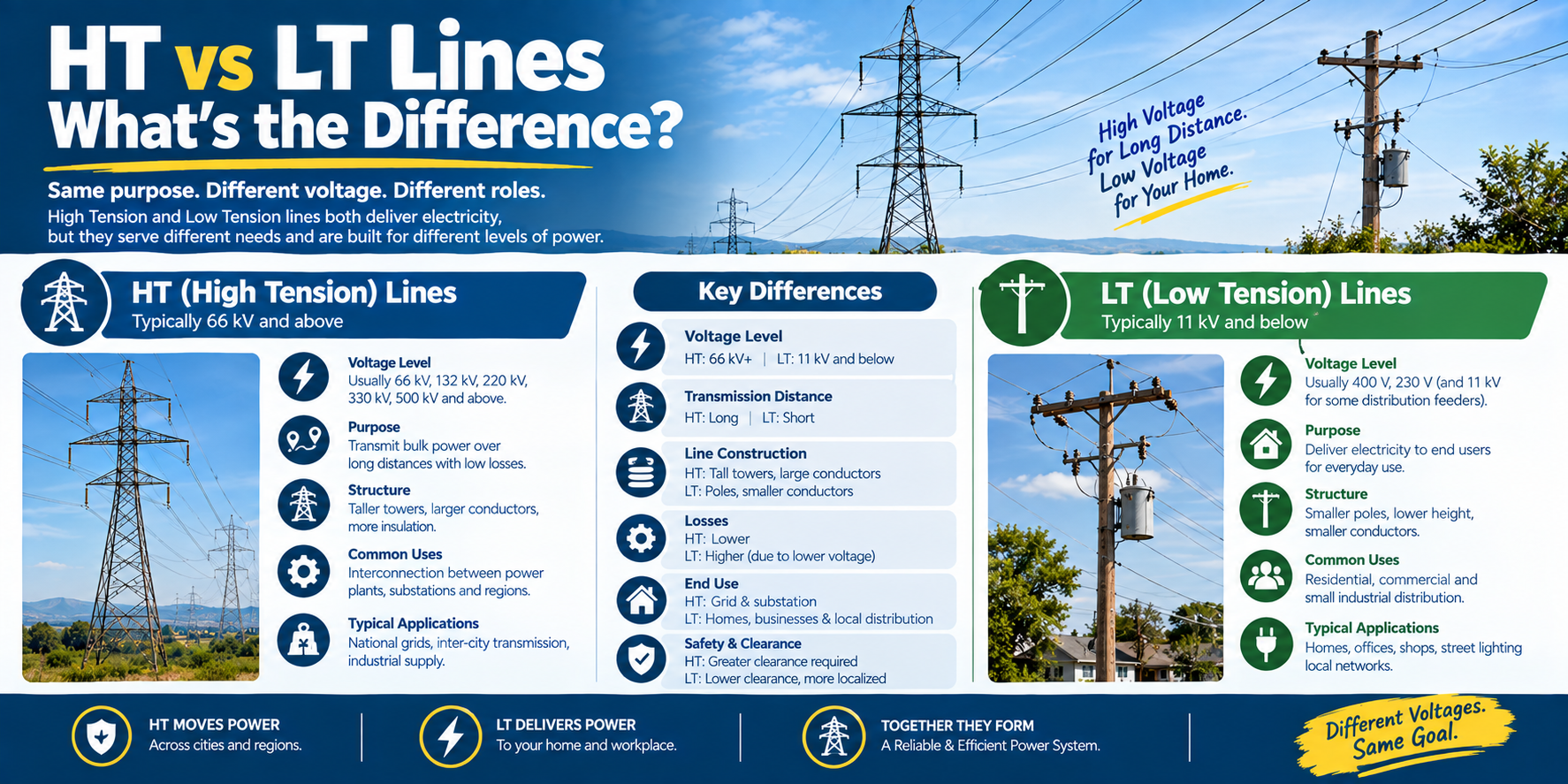
Transmission lines (with a shield wire) frequently use OPGW on new builds. Distribution networks which often have no shield wire frequently use ADSS, strung on the poles below the conductors.
4. Span length and mechanical loading
Long spans and heavy ice/wind loading affect both cables but in different ways. OPGW’s metallic construction handles high tension well in the shield-wire position; ADSS span capability depends on the cable design and the sag/tension the dielectric sheath can tolerate, and long ADSS spans need careful attention to the space-potential environment near the conductors (the electric field the dielectric sheath sits in). Your cable supplier specifies the cable to the span; your hardware supplier specifies the fittings to that cable.
5. Lightning and earthing philosophy
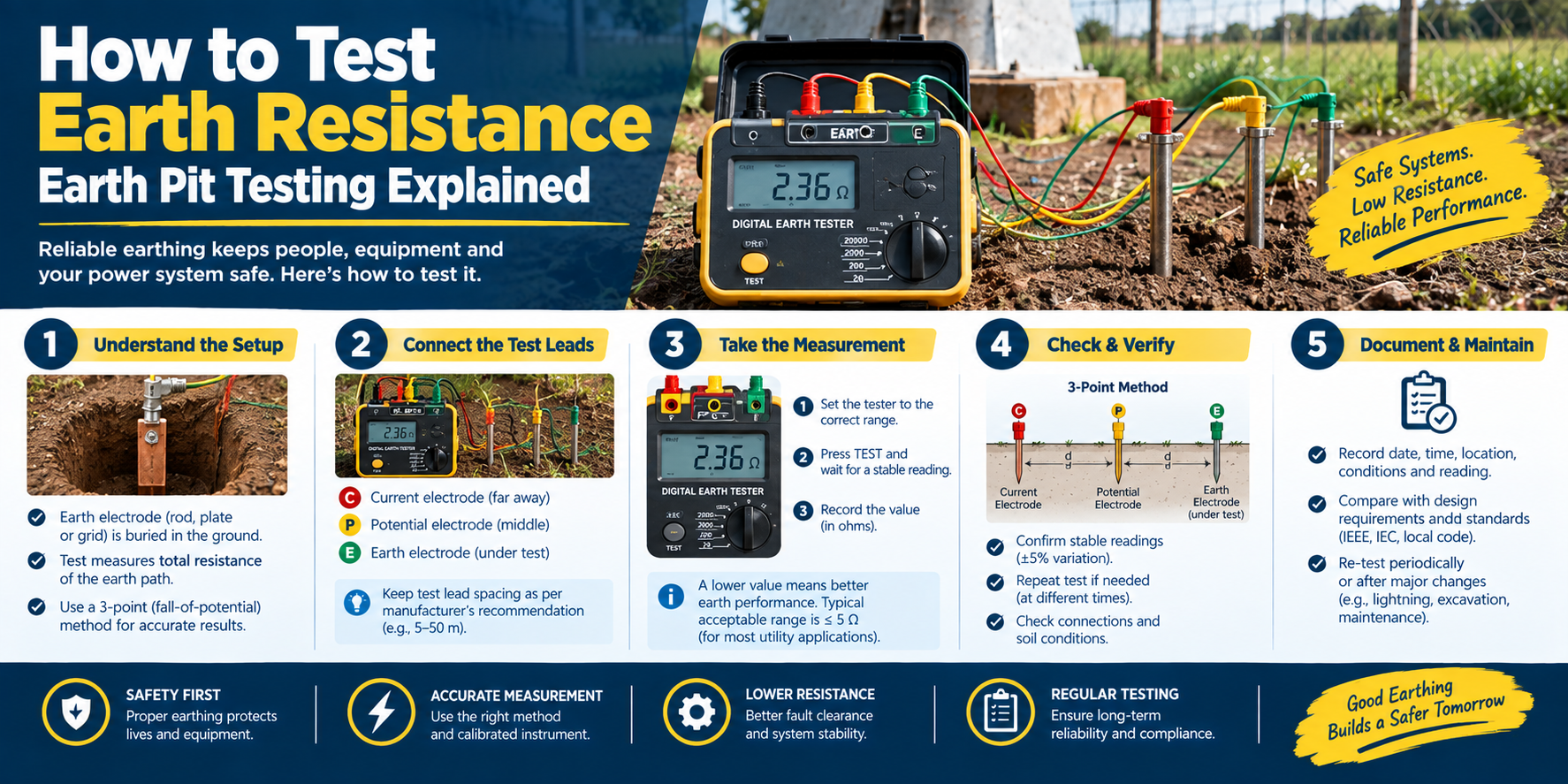
OPGW is the lightning protection it’s the shield wire. If a line needs shield-wire-level lightning protection and fiber, OPGW delivers both. ADSS provides no lightning shielding (it’s below the conductors), so on a line that needs a shield wire, ADSS is an addition to not a replacement for the earth wire.
The short decision rule most projects land on: new or rebuilt transmission line → OPGW; existing energized line or distribution network → ADSS; a mixed network → both, spliced at the substations.
The Part Most Comparisons Skip: The Fittings Each Cable Needs
Choosing the cable is only half the job. ADSS and OPGW need different hardware, because one is metallic-and-earthed and the other is fully dielectric. Getting the fittings wrong is a common, avoidable mistake. Here’s what each cable type needs.
OPGW hardware
Because OPGW is metallic and lives on the earthed structure, its fittings coordinate with the tower’s bonding:
- Suspension and tension/dead-end assemblies sized to the OPGW’s diameter and tension, holding it in the shield-wire position.
- A down-lead clamp arrangement that guides the OPGW down the tower to the splice point, pinned at intervals so the cable doesn’t slap against the steel in the wind.
- A junction box / splice closure at the splice point.
- Earthing/bonding provisions, because the metallic cable is bonded to the structure’s earth.
ADSS hardware
Because ADSS is dielectric and hangs below the conductors, its fittings are chosen for the sheath and the electrical environment:
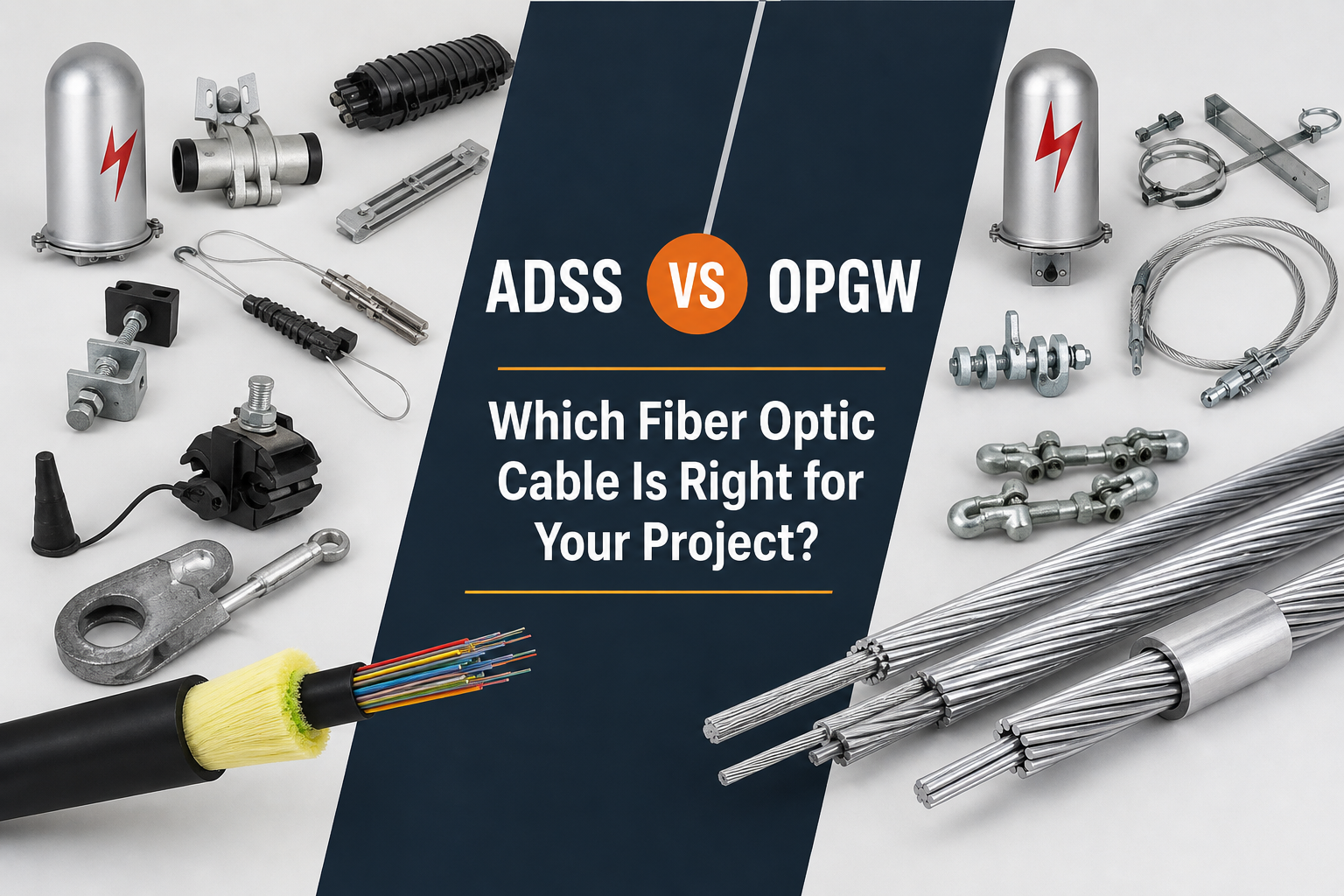
- Anchoring / dead-end clamps and suspension clamps designed to grip the dielectric sheath without damaging it, sized to the cable diameter and span tension.
- Aluminum supports for ADSS at the structures.
- Vibration control matched to the light, dielectric cable usually a spiral vibration damper, which is lightweight and made for smaller cable diameters and the dielectric sheath, rather than a heavy metallic damper.
- A fiber optic closure or metal junction box at the splice.
The practical rule: specify the fittings to the cable, not the other way round. An ADSS clamp on OPGW, or an OPGW fitting on ADSS, is the wrong tool the grip, the sizing, and the earthing assumptions differ. Both families are part of the broader ADSS/OPGW fittings range.
What About a Network That Uses Both?
Many real networks use both cable types OPGW on the new transmission backbone, ADSS on the existing lines and distribution feeders and splice them together at substations. This is normal and often optimal: you use each cable where it’s strongest. If your project mixes cable types, the key is to specify a coordinated hardware kit for each cable, marked by structure, so the crew installs the right fittings on the right cable. A supplier who makes both ADSS and OPGW hardware can supply the whole route as one coordinated package.
ADSS vs OPGW: Frequently Asked Questions
Is ADSS or OPGW better? Neither is universally better they solve different problems. OPGW is usually better for new or rebuilt transmission lines because it doubles as the shield wire. ADSS is usually better for existing, energized lines and distribution networks because it can be strung below the conductors, often without an outage. The “better” cable is the one that fits your line’s condition, voltage, and outage constraints.
What is the main difference between ADSS and OPGW? The core difference is metal. OPGW is metallic and sits at the top of the structure as the earth/shield wire, with fibers inside. ADSS is all-dielectric (no metal) and hangs below the conductors. That single difference drives their positions, installation methods, and required fittings.
Can ADSS be installed on a live line? Yes this is one of ADSS’s main advantages. Because it is fully dielectric and strung below the conductors, ADSS can often be installed on an energized line without an outage, which is why it’s favored for adding fiber to existing lines.
Does OPGW replace the ground wire? Yes. OPGW is the ground/shield wire it replaces the conventional earth wire at the top of the tower while adding fiber-optic capability inside. That’s why it’s efficient on new builds where the shield wire is being installed anyway.
Do ADSS and OPGW use the same fittings? No. ADSS needs dielectric-friendly anchoring/suspension clamps, aluminum supports, and light spiral dampers matched to its sheath; OPGW needs metallic suspension/tension fittings, a down-lead arrangement, and earthing/bonding provisions. Specify the fittings to the specific cable.
Which is cheaper, ADSS or OPGW? It depends on the whole project, not just the cable. OPGW can be cost-effective on new builds because it serves as the shield wire too. ADSS can be cost-effective on existing lines because it avoids a shield-wire replacement and often an outage. Compare total installed cost cable, structures, installation, and outage not the cable price alone.
The Bottom Line
ADSS and OPGW both put fiber on a power line, but they are built for different situations. OPGW metallic, at the top, doubling as the shield wire suits new and rebuilt transmission lines. ADSS fully dielectric, below the conductors, installable live suits existing, energized lines and distribution networks. Decide by the line’s condition, your outage constraints, the voltage, and the spans, and then specify the correct hardware family for whichever cable you choose.
DAPENG Power (DP Power Fitting) manufactures the fittings for both the ADSS/OPGW hardware range, including anchoring clamps, aluminum ADSS supports, spiral vibration dampers, and junction boxes. If you tell us the cable type, diameter, span, and structure, we’ll specify the matching fittings and quote them as a coordinated kit.