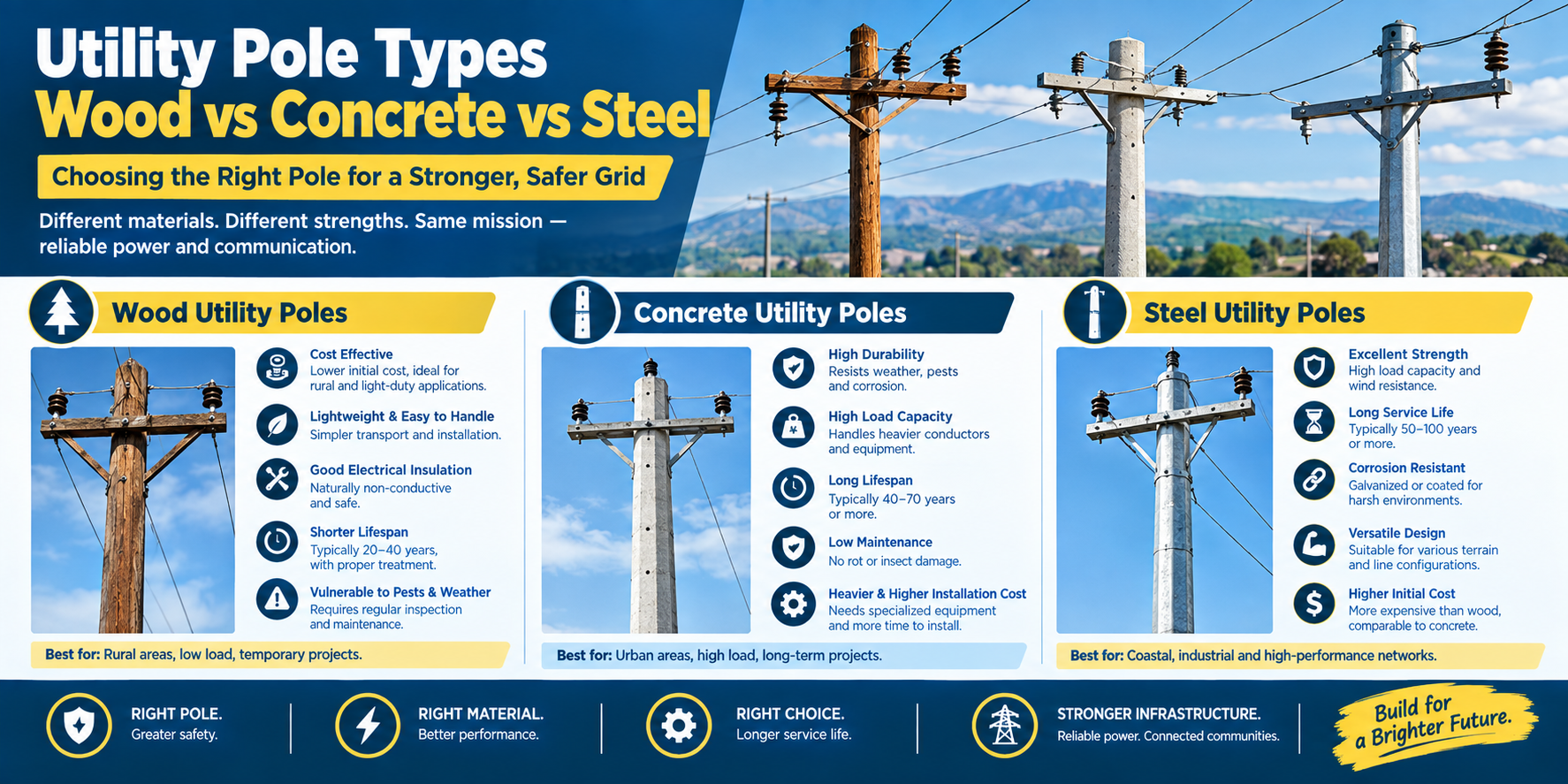
High-performance Pole Bands from China represent the pinnacle of industrial engineering, delivering an exceptional price-to-performance ratio. By combining high-tensile structural steel, precision-driven manufacturing, and strict ASTM/ISO compliance, these components serve as the literal “backbone” of modern grids.
Engineered specifically for the rigors of global utility and telecommunications infrastructure, our pole bands ensure long-term structural durability, superior corrosion resistance, and cost-efficient scalability. For EPC contractors and utility operators, these components are not just fasteners; they are a guarantee of network uptime and public safety.
What is a Pole Band?
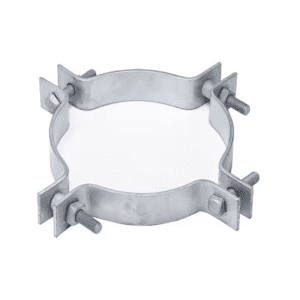
A Pole Band is a heavy-duty, circular or semi-circular steel fastening component designed for pole line hardware systems. Its primary function is to provide a secure, high-friction attachment point on utility poles (wood, concrete, or steel) without the need for drilling through the pole structure itself.
Material Composition & Standards
To withstand the immense mechanical tension of power lines, pole bands are:
- Manufactured from High-Tensile Steel: Utilizing grades like Q235B or Q345B to ensure the metal doesn’t deform under load.
- Surface Protection: Every unit undergoes Hot-Dip Galvanization (HDG) per ASTM A153 or ISO 1461 standards to prevent oxidation.
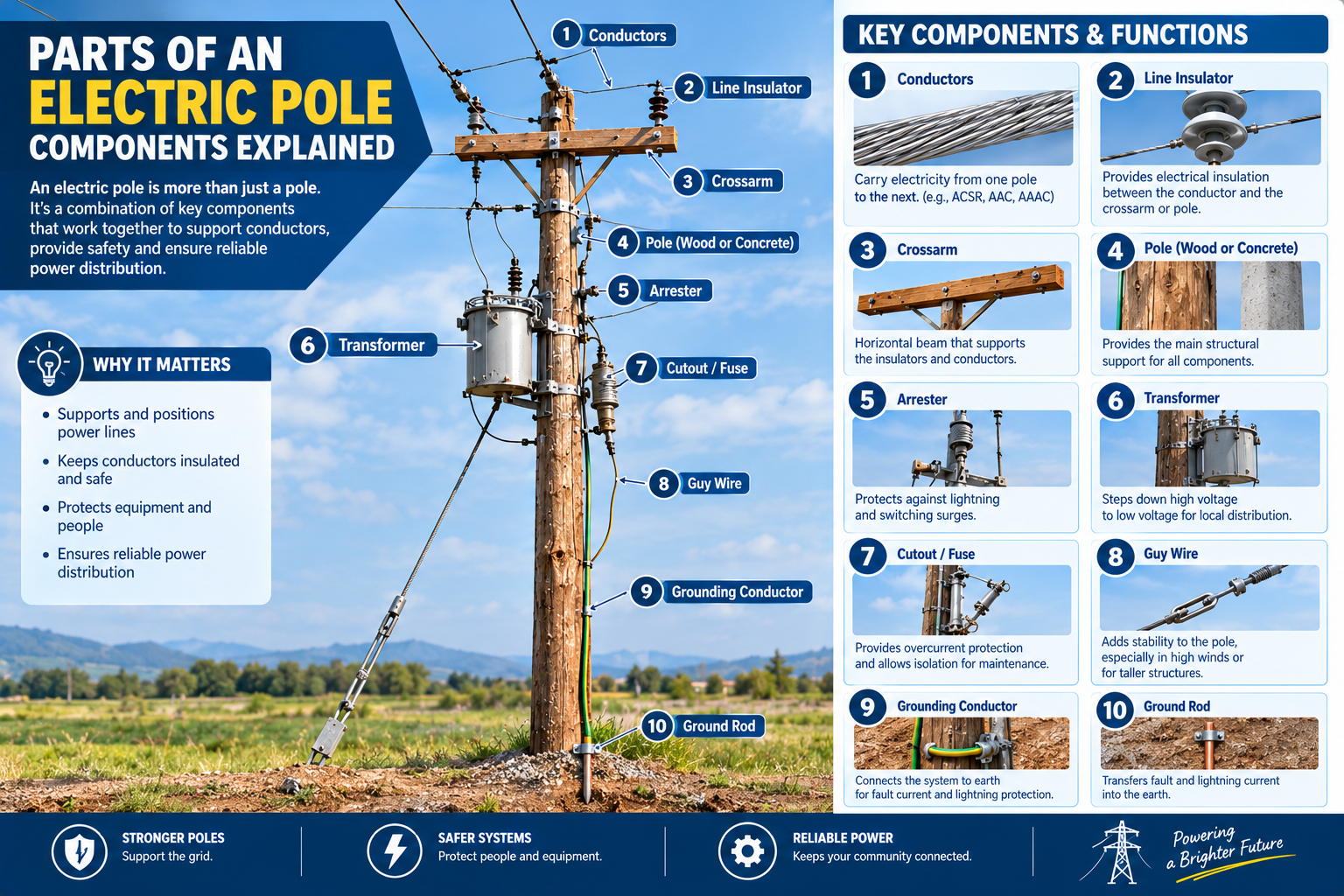
- Functional Versatility: They act as the primary interface for securing cross arms, transformers, secondary racks, insulators, and guy wire attachments.
Global Infrastructure Risk: Why Component Quality is Non-Negotiable
A utility pole may appear structurally simple, but its integrity is a delicate balance of physics and metallurgy. The pole band is often the single point of failure in high-stress environments.
The Consequences of Substandard Hardware:
- Corrosion Fatigue: Poorly galvanized bands succumb to rust within 5 years, leading to “rust bleeding” and eventual snapping.
- Dimensional Inaccuracy: If the band does not fit the pole diameter perfectly, the clamping force is uneven, causing equipment to “slip” during windstorms.
- Welding Failures: Weak joints in the lugs or bolt-attachment points can lead to catastrophic hardware drops, causing grid outages and severe safety hazards.
In large-scale infrastructure projects, these failures translate to massive financial losses and project delays. Selecting a premier Chinese manufacturer is a strategic move to mitigate these risks through engineered reliability.
The Metallurgy of Strength: GB/T Meets ASTM & EN Standards
Understanding the chemistry of the steel is crucial for engineering teams. Chinese manufacturers utilize standardized steel grades that align perfectly with Western requirements.
Comparison Table: International Equivalents
| Chinese Standard | American Standard (ASTM) | European Standard (EN) | Typical Application |
| GB/T 700 Q235B | ASTM A36 | EN 10025 S235JR | Standard distribution lines |
| GB/T 1591 Q345B | ASTM A572 Grade 50 | EN 10025 S355 | High-tension transmission |
Mechanical Property Deep-Dive:
- Yield Strength: $\ge 235 \text{ MPa}$ for Q235B and $\ge 355 \text{ MPa}$ for Q345B.
- Elongation: High ductility (typically $\ge 20\%$) allows the band to absorb vibrations from wind and seismic activity without cracking.
- Fatigue Resistance: Engineered to handle cyclic loading, which is common in areas with high wind speeds.
Hot-Dip Galvanization (HDG): The 50-Year Shield
Pole bands operate in some of the harshest environments on Earth—from salt-mist coastal zones to humid tropical rainforests. Without superior coating, even the strongest steel will fail.
The HDG Process Explained:
- Surface Preparation: Acid pickling removes all impurities and mill scale.
- Fluxing: A protective layer is applied to prevent oxidation before dipping.
- The Zinc Bath: The steel is submerged in molten zinc at approximately 450°C.
- Metallurgical Bond: Unlike paint, HDG creates a series of zinc-iron alloy layers that are harder than the base steel itself.
The Result: A coating thickness of 80–100 microns that offers “self-healing” properties. If the surface is scratched, the surrounding zinc acts as a sacrificial anode to protect the exposed steel.
Advanced Manufacturing & Precision Machining
Modern Chinese factories have transitioned from manual labor to high-tech automation to ensure every batch is identical.
A. CNC Forming & Rolling
Using automated rolling machines, the steel plate is curved to a precise radius. This ensures that when the band is bolted, it applies uniform 360-degree pressure on the pole, preventing localized stress fractures.
B. Precision Punching
Bolt holes are the weakest points if not done correctly. We use high-speed punching presses with tolerances of ±0.05 mm. This ensures that during field installation, bolts slide in perfectly without the need for on-site reaming.
C. Robotic Welding
For heavy-duty bands that require welded lugs, robotic arms provide consistent penetration and bead quality. This eliminates human error and ensures the weld is as strong as the parent metal.
Comprehensive Quality Assurance: The Zero-Defect Protocol
Quality is not an afterthought; it is embedded in every stage of production.
Non-Destructive Testing (NDT)
- Ultrasonic Testing (UT): Used to detect internal voids or inclusions in the steel plate.
- Magnetic Particle Inspection (MPI): Ensures there are no microscopic surface cracks after the forming process.
Mechanical & Chemical Lab Testing
- Spectrometry: Verifies the chemical “DNA” of the steel (Carbon, Manganese, Silicon content).
- Tensile Testing: We pull samples to destruction to verify the actual breaking load.
- Salt Spray Testing: Simulates decades of environmental exposure in a high-corrosion chamber (ISO 9227).
Installation Best Practices for Utility Engineers
To maximize the lifespan of a pole band, proper installation is mandatory.
- Torque Management: Bolts must be tightened to the specified torque. Over-tightening can “stretch” the band beyond its elastic limit, while under-tightening leads to hardware slippage.
- Pole Surface Prep: For concrete poles, ensure the surface is free of debris. For wood poles, account for the natural shrinkage of the wood over time.
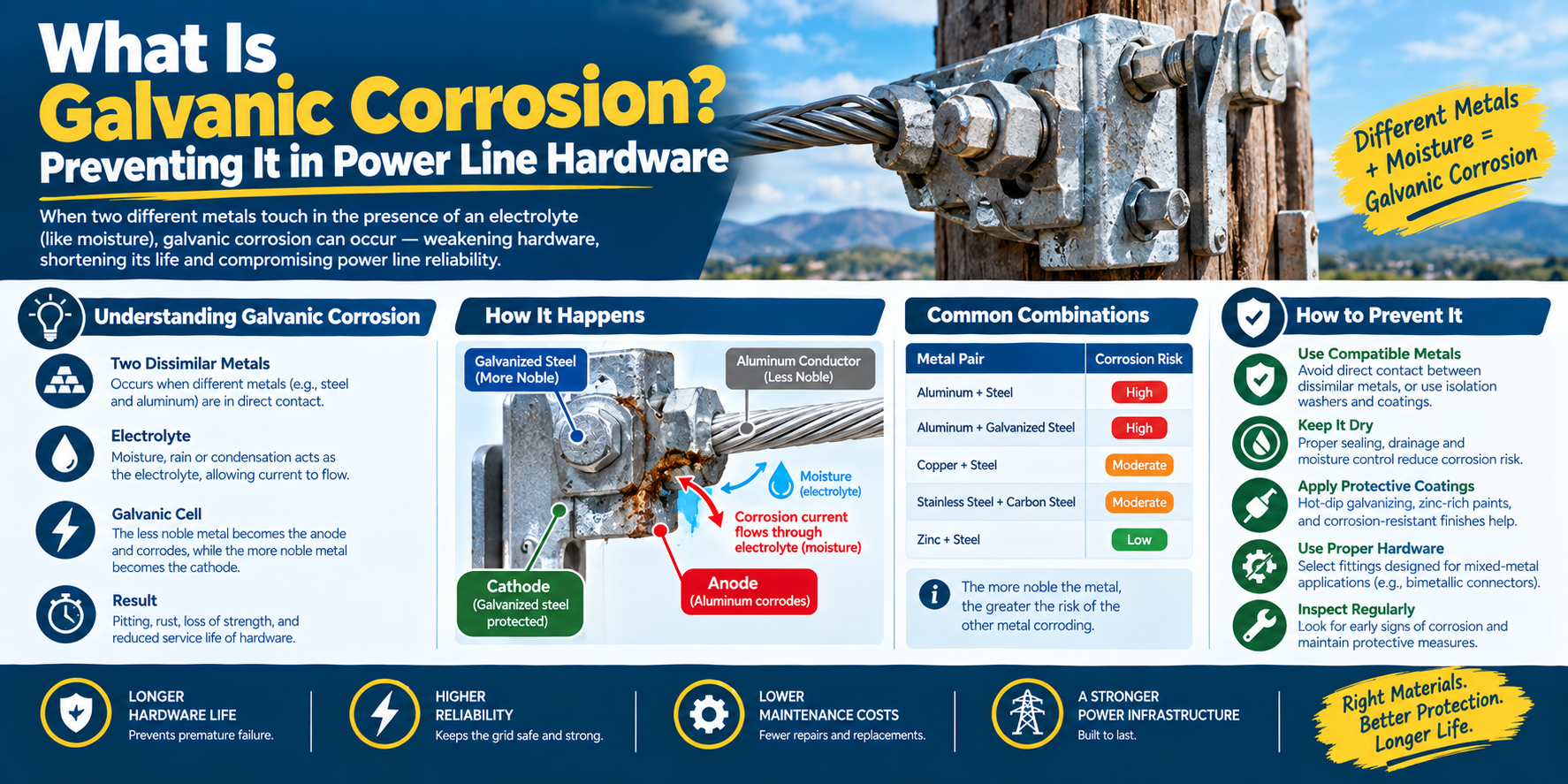
- Compatibility: Always use galvanized bolts and nuts (Grade 5 or 8) to prevent galvanic corrosion between the fastener and the band.
Total Cost of Ownership (TCO) vs. Initial Purchase Price
Smart procurement is about looking at the Life Cycle Cost.
- Cheap, Non-Certified Bands: May save 15% upfront but require replacement in 7 years. Factoring in bucket truck rental, labor, and power shutdown costs, a “cheap” band ends up costing 10x more over its life.
- High-Quality Galvanized Bands: With a 30-50 year lifespan, the maintenance cost is virtually zero.
Strategic Sourcing: Why China is the Global Hub
The advantage of sourcing from Chinese manufacturing hubs like Ningbo, Shanghai, and Shenzhen lies in the “Industrial Ecosystem.”
- Supply Chain Integration: Raw steel mills, galvanizing plants, and shipping ports are located within a 100km radius. This reduces internal logistics costs and lead times.
- Scalability: Whether you need 500 units for a local repair or 500,000 units for a national grid expansion, Chinese factories can scale production overnight.
- OEM/ODM Flexibility: Need a custom thickness for a 20-inch diameter pole? Chinese engineers can provide CAD drawings and prototypes within days.
Logistics, Packaging & Global Export
Shipping heavy steel hardware requires specialized packaging to ensure it arrives in pristine condition.
- Seaworthy Packaging: We use reinforced steel-strapped wooden pallets with VCI (Volatile Corrosion Inhibitor) plastic wrapping.
- Container Optimization: Our logistics teams calculate the maximum weight-to-volume ratio to reduce your “Cost per Unit” during sea freight.
- Documentation: Every shipment is accompanied by a Mill Test Report (EN 10204 3.1), Certificate of Origin, and Packing List for smooth customs clearance.
Frequently Asked Questions
Q1: Can these bands be used on both wood and steel poles?
Yes, but the clamping design may vary. Single-bolt bands are common for wood, while double-bolt or “heavy-duty” bands are often used for steel or concrete structures.
Q2: What is the typical Zinc coating thickness?
Our standard is 85 microns, but we can provide up to 120 microns for extreme coastal environments (C5-M corrosion category).
Q3: Do you support third-party inspections?
Absolutely. We regularly host inspectors from SGS, TÜV, and Bureau Veritas to verify batches before they leave the factory.
Conclusion
In the world of utility infrastructure, there is no room for good enough. A pole band is a critical safety component. By partnering with a certified Chinese manufacturer, you are investing in:
- Engineering Precision
- Unbeatable Cost-Efficiency
- Decades of Maintenance-Free Service