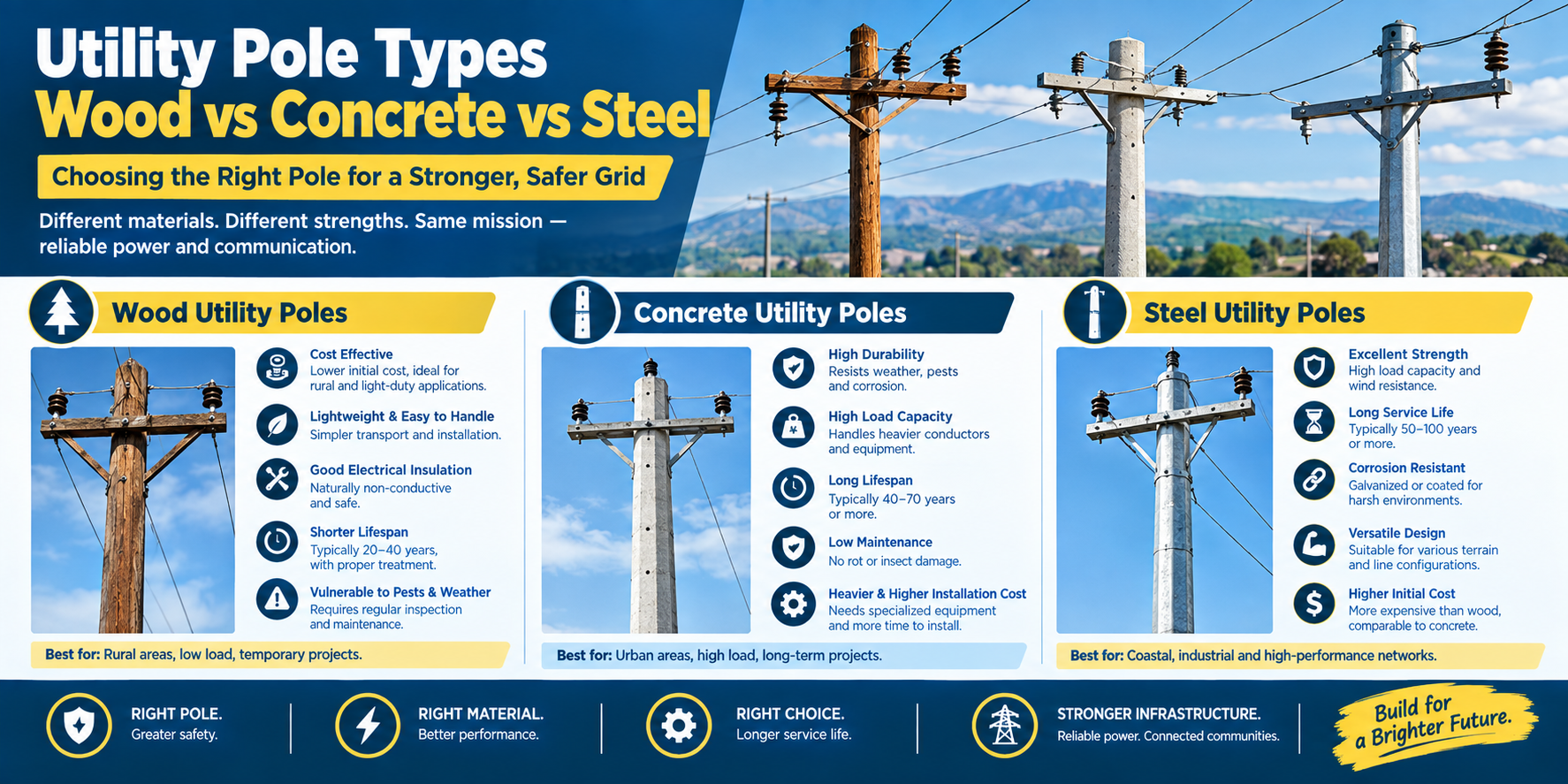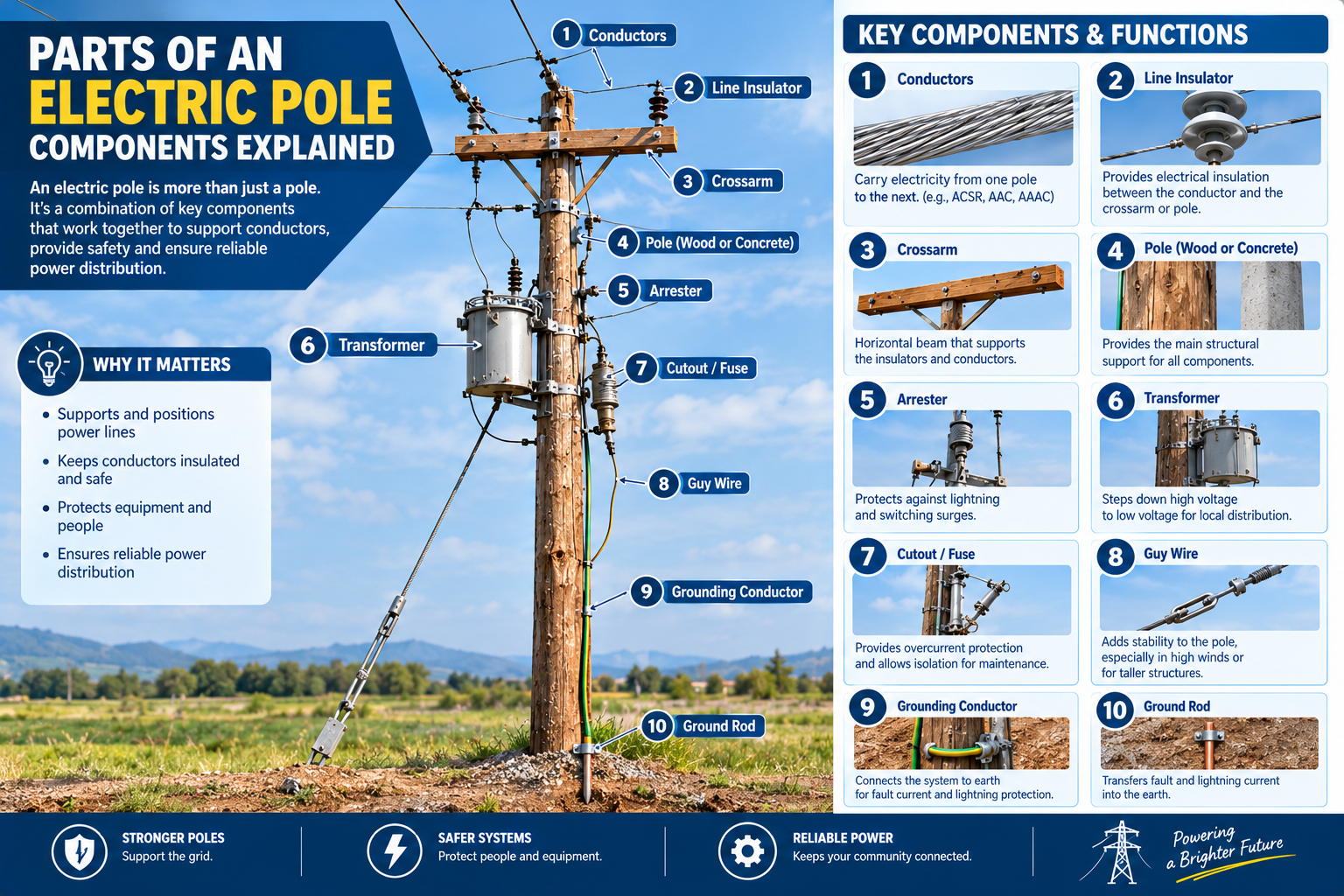
In today’s urban and industrial growth, strong infrastructure is essential for safety and reliability. High-performance Street Light Arms manufactured in China offer an elite price-to-performance ratio, merging high-tensile structural steel with precision CNC fabrication and international ASTM/ISO compliance. Designed for highways, municipal grids, and Smart City initiatives, these components provide a maintenance-free service life exceeding 30 years, regardless of environmental severity.
What is a Street Light Arm?
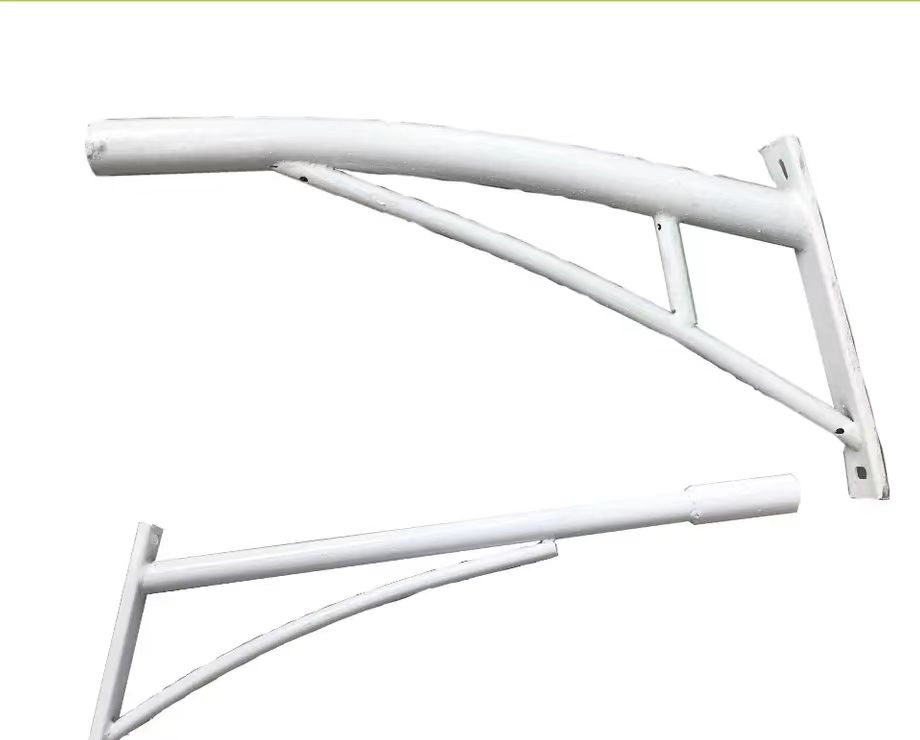
In industrial terminology, a Street Light Arm (also known as a lighting bracket or mast arm) is a structural extension component of pole line hardware. Its primary function is to support and position a luminaire (light fixture) at a specific outreach and height relative to the utility pole, ensuring optimal light distribution over roadways, pedestrian paths, and industrial sites.
Key Characteristics:
- Materials: Predominantly fabricated from high-tensile structural steel (Q235B/Q345B) or corrosion-resistant aluminum alloys.
- Mounting Interfaces: Secured to utility poles using specialized clamps, bolts, or universal pole bands.
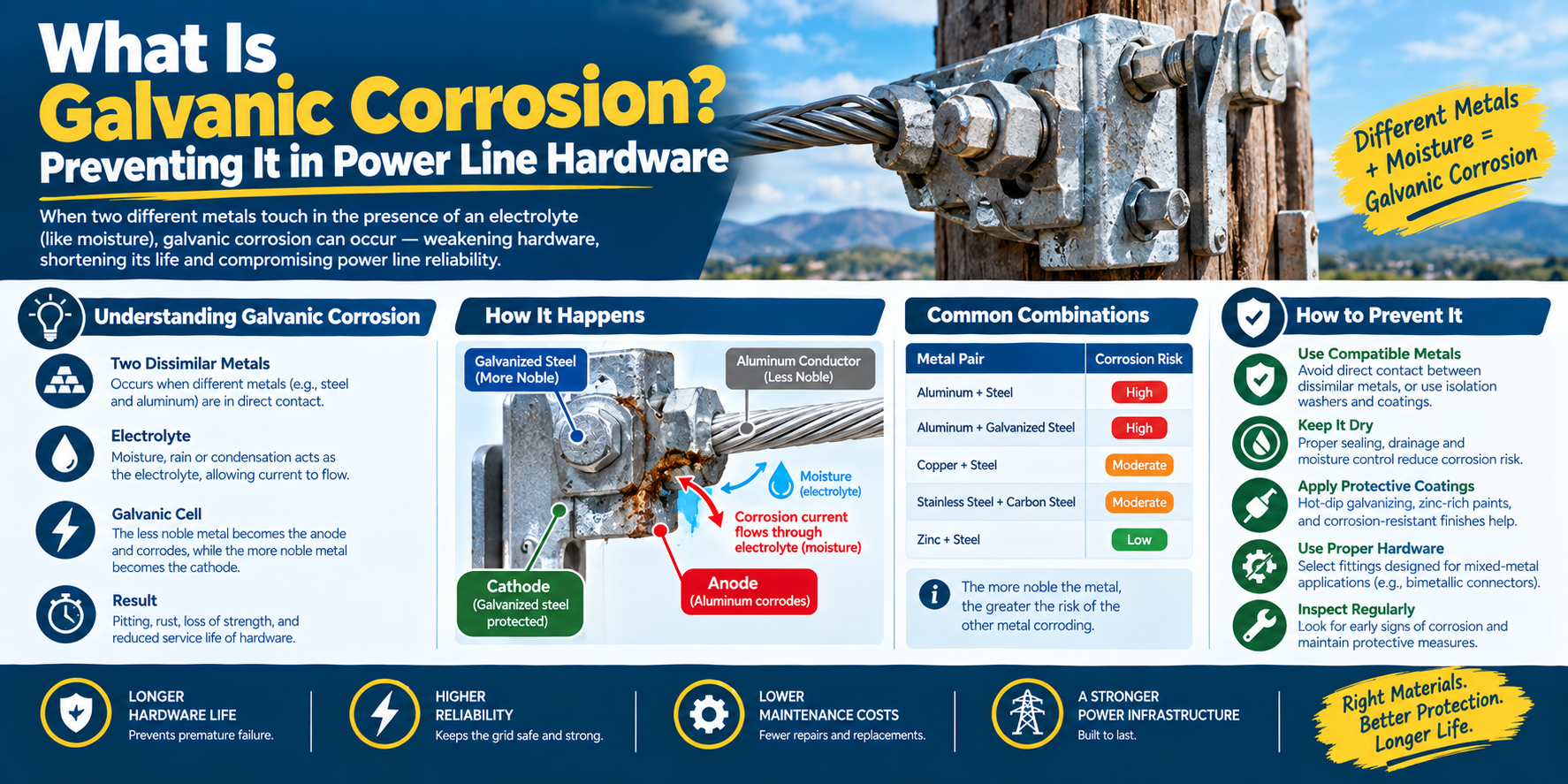
- Protective Coating: Finished with Hot-Dip Galvanization (ISO 1461) to prevent oxidation and structural degradation.
- Aerodynamic Engineering: Designed to meet specific Effective Projected Area (EPA) ratings, ensuring the arm can withstand the combined weight of modern LED fixtures and high-velocity wind loads.
Metallurgy & Material Standards: Global Bridge
The structural integrity of a street light arm is determined in the furnace. To ensure seamless integration into global projects (USA, Europe, Southeast Asia), leading Chinese manufacturers align domestic GB/T standards with Western ASTM and EN equivalents.
Chemical Composition & Mechanical Properties Table
| Steel Grade (China) | International Equivalent | Yield Strength (σs) | Tensile Strength (σb) | Primary Application |
| GB/T 700 Q235B | ASTM A36 / DIN S235JR | $\geq$ 235 MPa | 370–500 MPa | Standard Urban Lighting |
| GB/T 1591 Q345B | ASTM A572 / EN S355JR | $\geq$ 345 MPa | 470–630 MPa | High-Wind & Highways |
Technical Insight: In regions prone to cyclonic activity or seismic events, Q345B (S355) is the preferred “High-Strength Low-Alloy” (HSLA) choice. This steel possesses superior “ductility,” allowing the arm to absorb cyclic vibrations and dynamic loads without developing stress cracks at the weld joints.
Product Types & Configuration Diversity
Infrastructure projects are rarely uniform. Manufacturers provide a wide array of configurations to meet specific municipal or industrial requirements:
A. Single Arm Street Light Brackets
The most ubiquitous design, optimized for standard road lighting. It focuses on streamlined installation and clean architectural aesthetics.
B. Double & Four-Way Mast Arms
Utilized at major intersections and multi-lane highways where multi-directional illumination is required from a single central pole, significantly reducing hardware footprints.
C. Upsweep vs. Truss Designs
- Upsweep Arms: Feature a curved geometry that enhances aesthetic appeal while providing necessary elevation for the luminaire.
- Truss Arms: Reinforced with secondary support members, these are essential for heavy industrial fixtures or extreme outreach requirements (exceeding 4 meters).
D. Smart City Integrated Arms
Engineered for the 5G era, these arms are designed with higher load-bearing capacities to support not just lights, but environmental sensors, CCTV cameras, and small-cell antennas.
Engineering Precision: The CNC Fabrication Workflow
Modern manufacturing in China has transitioned from manual pipe-bending to fully automated CNC (Computer Numerical Control) environments, ensuring every unit is identical to the CAD blueprint.
- Precision Tube Cutting: Industrial lasers ensure lengths and angles are accurate to ±0.5mm, vital for maintaining a uniform streetscape.
- CNC Mandrel Bending: Mandrel benders prevent throating (wall-thinning) at the curve’s apex. This maintains a consistent internal diameter, which is critical for the snag-free routing of internal electrical wiring.
- Robotic Welding: Utilizing CO2 Shielded Arc Welding or robotic MIG welding ensures that penetration depth is uniform. This transforms the mounting plate and arm into a monolithic structural unit.
- Deburring & Surface Prep: Before galvanization, every arm undergoes acid pickling and shot blasting to remove impurities, ensuring a flawless metallurgical bond with the zinc coating.
Corrosion Resistance: The Science of Longevity
Street light arms are High-Exposure assets, constantly battling coastal salt mist, industrial pollutants, and de-icing chemicals.
Hot-Dip Galvanization (HDG) Standards
Quality-centric manufacturers adhere to ASTM A123/A153 and ISO 1461 protocols:
- The Molten Bath: Steel is submerged in 450°C molten zinc.
- Coating Thickness: A minimum of 85–100 microns is maintained, providing a physical and chemical barrier.
- Surface Hardness: The resulting zinc-iron alloy layers are harder than the base steel itself, providing extreme abrasion resistance during transport and installation.
Duplex Systems
For extreme environments (Category C5-M Marine), we offer Powder Coating over HDG. This provides a secondary aesthetic layer and doubles the corrosion protection, extending the service life to over 50 years.
Total Cost of Ownership (TCO) for Global Buyers
Savvy procurement officers look beyond the “Price per Unit” and analyze the Total Cost of Ownership. Direct sourcing from China lowers TCO through several mechanical and logistical advantages:
- Zero Maintenance Cycles: ASTM-compliant galvanization eliminates the need for periodic rust remediation or repainting.
- Installation Efficiency: Bolt-hole alignment with tolerances below ±0.05mm ensures that field crews spend less time forcing fits, drastically reducing labor hours.
- Consolidated Supply Chain: By sourcing Anchor Rods, Insulators, Suspension Clamps, and Street Light Arms from a single manufacturing hub, freight costs per unit are reduced by up to 30% through container optimization.
Quality Assurance: The Zero-Defect Protocol
To bridge the Trust Gap, reputable Chinese manufacturers implement a rigorous inspection hierarchy:
- Spectrometry Analysis: Every heat of steel is tested for chemical purity (Carbon, Manganese, Silicon levels).
- Non-Destructive Testing (NDT): Critical weld seams are inspected via Ultrasonic or Magnetic Particle testing to identify subsurface porosity.
- Salt Spray Testing: Adherence to ISO 9227 ensures the coating can withstand 1,000+ hours of accelerated corrosive exposure.
- Third-Party Validation: We welcome inspections from global authorities such as SGS, TÜV Rhein land, and Bureau Veritas prior to final sealing and dispatch.
Strategic Logistics: Export Readiness
Strategically located near the world’s most efficient shipping hubs, Ningbo, Shanghai, and Shenzhen, Chinese manufacturers ensure global projects stay on schedule.
- Lead Times: Standard configurations typically move from deposit to port within 15–30 days.
- Seaworthy Packaging: Components are wrapped in protective EPE foam and secured on reinforced steel or fumigated pallets, preventing “white rust” during long sea transits.
- Documentation: Full sets of Bills of Lading, Certificates of Origin, and Mill Test Reports (MTR) are provided for seamless customs clearance.
Strategic Procurement: How to Choose a Supplier
When vetting a China-based manufacturer, ensure they satisfy these three technical pillars:
- MTR Provision: Can they provide Material Test Reports traceable to the raw steel mill?
- Galvanization Proof: Do they provide coating thickness certificates compliant with ASTM A123?
- Engineering Support: Are they capable of providing CAD drawings (DWG/STEP) for project approval?
Applications Across Global Projects
- Highway Infrastructure: High-outreach arms for multi-lane safety.
- Industrial & Port Zones: Heavy-duty mast arms designed for high-vibration environments.
- Residential Landscapes: Aesthetic, low-glare brackets for community lighting.
- Solar Solutions: Lightweight, reinforced arms designed to support the eccentric weight of solar panels and battery housings.
FAQs
Q1: Do you offer OEM/Customized designs?
Yes. Our engineering departments can manufacture according to your specific blueprints, including custom lengths, sweep angles, and mounting plate configurations.
Q2: How are wind load calculations performed?
We utilize structural analysis software to calculate the Effective Projected Area (EPA) of the arm and fixture, ensuring the material yield strength exceeds local wind-load requirements.
Q3: What is the Minimum Order Quantity (MOQ)?
While we prioritize Full Container Loads (FCL) for maximum freight efficiency, we support LCL (Less than Container Load) for initial project samples or specialized utility repairs.
Q4: Are your facilities ISO Certified?
Yes. Our manufacturing plants operate under the ISO 9001:2015 Quality Management System, ensuring consistent production standards.