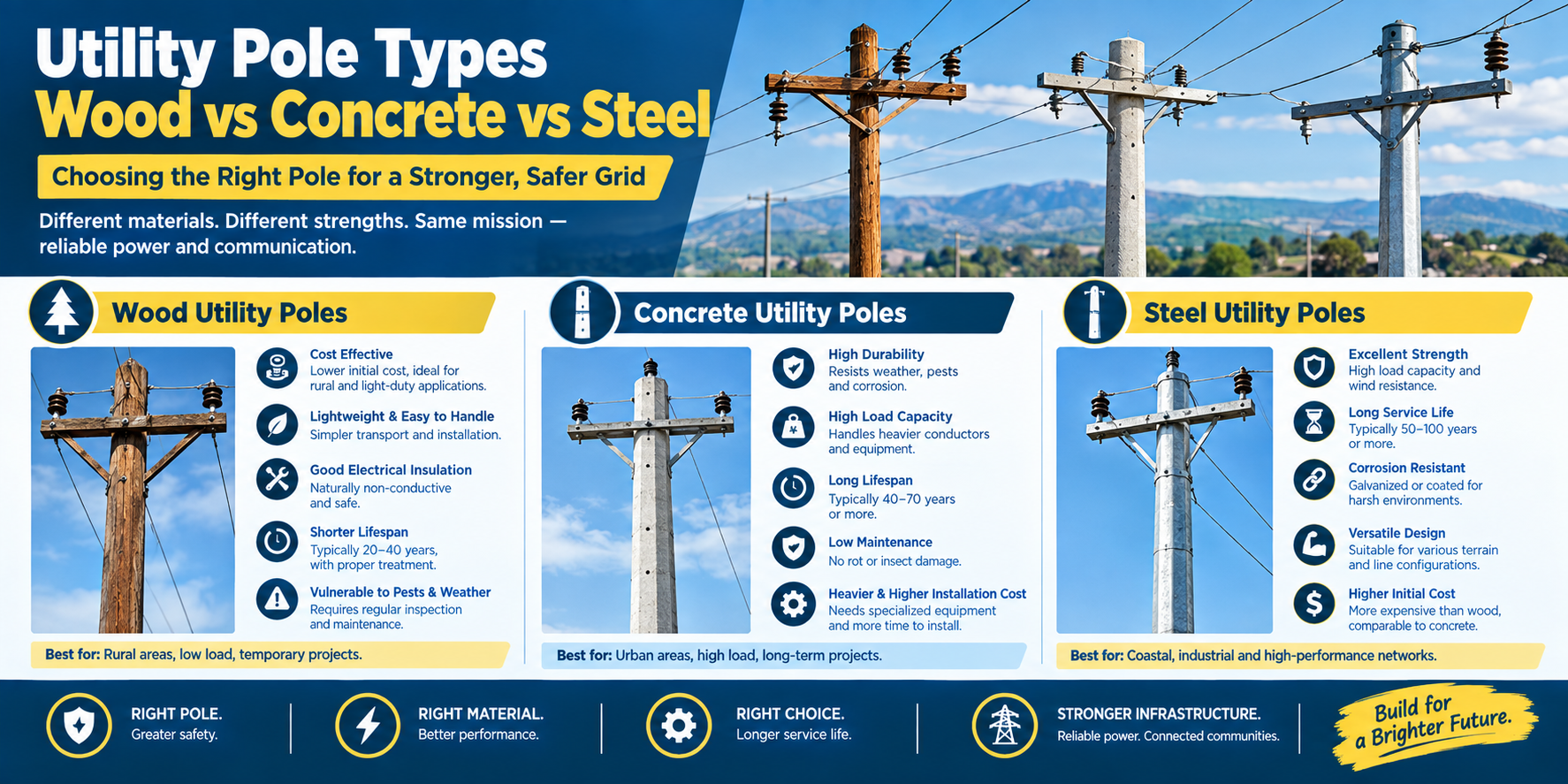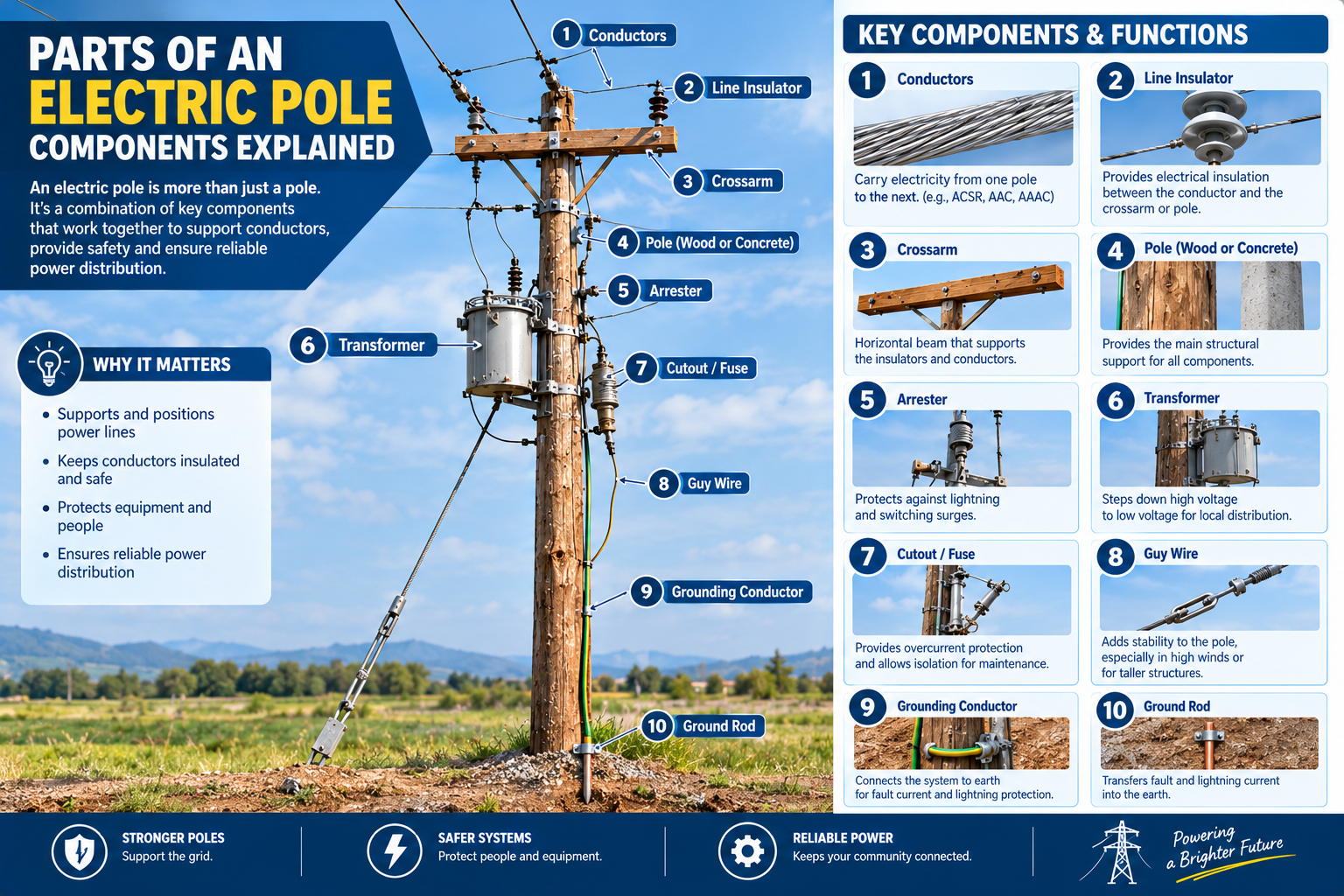

In the massive landscape of electrical transmission and telecommunications, it is often the smallest, hidden components that carry the heaviest burden. The Stay Plate (also known as an Anchor Plate) is the silent guardian of structural integrity. While poles and conductors dominate the horizon, the stay plate works tirelessly underground to ensure that high-velocity winds, ice accumulation, and mechanical tension do not bring the entire network to a standstill.
For EPC (Engineering, Procurement, and Construction) contractors and utility providers, sourcing these components from a premier Stay Plate Manufacturer in China is no longer just a cost-saving measure, it is a strategic decision to leverage world-class metallurgy and high-volume precision engineering.
Technical Anatomy: What Exactly is a Stay Plate?
A stay plate is a heavy-duty, flat or curved steel plate used in the anchoring system of a guyed pole. It is positioned at the bottom of a stay-log or directly buried in the ground, connected to a Stay Rod.
The Physics of Load Distribution
The primary function of a stay plate is surface area expansion. A standard stay rod has a small diameter; if pulled directly against the soil, it would cut through the earth like a knife through butter. The stay plate acts as a massive “dead man” anchor. By increasing the surface area, it engages a huge volume of soil weight (overburden), converting lateral wire tension into stable, downward gravitational resistance.
Metallurgy and Material Science: The VIP Standard
In the manufacturing hub of China, quality begins at the molecular level. Not all steel is created equal.
Q235B vs. Q345B: Which one do you need?
- Q235B (Standard Grade): Equivalent to ASTM A36. This is the global standard for power distribution (11kV to 33kV). It offers excellent ductility, meaning the plate can absorb sudden shocks (like a falling tree branch on a line) without snapping.
- Q345B (High-Tensile Grade): Equivalent to ASTM A572. This is used for “Heavy-Duty” applications, such as 132kV transmission lines or 5G towers in coastal areas. It has a higher yield strength ($345 \text{ MPa}$), allowing for thinner plates that carry the same load as thicker, lower-grade alternatives.
Chemical Composition and Yield Strength
A VIP manufacturer provides a Mill Test Certificate (MTC) that proves the Carbon ($C$), Manganese ($Mn$), and Silicon ($Si$) levels are within strict tolerances. This ensures that the steel does not become brittle in extreme cold (important for Russian or Canadian markets) or lose strength in extreme heat (Middle Eastern markets).
The Galvanization Process: The 50-Year Shield
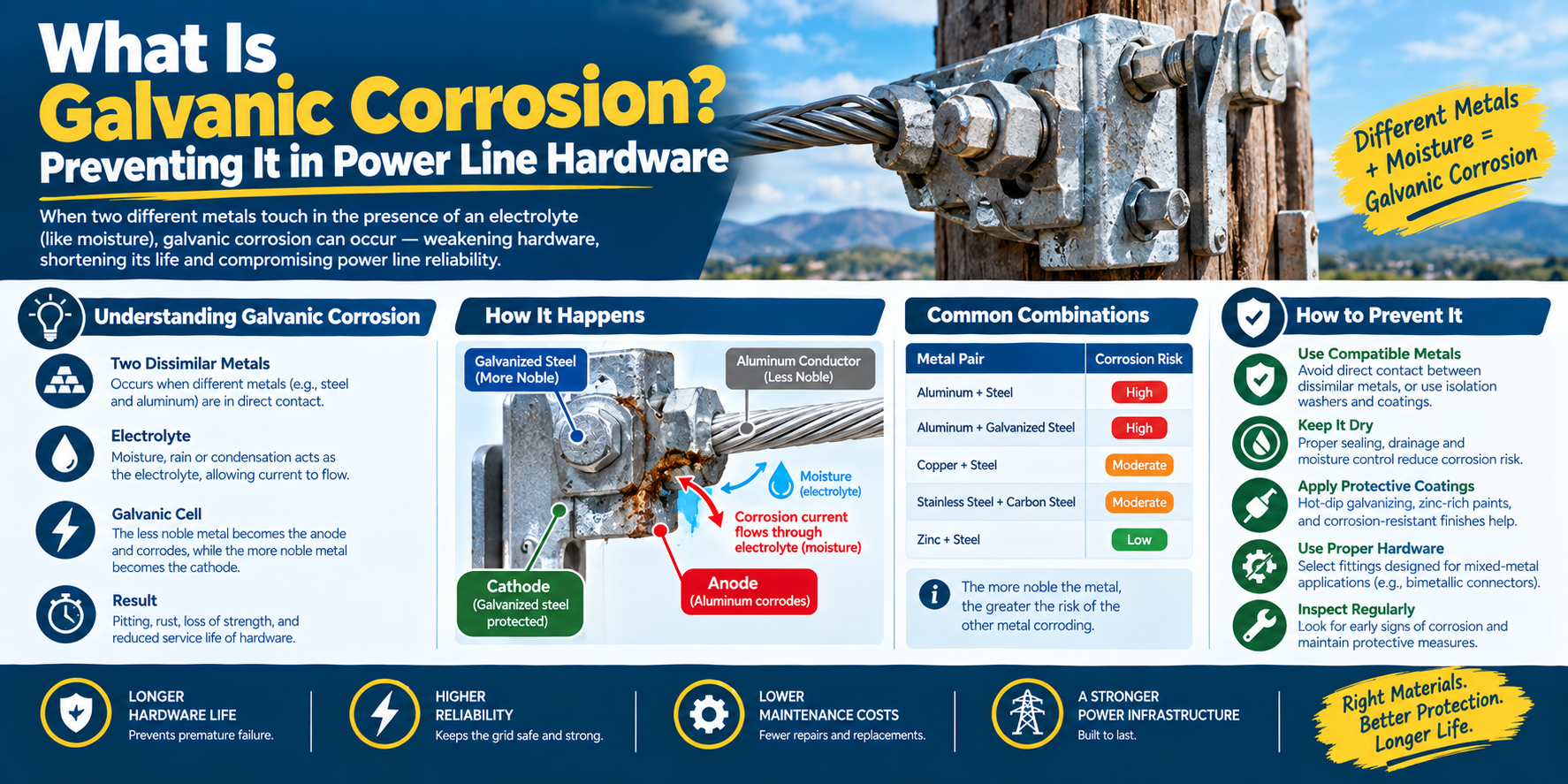
Corrosion is the #1 killer of underground hardware. Since stay plates are buried, they are subject to “Soil Stress” a combination of moisture, acidity, and microbial activity.
Hot-Dip Galvanization (HDG) per ISO 1461
Chinese VIP manufacturers use a multi-stage HDG process:
- Caustic Cleaning: Removing oil and grease.
- Pickling: An acid bath to remove mill scale.
- Fluxing: Preparing the surface for zinc bonding.
- The Dip: The plate is submerged in $450^\circ\text{C}$ molten zinc.
The Result: A coating thickness of 86 to 100+ microns. This isn’t just a “paint” job; it’s a metallurgical bond. Even if a technician scratches the plate during installation, the “Sacrificial Anode” property of zinc prevents the steel from rusting.
Manufacturing Excellence: Precision at Scale
Modern Chinese factories have transitioned from manual labor to Industry 4.0 automation.
CNC Laser Cutting vs. Punching
Traditional punching can leave “burrs” or micro-cracks around the center hole. Under extreme tension, these cracks can propagate, leading to plate failure. VIP manufacturers use CNC Fiber Lasers, ensuring:
- Perfect hole alignment (within $0.01\text{mm}$).
- Smooth edges that don’t damage the stay rod threads.
- Custom shapes (Square, Circular, or Ribbed) without expensive new tooling.
Hydraulic Flattening
After the heat treatment and galvanization, plates can sometimes warp. A VIP supplier uses a secondary hydraulic press to ensure the plate is 100% flat, ensuring the load is distributed evenly across the entire soil surface.
Global Standards Comparison Table
When procuring for international tenders, compliance is the first gate.
| Feature | Chinese Standard | American Standard | European Standard |
| Material | GB/T 700 (Q235B) | ASTM A36 | EN 10025 (S235JR) |
| Galvanization | GB/T 13912 | ASTM A153 | ISO 1461 |
| Tolerance | GB/T 1804 | ANSI C135.1 | DIN 7168 |
| Testing | GB/T 228.1 | ASTM E8 | EN 10002 |
Installation Best Practices: Avoiding Costly Mistakes
Even the best stay plate will fail if installed incorrectly.
- The Undisturbed Earth Rule: The stay plate should always be placed against “undisturbed” soil. If the soil is loose or backfilled poorly, the plate will shift (creep), causing the guy wire to sag.
- Angle Alignment: The stay rod must be perpendicular to the stay plate. If the rod enters at an angle, it creates “point loading,” which can bend the plate or shear the bolt.
- Depth of Burial: Generally, a stay plate should be buried at a depth of at least $1.5\text{ to }2.0 \text{ meters}$ to utilize the weight of the earth effectively.
Sourcing from China: The Strategic Advantage
Why do 80% of the world’s utility companies buy from China?
- Integrated Supply Chain: China produces the steel, the zinc, and the machinery. This vertical integration keeps prices competitive.
- Logistical Hubs: Factories in provinces like Hebei or Zhejiang are hours away from the world’s largest ports (Ningbo/Shanghai).
- Customization (OEM/ODM): If you have a specific design for a tender in Brazil or South Africa, Chinese engineers can provide CAD drawings and prototypes in less than a week.
Quality Control: The Zero-Defect Framework
A VIP manufacturer implements a three-tier QC system:
- IQC (Incoming Quality Control): Testing the raw steel slabs before production begins.
- IPQC (In-Process Quality Control): Checking the dimensions after laser cutting and pressing.
- OQC (Outgoing Quality Control): Checking the galvanization thickness and “Preece Test” (zinc uniformity) before the plates are packed on seaworthy pallets.
Case Study: High-Wind Coastal Infrastructure
- Location: South East Asia (Typhoon Zone).
- Challenge: Standard 6mm stay plates were failing due to high-velocity wind loads causing “soil liquefaction” and plate deformation.
- Solution: We supplied 12mm thick, Q345B High-Tensile Stay Plates with a ribbed design for extra stiffness.
- Result: Zero failures recorded during the 2024 monsoon season, saving the utility provider an estimated $2 \text{ million}$ in emergency repair costs.
Total Cost of Ownership (TCO): The Procurement Secret
Don’t be fooled by a low “Unit Price.”
- Unit Price A: $\$5.00$ (Low quality, 10-year life).
- Unit Price B: $\$7.00$ (VIP quality, 40-year life).
In 40 years, “Option A” will cost you the price of four plates, plus the labor to dig up the ground four times. “Option B” is a “set it and forget it” solution.
Conclusion
Selecting a Stay Plate Manufacturer in China is about more than just buying steel. It is about finding a partner who understands the high stakes of national infrastructure. Whether you are expanding a 5G network or stabilizing a rural power grid, ensure your foundation is built on high-tensile, hot-dip galvanized excellence.
FAQs
Q: Can I get a Mill Test Certificate (MTC) with my order?
A: Yes, every VIP shipment includes an EN 10204 3.1 certificate detailing the chemical and mechanical properties of the steel.
Q: What is the maximum thickness you can manufacture?
A: We can produce stay plates from $3\text{mm}$ up to $25\text{mm}$ depending on the project requirements.
Q: How do you prevent white rust during sea transit?
A: We use “Seaworthy Packaging,” which includes plastic wrapping and moisture-absorbent silica gel inside reinforced wooden or steel pallets.