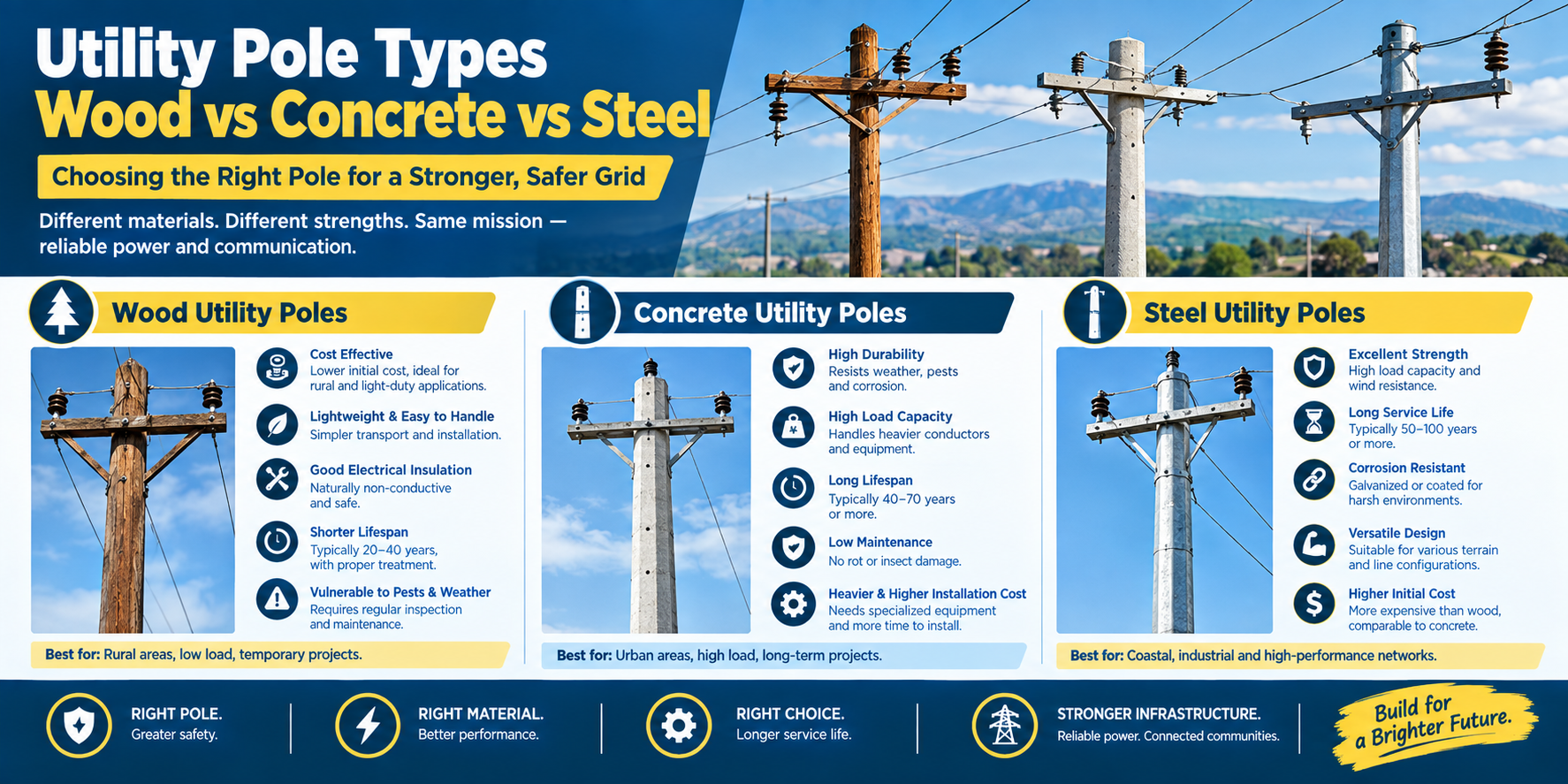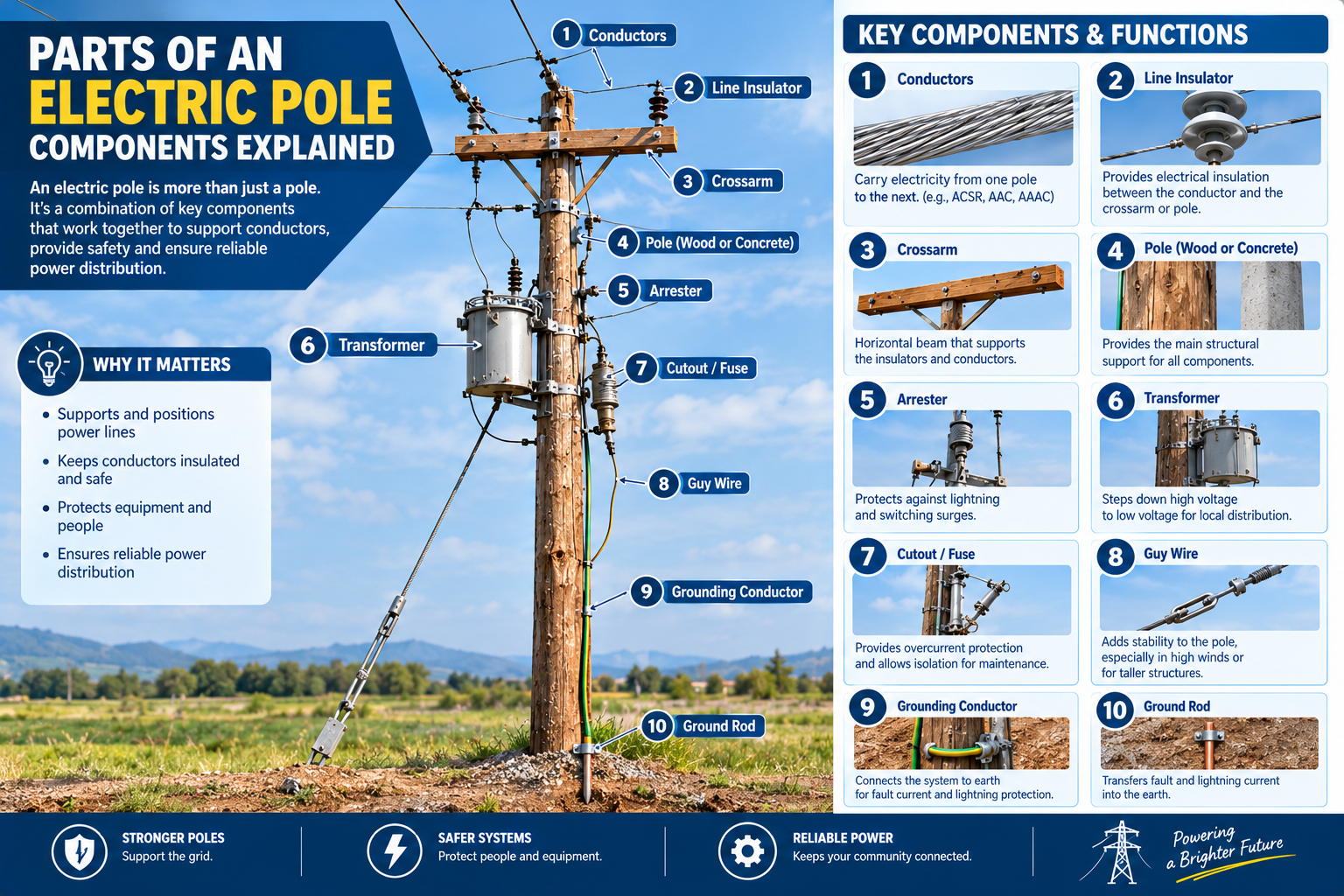
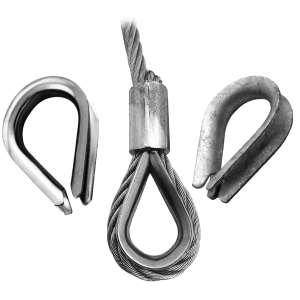
In the high-stakes world of heavy lifting, maritime operations, and utility infrastructure, the integrity of a system is only as strong as its smallest termination point. High-performance Galvanized Thimbles from China represent the optimal intersection of advanced metallurgy and global cost-efficiency. Engineered with heavy-duty hot-dip galvanization ($\geq$ 85 $\mu$m) and fully compliant with ASTM, ISO, and DIN standards, these components ensure long-term structural integrity in environments where failure is not an option.
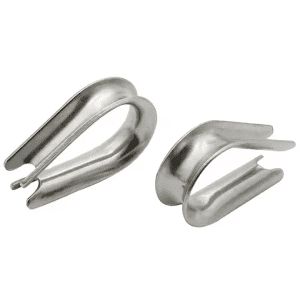
What is a Galvanized Thimbles?
A Galvanized Thimble is a precision-engineered rigging fitting designed to protect the eye or loop of a wire rope or synthetic sling from friction, abrasion, and crushing. By providing a rigid metal track, the thimble maintains the rope’s natural curvature under tension, preventing strand deformation and premature fatigue.
Learn more about: Ground Rods
The Mechanics of Protection of Galvanized Thimbles
When a wire rope is bent around a pin or shackle without a thimble, the concentrated stress at the crown of the loop causes the internal strands to flatten and eventually shear. The thimble redistributes these forces across a wider surface area.
- Material Composition: Typically manufactured from high-tensile carbon steel (Q235B or C1045).
- Protective Interface: Acts as the sacrificial wear-layer between the high-hardness shackle pin and the wire rope.
- Service Life Extension: In high-load industrial environments, a premium galvanized thimble can extend the service life of a wire rope assembly by 40% to 60%, significantly reducing operational downtime and replacement costs.
The Hidden Risk in Rigging Systems: Beyond the Metal
In global logistics, a single failure in a wire rope terminal is a catastrophic bottleneck. Whether it is a port crane in Rotterdam or a power grid expansion in Southeast Asia, the thimble is the silent guardian of the cable’s integrity.
The Bird-Caging Phenomenon
Substandard thimbles, often manufactured from low-grade recycled steel, deform under peak loads. When a thimble collapses, the wire rope loses its radius, leading to bird-caging a structural failure where the outer strands of the rope explode outward.
Solving the Price-to-Performance Paradox
Strategically, sourcing low-grade hard ware is a liability. Procurement officers are increasingly shifting toward China’s high-tech manufacturing hubs. These facilities utilize automated robotic welding and CNC groove machining to ensure that every thimble meets the exact geometric requirements of international safety codes, bridging the gap between affordable volume and elite performance.
Technical Specifications: Global Compatibility & Standards
We bridge the gap between regional specifications to ensure your hardware integrates seamlessly into any global project. Understanding the crossover between GB/T (Chinese), ASTM (American), and DIN (German) standards is critical for compliance.
Metallurgy & Material Compliance Table
| Component | GB/T (China) | ASTM (USA) | DIN (Germany) | Application Context |
| Base Metal | GB/T 700 (Q235B) | ASTM A36 | DIN 17100 | General structural load |
| High-Tensile Steel | GB/T 699 (45#) | ASTM 1045 | EN 10083-2 | Heavy-duty rigging (G-414) |
| Galvanization | GB/T 13912 | ASTM A123 | EN ISO 1461 | Corrosion resistance |
| Design Specs | GB/T 5974.1 | FF-T-276b | DIN 6899 (Form B) | Dimensional geometry |
Data-Rich Manufacturing Specs
- Yield Strength: $\geq$ 235 MPa for standard use; up to 355 MPa for heavy-duty infrastructure.
- Coating Thickness: Hot-Dip Galvanized (HDG) layers maintained at a minimum of 85 $\mu$m, exceeding the standard marine requirement of 65 $\mu$m.
- Salt Spray Resistance: Laboratory tested to exceed 1,000 hours (ISO 9227) without the appearance of red rust.
- Dimensional Tolerance: Precision-controlled within $\pm$ 0.05 mm for perfect groove alignment, ensuring the wire rope sits flush against the metal track.
Hot-Dip Galvanization (HDG): The Science of 30+ Year Longevity
The lifespan of a thimble is determined by the molecular bond between the zinc and the steel. Unlike cheap electro-plated alternatives (which offer only 5–10 $\mu$m of protection), our HDG process creates a multi-layered zinc-iron alloy.
The Four-Stage Chemical Process
- Chemical Pickling: The raw steel thimble is submerged in an acidic solution to remove all surface oxides and mill scale. This ensures a “naked” steel surface for bonding.
- Fluxing: A protective layer is applied to prevent oxidation before the thimble enters the zinc bath.
- Molten Immersion: The components are dipped in $450^{\circ}$C molten zinc. At this temperature, a diffusion reaction occurs.
- The Metallurgical Result: The process creates four distinct layers:
- Eta Layer: 100% Zinc (Top)
- Zeta Layer: 94% Zinc, 6% Iron
- Delta Layer: 90% Zinc, 10% Iron
- Gamma Layer: 75% Zinc, 25% Iron (Base)
The Benefit: This coating does not just sit on the surface; it becomes part of the metal. If the thimble is scratched, the surrounding zinc acts as a sacrificial anode, oxidizing itself to protect the exposed steel.
Engineering Deep-Dive: Selecting the Right Type
Not all thimbles are created equal. Choosing the wrong “form” can lead to premature rope wear.
Light-Duty (DIN 6899 Form A)
Best for static applications like fencing or light architectural rigging. These are cold-formed and offer a slim profile.
Heavy-Duty (G-414 / DIN 6899 Form B)
Designed for critical lifting. These feature a much thicker throat to prevent the thimble from collapsing under the massive tension generated by winches and cranes.
Tube Thimbles
Used primarily for synthetic ropes (Dyneema/HMPE). The tube completely encloses the rope, protecting it from 360 degrees of abrasion.
Quality Assurance: The China Trust Framework
In the past, sourcing from overseas carried transparency risk. Modern Chinese manufacturing has eliminated this through a rigorous inspection regime that matches Western aerospace standards.
- Non-Destructive Testing (NDT): For heavy-duty G-411 or G-414 types, we employ Ultrasonic Testing (UT) and Magnetic Particle Inspection (MPI) to ensure no internal fissures exist within the forged steel.
- Chemical Analysis: Every batch undergoes spectroscopic verification to ensure carbon and manganese levels stay within the $\pm$ 0.02% variance allowed by ASTM A36.
- Breaking Load Tests: We conduct destructive testing on random samples from every 5,000 units to verify that the Actual Breaking Load (ABL) exceeds the Minimum Breaking Load (MBL) by a safety factor of 5:1.
Pro Tip for Engineering Teams: You can request a full Technical Data Sheet (TDS), CAD models (STEP/DWG), and a Material Test Report (MTR) according to EN 10204 3.1 for every shipment.
Installation Best Practices: Avoiding Common Failures
Even the best thimble will fail if installed incorrectly. Our engineering team recommends the following:
- Groove Matching: The groove diameter should be roughly 10% larger than the wire rope diameter. If the groove is too tight, it pinches the rope; if too wide, the rope flattens.
- Point of Attachment: Ensure the shackle or pin used in the eye is large enough to seat properly in the thimble’s curve. A pin that is too small focuses all the load on a single point of the thimble’s crown.
- Inspection Frequency: In maritime environments, thimbles should be inspected every 6 months for signs of “elongation” (stretching), which indicates the system has been overloaded.
Why Global Procurement Officers Trust Our Manufacturing
Beyond the hardware, we provide a resilient supply chain designed for the complexities of 2026 logistics.
OEM/ODM Flexibility
Need a custom groove radius for a specific diameter of HMPE rope? Our rapid-tooling capabilities allow for custom prototypes in under 10 days. We specialize in modifying standard designs to meet niche architectural or military requirements.
Logistics Mastery: Factory-Fresh Delivery
Located near the deep-water ports of Shanghai and Ningbo, we minimize inland transit time.
- VCI Packaging: We use Volatile Corrosion Inhibitor (VCI) bags for all bulk shipments. This creates a molecular protective layer that prevents salt-air corrosion during the 30-45 day ocean transit.
- Sustainable Sourcing: Our factories adhere to the latest environmental regulations regarding zinc recycling and carbon emissions, helping your company meet its ESG (Environmental, Social, and Governance) targets.
Conclusion
In high-stakes rigging, the smallest component often carries the heaviest load. A thimble is more than a piece of bent metal; it is a calculated safety interface. Choosing a manufacturer that prioritizes ASTM compliance, metallurgical precision, and HDG longevity is not just a procurement decision, it is a safety mandate.
Partner with China’s leading technical hardware exporter for your next infrastructure project.
FAQ Section
Q: Can these thimbles be used with stainless steel wire rope?
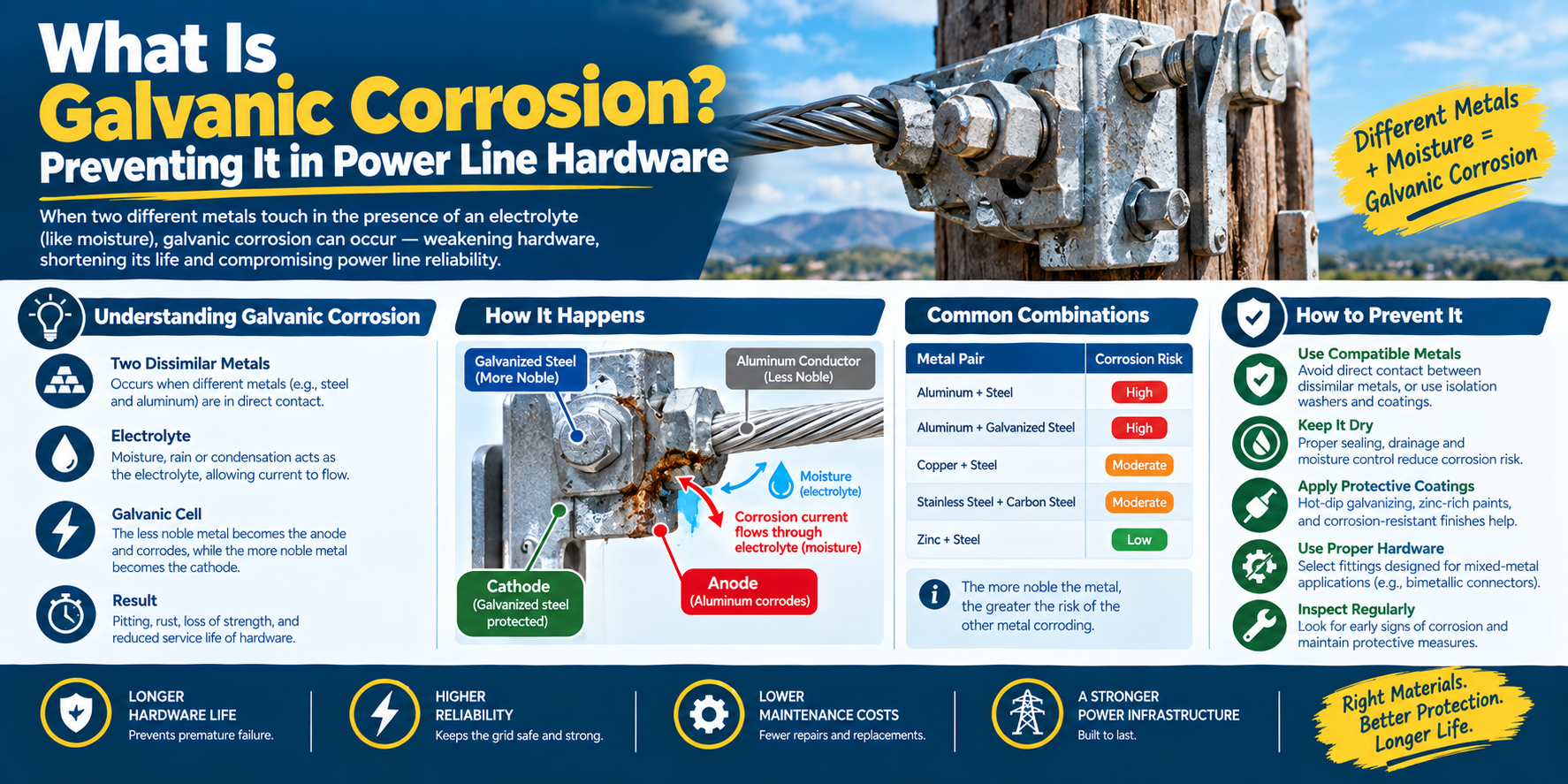
A: We do not recommend using galvanized carbon steel thimbles with stainless steel rope. The dissimilar metals can cause galvanic corrosion. For stainless rope, always use SS316 thimbles.
Q: What is the difference between “Commercial Grade” and “Heavy Duty”?
A: Commercial grade thimbles (light patterns) are for static loads and light tie-downs. Heavy-duty thimbles (G-414 style) are required for any application involving overhead lifting or high-vibration environments.
Q: Do you provide Third-Party Inspection?
A: Yes. We regularly facilitate on-site inspections by SGS, TUV, and Bureau Veritas (BV) at the client’s request to verify coating thickness and break-load compliance.