In the high-stakes environment of electrical utility management, the stability of an entire regional power grid often hinges on a single termination point. Imagine a high-voltage transmission line crossing a mountain pass during a severe ice storm. As hundreds of pounds of ice accumulate on the conductor, the mechanical tension spikes to extreme levels.
If a traditional bolted clamp is used at the dead-end pole, the concentrated point-load pressure can crush the aluminum strands or cause the wire to creep, leading to catastrophic line drops. This is not just a repair issue; it is a multi-million dollar liability that threatens public safety and energy security.
For utility procurement officers and lead structural engineers, the Dead End Grip is the primary defense against such failures. Unlike mechanical clamps that rely on localized crushing force, these helical fittings grip the conductor with distributed radial pressure.
At DP Power Fitting, we manufacture industrial-grade Dead End Grips that solve the problem of conductor fatigue at the source. Our products ensure that your infrastructure remains resilient under the most extreme atmospheric loads across the globe.
What is a Dead End Grip?
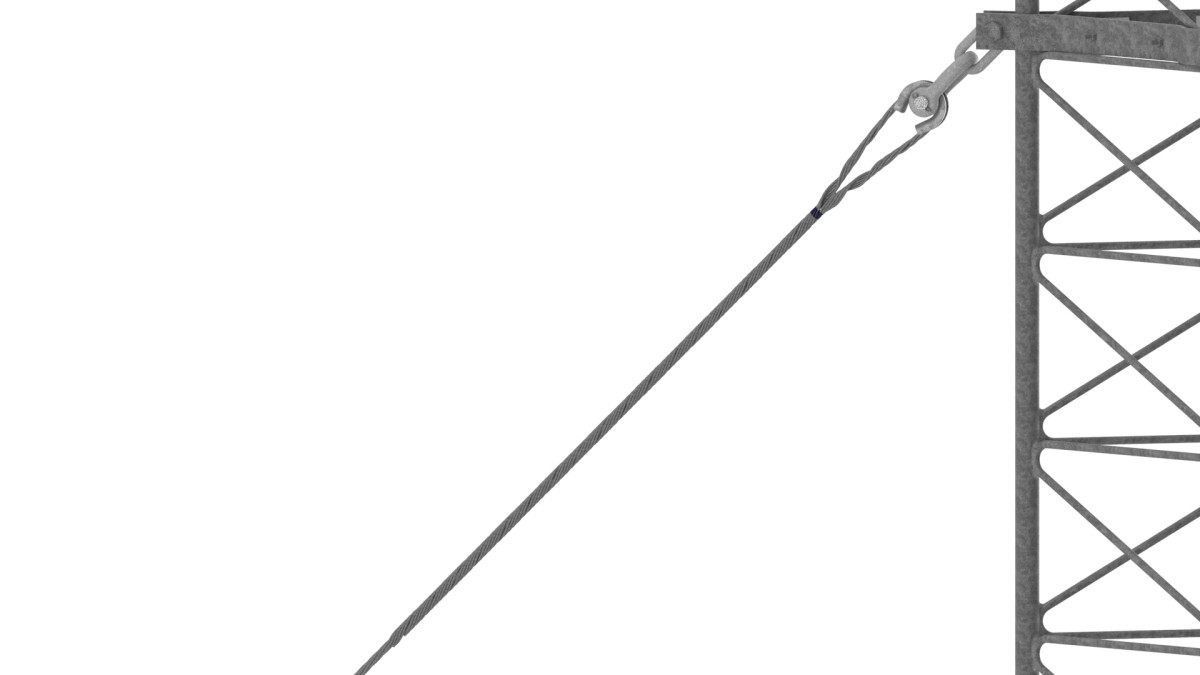
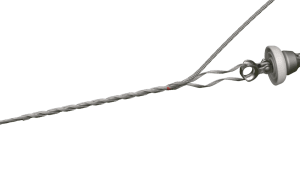
A Dead End Grip is a helical, preformed fitting used to terminate the ends of overhead conductors, stay wires, and fiber optic cables (ADSS/OPGW). It consists of several individual high-strength wires formed into a specific spiral pitch and inner diameter.
The internal surface of the grip is typically coated with a specialized aluminum oxide grit to increase the coefficient of friction. When wrapped around a conductor, the grip applies a uniform radial pressure over a large surface area, achieving up to 95% of the Rated Breaking Strength (RBS) of the conductor without damaging the delicate outer strands.
Technical Performance Matrix
To ensure your project meets global engineering benchmarks, refer to the following specification data:
| Feature | Industrial Specification | Standard Compliance |
| Primary Material | Aluminum-Clad Steel / Galvanized Steel | ASTM A475 / B415 |
| Grip Strength | $\ge$ 95% of Conductor RBS | IEEE 1138 / ANSI C119.4 |
| Coating Type | Hot-Dip Galvanization (HDG) | ASTM A153 / ISO 1461 |
| Zinc Thickness | $\ge$ 80 Microns ($600 g/m^2$) | ISO 1461 |
| Service Life | 50+ Years | ISO 9001:2015 |
| Installation | Tool-less / Preformed | NEMA PH1 |
Why Preformed Helical Design is the Gold Standard
In the B2B industrial niche, standard hardware is often the weakest link. Modern infrastructure requires precision-engineered fittings that can handle high-frequency vibration and thermal expansion.
1. Stress Distribution and Fatigue Prevention
Crucially, mechanical bolted clamps create “point loads.” This localized pressure leads to stress concentration and eventual metal fatigue. Conversely, a Dead End Grip distributes the mechanical load across its entire helical length.
By spreading the tension, the grip protects the conductor from “necking” or strand deformation. This is particularly vital for ACSR (Aluminum Conductor Steel Reinforced) wires, where maintaining the integrity of the aluminum shell is paramount for electrical conductivity and heat dissipation.
2. Material Integrity: High-Tensile Structural Grade Steel
At DP Power Fitting, we utilize high-tensile structural-grade steel to manufacture our helical rods. These materials offer the perfect balance of flexibility for installation and rigidity for long-term tensioning.
The raw material is cold-drawn to increase its yield strength, ensuring the grip does not relax over decades of thermal cycling. Whether in the sub-zero temperatures of the Northern USA or the extreme heat of the Middle East, the grip maintains its pitch and holding power.
Corrosion Resistance: The Science of HDG and Alumoweld
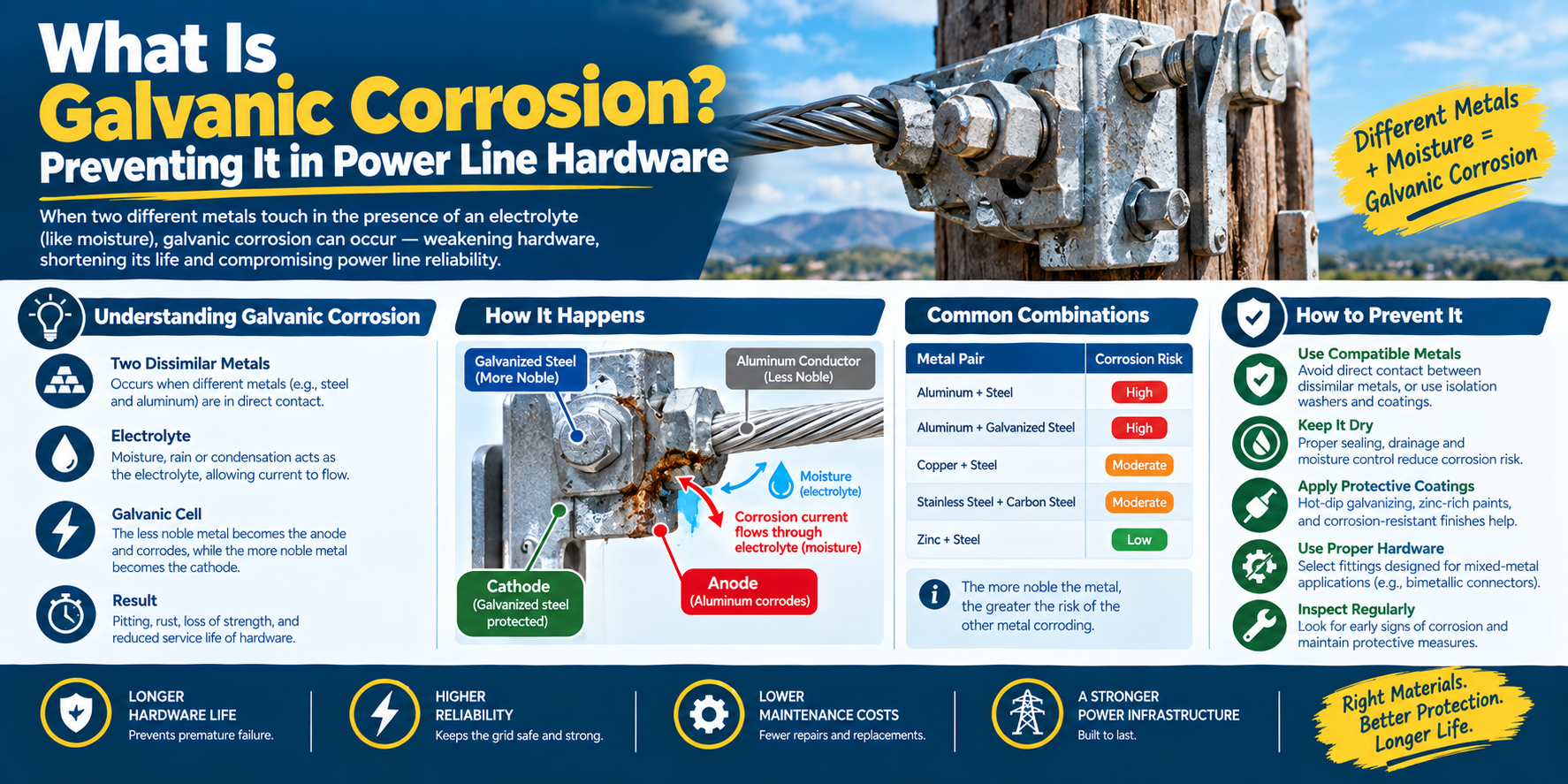
For hardware deployed in humid regions or coastal zones, corrosion is the primary driver of maintenance costs. Our Dead End Grips are engineered to resist atmospheric oxidation via two primary methods:
1. Hot-Dip Galvanization (ASTM A153)
For standard steel conductors and stay wires, we use Hot-Dip Galvanization. This process creates a metallurgical bond between the zinc and the steel. We maintain a minimum thickness of 80 microns, providing decades of sacrificial protection. In high-salinity areas like Karachi or coastal Florida, this coating is the difference between a 5-year and a 50-year lifespan.
2. Aluminum-Clad Steel (Alumoweld)
For high-performance applications and ADSS fiber optics, we offer Aluminum-Clad steel grips. This material combines the strength of steel with the superior corrosion resistance of aluminum, making it practically immune to the salt-spray environments of coastal regions.
Pro Tip for Procurement Officers: > Procurement Officers can request a Technical Data Sheet (TDS), Stress-Strain charts, and a custom bulk price list for Dead End Grips from our technical department.
The Manufacturing Process: Precision Meets Reliability
We do not simply bend wire; we engineer tension. Our manufacturing process at DP Power Fitting involves several critical stages to ensure zero-defect hardware.
1. Helical Pitch Calibration
Each Dead End Grip is calibrated to a specific pitch and inner diameter (ID). This ID is slightly smaller than the target conductor. This “interference fit” is what generates the gripping force without the need for bolts or specialized tools.
2. Internal Grit Application
To ensure maximum friction, the interior of our grips is treated with a high-friction aluminum oxide grit. This grit is bonded to the wire using a weather-resistant adhesive that does not degrade under UV exposure or extreme temperature fluctuations.
3. Quality Testing and Validation
Every batch undergoes rigorous testing:
- Tensile Strength Testing: Pulling the grip to its breaking point to verify RBS.
- Vibration Testing: Simulating wind-induced Aeolian vibration to ensure the grip does not migrate.
- Dimensional Verification: Ensuring the pitch and length meet ANSI specifications.
Applications: Where Dead End Grips Power the World
The versatility of helical fittings makes them essential across various high-stakes industrial sectors:
1. Power Distribution and Transmission
From 11kV distribution to 500kV transmission, Dead End Grips secure the conductors at the beginning and end of every line segment. They are the industry standard for terminating ACSR, AAAC, and AAC conductors.
2. Telecommunications and Fiber Optics (ADSS/OPGW)
Fiber optic cables are delicate. Standard clamps would crush the glass fibers. Dead End Grips provide the necessary tension to support the weight of the cable across long spans while keeping the “crush force” below the fiber’s safe threshold.
3. Railway Electrification Systems
In electrified railway systems, constant tension is required for safe train operation. Our grips secure the catenary wires, ensuring they stay perfectly level despite the constant vibration caused by passing high-speed trains.
4. Renewable Energy Projects
Wind and solar farms require extensive cabling over rough terrain. Dead End Grips stabilize these connections, ensuring that renewable energy reaches the grid without interruption.
The Procurement Angle: ROI and Supply Chain Efficiency
For global B2B buyers, sourcing hardware is about minimizing the Total Cost of Ownership (TCO).
Tool-Less Installation and Labor Savings
One of the biggest pain points in grid construction is labor. Dead End Grips require no wrenches, torque limiters, or hydraulic tools. A trained line worker can install a preformed grip in less than 60 seconds. This drastically reduces the “man-hours per pole” on large-scale projects, offering an immediate ROI on labor costs.
Bulk Availability and Global Logistics
We support infrastructure projects in the USA, China, and Global markets with optimized logistics.
- Packaging: Grips are color-coded for size identification and shipped in weather-resistant crates to prevent abrasion.
- Lead Times: Our high-volume lines ensure 14–21 day turnaround times for standard sizes, keeping your project on schedule.
Critical Design Features for Long-Term Safety
- Color Coding: Each grip features a color mark indicating the conductor diameter range, preventing installation errors in the field.
- Crossover Marks: An embossed mark indicates the starting point for wrapping, ensuring perfectly centered tension.
- Smooth Ends: All wire ends are rounded and polished to prevent electrical “corona” discharge and to protect line workers’ hands.
- Identification Tags: Each bundle is tagged with the batch number and material type for full ISO 9001:2015 traceability.
Final Verdict: Why Quality Grips are Non-Negotiable
The strength of a power line is only as reliable as its termination. A Dead End Grip may be a simple-looking component, but its role in preventing structural failure is monumental.
Investing in high-quality, galvanized or aluminum-clad hardware from DP Power Fitting is a strategic move to safeguard your entire system. Don’t risk a million-dollar outage over a sub-standard fitting.
Request a Bulk Quote Today
Secure your conductors with industry-leading hardware trusted by global utilities. Contact our engineering team for custom sizes or click below to request an immediate quote for bulk orders.
FAQ Section
- Q: Can Dead End Grips be reused after being removed?
- A: No. For safety reasons, it is not recommended to reuse grips that have been under full tension, as the helical pitch may have slightly elongated, compromising its future holding strength.
- Q: What is the difference between a Dead End Grip and a Guy Grip?
- A: While similar in design, Guy Grips are for stay wires, while Dead End Grips are specifically engineered with material compatibility and grit for energized conductors (like ACSR).
- Q: Does it meet IEEE 1138 standards for OPGW?
- A: Yes, our specialized fiber-optic grips are fully compliant with IEEE 1138 for high-tension optical ground wire applications.
- Q: How long does a Dead End Grip last?
- A: With our 80-micron hot-dip galvanization, our grips are rated for a 30–50 year service life, depending on environmental salinity.
- Q: Do I need a thimble with this grip?
- A: Yes, the “loop” of the grip should always be installed over a thimble or a compatible rounded fitting to prevent mechanical fatigue at the bend.