How to Reduce Earth Resistance: Practical Methods
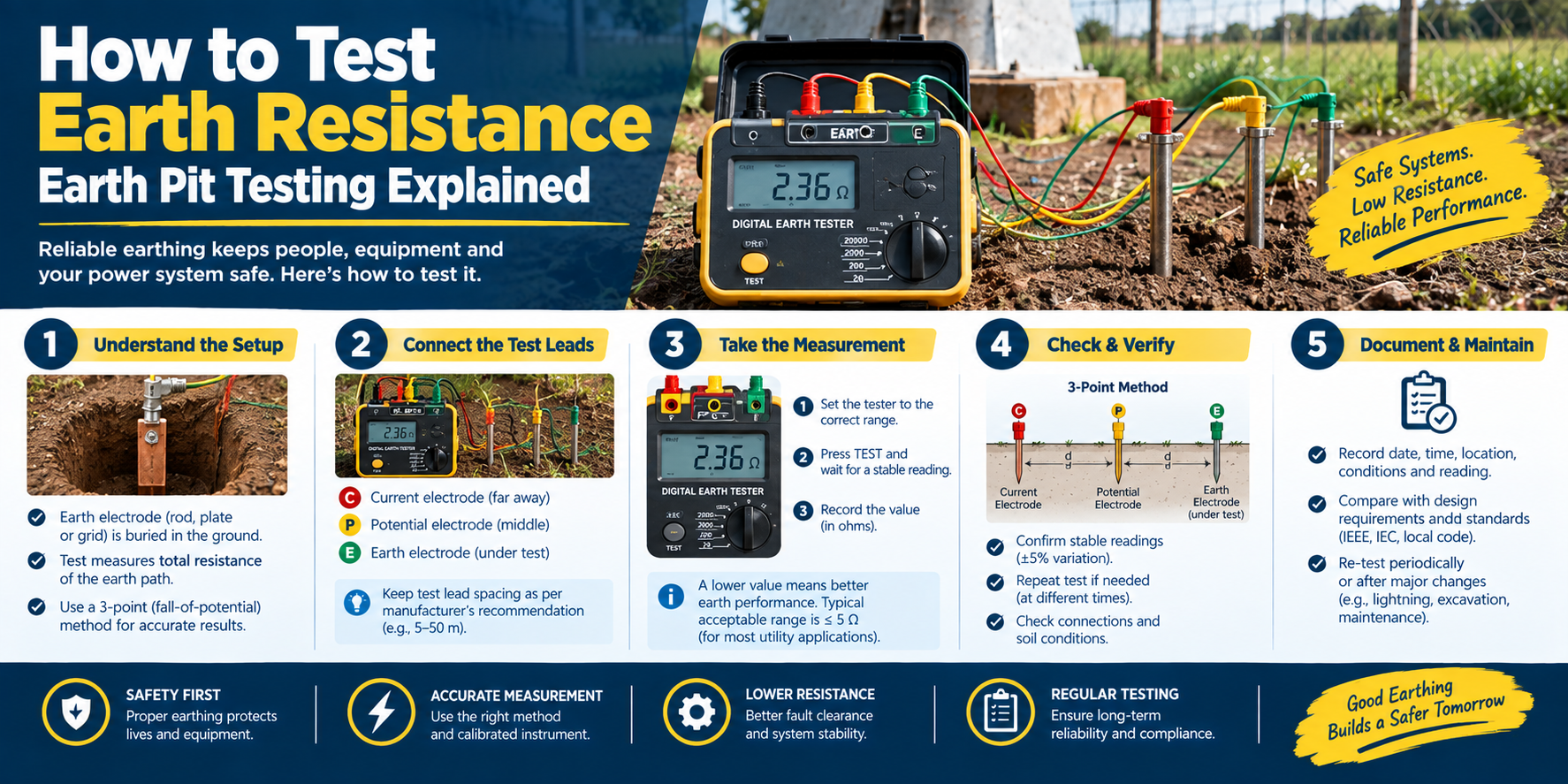
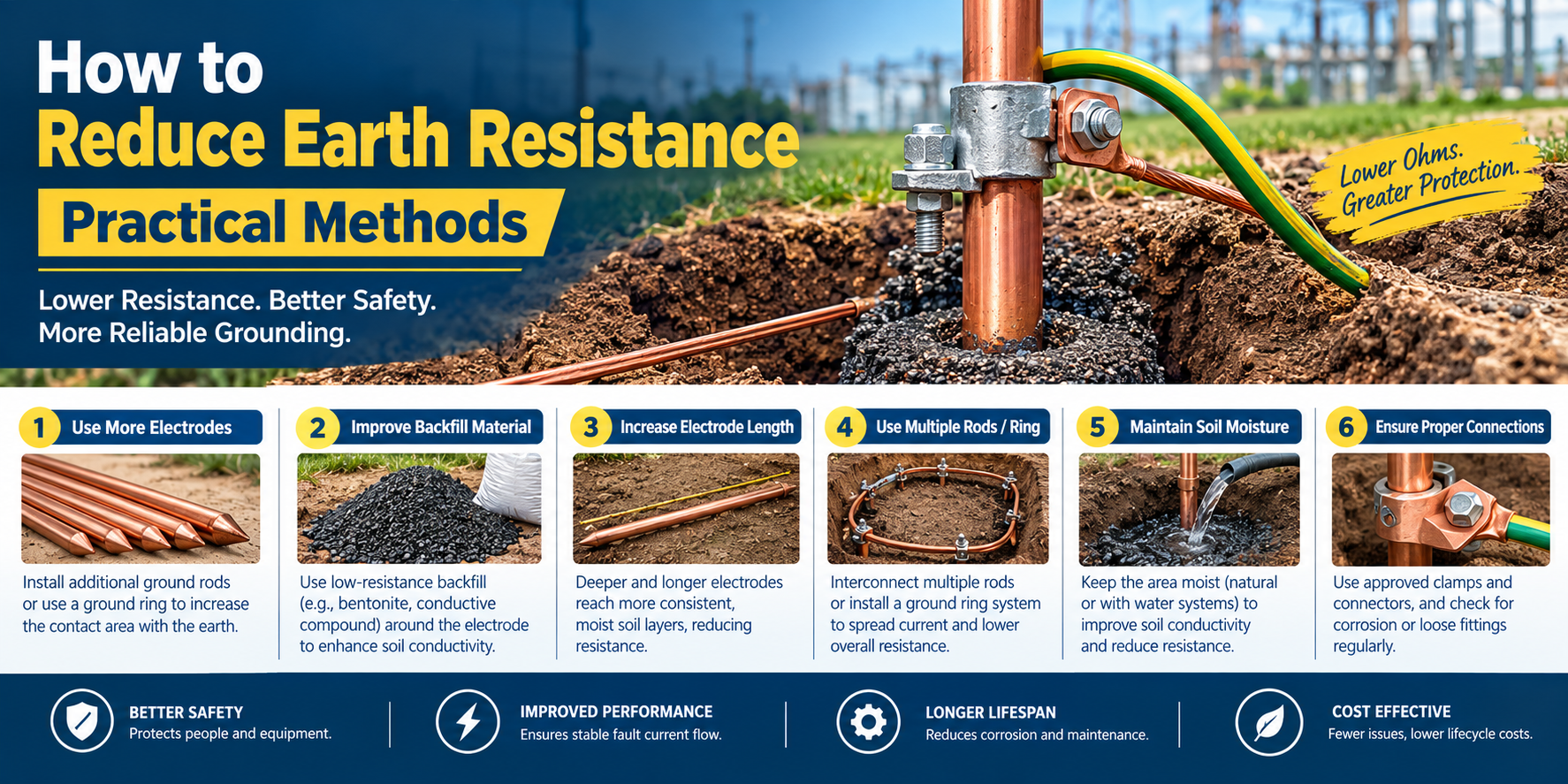
To reduce earth (ground) resistance, the most effective methods are: drive the electrode deeper into moist, low-resistivity soil (coupling rods to reach depth); add more rods, spaced apart and bonded together; increase the electrode surface area (larger diameter or more/longer rods); and treat the soil with an earth-enhancing compound where permitted. Earth resistance depends mostly on soil resistivity and electrode depth/area, so depth is usually the strongest lever. Test, then apply the method that fits your soil and resistance target.
A grounding system only protects if its earth resistance is low enough and in dry, rocky, or high-resistivity soil, a single rod often isn’t. This guide explains what drives earth resistance and the practical methods to reduce it, in order of effectiveness.
What Determines Earth Resistance?
Earth resistance is the resistance between your electrode and the general mass of earth. It’s governed mainly by:
- Soil resistivity: how well the soil conducts, which varies enormously (moist clay conducts well; dry sand and rock poorly) and changes with moisture and temperature.
- Electrode depth: deeper soil is usually moister and more conductive, so a deeper electrode reaches lower-resistivity ground.
- Electrode surface area: more contact with the soil (larger diameter, more/longer rods) lowers resistance.
You can’t easily change the soil’s basic nature, but you can change how deep and how much electrode is in contact with it which is what the methods below do.
Method 1: Drive Deeper (the Strongest Lever)
Because resistivity usually falls with depth (moister soil), driving the electrode deeper is typically the most effective single method. The surface layers dry out and freeze; deeper soil stays moist and conductive year-round.
To go deeper than one rod allows, couple rods: a ground coupling rod joins rods end-to-end so you drive them as one continuous electrode into the deeper, lower-resistance soil (a driving stud protects the thread while driving). Deep-driven coupled rods are the standard way to reach a low resistance in difficult ground.
Method 2: Add More Rods, Spaced Apart
Adding multiple rods in parallel lowers the overall resistance but only if they’re spaced far enough apart. Rods too close together overlap their resistance zones and don’t help much; spaced adequately (commonly at least 6 ft / 1.8 m, per codes such as the NEC), each rod develops its own low-resistance zone. Bond the rods together into one grounding system. Multiple spaced rods are effective where you can’t drive a single rod deep enough.
Method 3: Increase the Electrode Surface Area
More electrode surface in contact with the soil means lower resistance:
- Larger-diameter rods reduce resistance (though diameter has a smaller effect than length/depth).
- Longer rods (or coupled rods) increase contact length.
- Ground rings or plates add area in certain designs.
Length/depth generally beats diameter, so prioritize going deeper or adding rods over simply using a fatter rod.
Method 4: Treat the Soil
Where depth and more rods aren’t enough, soil treatment lowers the resistivity around the electrode:
- Earth-enhancing compounds (conductive backfill) placed around the rod improve the soil-to-electrode contact and hold moisture.
- Traditional additives (salt, charcoal, bentonite) have been used, though modern engineered compounds are preferred and some additives are restricted for environmental/corrosion reasons.
Soil treatment is especially useful in rocky or very dry ground where driving deep is hard. Follow environmental rules and standards (e.g. IEEE guidance) for soil treatment.
Method 5: Choose the Right Electrode Material
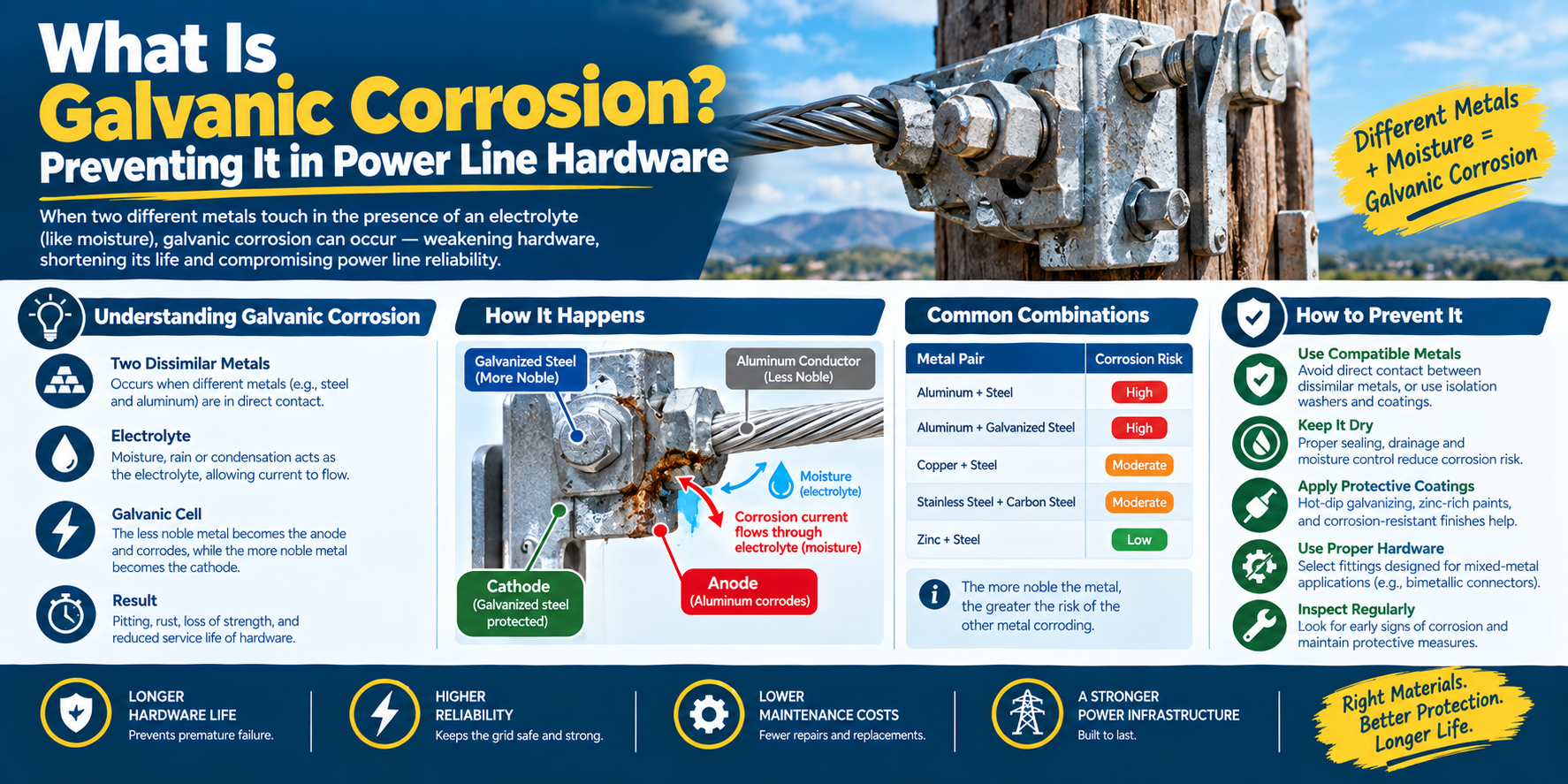
Material doesn’t change the initial resistance much, but it governs whether the resistance stays low over time. A copper-bonded rod resists corrosion, so the earth stays low-resistance for decades; a corroded electrode or bond slowly raises resistance. And matching metals (copper conductor + copper-alloy clamp + copper-bonded rod) prevents the galvanic corrosion that would otherwise degrade the connection. So material choice protects the durability of your low resistance.
The Method Order
| Priority | Method | When |
|---|---|---|
| 1 | Drive deeper (couple rods) | Almost always the strongest lever |
| 2 | Add spaced, bonded rods | Can’t drive one rod deep enough |
| 3 | Increase electrode area | Supplementary |
| 4 | Treat the soil | Rocky/dry ground, or when above aren’t enough |
| 5 | Corrosion-resistant, matched materials | To keep resistance low long-term |
Test first, apply the method that fits your soil and target, then re-test.
How to Reduce Earth Resistance: FAQ
What is the most effective way to reduce earth resistance? Driving the electrode deeper into moist, low-resistivity soil is usually the most effective single method, because soil resistivity generally falls with depth. Coupling rods lets you drive as one continuous electrode to reach that deeper soil. Adding spaced rods and treating the soil are effective supplements.
Why is my ground resistance too high? Usually because the soil is high-resistivity (dry, rocky, or sandy) or the electrode is too shallow or too small. Surface soil dries out and freezes, raising resistance. Reaching deeper moist soil, adding rods, or treating the soil lowers it. A corroded connection can also raise measured resistance over time.
Does adding more ground rods lower resistance? Yes multiple rods in parallel lower the overall resistance, but only if spaced far enough apart (commonly at least 6 ft / 1.8 m) so their resistance zones don’t overlap. Bond them together as one system. Rods too close together give little benefit.
Does rod diameter affect earth resistance? A larger diameter lowers resistance somewhat, but far less than increasing length/depth or adding rods. Prioritize driving deeper or adding spaced rods over simply using a fatter rod. Diameter is a secondary lever.
What is soil treatment for earthing? Placing conductive backfill or an earth-enhancing compound around the electrode to lower the soil resistivity and improve contact and moisture retention. It’s especially useful in rocky or very dry ground. Follow environmental rules and standards for the compound used.
How does electrode material affect resistance? Material has little effect on the initial resistance but governs whether it stays low. A corrosion-resistant copper-bonded rod, with matched-metal connections, keeps the earth low-resistance for decades; a corroding electrode or galvanically mismatched bond slowly raises resistance. Material protects durability.
The Bottom Line
Earth resistance is driven by soil resistivity and electrode depth/area, so you lower it by driving deeper (the strongest lever, via coupled rods), adding spaced and bonded rods, increasing electrode area, and treating the soil where needed then keeping it low long-term with corrosion-resistant, matched materials. Test, apply the right method for your soil, and re-test to confirm the target.
DAPENG Power (DP Power Fitting) makes the earthing hardware to hit a low resistance and keep it copper and galvanized ground rods, coupling rods for deep driving, and matched rod, strand, and I-beam bonding clamps. Tell us your soil and resistance target, and we’ll specify the electrode system to reach it.