
A clevis bolt is a specialized, high-strength fastener characterized by a flat head and a cross-drilled hole at the shank end, designed to be secured with a cotter pin or R-clip. Unlike standard threaded bolts, clevis bolts are engineered to facilitate rotational movement within a shackle or clevis-end assembly while absorbing significant shear loads.
In industrial B2B procurement, inconsistent metallurgy and dimensional variances in fasteners can lead to catastrophic mechanical failure or project delays. Our manufacturing process solves these bottlenecks by providing high-tolerance, traceable clevis bolts that replace unreliable “off-the-shelf” hardware with engineered components tailored for heavy-duty applications. Consequently, these fasteners are essential for systems requiring both articulation and high tensile security.
Engineering Standards Behind Industrial Clevis Bolt Fabrication
The structural integrity of a clevis assembly depends entirely on the mechanical properties of the bolt. Global grid integration and industrial automation require components that speak a universal language of quality.
Compliance Metrics for International Infrastructure
To ensure seamless integration into Western markets, our production lines synchronize Chinese national standards with international equivalents.
| Component / Test | International (ISO) | USA (ASTM/ANSI) | Germany (DIN) | China (GB/T) |
| General Dimensions | ISO 2341 | ANSI B18.8.1 | DIN 1444 | GB/T 882 |
| Material Strength | ISO 898-1 | ASTM A325 / A449 | DIN EN ISO 898 | GB/T 3098.1 |
| Stainless Steel | ISO 3506 | ASTM F593 | DIN 267 | GB/T 3098.6 |
| Hot-Dip Galvanizing | ISO 1461 | ASTM A153 | DIN 50976 | GB/T 13912 |
Technical Benchmarks for High-Load Applications
- Yield Strength: $\geq 355\text{ MPa}$ for Grade 8.8; up to $940\text{ MPa}$ for Grade 10.9.
- Dimensional Tolerances: Maintained within $\pm0.05\text{mm}$ to ensure smooth fitment in clevis yokes.
- Surface Roughness: Ra values of $0.8\text{ to }1.6\text{ \mu m}$ to minimize friction and wear at the pivot point.
- Shear Capacity: Engineered to withstand $60\% \text{ to } 75\%$ of ultimate tensile strength (UTS).
Metallurgy and Material Science Driving Component Longevity
Strategically, the choice of raw material dictates the bolt’s performance in corrosive or high-stress environments. Beyond the technical specs, our sourcing involves strictly audited steel mills.
Material Grade Comparison
| Feature | Carbon Steel (Grade 8.8) | Alloy Steel (Grade 10.9) | Stainless Steel (A4/316) |
| Tensile Strength | $800\text{ MPa}$ | $1040\text{ MPa}$ | $700\text{ MPa}$ |
| Corrosion Resistance | Moderate (Coated) | Moderate (Coated) | Superior (Natural) |
| Ductility | High | Moderate | High |
| Best For | General Construction | Heavy Machinery | Marine / Chemical |
Advanced Surface Engineering
To combat environmental degradation, we apply specialized coatings that exceed standard lifecycle expectations:
- Hot-Dip Galvanizing: Zinc coating thickness $\geq 85\text{ \mu m}$ for 1000+ hours of salt spray resistance.
- Zinc-Nickel Plating: Ideal for automotive and aerospace sectors requiring thinner profiles with high protection.
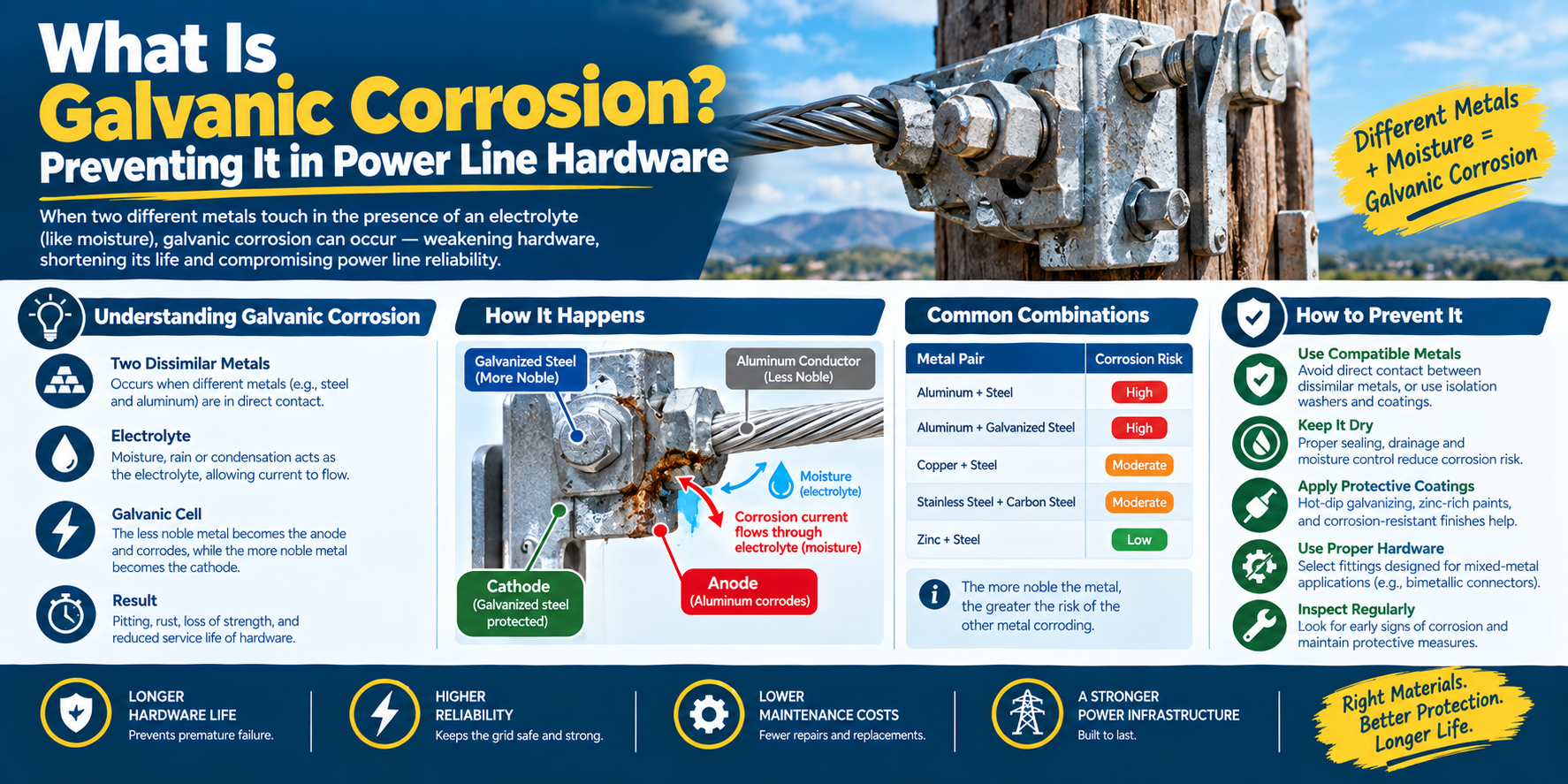
- Dacromet/Geomet: Non-electrolytic coatings that eliminate the risk of hydrogen embrittlement in high-strength bolts.
💡 Pro Tip: Engineering Support
Before finalizing your procurement order, request a Material Test Report (MTR) and 3D CAD models (STEP files). This ensures the hole alignment for the cotter pin perfectly matches your load-bearing shackle.
Advancements in Machining and Manufacturing Process Control
The transition from traditional lathing to automated CNC (Computer Numerical Control) production has revolutionized the reliability of China-based exports.
Precision Manufacturing Stages
- Cold Heading: For smaller diameters, cold forming increases the strength of the bolt head through work hardening.
- Hot Forging: For diameters exceeding $M24$, hot forging ensures the grain flow of the metal follows the bolt’s contour, maximizing fatigue resistance.
- CNC Drilling: The cotter pin hole is drilled using high-precision jigs, ensuring the hole is perfectly perpendicular to the shank, a critical factor for safety in articulated joints.
- Thread Rolling: Unlike cut threads, rolled threads are smoother and have higher fatigue life due to the compressive stresses induced during the process.
Quality Assurance and Testing Protocols
In high-risk sectors like railway electrification or bridge building, a “good enough” bolt is a liability. Our QA system is designed for zero-defect delivery.
Multi-Layer Inspection Framework
- Chemical Composition Analysis: Spectrometer testing verifies the exact carbon, manganese, and chromium content of the alloy.
- Ultrasonic Testing (UT): Non-destructive testing to detect internal fissures or air pockets in the forged shank.
- Hardness Testing: Rockwell (HRC) or Vickers (HV) testing ensures the heat treatment has reached the required depth and uniformity.
- Dimensional Verification: Using CMM (Coordinate Measuring Machine) technology to guarantee tolerances of $\pm0.05\text{mm}$.
Logistics, Port Handling, and Export Compliance
For Western buyers, the “Landed Cost” is only one part of the equation; supply stability is the other. We leverage China’s world-class infrastructure to streamline global delivery.
Strategic Export Channels
- Port Proximity: Our facilities are strategically located near Shanghai and Shenzhen ports, reducing inland transit time by 48–72 hours.
- Packaging Excellence: Bolts are treated with VCI (Vapor Corrosion Inhibitor) paper and packed in steel-banded reinforced crates to prevent moisture ingress during sea freight.
- MOQ Flexibility: We support “Just-In-Time” (JIT) manufacturing with flexible Minimum Order Quantities for custom-dimensioned clevis bolts.
- Customization: From non-standard shank lengths to specialized hole placements for double-locking mechanisms, our OEM capabilities meet unique engineering blueprints.
Addressing Procurement Pain Points
Beyond the technical specs, we recognize the human element in B2B sourcing.
- Lead Times: By maintaining a buffer stock of semi-finished carbon steel shanks, we can reduce lead times for custom orders to under 21 days.
- Traceability: Every shipment is accompanied by a batch-specific 3.1 Certification, ensuring full traceability back to the steel melt.
- Communication: Engineering-grade clarity in English-speaking technical support eliminates the “lost in translation” risks common in international trade.
FAQs
What is the difference between a clevis bolt and a standard machine bolt?
A clevis bolt is designed primarily for shear loads and articulation. It lacks the standard threading found along the length of a machine bolt, featuring instead a smooth shank and a cross-drilled hole for a pin. This design prevents the assembly from over-tightening and allows parts to pivot.
How do I choose between a Grade 8.8 and Grade 10.9 clevis bolt?
Grade 8.8 is the “workhorse” for general industrial use, offering excellent ductility. Grade 10.9 is preferred for high-stress applications in heavy machinery where higher tensile and yield strength are required. However, 10.9 bolts require specialized coatings to avoid hydrogen embrittlement.
Can clevis bolts be customized for sub-zero temperatures?
Yes. For applications in Arctic environments or high-altitude aerospace, we use Charpy V-Notch tested materials (such as L7 or L7M grades) that maintain impact toughness at temperatures as low as $-101^\circ\text{C}$.
What are the standard finishes for marine-grade clevis bolts?
For marine use, we recommend Stainless Steel 316 (A4) as the primary material. If carbon steel must be used for strength, a Hot-Dip Galvanized finish with a secondary topcoat or a Zinc-Nickel plating is the minimum requirement for longevity.
Is third-party inspection (SGS/TUV) available?
Absolutely. We regularly host SGS and TUV inspectors for pre-shipment verification, including dimensional checks, pull-testing, and chemical analysis to ensure the order matches the technical data sheet exactly.
Secure Your Industrial Supply Chain Today
In a world of fluctuating material costs and fragile logistics, your choice of fastener manufacturer defines your project’s resilience. Our precision clevis bolts provide the reliability your engineers demand and the cost-efficiency your procurement team requires.
Contact our technical sales team today for a formal RFQ and receive a comprehensive Material Test Report for your next project.