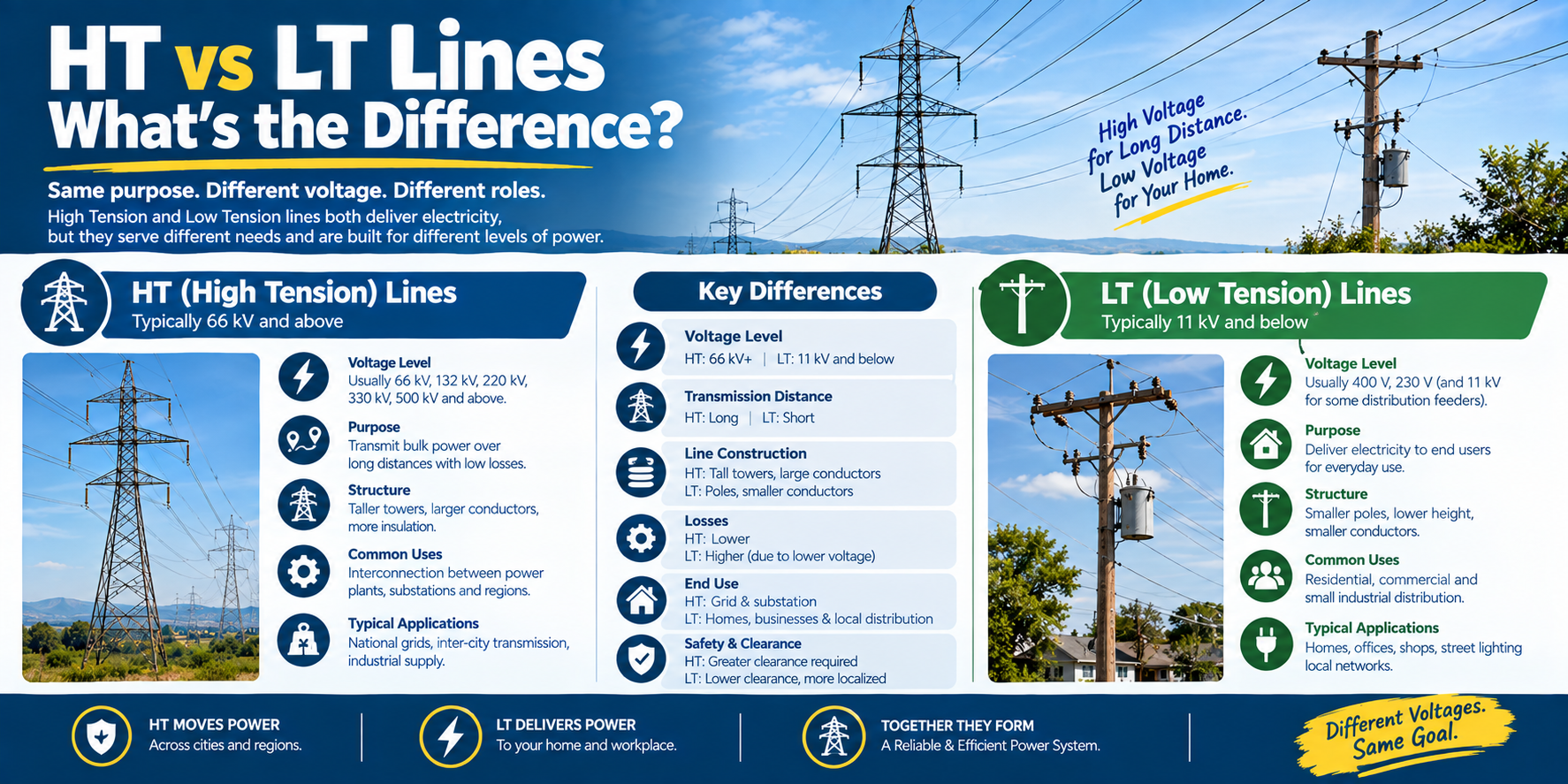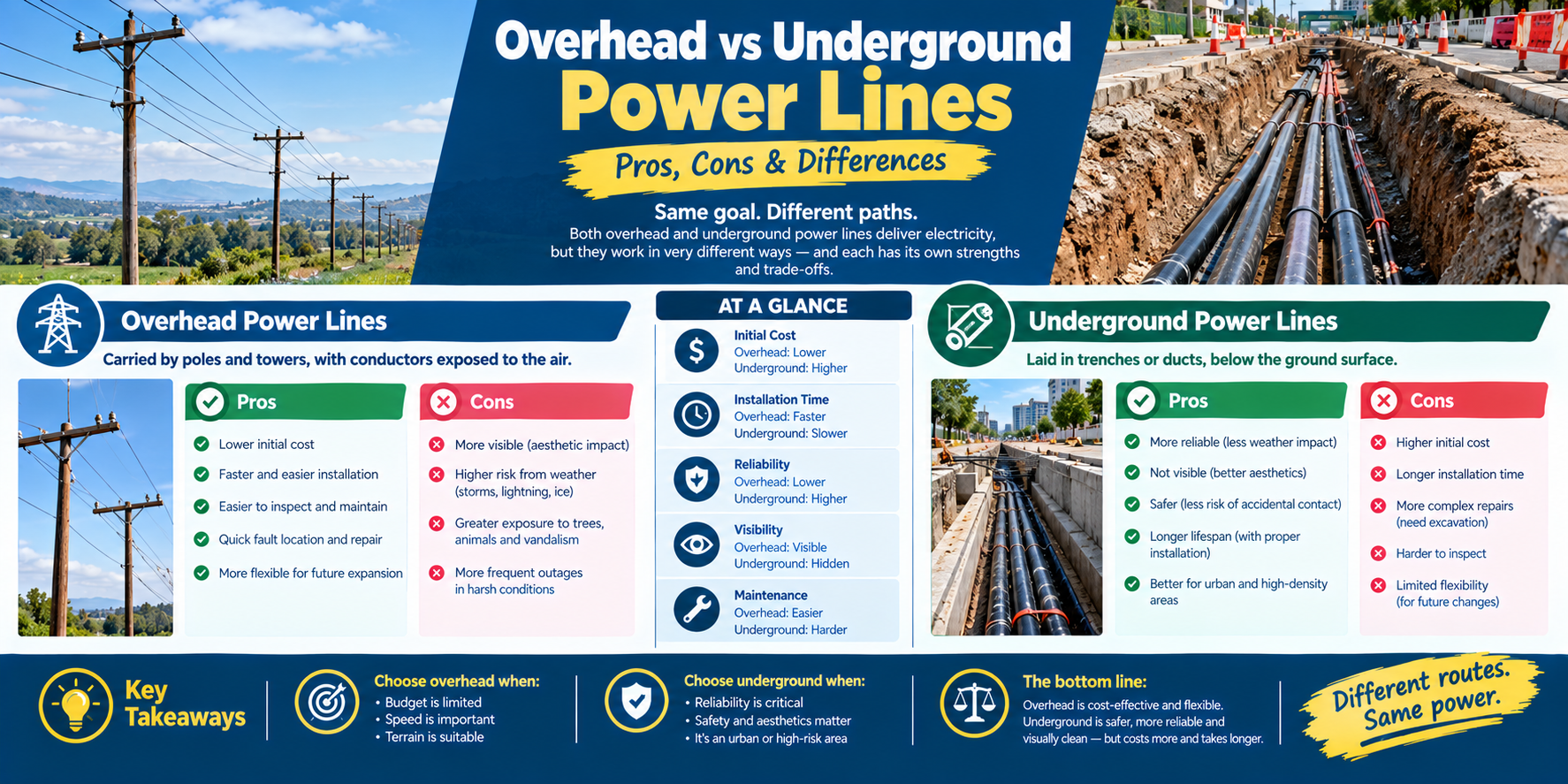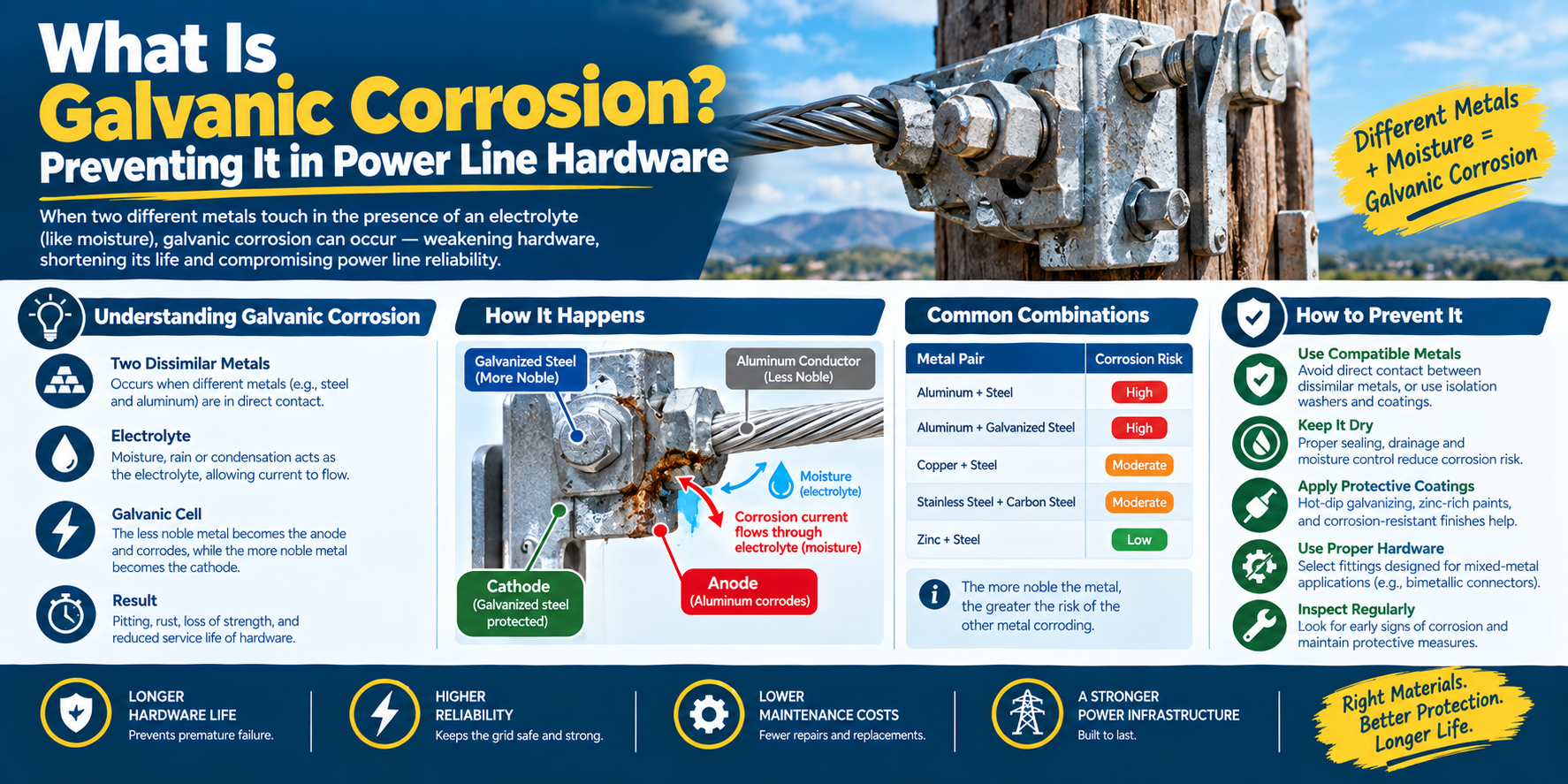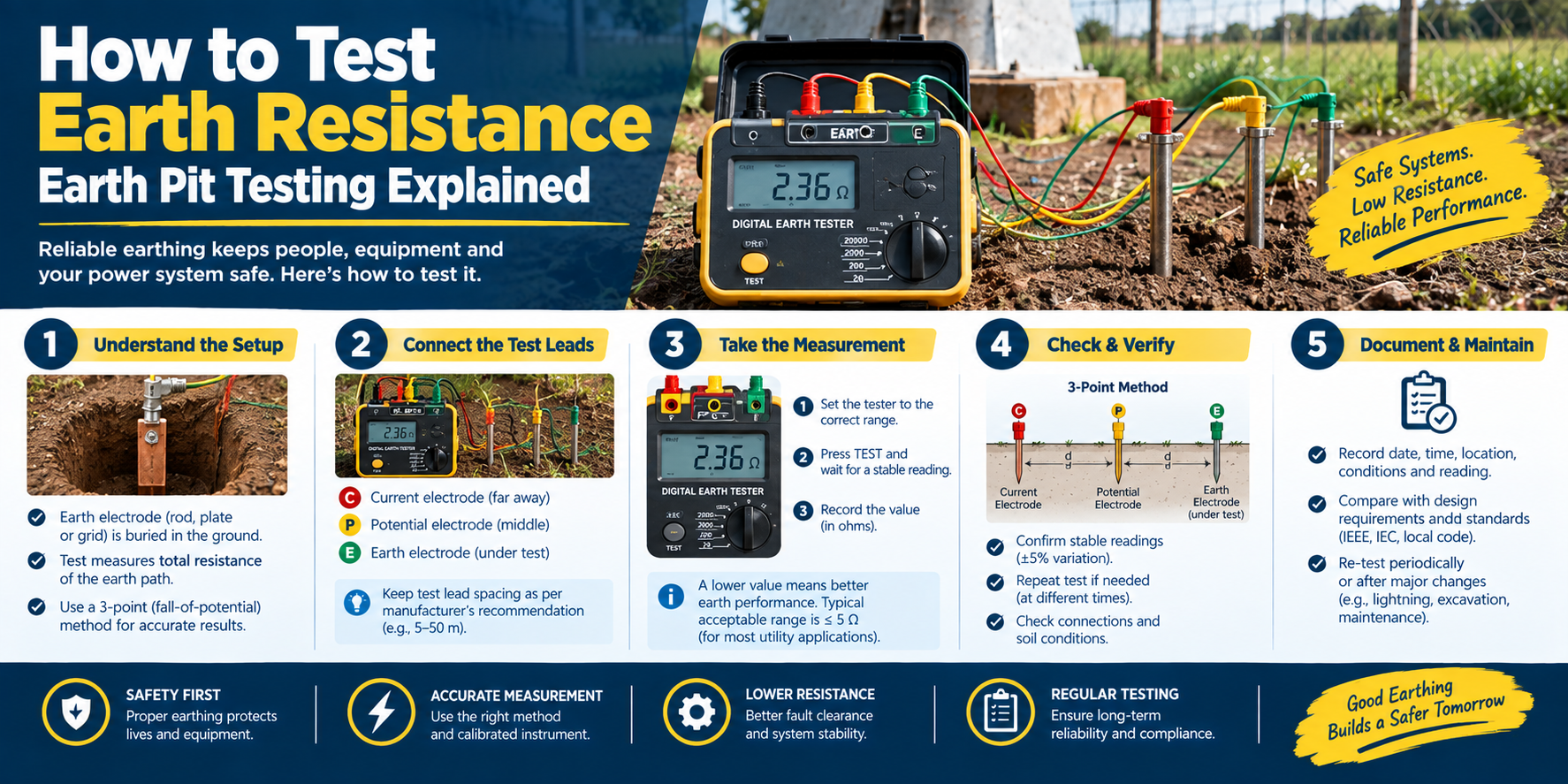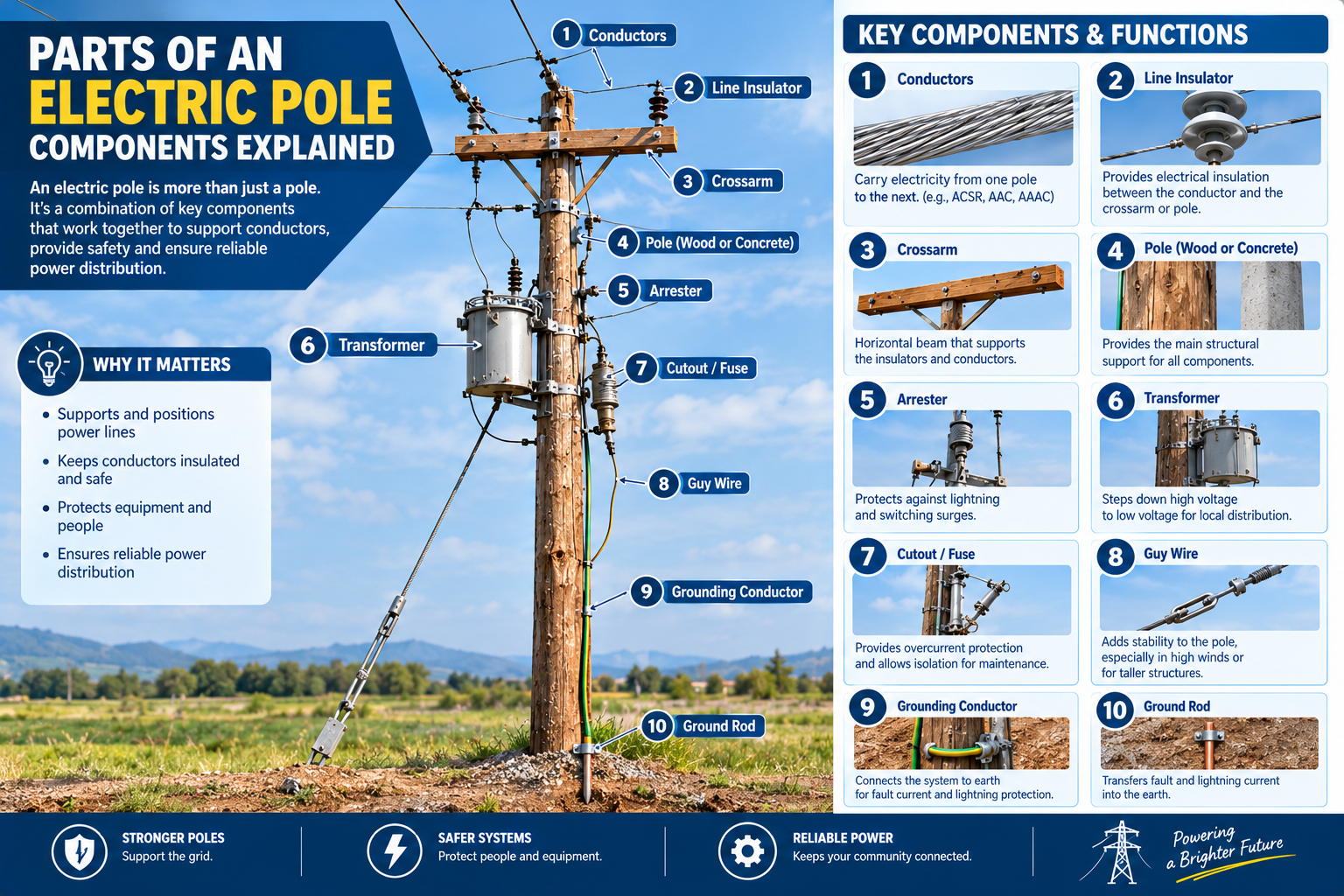
The integrity of a multi-million dollar power grid often rests on a few square inches of buried steel. Imagine a Category 4 hurricane sweeping through a coastal utility corridor. As 140 mph winds exert massive lateral forces on high-voltage transmission poles, the entire system relies on the guy wires and, more critically, the Ground Anchors holding them in place.
In high-stakes engineering, “failure” isn’t just a maintenance ticket—it’s a catastrophic domino effect of falling towers and localized blackouts. Low-quality anchoring hardware is a ticking liability that can lead to multimillion-dollar downtime and compromised public safety.
For procurement officers and structural engineers, selecting the correct anchoring system is the primary defense against grid collapse. A Ground Anchor must resist not only the physical tension of the line but also the relentless chemical warfare of acidic or high-salinity soils.
At DP Power Fitting, we specialize in industrial-grade Ground Anchors designed for long-term reliability. Our systems ensure that your infrastructure remains perfectly vertical, regardless of the soil condition or atmospheric volatility.
What is a Ground Anchor?
A Ground Anchor is a structural fastener designed to transfer tensile forces from a structure to the ground. In the context of utility poles and telecommunication towers, these anchors are typically buried or driven into the earth to provide a secure termination point for guy wires.
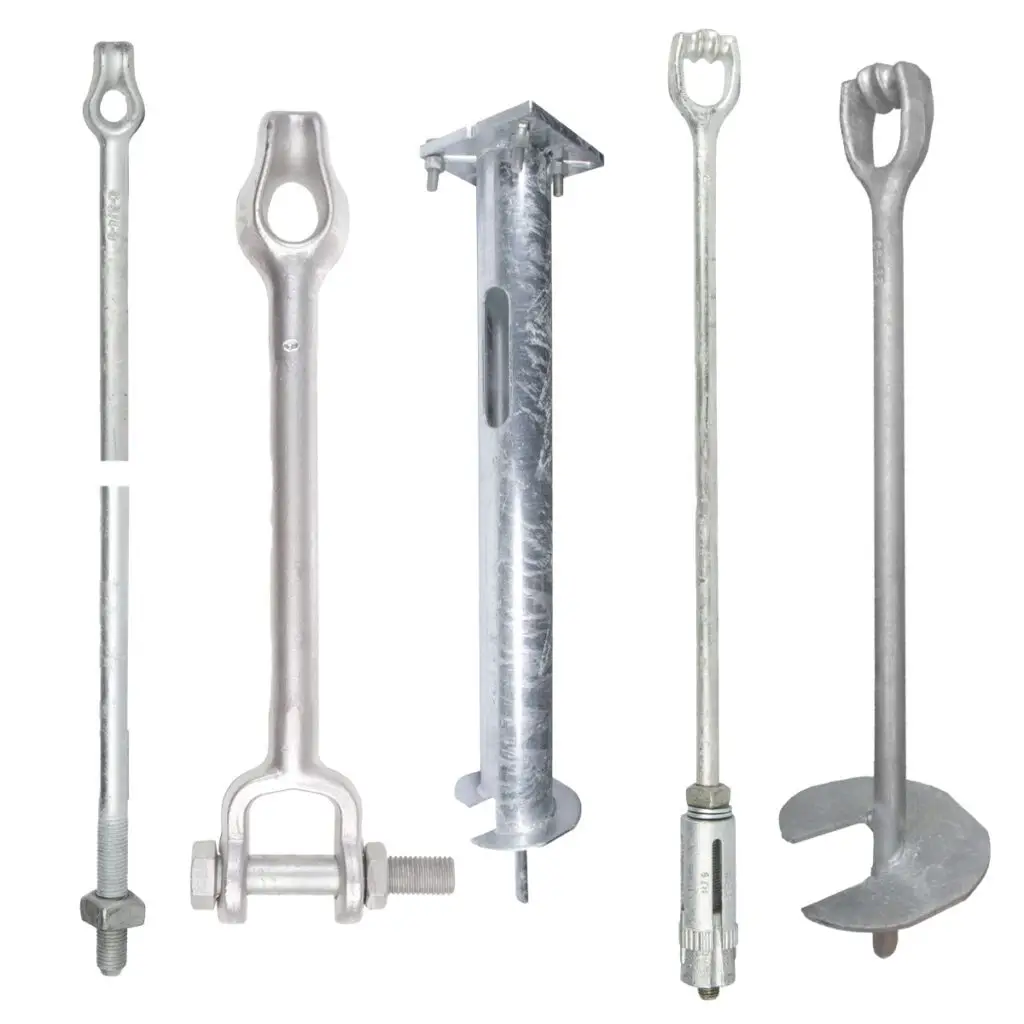
Manufactured from high-tensile structural-grade steel (ASTM A36 or Q235B), they are available in several configurations, including expanding, screw-in (helix), and plate anchors. To prevent underground oxidation, they are treated with Hot-Dip Galvanization (ASTM A153), allowing them to withstand moisture and chemical exposure for over 50 years.
By utilizing a Ground Anchor, engineers can effectively stabilize overhead lines against wind loads, ice accumulation, and unbalanced conductor tension.
Why Ground Anchors are the Gold Standard for Modern Infrastructure
In the B2B industrial sector, “strong enough” is never a valid engineering metric. Modern infrastructure demands materials that meet strict global benchmarks and deliver consistent mechanical performance over decades.
1. Mechanical Integrity & Stress Handling
Ground Anchors are designed to convert the mechanical energy of a guy wire into “holding capacity” within the soil. Crucially, the surface area of the anchor plate or helix is calibrated to the soil’s “Internal Angle of Friction.”
High-tensile steel ensures that the anchor rod does not snap under sudden kinetic loads, such as a falling tree branch hitting a conductor. Conversely, the ductility of the steel allows the anchor to absorb minor seismic vibrations without brittle fracture.
2. Corrosion Resistance: The Science of HDG
Corrosion is the primary driver of failure for buried hardware. At DP Power Fitting, all ground anchors undergo Hot-Dip Galvanization (HDG) in accordance with ISO 1461 and ASTM A153.
We maintain a minimum zinc coating thickness of 80 microns. This metallurgical bond provides “sacrificial protection,” meaning the zinc will prioritize itself for corrosion before the inner steel core is ever touched. This is essential for hardware deployed in the humid regions of the coastal USA, South China, or high-salinity industrial zones.
Entity-Based Classifications: Types of Utility Ground Anchors
To optimize grid stability, engineers must select the specific “Entity” or anchor type that matches the soil profile.
Expanding Anchors (Never-Creep) Expanding anchors are designed for installation in holes drilled by an earth auger. Once placed, the blades are expanded into the undisturbed soil. This creates a massive resistance cone, making them ideal for rocky or firm clay soils.
Screw-In / Helix Anchors These anchors consist of a steel shaft with one or more helical plates. They are “screwed” into the ground using a hydraulic torque motor. Helix anchors are favored for their speed of installation and their ability to be “load-tested” during the driving process based on torque readings.
Plate Anchors Plate anchors are heavy-duty flat steel plates buried in a horizontal trench. They offer the highest surface area for maximum holding capacity in soft or sandy soils. At DP Power Fitting, our plate anchors are reinforced to prevent bending under extreme tension.
Pro Tip: Procurement Officers can request a Technical Data Sheet (TDS), Soil-to-Anchor Load Charts, and a custom bulk price list for Ground Anchors from our technical team.
Manufacturing Process: Engineering Precision at DP Power Fitting
We do not simply forge metal; we engineer tension-resistance. Our manufacturing process involves several critical stages to ensure zero-defect hardware.
1. High-Tensile Steel Selection
We utilize ASTM A36 or Q235B structural-grade steel. These materials offer the optimal yield strength required for utility applications. Every batch of raw material is verified via chemical analysis to ensure it meets the required mechanical properties.
2. Precision Welding and Forging
For helix and expanding anchors, the weld integrity is paramount. We utilize automated CO2 shielded welding to ensure deep penetration. This prevents the helix from “walking” or detaching from the shaft during high-torque installations.
3. Load Testing and Validation
Every batch undergoes rigorous testing:
- Tensile Testing: Pulling the anchor shaft to its breaking point.
- Torque Testing: Simulating the stress of a hydraulic motor during installation.
- Galvanization Check: Magnetic gauge testing to verify the 80-micron zinc threshold.
Applications Across High-Stakes Industries
The versatility of the DP Power Fitting Ground Anchor makes it a staple across multiple technical sectors:
Power Distribution and Transmission From 11kV distribution poles to 500kV transmission towers, ground anchors provide the lateral stability required to prevent pole “leaning” and line-to-line contact during storms.
Telecommunication and 5G Expansion The rapid rollout of 5G requires stable towers in both urban and rural environments. Our anchors provide a footprint-saving stability solution for guyed masts and monopole towers.
Railway Electrification In railway systems, constant tension on the contact wire is mandatory for safe train operation. Ground anchors secure the termination points of these wires, ensuring they stay level despite the vibration of passing high-speed trains.
The Procurement Angle: ROI and Supply Chain Efficiency
For global B2B buyers, sourcing hardware is about minimizing the Total Cost of Ownership (TCO).
Reduced Maintenance Costs
Low-quality anchors often fail within 10–12 years due to “pitting corrosion.” Replacing a buried anchor is 20 times more expensive in labor and excavation than the cost of the anchor itself. Choosing a 50-year galvanized anchor from DP Power Fitting eliminates these hidden costs.
Bulk Availability and Global Logistics
We support infrastructure projects worldwide with optimized logistics.
- Packaging: Anchors are bundled with high-strength steel strapping and palletized for seaworthy transport.
- Lead Times: Our high-volume production lines ensure a 14–21 day turnaround for standard sizes.
Critical Design Features for Easy Installation
- Chamfered Ends: All rods feature chamfered ends to allow for quick nut engagement, even when line workers are wearing heavy protective gloves.
- Thimble-Eye Forging: The eye of the rod is precision-forged to ensure a smooth radius, preventing guy wire fatigue at the connection point.
- Identification Marking: Each anchor is stamped with a batch code for full ISO 9001:2015 traceability, facilitating easy field audits.
Final Verdict: Why Quality Anchoring is Non-Negotiable
The strength of an electrical grid is only as reliable as the soil it is anchored to. A Ground Anchor may be hidden underground, but its role in preventing structural failure is monumental.
By selecting hardware that exceeds ASTM standards and offers superior galvanization, you are choosing grid resilience over localized failure. At DP Power Fitting, we provide the foundation for a more stable future.
Request a Bulk Quote Today
Secure your infrastructure with industry-leading Ground Anchors. Contact our engineering team for custom dimensions or click below to request an immediate quote for bulk orders.
FAQ Section
- Q: What is the average holding capacity of a 10-inch helix anchor?
A: Holding capacity depends on soil class, but a 10-inch helix in Class 5 soil typically provides 10,000 to 12,000 lbs of resistance. - Q: How deep should a utility ground anchor be installed?
A: For distribution poles, the anchor is usually installed 5 to 7 feet deep, ensuring the helix or plate is below the frost line and in undisturbed soil. - Q: Can ground anchors be reused after removal?
A: For permanent utility structures, reuse is not recommended as the removal process can damage the galvanization and compromise the thread integrity. - Q: What is the best anchor for sandy soil?
A: Plate anchors or multi-helix screw anchors are preferred for sandy soil as they provide a larger surface area to distribute the tension load. - Q: Does the galvanization meet ASTM A153?
A: Yes, all DP Power Fitting ground anchors meet or exceed ASTM A153 Class C and ISO 1461 standards.