Earthing vs Grounding: What’s the Difference?
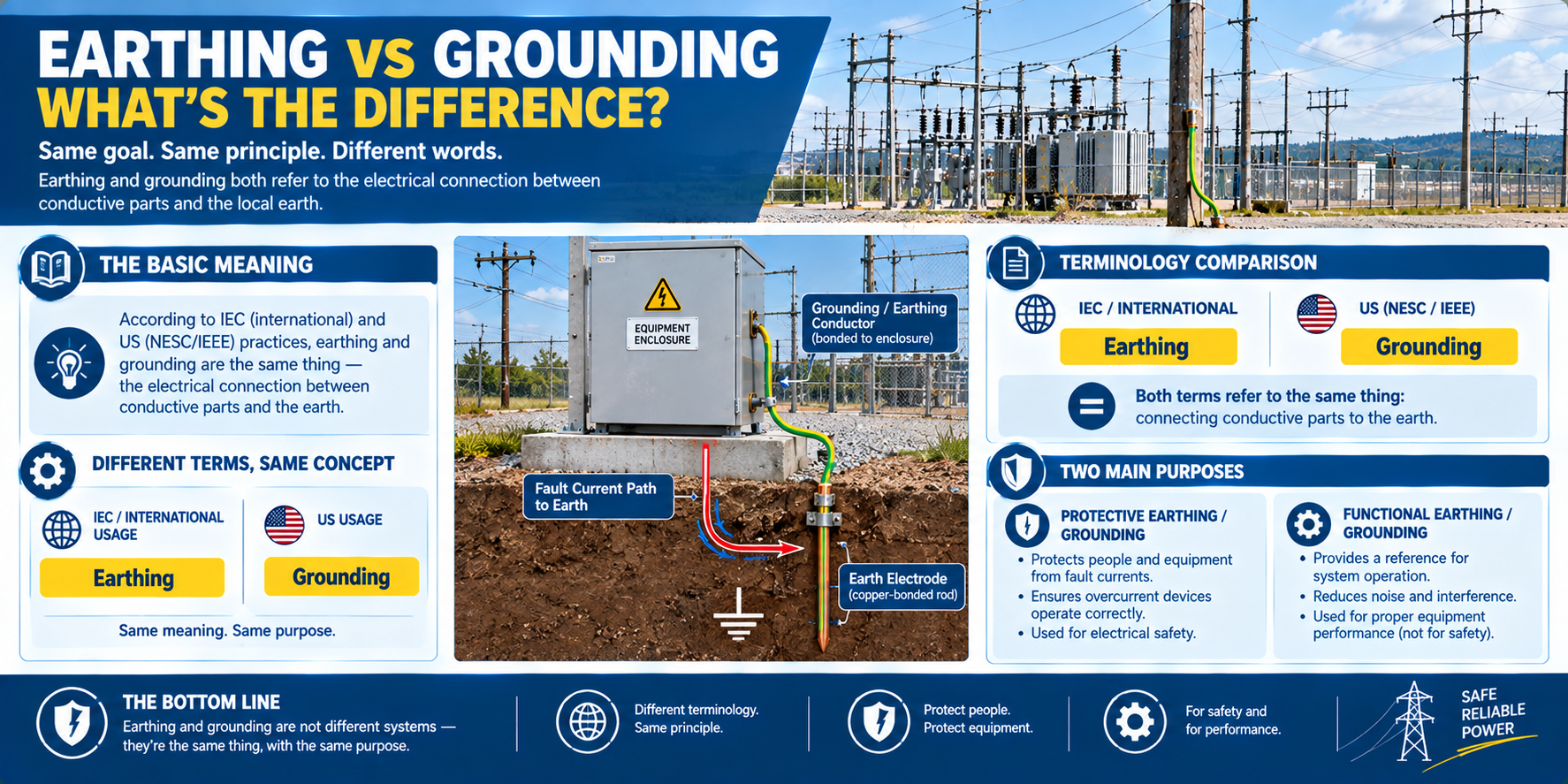
Earthing and grounding refer to essentially the same thing, connecting electrical systems and equipment to the earth for safety, and the words are often used interchangeably. The difference is mostly regional: “earthing” is the term used in British/IEC English (UK, Europe, Asia, Africa, Middle East), while “grounding” is the American (NEC) term. Where a technical distinction is drawn, “earthing” often refers to connecting to the physical earth (the electrode), and “grounding” to connecting to a common reference point in the system, but in everyday use, they mean the same protective connection.
“Earthing” and “grounding” are two of the most-searched terms in electrical work, and people often wonder whether they’re different things. This guide clears it up.
The Short Answer: Mostly the Same Thing
For most purposes, earthing and grounding mean the same thing: making a deliberate connection between an electrical system (or equipment) and the earth, so that fault and lightning currents have a safe path and exposed metal parts stay at a safe voltage. The two words are used interchangeably across the industry.
The main reason there are two words is regional terminology:
- “Earthing” the term in British / IEC English, used across the UK, Europe, Asia, Africa, and the Middle East.
- “Grounding” the term in American English, used in the US and under the NEC.
So an engineer in London and an engineer in New York are usually describing the same connection with different words.
Where a Technical Distinction Is Drawn
Some texts draw a finer distinction between the two:
- Earthing connecting to the physical earth (the ground itself), via an electrode buried in the soil. This is about creating a low-resistance path to the mass of earth.
- Grounding connecting to a common reference point (often called ground) in the electrical system, which may or may not be the physical earth, so that all parts share a common zero-voltage reference.
In this view, “earthing” is specifically the earth-electrode connection, and “grounding” is the broader system reference. But this distinction is not universal, and in everyday practice the two are used as synonyms.
What They Both Achieve
Whichever word you use, the purpose is the same safety:
- Protecting people keeping exposed metal parts at a safe voltage so a fault doesn’t make equipment live and dangerous to touch.
- Clearing faults giving fault current a low-resistance path so protective devices (fuses, breakers) operate quickly.
- Lightning and surge protection carrying lightning and surge current safely to earth. (See our lightning-protection guide.)
- A voltage reference giving the system a stable zero-voltage reference.
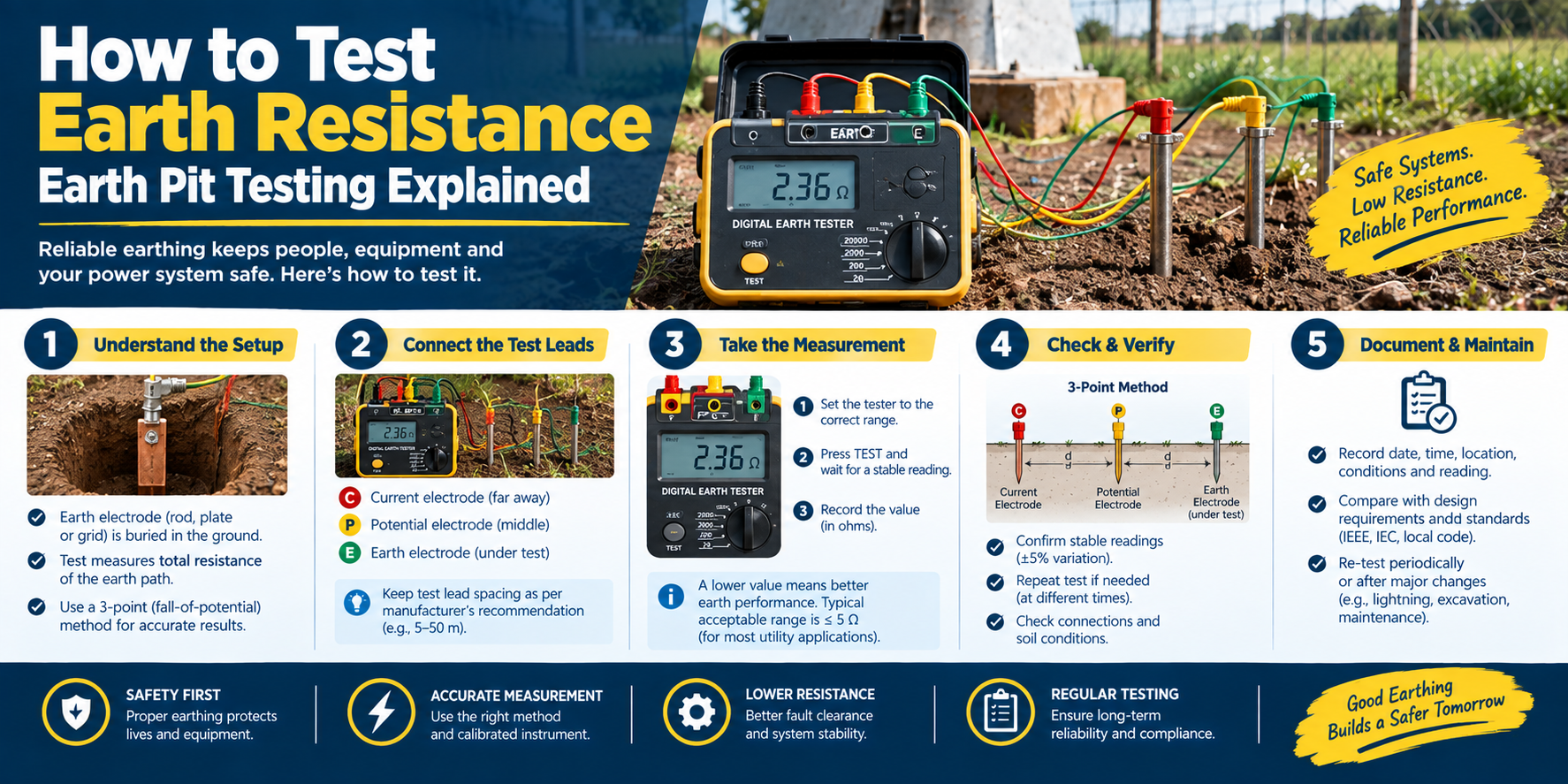
All of this depends on a low-resistance connection to earth through an electrode. (See our how-to-ground-an-overhead-line and how-to-reduce-earth-resistance guides.)
The Hardware Is the Same
Whether your standard says “earthing” or “grounding,” the hardware is the same:
- An electrode a ground rod (copper-bonded or galvanized) or a plate/pipe (see our types-of-earthing guide).
- Bonding clamps a ground rod clamp to the rod, a strand ground clamp to a wire, an I-beam grounding clamp to steel.
- Coupling rods to drive deeper for a lower resistance.
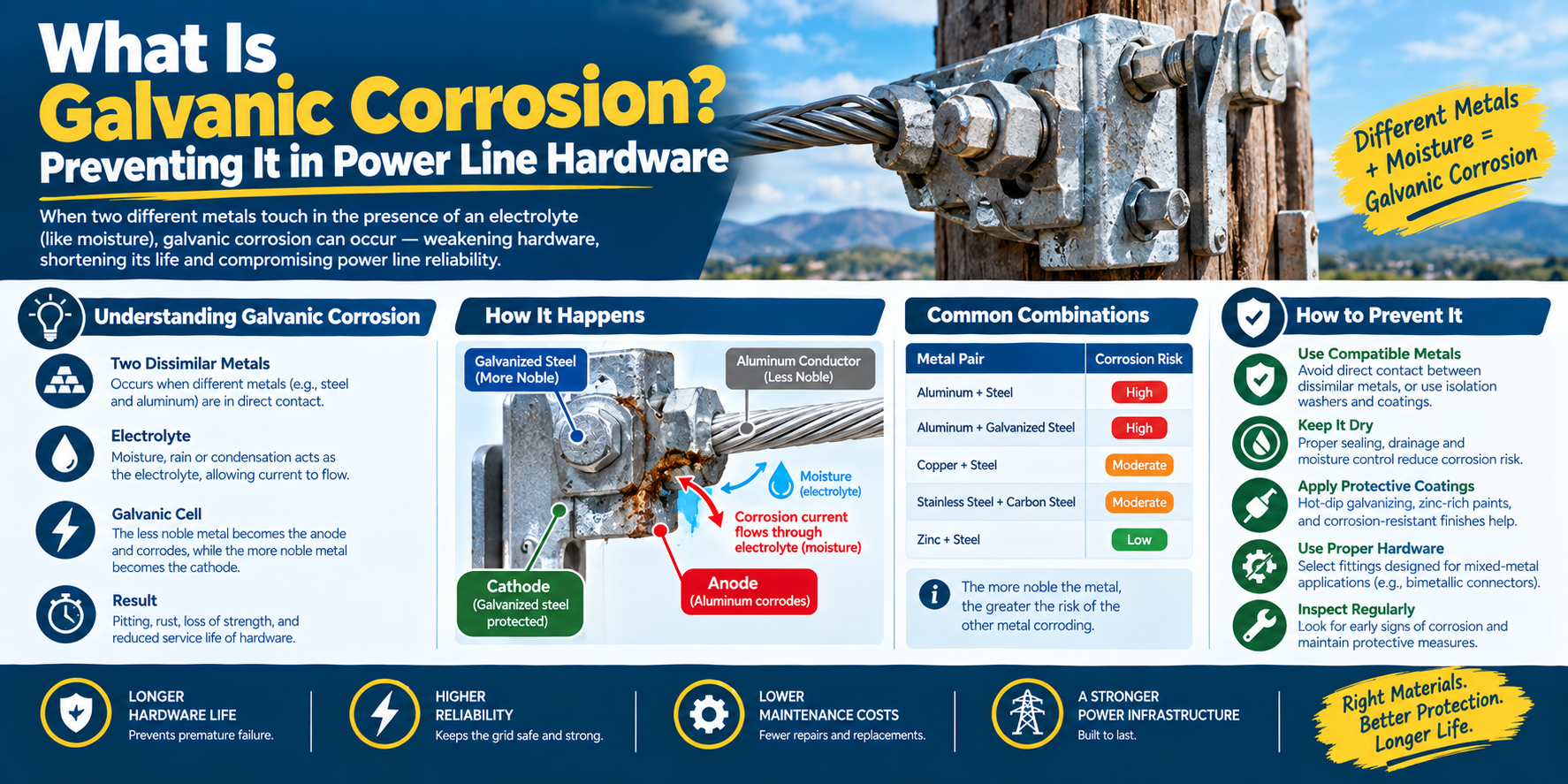
And the same discipline applies: match the metals to avoid galvanic corrosion (see our galvanic-corrosion guide).
Earthing vs Grounding: FAQ
Are earthing and grounding the same thing? For most purposes, yes they refer to the same protective connection between electrical systems/equipment and the earth, and the words are used interchangeably. The main difference is regional: “earthing” is British/IEC English, “grounding” is American English.
Why are there two different words? Because of regional terminology. “Earthing” is used in the UK, Europe, Asia, Africa, and the Middle East (British/IEC English); “grounding” is used in the US (American English/NEC). Both describe connecting to earth for safety.
Is there any technical difference between earthing and grounding? Some texts distinguish “earthing” as the connection to the physical earth (the electrode) and “grounding” as the connection to a common system reference point. But this distinction isn’t universal, and in everyday practice the two are synonyms for the same protective connection.
What is the purpose of earthing/grounding? To protect people (keeping metal parts at a safe voltage), clear faults quickly (giving fault current a low-resistance path so breakers operate), carry lightning and surge current safely to earth, and give the system a stable voltage reference. All depend on a low-resistance earth connection.
Does it matter which word my standard uses? Not for the hardware the electrode, clamps, and bonding are the same whether the standard says earthing or grounding. Just follow your standard’s requirements for resistance, electrode type, and bonding. The terminology differs; the engineering is the same.
What hardware is used for earthing/grounding? An electrode (ground rod, plate, or pipe), bonding clamps to connect conductors and structures to it, and coupling rods to drive deeper for lower resistance all in galvanically matched metals to avoid corrosion. The hardware is identical regardless of which term is used.
The Bottom Line
Earthing and grounding are essentially the same thing a protective connection to the earth for safety with the difference being mainly regional terminology (earthing in British/IEC English, grounding in American English). Where a finer distinction is drawn, earthing is the earth-electrode connection and grounding the system reference, but in practice they’re synonyms, and the hardware is identical.
DAPENG Power (DP Power Fitting) manufactures earthing/grounding hardware to IEC and ANSI standards ground rods (copper and galvanized), coupling rods, and the rod, strand, and I-beam bonding clamps. Whichever term your standard uses, tell us your requirements and we’ll specify the hardware.