An Industry Insider’s Perspective on What Separates a True Manufacturing Partner from a Mere Supplier
If you’ve been in the power transmission and utility infrastructure space for any length of time, you already know the drill. Projects live and die by the quality of the hardware that holds everything together. Tension clamps, suspension clamps, stay rods, cross arms — these aren’t just components. They’re the backbone of reliable power delivery.
But here’s the question that keeps project managers and procurement professionals up at night: How do you separate a genuine, battle-tested manufacturer from the sea of traders, middlemen, and “we-can-source-it” outfits that clutter the supply chain?
After 15+ years in this industry, I’ve seen the good, the bad, and the downright dangerous. Let me share what I’ve learned — and why the choice you make on your next project could be the difference between a smooth installation and a logistical nightmare.
The Hidden Costs of “Just Any” Supplier
Let’s be honest. When you’re under pressure to deliver a project on time and on budget, it’s tempting to go with the lowest bidder or the supplier who promises the shortest lead time. I’ve been there. We all have.
But here’s what the price tag doesn’t tell you:
-
Inconsistent quality that fails field inspections and forces re-orders
-
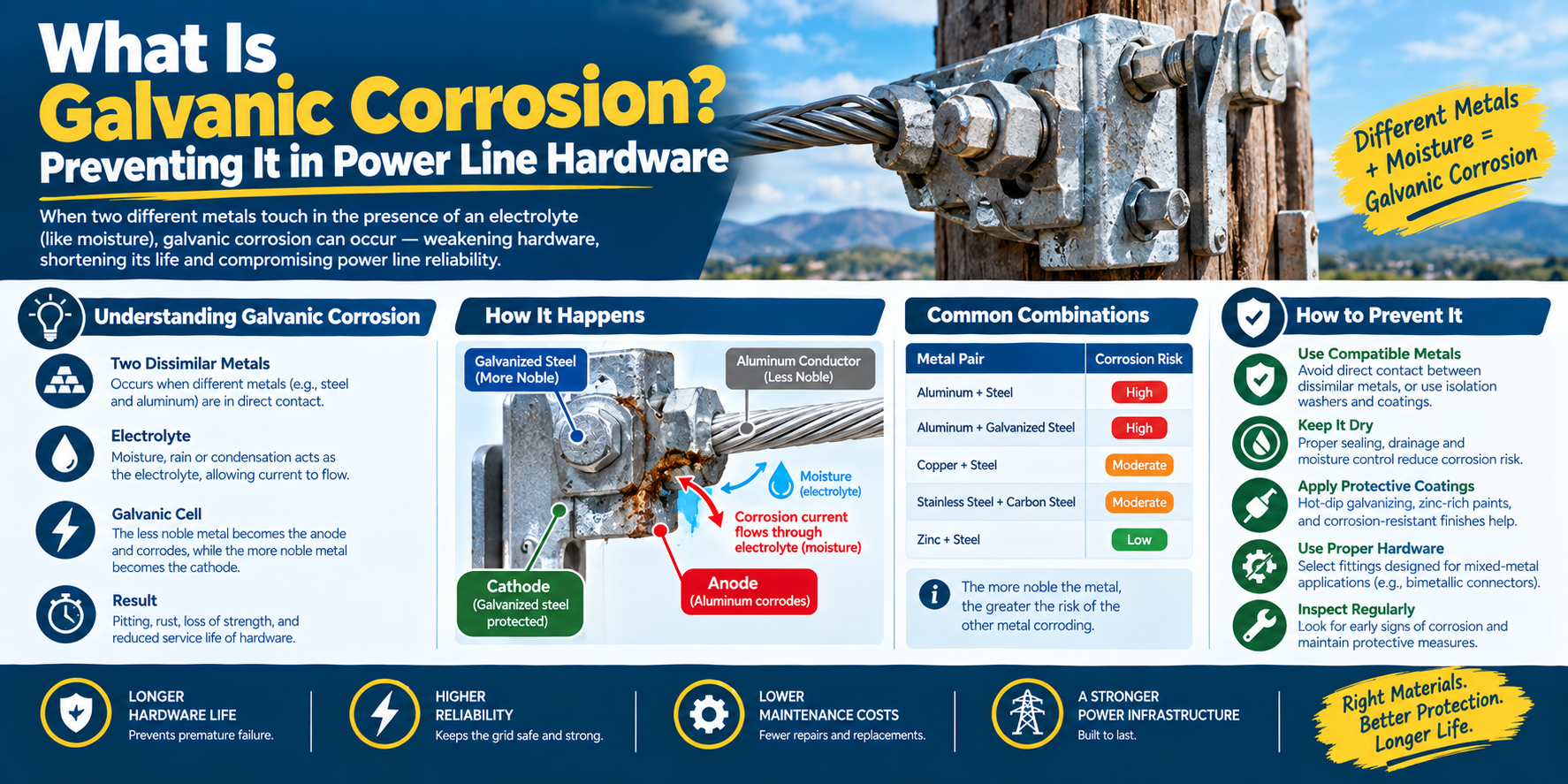
Corrosion issues that show up years later — after the warranty expires
-
Custom specifications that get lost in translation because the supplier doesn’t actually manufacture anything
-
Logistical chaos when you realize your “supplier” is just coordinating multiple factories with no real control over production
The truth is, you don’t just buy hardware. You buy reliability. You buy peace of mind. You buy a partner who understands that your reputation is on the line.
What a 15-Year Veteran Manufacturer Actually Brings to the Table
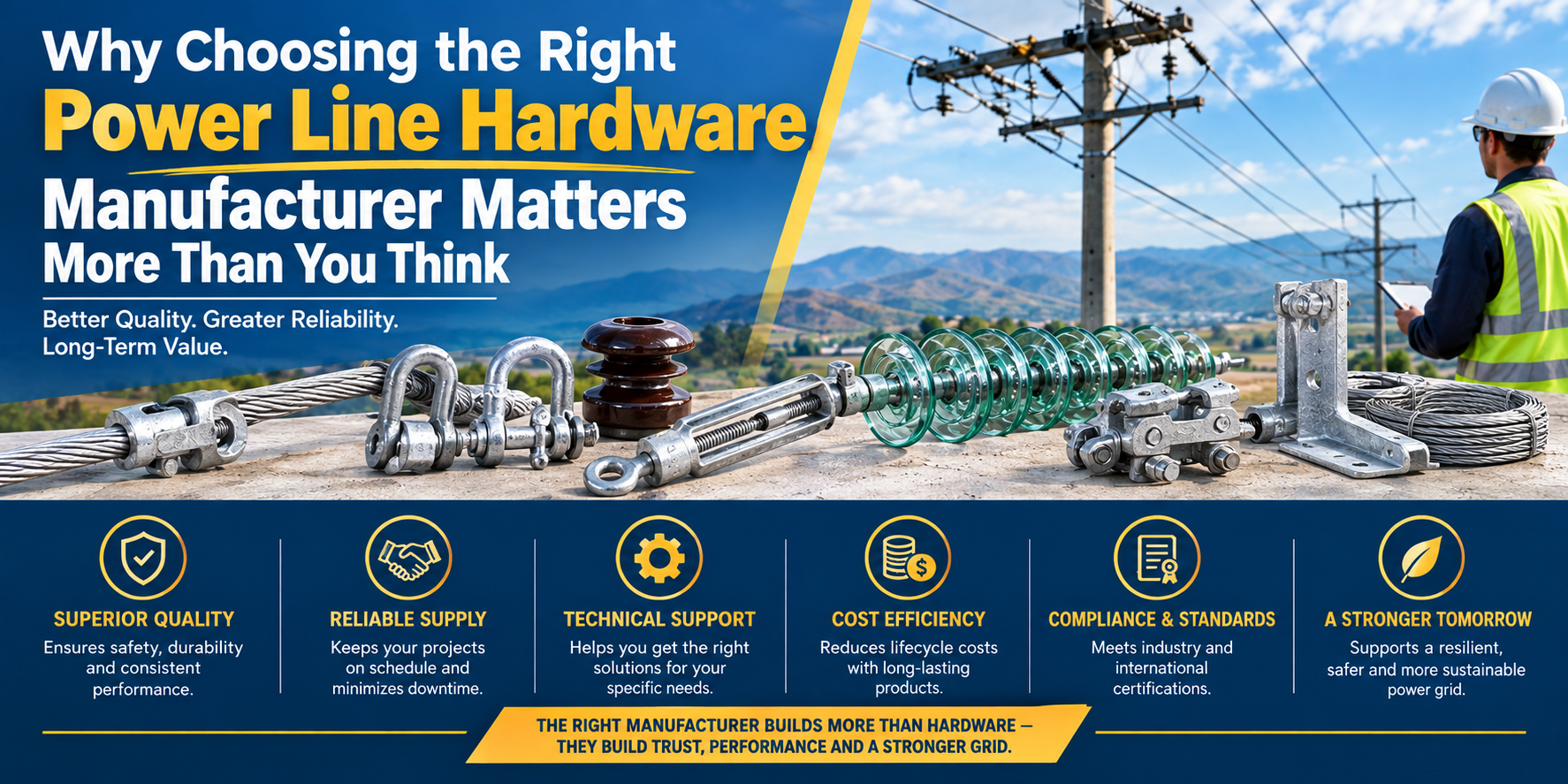
When I evaluate a power line hardware manufacturer, I look for one thing above all else: control.
Control over raw materials. Control over production. Control over quality. Control over delivery.
This is where companies like DP Power Fitting (DAPENG Power) stand apart. With over 15 years of industry experience, they’ve built something that many competitors simply can’t match: a fully integrated manufacturing system.
What does that mean in practical terms?
Forging, casting, stamping, and in-house hot-dip galvanizing — all under one roof. This isn’t just about convenience. It’s about quality assurance at every single step. When a manufacturer controls the entire production chain, from raw material inspection to final packaging, they can guarantee consistency in a way that an assembly-only operation never can.
And that 20-year guarantee on galvanizing? That’s not marketing fluff. That’s the result of tight process control that most suppliers can only dream of.
The OEM Advantage: When “Standard” Just Won’t Cut It
Here’s something I’ve learned the hard way: Every project is different. Site conditions vary. Engineering specifications vary. Local regulations vary.
The manufacturers who treat every order as a cookie-cutter transaction are the ones who end up causing delays, rework, and finger-pointing.
The ones who get it right understand that customization isn’t a favor — it’s a core competency.
DP Power Fitting, for example, supports OEM and custom manufacturing based on drawings, samples, or specific technical requirements. They don’t just say “we can do custom.” They actually have the engineering team and production flexibility to make it happen.
I’ve seen this play out in real projects — from Cape Town to Santiago, Chicago to Manila. The manufacturers who succeed in these diverse markets are the ones who take the time to understand the local environment and engineer solutions accordingly.
Quality Control: The Difference Between “Good Enough” and “Built to Last”
Let me tell you a story.
A few years back, I was called in to consult on a transmission project that had gone off the rails. The hardware had been sourced from a low-cost supplier — not a manufacturer, just a trader. The fittings looked fine on paper. They looked fine on arrival.
But during installation, tensile strength tests started failing. Then corrosion resistance tests. Then dimensional checks.
The whole shipment had to be rejected. The project was delayed by months. The cost overruns were staggering.
The supplier had skipped the quality control steps that a real manufacturer would never compromise on.
This is why I always tell procurement teams: Look for the QC process, not just the certificate.
A manufacturer worth its salt will have:
-
Raw material inspection and traceability
-
In-process quality monitoring at every stage
-
Mechanical and tensile strength testing
-
Corrosion resistance control through controlled galvanizing
And most importantly — final inspection before dispatch. Every. Single. Unit.
This isn’t about bureaucracy. It’s about ensuring that what arrives on your job site is exactly what you ordered, built to the specifications you need, and ready to perform under real-world conditions.
The Logistics Advantage Nobody Talks About
Here’s something that doesn’t get enough attention in the sales brochures: consolidation and logistics support.
When you’re managing a large utility project, you’re not just buying fittings. You’re buying insulators, fasteners, cross arms, and a dozen other product categories. Coordinating with multiple suppliers is a headache. Coordinating with multiple countries of suppliers is a nightmare.
This is where working with an established manufacturer pays dividends you don’t see on the invoice.
DP Power Fitting, for instance, offers integrated supply and logistics support — helping consolidate goods from approved suppliers and shipping them together with their own products. One point of contact. One shipment. One less thing to worry about.
That’s not just convenience. That’s project management.
What the Market Is Saying
I always pay attention to what customers actually say — not the polished testimonials on a website, but the real feedback from real projects.
And here’s what I’m hearing about manufacturers who get it right:
-
“Professional service from inquiry to shipment. Factory-direct support helped us manage project costs.” — Ricardo Silva, Brazil
-
“Reliable manufacturer for overhead line fittings. Their production capacity supports bulk orders efficiently.” — Engr. Mohammad Rahman, Bangladesh
-
“We’ve used their overhead line hardware for multiple utility projects. The products are reliable and well-finished.” — Michael Thompson, USA
-
“Customized fittings were produced according to our drawings. Lead time and packaging met our expectations.” — Carlos Fernández, Chile
-
“Competitive pricing and stable delivery schedules. Suitable for long-term cooperation.” — Luis Rodriguez, Mexico
Notice the recurring themes? Reliability. Consistency. Communication. Value.
These aren’t buzzwords. They’re the things that keep projects on track and partnerships intact.
The Bottom Line: Partner, Don’t Just Purchase
After 15 years in this business, my advice is simple:
Don’t treat your power line hardware supplier as a transaction. Treat them as a partner.
Because when things go wrong — and in this industry, they will — you want someone on your side who has the experience, the capacity, and the commitment to make it right.
You want a manufacturer who:
-
Has the production capacity to handle bulk orders and long-term supply agreements
-
Offers factory-direct pricing without middleman markups
-
Provides technical support throughout the project lifecycle
-
Stands behind their products with real quality guarantees
That’s what DP Power Fitting represents. Not just a supplier of tension clamps and suspension clamps, but a partner who understands that your success is their success.
Ready to Make the Right Choice?
The next time you’re sourcing power line fittings for a transmission, distribution, or telecom project, ask yourself:
Am I buying hardware — or am I buying a partnership?
If the answer is the latter, it’s time to talk to a manufacturer who’s been doing this for 15+ years and isn’t going anywhere.
Because in this industry, reliability isn’t optional. It’s everything.