Don’t let the wrong supplier derail your next transmission project. Here’s what 15 years in the industry has taught me.
You’re staring at a shortlist of overhead line fittings suppliers. The quotes are in. The lead times look reasonable. Everyone claims to have “quality products” and “competitive pricing.”
So why does something still feel off?
Because you’ve been burned before. Or you’ve seen colleagues get burned. A shipment arrives with substandard galvanizing. Tension clamps fail tensile testing. The “manufacturer” turns out to be a trading company that can’t even tell you which factory actually made your order.
After 15+ years in the power transmission and utility infrastructure space, I’ve learned that asking the right questions upfront separates a smooth project from a costly nightmare.
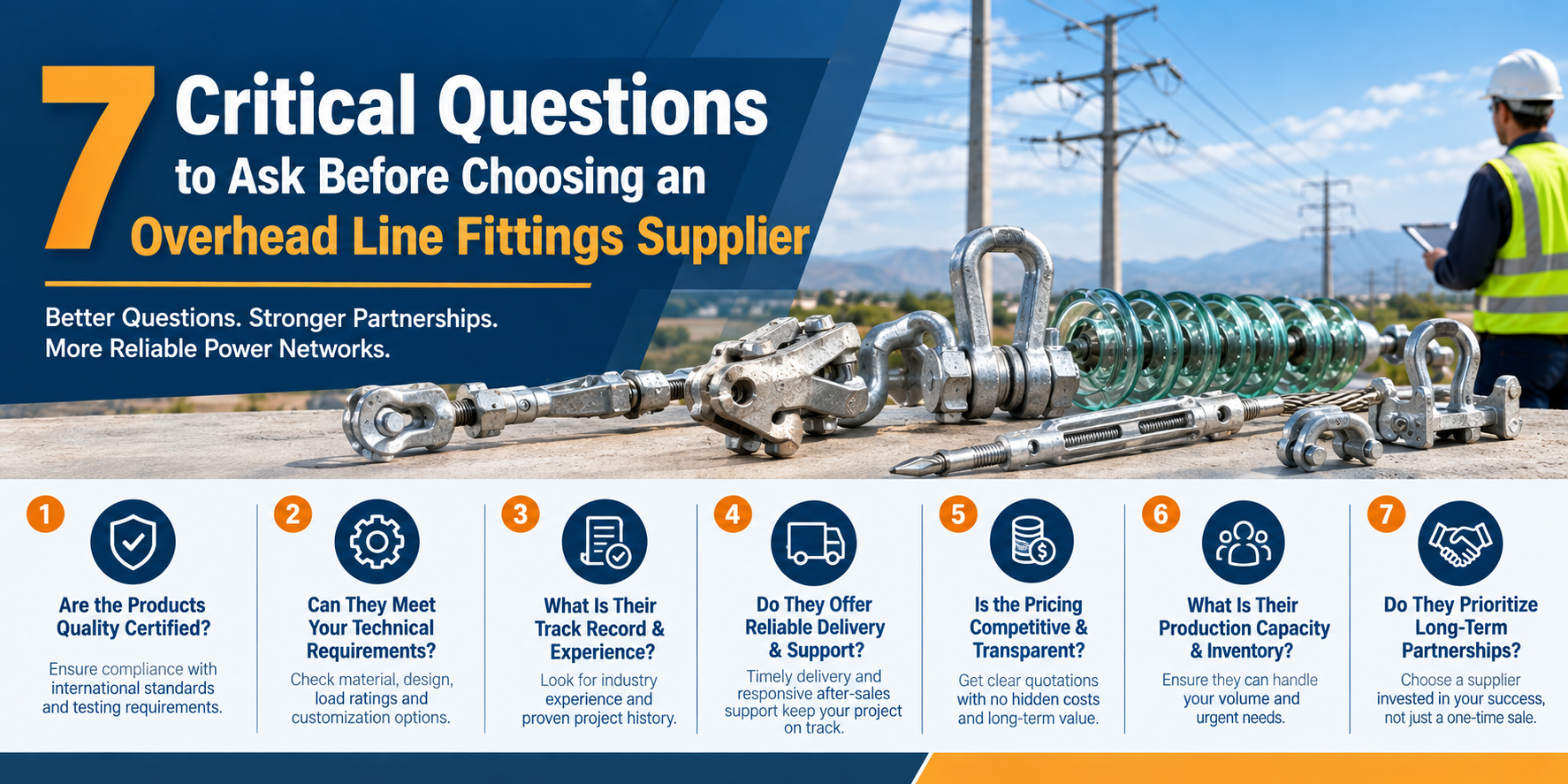
Here are the seven questions I recommend every procurement professional and project manager ask before signing that purchase order.
1. “Are You a Manufacturer or a Trader?”
This is the single most important question — and the one most people skip.
A trader sources from multiple factories, adds a markup, and has zero control over production quality. A manufacturer actually operates the forging equipment, casting lines, stamping presses, and galvanizing facilities that produce your hardware.
Why does this matter?
Because when something goes wrong — and in this industry, things do go wrong — a manufacturer can fix it. They can adjust production, expedite re-orders, and trace every batch back to raw material records.
A trader? They’ll point fingers at their factory. And you’ll be left holding the bag.
What to look for: Manufacturers like DP Power Fitting operate complete production systems including forging, casting, stamping, and in-house hot-dip galvanizing. They control the entire process from raw material to final inspection. That’s not just a supply chain — that’s accountability.
2. “What Quality Control Measures Do You Have in Place?”
Anyone can slap a “quality” label on their website. The question is: what actually happens on the factory floor?
A serious power line hardware supplier will have a documented quality control process that covers:
-
Raw material inspection and traceability — They know exactly where the steel came from and can provide certificates.
-
In-process quality monitoring — Checks happen during production, not just at the end.
-
Mechanical and tensile strength testing — Because your fittings need to perform under real load conditions.
-
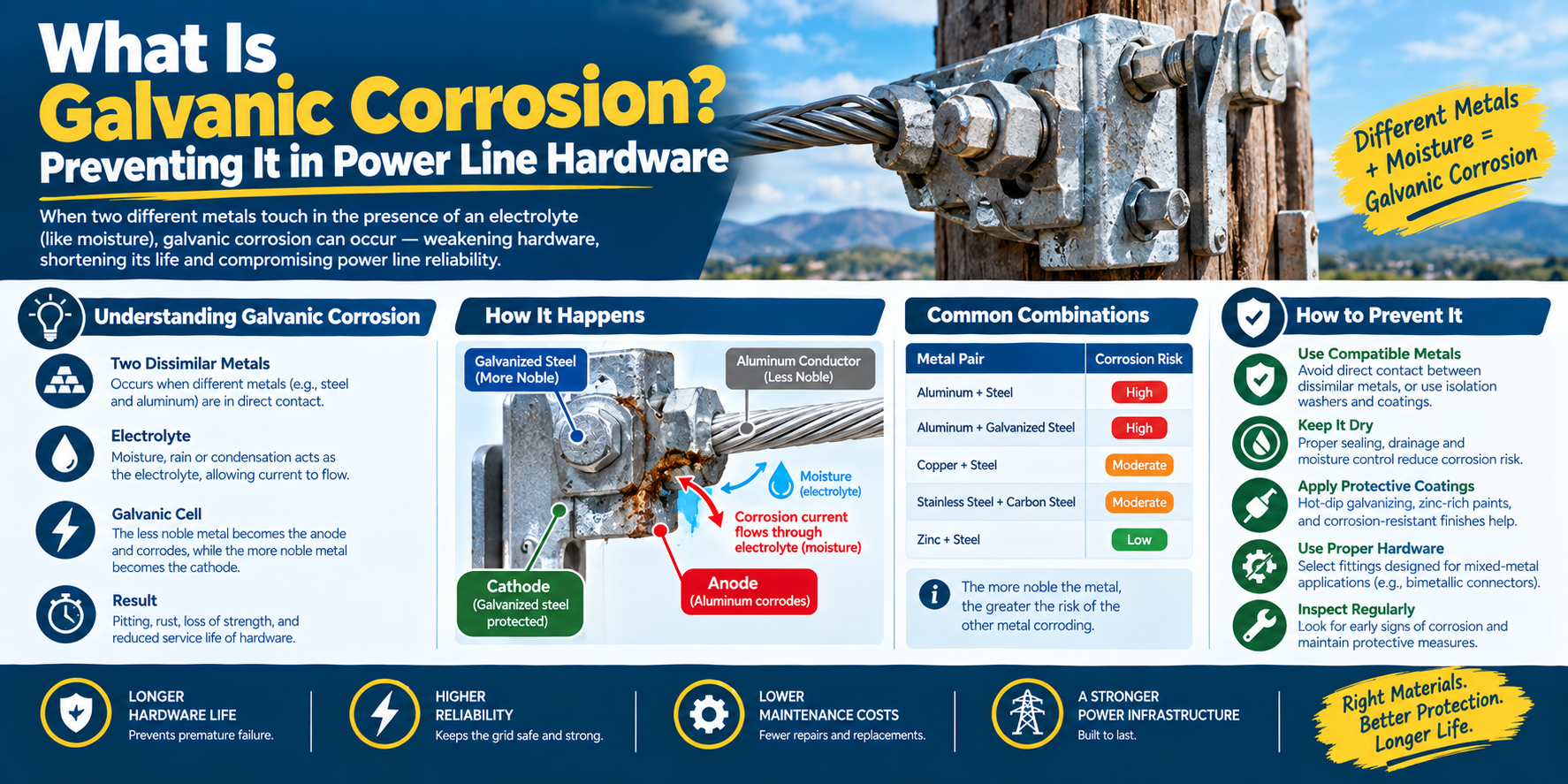
Corrosion resistance control — Through controlled hot-dip galvanizing that meets international standards.
-
Final inspection before dispatch — Every. Single. Unit.
I’ve seen projects fail because the supplier skipped these steps. Don’t let that be you.
3. “Can You Handle Custom and OEM Orders?”
Standard products are fine — until they’re not.
Every project has unique requirements. Different soil conditions. Different wind loads. Different regulatory standards. Different engineering specifications.
A supplier that only offers off-the-shelf products is telling you something important: they don’t have the engineering capability to solve your problems.
What you need: A partner that supports OEM and custom manufacturing based on drawings, samples, or specific technical requirements. Someone with the production flexibility to create custom tooling and adapt to different market needs.
Because when your project requires specialized fittings, you don’t want to hear “we can’t do that.” You want to hear “send us the drawings.”
4. “Do You Have In-House Galvanizing?”
This sounds like a technical detail. It’s not. It’s a deal-breaker.
Outsourced galvanizing is a gamble. You’re trusting a third party to control bath temperature, zinc composition, and coating thickness. If they cut corners, your fittings will corrode years before they should.
In-house hot-dip galvanizing means the manufacturer controls the entire process — from surface preparation to final coating inspection. They can guarantee coating quality and consistency.
DP Power Fitting, for example, offers professional galvanizing to international standards with a high-zinc coating guaranteed for 20 years. That’s not a marketing claim — that’s the result of process control.
5. “What’s Your Experience with International Projects?”
If you’re reading this, chances are your project isn’t in the same country as your supplier. That introduces a whole new layer of complexity.
-
Different technical standards
-
Different inspection requirements
-
Different logistics and shipping regulations
-
Different communication and time zones
What you need: A supplier with proven global export capability and real-world project experience. Look for case studies and customer feedback from markets similar to yours.
DP Power Fitting has delivered customized overhead line hardware for projects in Cape Town, Santiago, Chicago, and Manila. That’s not just export experience — that’s adaptability to different environments, standards, and project requirements.
6. “Can You Support Bulk Orders and Long-Term Agreements?”
One-off purchases are easy. Long-term partnerships are hard.
If you’re managing a multi-year infrastructure project or a recurring procurement cycle, you need a supplier with:
-
Strong production capacity to handle bulk orders
-
Stable supply chain to maintain consistent delivery schedules
-
Financial stability to support long-term supply agreements
A supplier that struggles with capacity during peak demand will leave you scrambling. A supplier that can’t commit to multi-year pricing will blow your budget.
7. “What Happens If Something Goes Wrong?”
This is the question nobody wants to ask — and the one that matters most.
Every supplier has great testimonials when things go smoothly. The real test is how they respond when there’s a problem.
-
A shipment gets delayed. Do they communicate proactively or leave you in the dark?
-
A batch fails inspection. Do they take responsibility or blame someone else?
-
You need technical support during installation. Is anyone available to help?
What to look for: A supplier with dedicated after-sales support and a commitment to resolving issues promptly. Someone who treats your order as a priority, not a transaction.
The Bottom Line: Partner, Don’t Just Purchase
Here’s what 15 years in this industry has taught me:
The cheapest quote is almost never the best value.
When you choose a power line fittings manufacturer based solely on price, you’re betting that nothing will go wrong. And in this industry, something always goes wrong.
The real value comes from a partner who:
-
Manufactures — not trades — your hardware
-
Controls quality from raw material to final inspection
-
Supports custom and OEM solutions
-
Operates in-house galvanizing for consistent corrosion protection
-
Delivers on international projects with proven experience
-
Scales for bulk orders and long-term agreements
-
Stands behind their products with real after-sales support
That’s what separates a supplier from a partner.
Ready to Ask the Right Questions?
The next time you’re evaluating overhead line fittings suppliers for a transmission, distribution, or telecom project, don’t just compare prices.
Compare capabilities. Compare control. Compare commitment.
Because in this industry, the right partner doesn’t just save you money — they save you headaches, delays, and reputational damage.