In modern power distribution and telecommunications, the demand for additional cable capacity is growing faster than the infrastructure can keep up. But installing new poles for every new cable is expensive, time-consuming, and often impractical in congested urban environments.
Enter the cable extension bolt—a specialized high-strength fastener that transforms a single pole into a multi-cable hub without structural modifications.
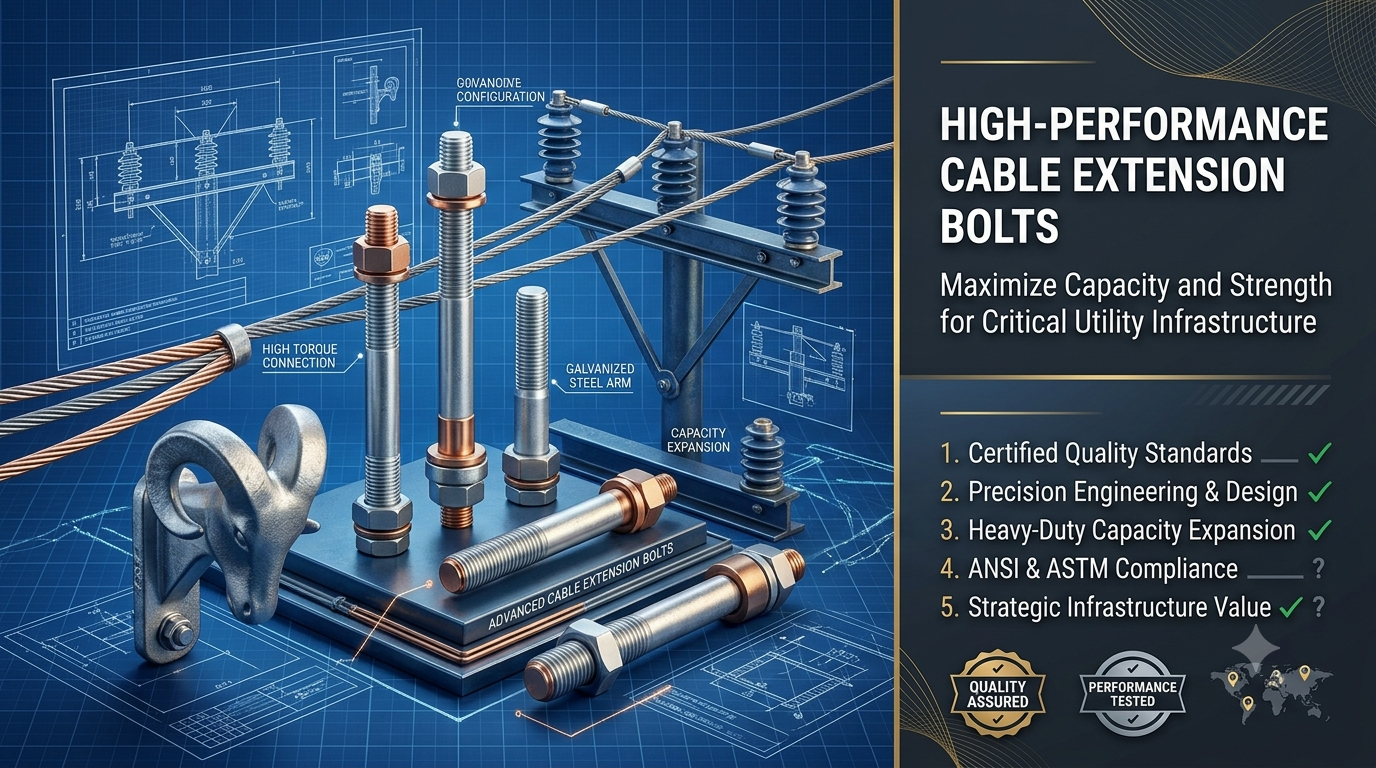
Premium-grade cable extension bolts manufactured with advanced metallurgy and precision engineering offer a strategic convergence of cost efficiency, durability, and global compliance. Designed to withstand extreme tensile stress while maintaining dimensional integrity over decades, these components are essential for ensuring long-term reliability in overhead power distribution and telecommunications infrastructure.
This comprehensive guide equips procurement specialists, engineers, and project managers with critical technical insights, enabling informed sourcing decisions that minimize lifecycle costs and maximize network capacity.
What Is a Cable Extension Bolt?
A cable extension bolt is a specialized fastener used in utility poles and communication systems to extend an existing suspension bolt and create space for additional cables. It typically includes:
-
A female threaded section – Connects to the existing suspension bolt
-
A male threaded section – Connects to new cable hardware
Its main purpose is simple: Extend the mounting point so a second cable can be installed alongside an existing one.
These bolts are designed to attach to the threaded ends of suspension bolts, allowing a second cable to be mounted on the same pole side and level. This solution reduces pole requirements and supports cost-effective network expansion.
How Cable Extension Bolts Differ from Standard Threaded Rods
Unlike standard threaded rods, cable extension bolts feature a specific forged shoulder and high-tensile head designed to interface with cable tensioning hardware. They are rated for dynamic loading and typically possess higher yield strength (≥ 640 MPa) to prevent stretching under permanent tension.
While threaded rods are used where a conventional bolt is too short or a more versatile approach is needed, cable extension bolts are engineered specifically for utility pole applications—with precision-machined threads that ensure seamless engagement with existing suspension hardware.
Why Cable Extension Bolts Are Critical for Infrastructure Expansion
Instead of installing new poles—which is expensive and time-consuming—cable extension bolts allow:
-
Adding multiple cables on the same pole
-
Reducing infrastructure cost
-
Improving installation efficiency
-
Optimizing limited pole space
They are widely used in:
-
Telecommunications networks
-
Power distribution systems
-
Cable TV infrastructure
-
Utility infrastructure projects
In fact, they are essential for messenger-supported systems, where multiple cables must run parallel on the same pole.
Real-World Benefits
| Benefit | Impact |
|---|---|
| Cost Savings | Eliminates new pole installation costs |
| Space Optimization | Maximizes existing pole capacity |
| Installation Speed | Screws directly into existing hardware |
| Network Flexibility | Enables rapid capacity expansion |
| Reduced Environmental Impact | Minimizes new pole footprint |
Metallurgy and Material Composition
The performance of a cable extension bolt is dictated by its molecular architecture. High-grade carbon steels and austenitic stainless steels ensure that every batch meets rigorous mechanical thresholds before machining.
Material Specifications
| Grade | International Equivalent | Key Property |
|---|---|---|
| 8.8 (ISO 898-1) | ASTM A325 | Standard high-strength applications |
| 10.9 (ISO 898-1) | ASTM A490 | Heavy-duty tension requirements |
| 12.9 (ISO 898-1) | ASTM A490 | Maximum tensile strength |
| Grade 304 (A2) | ASTM A276 | General corrosion resistance |
| Grade 316 (A4) | ASTM A276 | Marine/saltwater environments |
Mechanical Performance Metrics
-
Yield Strength: ≥ 355 MPa for standard applications; exceeding 640 MPa for high-tensile variants
-
Tensile Strength: 800 – 1200 MPa resistance to axial pull-out forces
-
Elongation at Break: ≥ 12% to ensure ductility under seismic loading
-
Thread Tolerance: 6g / 6H (ISO 965) ensuring seamless nut engagement
-
Surface Finish: Ra 3.2 to 1.6 μm to reduce stress concentration points
Advancements in Manufacturing Precision
The transition from traditional casting to Precision Cold Forging and CNC Thread Rolling has redefined the durability of extension bolts. By rolling threads rather than cutting them, the grain flow of the steel remains uninterrupted, significantly increasing fatigue resistance.
Manufacturing Process Milestones
1. Spheroidizing Annealing
Normalizing the raw wire rod for uniform hardness.
2. Multi-Station Cold Heading
Forming the bolt head and extension shoulder to ±0.05mm tolerances.
3. Induction Heat Treatment
Achieving precise Rockwell hardness (HRC 32-39) without inducing surface decarburization.
4. Automated Thread Rolling
Ensuring 100% pitch consistency for high-vibration environments.
Key Features of Premium Cable Extension Bolts
Dual Thread Design
-
Female thread connects to existing suspension bolt
-
Male thread connects to clamps and straps
High Strength Steel Construction
-
Made from galvanized steel
-
Resistant to corrosion and environmental damage
Space Optimization
-
Creates an offset extension
-
Allows multiple cables on one pole
Easy Installation
-
Screws directly into existing hardware
-
Minimal tools required
Compliance Metrics for International Infrastructure
Navigating the intersection of Chinese GB/T standards and Western ASTM/DIN equivalents is mandatory for risk mitigation. Manufacturing protocols are cross-referenced to ensure seamless integration into global projects.
Standards and Compliance
| Standard | Scope |
|---|---|
| ISO 898-1 | Mechanical properties of fasteners |
| ASTM A325 / A490 | High-strength structural bolts |
| ASTM F2329 | Hot-dip galvanizing for bolts |
| ASTM A153 | Zinc coating on hardware |
| ISO 1461 | Hot-dip galvanizing specifications |
| DIN 976 | Threaded rods dimensions |
| ANSI B18.2.1 | Square and hex bolts |
| ANSI B1.1 | Unified screw threads |
For critical infrastructure, cable band bolts should conform to ASTM A354, Grade BC, with threads following 8 pitch thread series, classes 2A (external) and 2B (internal) fit.
Types of Cable Extension Bolts
1. Standard Cable Extension Bolt
-
Used in general communication pole installations
-
Suitable for light to medium loads
2. Heavy-Duty Extension Bolt
-
Designed for high-load transmission systems
-
Used in industrial and utility-grade setups
3. Galvanized Extension Bolt
-
Coated for rust resistance
-
Ideal for outdoor environments
4. Custom Extension Bolt
-
Tailored length and threading
-
Used for specialized infrastructure projects
Applications Across Industries
Telecommunications
-
Adding second messenger cables
-
Supporting fiber optic lines
Power Distribution
-
Extending pole hardware for additional conductors
Cable TV Networks
-
Managing multiple cable lines on a single pole
Utility Infrastructure
-
Used with suspension bolts, reinforcing straps, and cable suspension clamps
These bolts enable technicians to install additional cables on the same level and direction without structural changes.
How Cable Extension Bolts Work
The installation process is straightforward:
-
Remove the nut from the existing suspension bolt
-
Thread the cable extension bolt onto it
-
Attach the cable suspension clamp
-
Secure with reinforcing straps
This creates a stable offset extension for the second cable. Result: Two cables on one pole, same level, no extra infrastructure.
Role in Pole Line Hardware Systems
Cable extension bolts are part of a broader ecosystem of pole line hardware, including:
-
Suspension bolts
-
Cross arms
-
Insulator fittings
-
Cable clamps
Their role is to increase capacity of existing poles while maintaining structural integrity.
Quality Assurance and Testing Protocols
Beyond the technical specs, trust is built through verifiable data. Every production run undergoes a multi-gate QA process to eliminate the “hidden costs” of field failure.
Testing Procedures
1. Chemical Composition Analysis
Spectrometric verification of Carbon, Manganese, Phosphorus, and Sulfur content.
2. Dimensional Inspection
Using automated optical sorting machines to verify length, diameter, and thread concentricity.
3. Hardness Mapping
Multiple-point Vickers or Rockwell testing across the bolt cross-section.
4. Proof Load Testing
Subjecting bolts to 90% of yield strength to ensure zero permanent deformation.
5. Salt Spray Testing
Validated for 1000+ hours to meet C4 and C5-M atmospheric corrosivity categories.
Third-Party Verification
Independent inspections can be conducted by globally recognized agencies such as:
-
SGS
-
TÜV
-
Intertek
Pro Tip for Procurement
Always request a Material Test Report (MTR) and 3D CAD Drawings during the RFQ stage. For critical infrastructure, ensure the supplier provides Ultrasonic Testing (UT) results to rule out internal fissures or inclusions that visual inspections miss.
Total Cost of Ownership (TCO)
While initial purchase cost is often a deciding factor, long-term performance defines true value.
Cost Comparison Scenario
| Factor | Low-Quality Hardware | Premium Hardware |
|---|---|---|
| Initial Cost | Low | Moderate |
| Lifespan | 3–5 Years | 15–25 Years |
| Maintenance | High | Minimal |
| Failure Risk | High | Very Low |
A marginal saving of $0.50 per unit can result in thousands of dollars in replacement and labor costs over time. When you factor in the cost of network downtime, the value of premium hardware becomes even more apparent.
Surface Treatments and Corrosion Protection
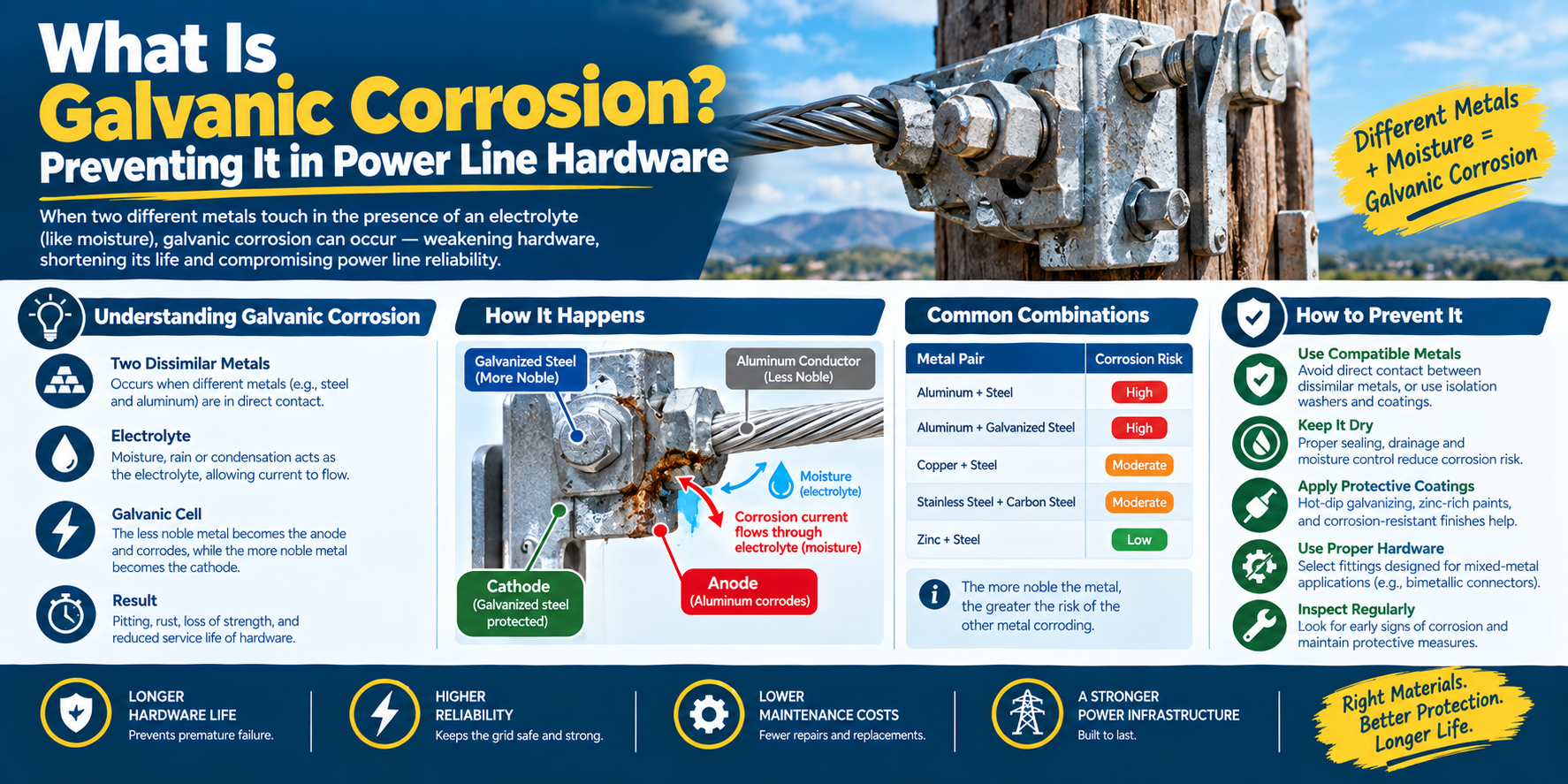
For coastal or high-salinity environments, proper surface treatment is non-negotiable.
Hot-Dip Galvanization (HDG)
The galvanization process complies with ASTM A153 and ISO 1461 standards, offering:
-
Coating Thickness: ≥ 610 g/m² (≈ 86 microns)
-
Salt Spray Resistance: Up to 1000+ hours
-
Surface Finish: Smooth, uniform, and drip-free
This zinc coating forms a metallurgical bond with the steel, providing long-term protection even if the surface is scratched during installation.
Stainless Steel Options
-
Grade 304 (A2) – General corrosion resistance
-
Grade 316 (A4) – Marine environments with high salinity
Hydrogen Embrittlement Prevention
After the electroplating process, bolts must undergo a de-embrittlement baking cycle (typically 200°C for 4+ hours) to drive out hydrogen atoms absorbed during acid pickling or plating.
Logistics, Export Handling, and Port Strategy
Strategically located near major export hubs, the logistics framework is optimized for high-volume global exports.
Packaging Standards
-
ISPM-15 compliant heat-treated pallets
-
VCI (Vapor Corrosion Inhibitor) bags to prevent sea-air oxidation
Production & Delivery Timelines
-
Standard Lead Time: 15–21 days
-
Custom Specifications: 30 days
-
MOQ Flexibility: Scalable from 500 units for specialized alloys
Documentation Provided
-
Bill of Lading
-
Certificate of Origin (CO)
-
SGS/TUV third-party inspection reports
-
Material Test Reports (MTR)
-
Compliance certificates
OEM and Customization Capabilities
Modern projects often require tailored solutions. Manufacturers offer:
-
Custom bolt lengths
-
Modified thread specifications
-
Special coating thickness requirements
-
Private labeling (OEM branding)
-
Special alloy selection (40Cr, 42CrMo for Grade 12.9)
Rapid tooling adjustments allow quick adaptation to project specifications.
Future Trends in Pole Line Hardware
The industry is evolving with advancements such as:
-
Smart grid integration – Hardware that supports monitoring sensors
-
Higher load capacity requirements – For growing cable densities
-
Advanced corrosion-resistant coatings – Extending service life in harsh environments
-
Digital quality tracking systems – Real-time traceability from forge to finish
Manufacturers are investing in R&D to meet these future demands.
FAQs
Q1: How do cable extension bolts differ from standard threaded rods?
Cable extension bolts feature a specific forged shoulder and high-tensile head designed to interface with cable tensioning hardware. Unlike standard rods, they are rated for dynamic loading and typically possess higher yield strength (≥ 640 MPa) to prevent stretching under permanent tension.
Q2: What surface treatments are best for marine-grade cable bolts?
For coastal or high-salinity environments, Hot-Dip Galvanizing (HDG) or A4-grade Stainless Steel (Grade 316) is recommended. HDG provides a sacrificial zinc layer that protects the steel even if the surface is scratched during installation.
Q3: Can these bolts be customized for specific tensile requirements?
Yes. Machining facilities can adjust the heat treatment profile and alloy selection (such as 40Cr or 42CrMo) to reach Grade 12.9 specifications, allowing for higher load-bearing capacities in compact footprints.
Q4: What is the standard tolerance for industrial exports?
Global standards typically require a tolerance of ±0.05mm to ±0.1mm. For precision engineering, CNC-finished extension bolts can achieve tighter tolerances depending on the thread class (e.g., 6g).
Q5: How is hydrogen embrittlement prevented in high-strength bolts?
After the electroplating process, bolts must undergo a de-embrittlement baking cycle (typically 200°C for 4+ hours) to drive out hydrogen atoms absorbed during acid pickling or plating.
Q6: What documentation should I request from a supplier?
Always request a Material Test Report (MTR), 3D CAD drawings, and for critical infrastructure, Ultrasonic Testing (UT) results to rule out internal fissures or inclusions.
Q7: Are these products compatible with US infrastructure?
Yes, they conform to ASTM standards including ASTM A325, A490, and F2329, and match standard pole drilling patterns.
Conclusion: Expand Your Network Capacity Without Expanding Your Infrastructure
As global communication and power demands increase, the pressure on existing utility infrastructure continues to grow. Cable extension bolts offer a simple, cost-effective solution to a complex problem—adding capacity without adding poles.
By leveraging advanced manufacturing capabilities with precision engineering and strict quality control, buyers gain access to high-performance hardware that meets the world’s most stringent engineering requirements.
Ready to Expand Your Network Capacity?
Explore our complete range of pole line hardware:
-
Cable Extension Bolt – Add capacity to existing utility poles
-
Pole Line Hardware – Complete solutions for utility pole construction
-
Insulators – Electrical isolation for conductors
-
Steel Cross Arms – Structural support for conductors
-
Suspension Clamps – Secure conductor suspension
-
Strain Clamps – High-tension conductor terminations
-
ADSS/OPGW Fittings – Fiber optic cable hardware
Need help selecting the right cable extension bolts for your project? Our engineering team is available for technical support and product recommendations. Contact us today to discuss your specific requirements.
Secure your network expansion with precision-engineered cable extension bolts designed for durability, compliance, and scalability.