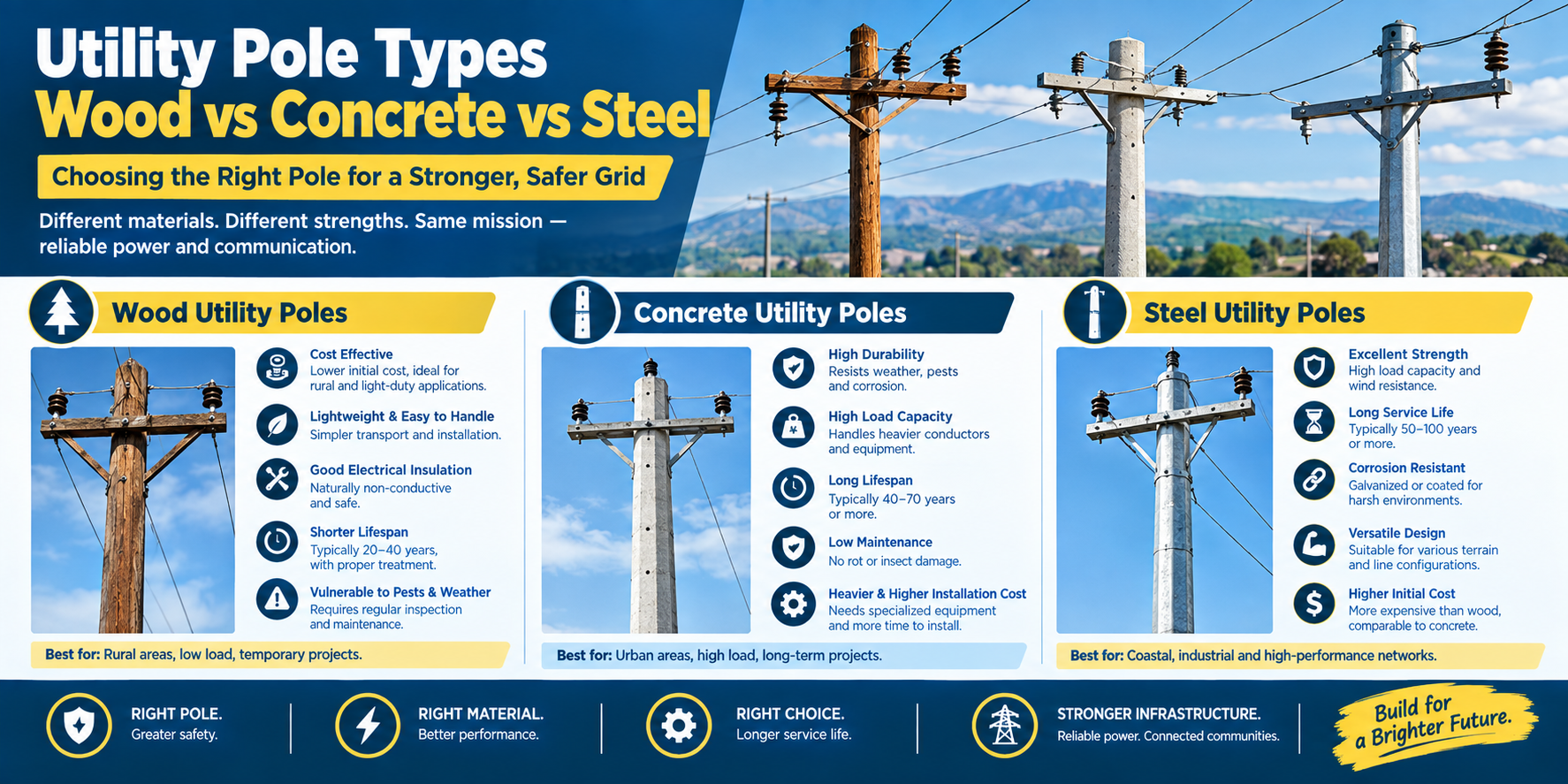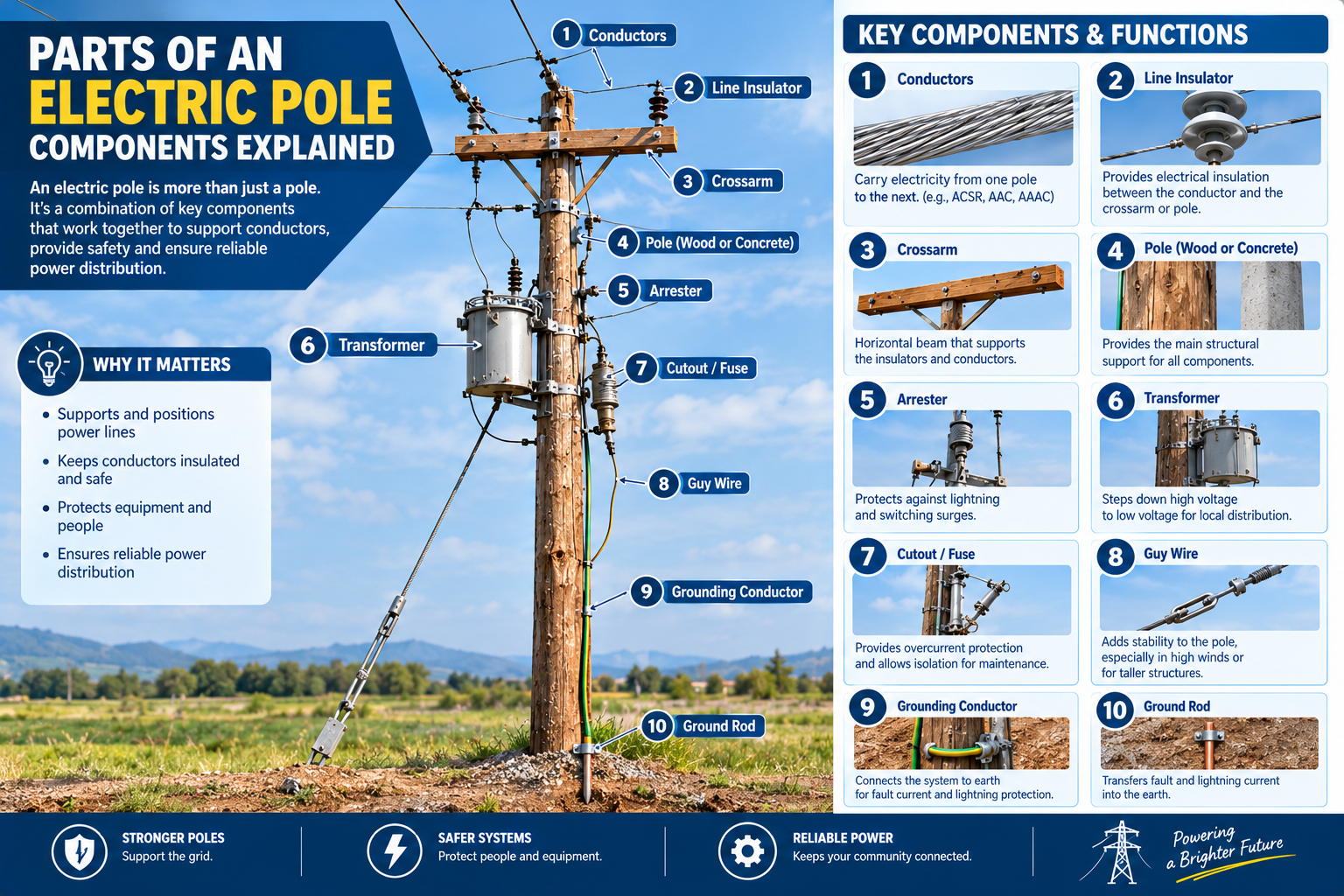
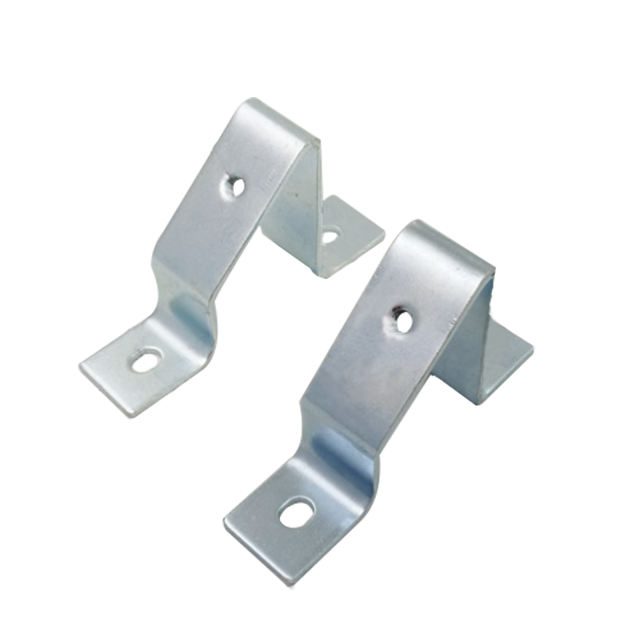
A high voltage post insulator bracket for substations is a precision-engineered structural fitting designed to secure post insulators onto steel frameworks, busbar supports, or utility poles, ensuring mechanical stability and electrical insulation in high-voltage environments.
In global procurement, engineers frequently face issues such as inconsistent welding quality, premature galvanization failure, and dimensional mismatches. These problems lead to installation delays and long-term system risks.
A properly engineered galvanized steel insulator bracket solves these challenges by delivering verified mechanical strength, precise alignment, and long-term corrosion resistance, ensuring reliable performance under extreme electrical and environmental stress.
Engineering Role in Substation Infrastructure
Post insulator brackets act as the load-transfer interface between energized conductors and grounded structures.
Functional Responsibilities
- Maintain phase-to-phase and phase-to-ground clearance
- Support static and dynamic mechanical loads
- Withstand short-circuit forces and thermal expansion
- Reduce aeolian vibration and structural fatigue
Core Applications
- Substation busbar systems
- Disconnect switch mounting
- Transformer support structures
- High voltage line hardware integration
Strategically, these brackets are a primary safeguard against cascading grid failures.
Types of Post Insulator Brackets for Substations
Substation Insulator Mounting Brackets
- Heavy-duty galvanized steel construction
- Designed for rigid, long-term installations
Composite Insulator Brackets
- Lightweight and corrosion-resistant
- Ideal for polymer insulators
Utility Pole Insulator Brackets
- Adaptable for hybrid substation-distribution systems
High Voltage Support Brackets
- Reinforced for ≥220kV applications
- Designed for extreme cantilever loads
Metallurgy & Structural Performance in High Voltage Brackets
Material integrity defines performance and lifespan.
Core Material Specifications
| Parameter | Specification | Standard Reference |
| Material Grade | Q355B / S355JR | GB/T 1591 / EN 10025 |
| Yield Strength | ≥ 355 MPa | ASTM A572 |
| Tensile Strength | 470–630 MPa | ASTM A36 / ISO 630 |
| Hardness | 140–180 HB | ASTM E10 |
| Surface Roughness | Ra ≤ 6.3 μm | ISO 4287 |
Sandelin Effect Control in Galvanization
- Silicon content maintained at 0.15%–0.25%
- Prevents brittle zinc coating
- Ensures ductile, impact-resistant finish
Performance Benefits
- Improved fatigue resistance
- Stable mechanical behavior under load
- Reduced risk of stress corrosion cracking (SCC)
Precision Machining & Advanced Manufacturing
Consistency is achieved through automation and strict process control.
Precision Fabrication Workflow
- Laser / Plasma Cutting
- Eliminates heat distortion
- Ensures clean edges
- CNC Drilling
- Hole tolerance: ±0.05 mm
- Perfect alignment with NEMA / IEC standards
- Robotic Welding
- AWS D1.1 compliant
- Full penetration, uniform welds
- Hot-Dip Galvanization
- Zinc purity: 99.99%
- Coating thickness: ≥85 μm
- Bath temperature: ~450°C
Performance Metrics
| Parameter | Value |
| Dimensional Accuracy | ±0.05 mm |
| Coating Thickness | ≥85 μm |
| Salt Spray Resistance | ≥1000 hours |
| Straightness | ≤ 1/1000 |
Compliance Metrics for Global Substation Projects
Cross-Standard Alignment
| Category | GB/T | International Equivalent |
| Steel | GB/T 1591 | ASTM A572 / EN 10025 |
| Galvanization | GB/T 13912 | ISO 1461 / ASTM A123 |
| Tolerance | GB/T 1804 | ISO 2768 |
| Welding | GB/T 3323 | AWS D1.1 / ISO 5817 |
| Electrical Clearance | GB/T 5582 | IEC 60826 |
Key Compliance Indicators
- Load capacity ≥ 1.5× rated load
- Salt spray ≥ 1000 hours
- RoHS & REACH compliant
- IEC-compatible design
Quality Assurance & Testing Protocols
Quality control is integrated at every stage.
Inspection Workflow
Raw Materials
- Chemical composition (OES spectrometry)
- MTR verification
In-Process
- Ultrasonic Testing (UT)
- Magnetic Particle Inspection (MPI)
Final Inspection
- Dimensional verification (CMM)
- Coating thickness measurement
- Mechanical load testing
Third-Party Verification
- SGS / TUV / Intertek
- ISO 9001 certified systems
💡 Pro Tip: Engineering Verification Before Procurement
Before placing bulk orders, request:
- CAD Drawings (DWG / STEP)
- Material Test Reports (MTR)
- Galvanization certificates
- Sample units for testing
👉 This ensures design compatibility and reduces project risk
Pricing Overview & Cost Drivers
Indicative Pricing
| Type | Price Range (USD) |
| Standard Bracket | $10 – $30 |
| High Voltage Bracket | $30 – $90 |
| Custom Bracket | Project-based |
Key Cost Factors
- Steel grade (Q235 vs Q355)
- Galvanization thickness
- Bracket geometry
- Order volume
- Customization requirements
Strategically, higher-quality brackets reduce long-term maintenance costs.
Logistics & Export Handling
Export Capabilities
- Ports: Shanghai, Ningbo, Shenzhen
- Packaging: ISPM-15 wooden crates + anti-corrosion wrapping
- Container optimization for cost efficiency
Lead Time Benchmarks
| Order Volume | Production | Delivery |
| ≤ 3,000 pcs | 15–20 days | 25–35 days |
| 3,000–15,000 pcs | 20–30 days | 30–45 days |
| Custom Orders | 30–50 days | Project-based |
Procurement Advantages
- Flexible MOQ (100–500 pcs)
- Fast export documentation
- Reduced landed cost
Procurement Strategy for Substation Engineers
Key Evaluation Criteria
- Verify ASTM / IEC compliance
- Confirm galvanization ≥85 μm
- Check welding certification (AWS D1.1)
- Request MTR and CAD drawings
- Evaluate supplier export experience
Common Procurement Risks
- Poor coating → corrosion
- Weak welding → failure
- Dimensional errors → delays
Applications in Modern Power Infrastructure
Substation Expansion
- Supports busbars and switchgear
- Handles short-circuit forces
Renewable Energy Systems
- Used in solar and wind substations
- High vibration resistance
Urban Grid Systems
- Compact installation support
- High-density infrastructure compatibility
Lifecycle Performance & ROI
A high-quality post insulator support structure delivers:
- 20–30 years service life
- Minimal maintenance
- High resistance to environmental stress
👉 Result: Lower total cost of ownership (TCO)
Final Call to Action
Secure Your Substation Project with Verified Hardware
Delays, failures, and compliance issues cost far more than the component itself.
Choose a manufacturer that delivers:
- Certified global standards
- Precision engineering
- Reliable logistics
👉 Request your RFQ, CAD drawings, and test reports today
👉 Ensure your project is delivered on time, on spec, and risk-free
Learn more about: Upset Bolt
FAQs
1. What load capacity do these brackets support?
Typically 5kN–20kN. Custom designs can exceed 40kN.
2. Are they compatible with porcelain and polymer insulators?
Yes, they follow standard NEMA and IEC mounting patterns.
3. How is galvanization quality ensured?
Through controlled silicon content and ≥85 μm coating thickness per ISO 1461.
4. Can I request custom designs?
Yes, OEM/ODM services are available for dimensions and configurations.
5. What certifications should suppliers provide?
ISO 9001, ASTM compliance, IEC standards, and SGS/TUV inspection reports.