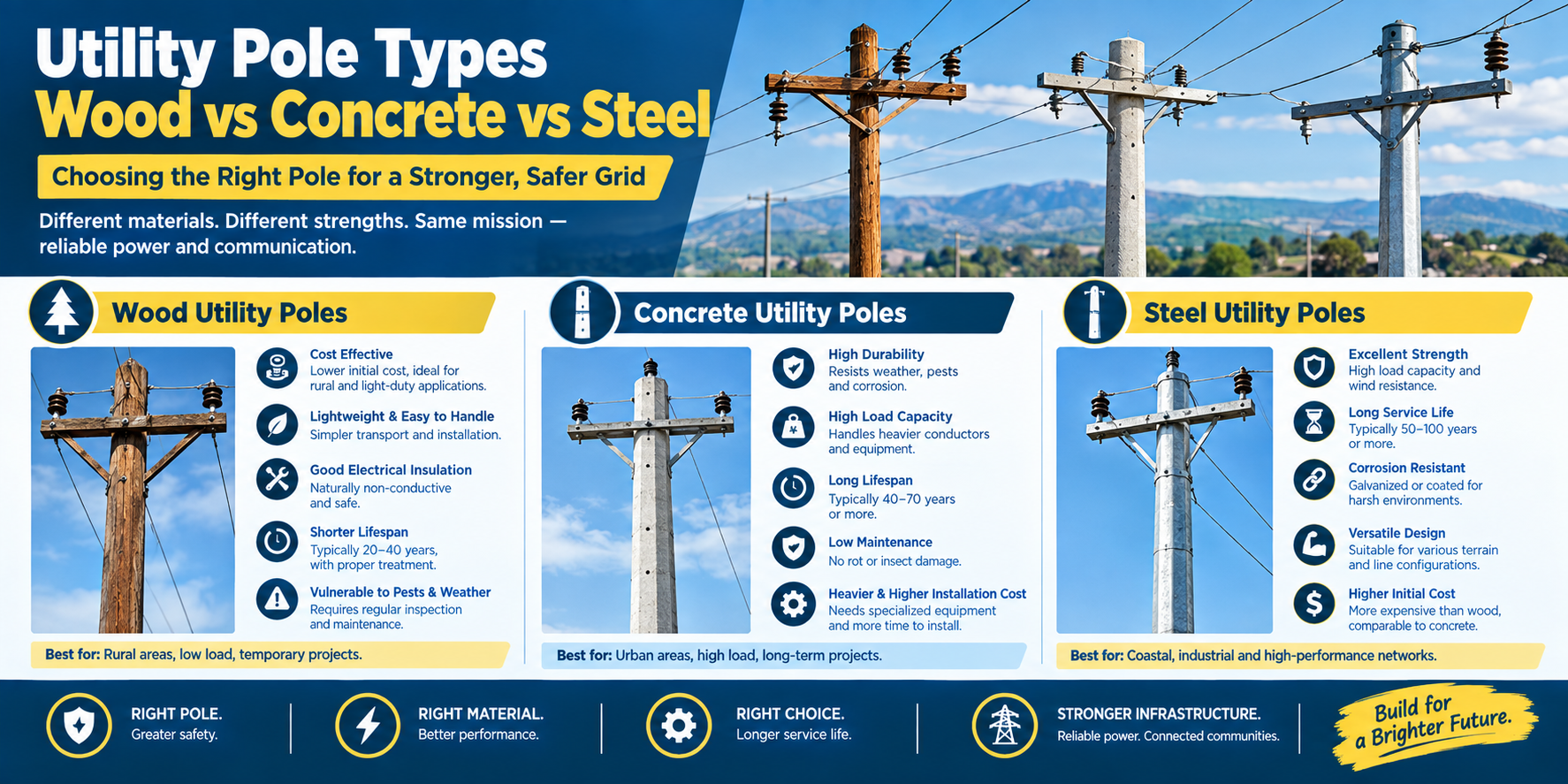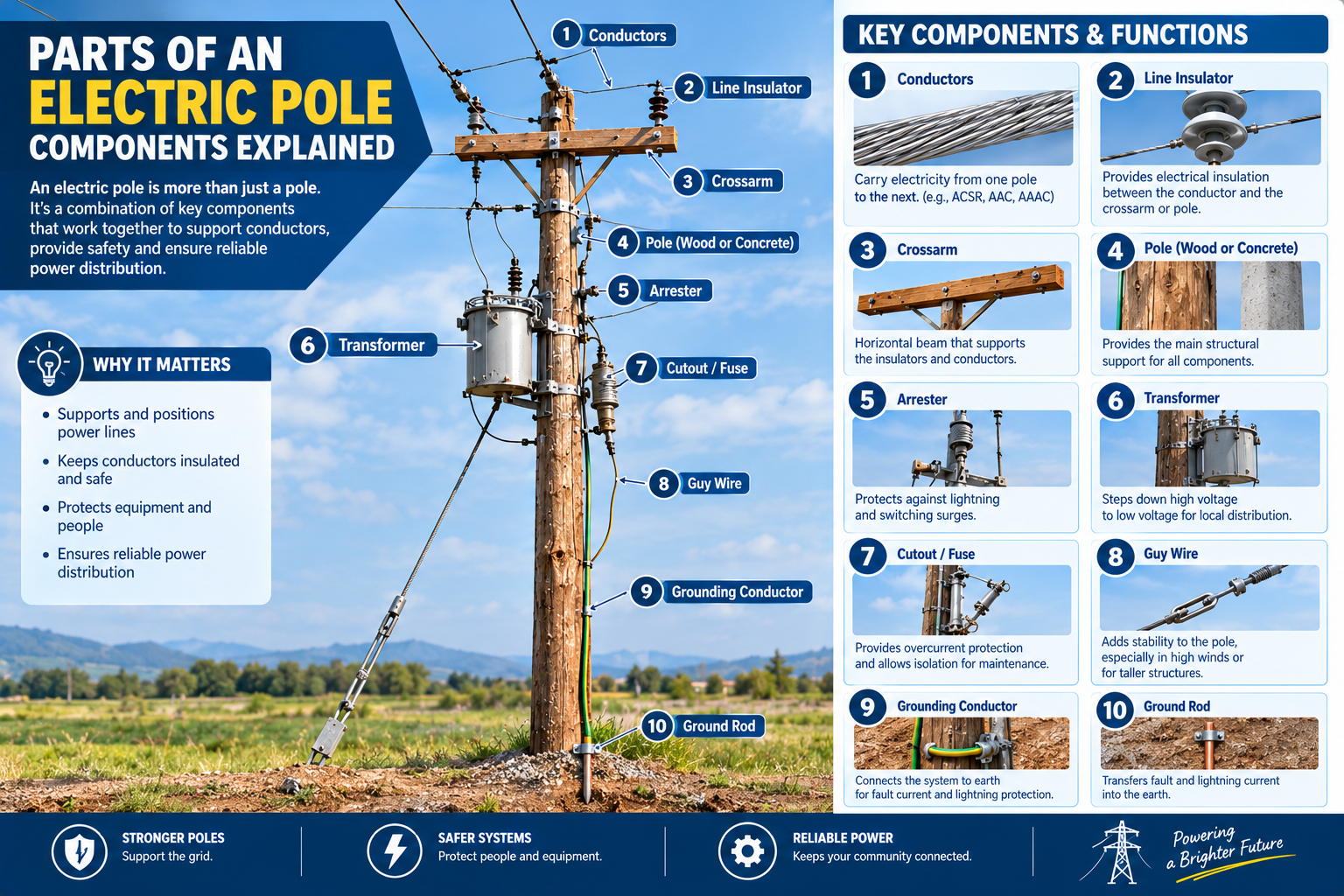
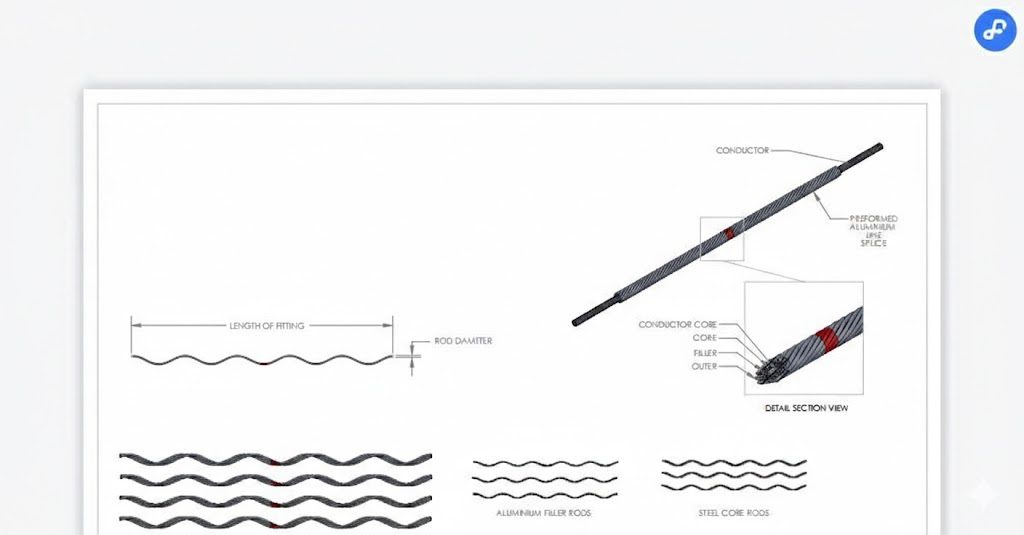
An Armor Rod is a helical reinforcement component, typically manufactured from high-grade aluminum alloy or galvanized steel, designed to protect overhead conductors from mechanical fatigue. These stressors, primarily Aeolian vibration, gallop, and flashover arcing at suspension points, can lead to catastrophic line failure if left unmitigated.
Strategically, the global energy sector faces persistent bottlenecks in sourcing components that balance metallurgical purity with cost-efficiency. While local Western domestic production often carries prohibitive lead times, advanced manufacturing hubs in China have closed the quality gap. By adhering to international standards such as ASTM B415 and IEC 61284, industrial buyers can secure protection that extends the operational lifespan of conductors by decades, ensuring grid stability without exceeding CAPEX budgets.
Engineering Standards Behind Helical Protection Systems
The efficacy of an Armor Rod is determined by its grip strength and the uniformity of its pitch. Unlike standard line guards, Armor Rods provide a robust layer of protection that absorbs and dissipates vibration energy away from the clamp or insulator support.
Comparative Standards and Regulatory Alignment
To ensure seamless integration into USA, UK, and EU power grids, manufacturing processes are mapped against multiple global benchmarks.
| Technical Parameter | Chinese Standard (GB/T) | International (IEC) | North American (ASTM) |
| Material Quality | GB/T 3190 | IEC 61089 | ASTM B233 / B415 |
| Helical Performance | GB/T 2337 | IEC 61284 | ASTM B416 |
| Galvanization | GB/T 13912 | ISO 1461 | ASTM A153 |
Metallurgy and Material Composition
Precision Armor Rods typically utilize Aluminum Alloy 6061-T6 or High-Strength Galvanized Steel.
- Yield Strength: $\ge 270 \text{ MPa}$ for aluminum variants; $\ge 690 \text{ MPa}$ for steel variants.
- Conductivity: $\ge 53\%$ IACS (International Annealed Copper Standard) for aluminum to prevent localized heating.
- Surface Roughness: $Ra \le 1.6 \mu m$ to mitigate corona discharge and RIV (Radio Interference Voltage).
Advancements in Precision Manufacturing
Modern manufacturing centers in Zhejiang and Jiangsu provinces utilize automated CNC wire-forming technology. This ensures that every rod in a set maintains an identical pitch and internal diameter, which is vital for providing a uniform radial grip without damaging the conductor strands.
Dimensional Accuracy and Tolerances
- Wire Diameter Tolerance: $\pm 0.05 \text{mm}$
- Pitch Uniformity: $\le 2\%$ variance across a standard 1500mm rod set.
- End-Finishing: Parrot-bill or ball-end finishes are applied to eliminate sharp edges, significantly reducing the risk of corona inception in HV/EHV applications.
Compliance Metrics for Corrosion Resistance
Given that these components are exposed to atmospheric pollutants and coastal salt spray, surface treatment is a non-negotiable metric.
- Salt Spray Testing: Verified for 1000+ hours (ASTM B117).
- Coating Thickness: Minimum 85μm for hot-dip galvanized variants.
- Passivation: Advanced chemical cleaning to remove iron contaminants from aluminum surfaces.
Quality Assurance and Testing Protocols
Reliability in the field is a direct result of stringent laboratory validation. We bridge the trust gap through transparent, third-party verified testing documentation.
Material and Structural Verification
Beyond standard factory inspections, high-authority procurement requires:
- Chemical Composition Analysis: Spectroscopic verification of Si, Fe, and Cu levels.
- Tensile & Elongation Testing: Ensuring the rods do not become brittle in sub-zero environments.
- Fatigue Testing: Simulating 100 million vibration cycles to verify long-term damping performance.
Pro Tip: Engineering Transparency
Request a Technical Validation Packet: For critical infrastructure projects, always insist on receiving:
- Full Material Test Reports (MTR).
- Dimensional Inspection Reports for each batch.
- 3D CAD models (.STEP or .IGES) to verify fitment with existing suspension hardware.
Strategic Logistics and Export Handling
Western procurement officers often cite lead times and shipping damage as primary pain points. Strategically located manufacturers near the ports of Shanghai or Ningbo mitigate these risks through streamlined logistics.
Packaging for Global Transit
Armor Rods are sensitive to bending during transit. To ensure arrival in “as-manufactured” condition:
- Heavy-duty fiberboard tubes or reinforced wooden crates are utilized.
- VCI (Volatile Corrosion Inhibitor) wrapping prevents oxidation during sea freight.
- Standardized Palletization: Optimized for 20’ GP and 40’ HQ containers to maximize space and reduce landed costs.
Port Logistics and Customs Compliance
By utilizing manufacturers with AEO (Authorized Economic Operator) status, shipments often bypass lengthy customs inspections. This reliability ensures that “Just-in-Time” delivery schedules remain intact, even during peak construction seasons.
Overcoming Procurement Pain Points
Customization and OEM Capabilities
Every conductor from ACSR to AAAC and OPGW requires a specific rod ID and length. Modern factories offer:
- Custom Color Coding: For easy identification in the field.
- Small Batch Samples: Validating fitment before the full production run.
- MOQ Flexibility: Accommodating both large-scale grid expansions and localized repair contracts.
Supply Chain Resilience
Diversifying away from purely domestic or purely regional sources is essential. Integrating a Tier-1 Chinese manufacturer provides a “safety valve” for supply, ensuring that project timelines are not held hostage by localized labor shortages or material scarcities in the West.
FAQs
How does an Armor Rod differ from a Line Guard?
While both provide protection, Armor Rods are longer, thicker, and designed for higher stress levels. They are used specifically at suspension points to protect against fatigue and flashover, whereas Line Guards are typically used for light-duty protection against abrasion and hand-tie damage.
Can Armor Rods be reused after removal?
It is generally discouraged. Once installed, the helical shape takes a “set” based on the conductor’s diameter. Removing and reinstalling can lead to reduced grip strength and inadequate vibration damping.
What information is required for an accurate RFQ?
To provide a precise quote, please specify:
- Conductor Type (e.g., ACSR “Drake”).
- Conductor Diameter ($mm$).
- Required Material (Aluminum Alloy or Galvanized Steel).
- Total Length and Rod Quantity per set.
Are your products compatible with Preformed Line Products (PLP) standards?
Yes. Our Armor Rods are engineered to be functionally equivalent and dimensionally compatible with industry-standard helical hardware used across North America and Europe.
How do you prevent corona discharge on EHV lines?
We utilize precision end-finishing (parrot-bill ends) and maintain a surface roughness $(Ra)$ of less than 1.6. This ensures a smooth electric field gradient, preventing the ionized discharge that causes energy loss and interference.
Closing: Secure Your Grid with Engineering Excellence
The stability of a power network is only as strong as its smallest component. Choosing a partner that understands the intersection of metallurgical precision and global logistics is the most effective way to de-risk your procurement strategy.
Learn more about: Ball Clevis
Contact our technical team today for a formal Request for Quotation (RFQ) or to request a sample kit for laboratory evaluation.