How to Assemble a Distribution Pole: Complete Hardware Checklist
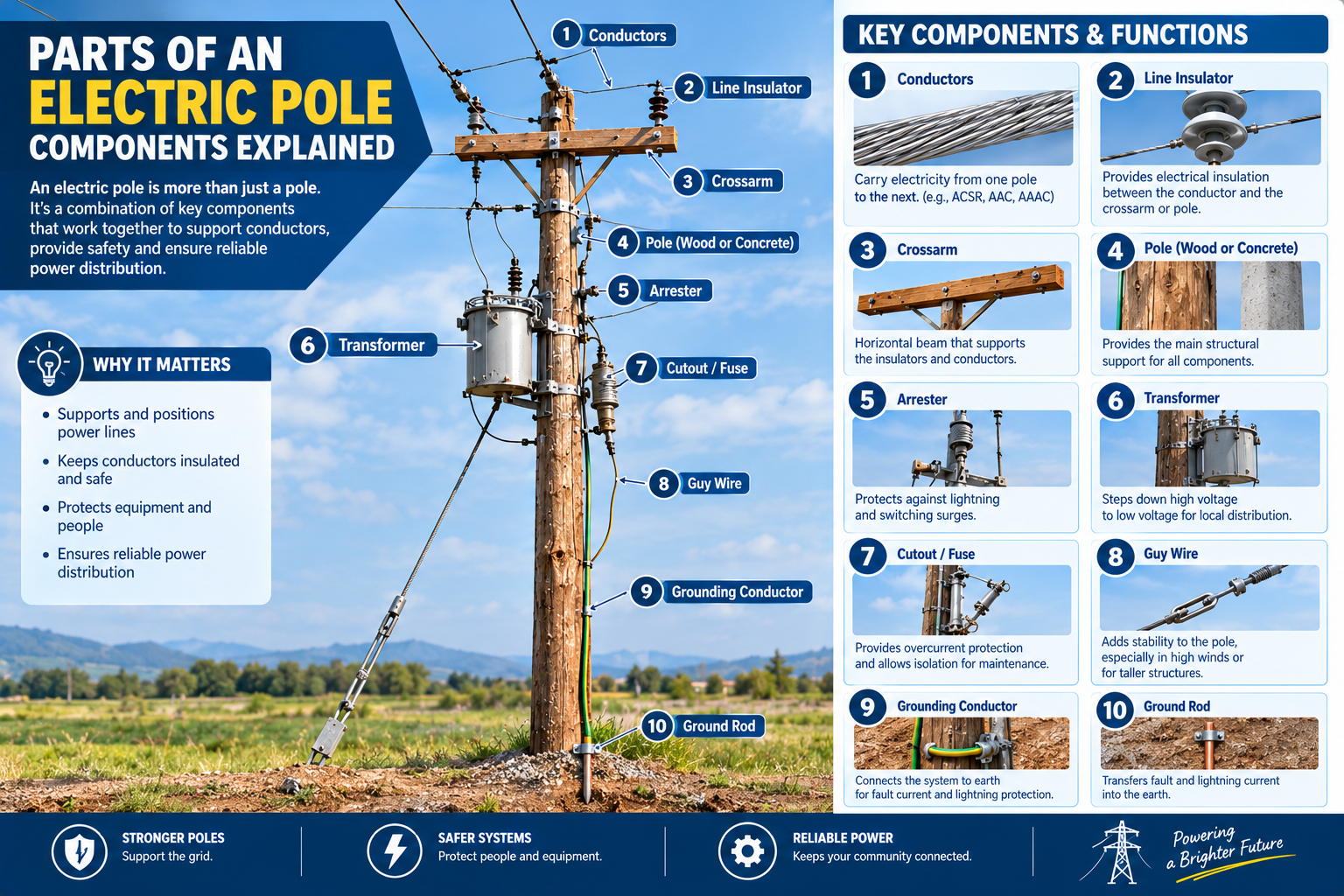
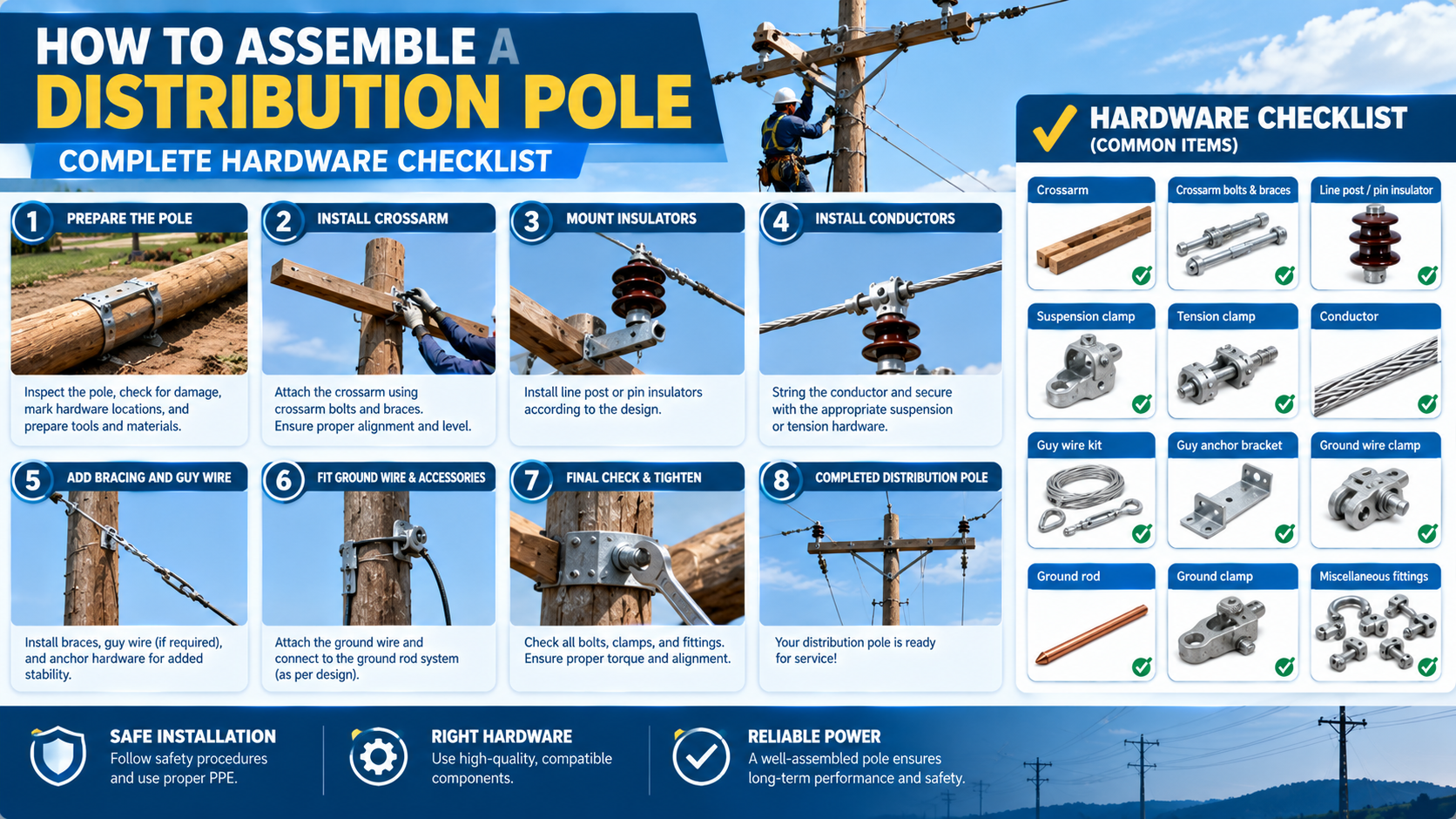
A distribution pole is assembled from the top down: a crossarm mounted to the pole holds insulators (pin or post) that carry the primary conductors, which are supported or terminated by conductor fittings (suspension or dead-end). Below, a secondary rack or D-bracket carries service conductors on spool insulators. At angle and dead-end poles, a guy assembly (guy wire, anchor, rod, termination) resists the pull, and a grounding system (ground rod, clamps) earths the pole. Each component is sized to the conductors, voltage, and loads.
Building a distribution pole means bringing together hardware from every category structure, insulators, conductor fittings, guys, and grounding into one coordinated assembly. This checklist walks through the components top to bottom, so nothing is missed and everything is matched.
1. The Structure: Crossarm and Mounting
The pole carries a crossarm that holds the conductors out and apart:
- A steel crossarm the electrical (EC) or power-pole (SA) type for symmetric structures, a V-type for heavier duty, or an alley arm where one side must stay clear.
- Mounted with a pole band (sized to the pole diameter at mounting height) and bolts (or a double-arming bolt for arms both sides).
- Braced with a flat crossarm brace.
(See our how-to-choose-a-crossarm guide.)
2. Insulators: Holding the Conductors
The crossarm carries insulators that isolate the energized conductors:
- Pin insulators on pins, or post insulators, for distribution voltages.
- Sized to the voltage and pollution level. (See our insulator-selection and creepage guides.)
3. Conductor Fittings: Supporting or Terminating
The conductors are held by fittings that depend on the pole’s role:
- Tangent (straight-run) pole → the conductor is supported; on distribution it’s typically tied to the pin/post insulator, or held with a suspension clamp.
- Angle / dead-end pole → the conductor is terminated with a strain clamp, bolt-type tension clamp, or preformed dead-end grip.
- Taps and joints use parallel-groove clamps or connectors.
(See our suspension-vs-tension-structures guide.)
4. Secondary & Service Hardware
Below the primary, the secondary/service conductors are carried on:
- A secondary rack (several conductors) or a D-bracket (one), holding spool insulators.
(See our secondary-rack-vs-D-bracket guide.)
5. Guy Assembly (Angle & Dead-End Poles)
Where the line pulls the pole sideways, a guy resists it:
- A guy wire from the pole (via a guy hook) to an anchor in the ground (via an anchor rod), terminated with a guy grip or guy clamp.
- The anchor is chosen by soil.
(See our guy/stay assembly and anchor-by-soil guides.)
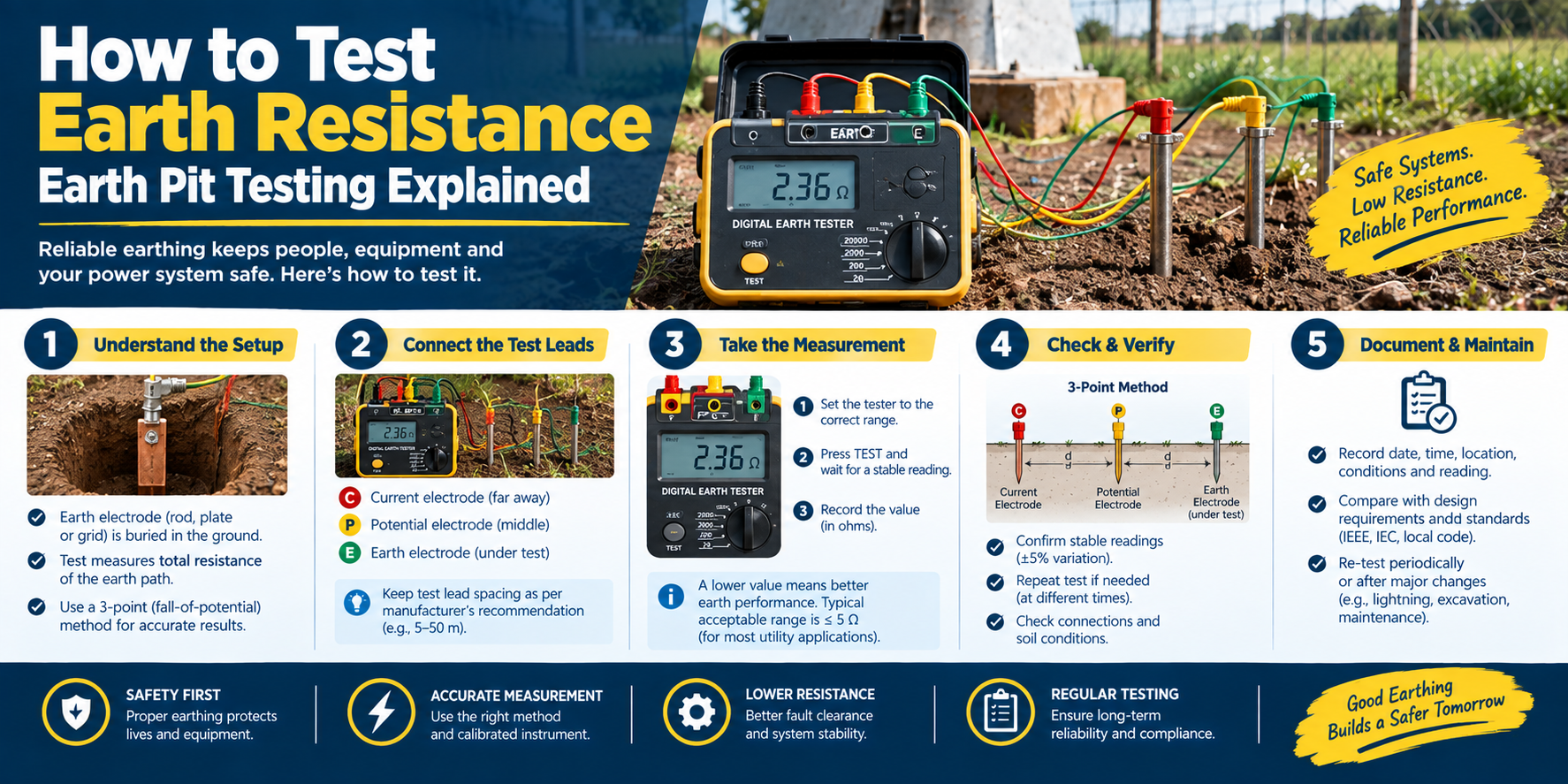
6. Grounding System
The pole is earthed for safety:
- A ground rod (copper-bonded or HDG) driven into the soil, bonded with a ground rod clamp, and connected to equipment/hardware as required.
(See our how-to-ground-an-overhead-line guide.)
Distribution Pole Assembly Checklist
| Component | Hardware |
|---|---|
| Structure | Crossarm, pole band, bolts, brace |
| Insulation | Pin/post insulators on pins |
| Conductor fittings | Suspension or strain/dead-end clamps |
| Secondary | Rack/D-bracket + spool insulators |
| Guys (angle/dead-end) | Guy wire, hook, anchor, rod, termination |
| Grounding | Ground rod, clamp, bonding |
| Fasteners | Machine/double-arming bolts, washers, nuts |
How to Assemble a Distribution Pole: FAQ
What hardware is on a distribution pole? A crossarm and mounting (pole band, bolts, brace), insulators (pin/post on pins) carrying the primary conductors, conductor fittings (suspension or strain/dead-end clamps), a secondary rack or D-bracket with spool insulators for service conductors, a guy assembly at angle/dead-end poles, and a grounding system. Each is sized to the conductors, voltage, and loads.
What is the difference between a tangent and a dead-end pole? A tangent pole supports the conductor on a straight run (typically tied to insulators or held in a suspension clamp). A dead-end (or angle) pole terminates the conductor, taking its full tension with a strain/dead-end clamp, and is usually guyed to resist the pull.
How are conductors attached at a distribution pole? On a tangent pole, the conductor is supported tied to a pin/post insulator or held in a suspension clamp. At an angle or dead-end, it’s terminated with a strain clamp, bolt-type tension clamp, or preformed dead-end grip that carries the line tension into the structure.
When does a distribution pole need a guy? When the line pulls the pole sideways at angles, dead-ends, and where the conductor tension isn’t balanced. A guy assembly (guy wire to a ground anchor) resists that pull and keeps the pole upright. Straight-run tangent poles usually don’t need guys.
How is a distribution pole grounded? With a ground rod driven into the soil near the pole, bonded to the earth conductor with a ground rod clamp, and connected to the equipment and hardware that require earthing. The rod type and depth are chosen for the soil and resistance target.
How do I make sure all the hardware matches? Specify the pole as a coordinated set crossarm, insulators, conductor fittings, secondary, guys, and grounding sized to the same conductors, voltage, and loads, from one supplier where possible. That avoids mismatched sizes, grades, or finishes in the field.
The Bottom Line
A distribution pole is a coordinated assembly: structure (crossarm + mounting), insulators, conductor fittings (support or terminate), secondary hardware, a guy assembly at angle/dead-end poles, and a grounding system every part sized to the conductors, voltage, and loads. Use the checklist so nothing is missed and everything matches.
DAPENG Power (DP Power Fitting) manufactures every component on the pole crossarms, insulators, conductor fittings, secondary hardware, guy and anchor hardware, grounding, and fasteners. Tell us your voltage, conductors, and pole role, and we’ll specify the complete pole assembly.