Utility Pole Types: Wood vs Concrete vs Steel
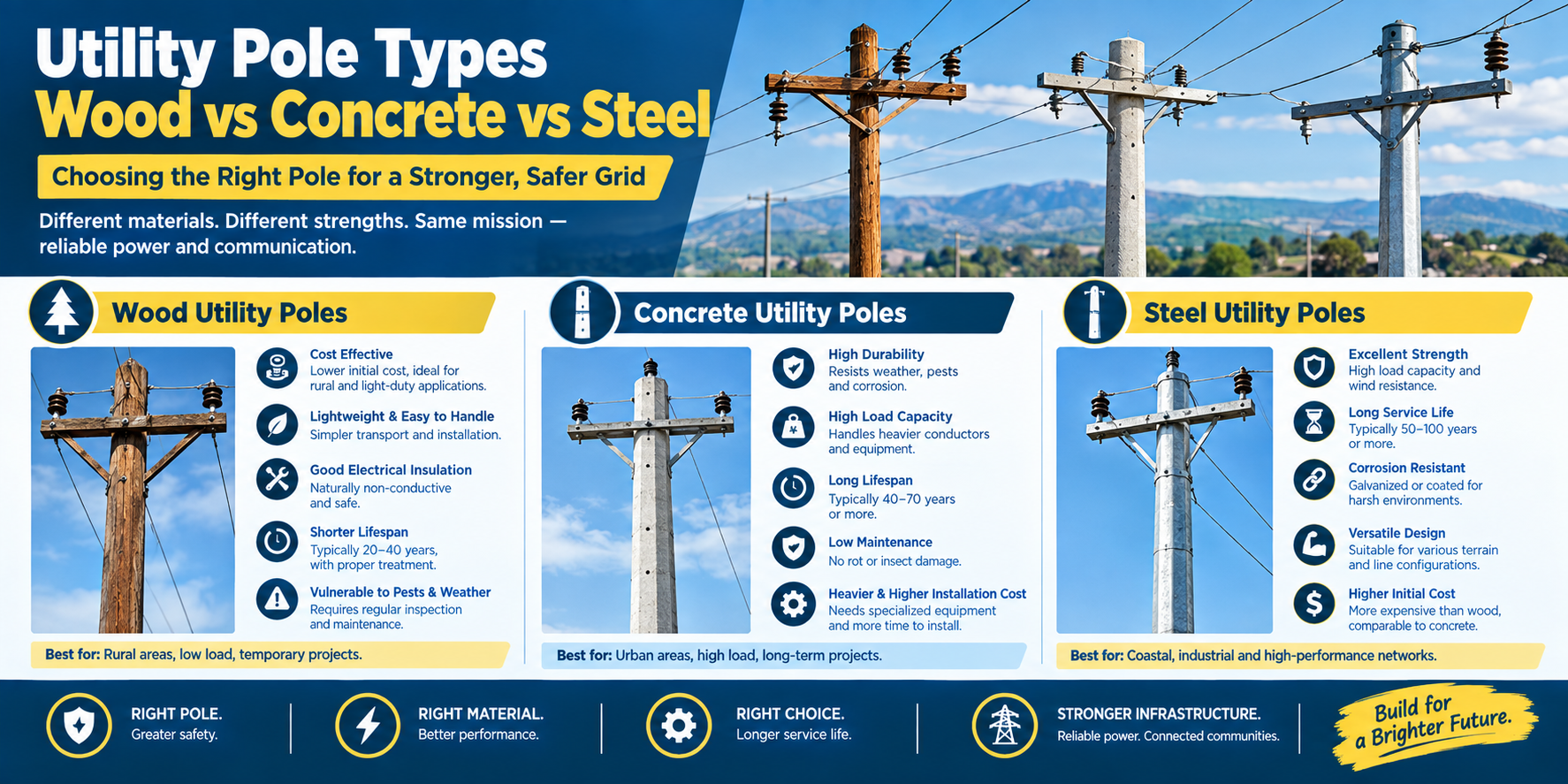
The main utility pole types are wood (traditional, economical, easy to work with but needs treatment and has a shorter life), concrete (strong, long-lasting, fire- and rot-resistant, but heavy), steel (strong, long-lasting, lightweight for its strength, and recyclable, but needs corrosion protection), and composite/fiberglass (light, non-conductive, corrosion-proof, but higher cost). The choice depends on cost, design life, environment, loading, and local availability, and the pole material affects how the hardware is mounted.
Utility poles come in several materials, each with trade-offs in cost, life, and strength. This guide compares wood, concrete, steel, and composite poles and explains how the mounting hardware differs.
Why Pole Material Matters
The pole carries the whole line the conductors, crossarms, insulators, and equipment and stands for decades in the weather. The material affects its cost, service life, strength, weight, maintenance, and how hardware attaches to it. There’s no universally best pole; the right choice depends on the project’s budget, environment, loading, and standards.
Wood Poles
Wood is the traditional utility pole material:
- Pros economical, widely available, easy to drill and climb, naturally somewhat insulating, and quick to install.
- Cons needs preservative treatment (against rot and insects), has a shorter service life than concrete or steel, can burn, and varies from pole to pole.
- Use very common on distribution networks, especially where cost and ease matter.
Hardware mounts to wood by through-bolting (with washers to spread the load) or banding.
Concrete Poles
Concrete (usually pre-stressed concrete) poles are strong and durable:
- Pros long service life, resistant to rot, insects, and fire, low maintenance, and consistent.
- Cons heavy (harder to transport and install), can crack if mishandled, and needs cast-in or bolted fixings for hardware.
- Use common where a long life and low maintenance justify the weight, and in regions where concrete is favored.
Steel Poles
Steel poles (often galvanized or weathering steel) are strong and long-lasting:
- Pros high strength for their weight (lighter than concrete), long service life, fire-resistant, consistent, recyclable, and available in tapered tubular or lattice forms.
- Cons need corrosion protection (galvanizing), are conductive (so earthing/insulation is considered), and cost more than wood.
- Use common for transmission (towers and poles) and increasingly for distribution where longevity and strength matter.
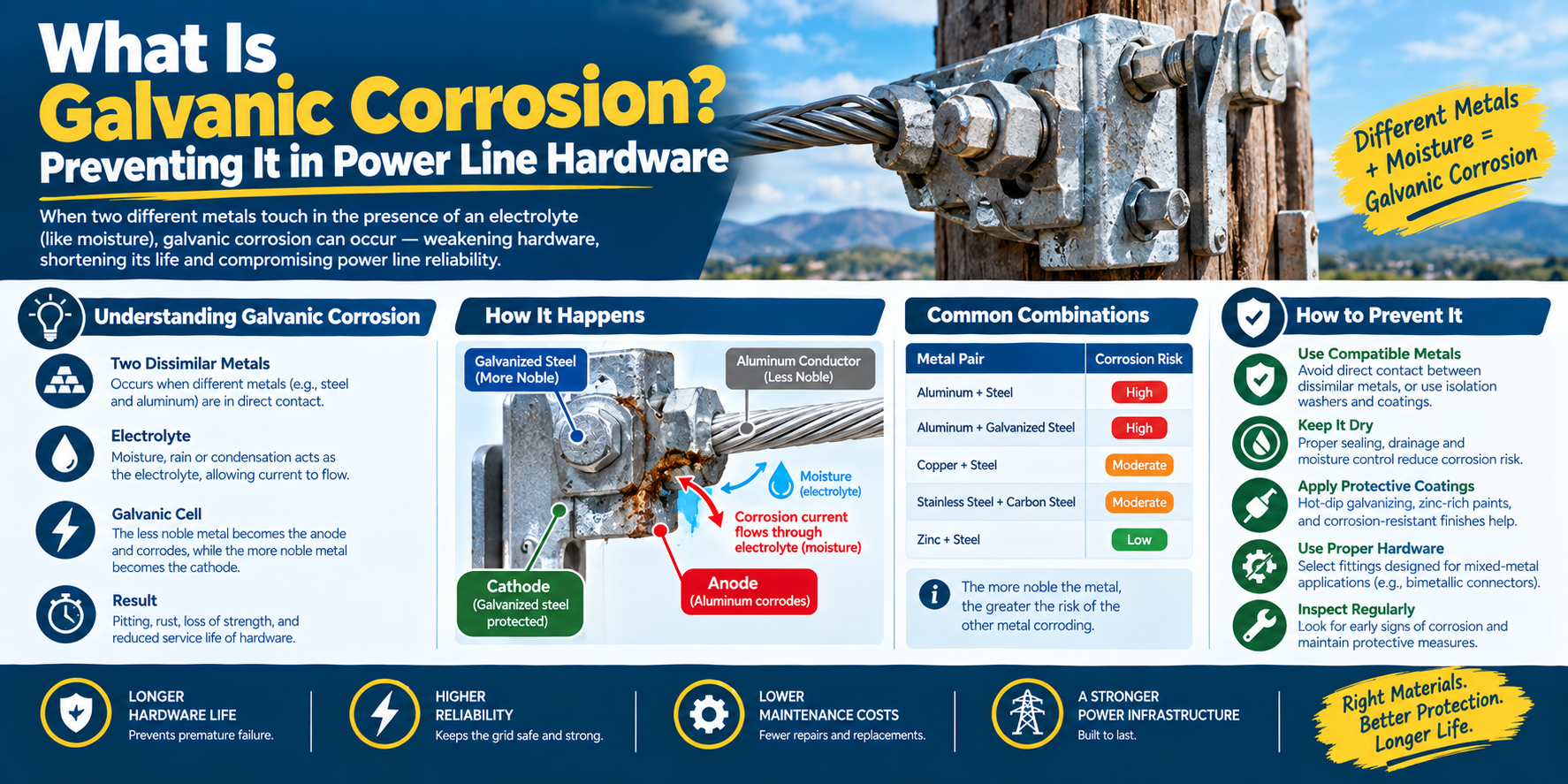
Steel poles pair naturally with galvanized steel hardware (matched finish and life).
Composite / Fiberglass Poles
Composite (fiberglass) poles are a newer option:
- Pros very light (easy to transport and install, good for remote/hard-access sites), corrosion-proof, non-conductive, fire-resistant, and long-lived.
- Cons higher purchase cost, and newer (less long-term field history than wood/concrete/steel).
- Use where light weight, corrosion resistance, or non-conductivity are priorities (coastal, remote, or fire-prone areas).
Utility Pole Types at a Glance
| Type | Life | Strength | Weight | Cost | Note |
|---|---|---|---|---|---|
| Wood | Shorter | Moderate | Light | Low | Needs treatment |
| Concrete | Long | High | Heavy | Medium | Rot/fire-resistant |
| Steel | Long | High | Moderate | Medium-high | Needs galvanizing |
| Composite | Long | Moderate-high | Very light | High | Corrosion-proof, non-conductive |
How the Hardware Differs by Pole Type
Whatever the pole material, it carries the same line hardware and DAPENG Power makes that hardware, sized and fixed to suit the pole:
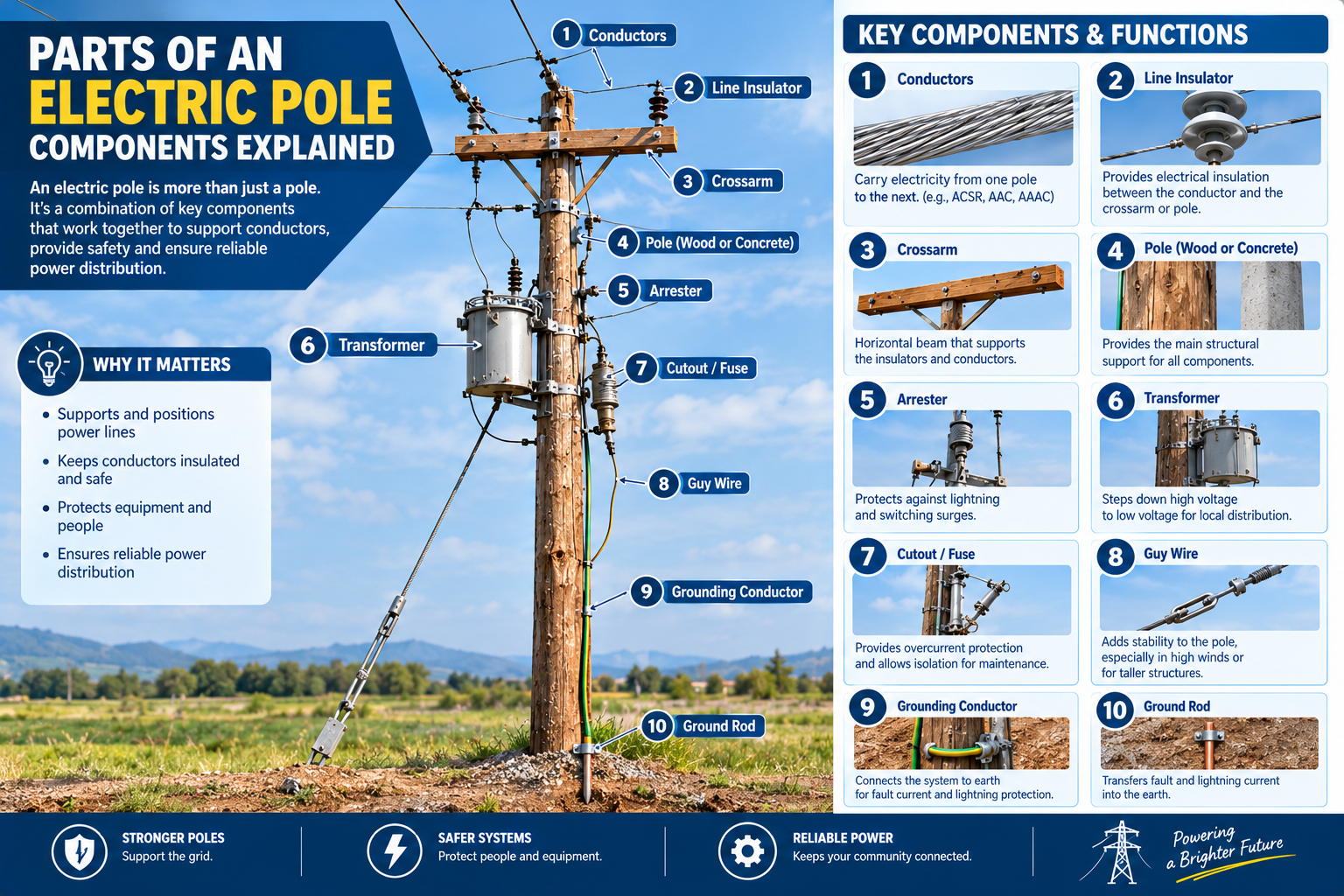
- Mounting a pole band clamps around a pole (sized to the diameter at the mounting height, since poles taper), or hardware is through-bolted with machine bolts / double-arming bolts and washers (spreading the load, important on wood).
- Crossarms steel crossarms mount to any pole type, holding the conductors and insulators.
- Finish galvanized hardware pairs with steel and concrete poles for matched corrosion life; on wood, galvanized hardware resists the outdoor environment.
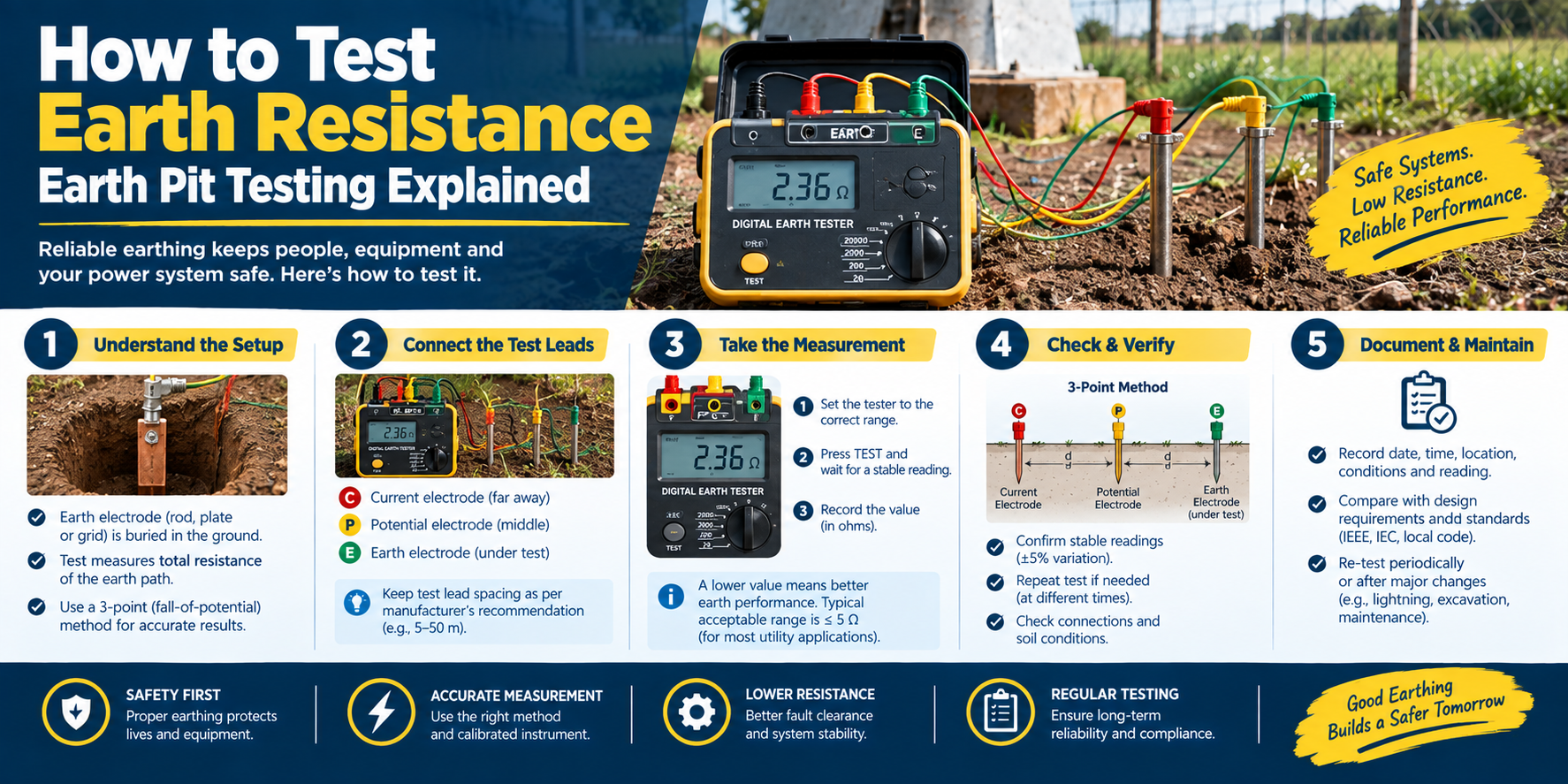
- Earthing steel poles are conductive, so bonding and earthing are considered; the grounding hardware is the same.
So we supply the crossarms, bands, brackets, and fittings to mount on whichever pole you use. (DAPENG makes the pole hardware, not the poles themselves.)
Utility Pole Types: FAQ
What are the main types of utility poles? The main types are wood (traditional, economical, shorter life), concrete (strong, long-lasting, heavy), steel (strong, lightweight for its strength, long-lasting), and composite/fiberglass (very light, corrosion-proof, non-conductive, higher cost). The choice depends on cost, life, environment, and loading.
Which is better, wood or steel poles? Neither is universally better. Wood is economical, easy to work, and widely used on distribution, but has a shorter life and needs treatment. Steel is stronger for its weight, longer-lasting, and fire-resistant, but costs more and needs corrosion protection. Choose by budget, life, and environment.
Why are concrete poles used? Concrete poles offer a long service life with resistance to rot, insects, and fire, and low maintenance worthwhile where longevity justifies their weight. They’re common in regions that favor concrete and where a durable, low-maintenance pole is wanted.
Are composite poles better than wood? Composite (fiberglass) poles are lighter, corrosion-proof, non-conductive, and long-lived, which suits coastal, remote, or fire-prone areas but they cost more and have less long-term field history than wood. Whether they’re “better” depends on whether those advantages justify the cost for the project.
Does the pole material change the hardware? The line hardware (crossarms, insulators, fittings) is largely the same, but the mounting differs: poles are through-bolted or banded, with washers to spread the load on wood. Steel poles are conductive, so earthing is considered. Galvanized hardware suits all pole types for corrosion life.
Which pole type is best for coastal areas? Composite (corrosion-proof, non-conductive) or galvanized steel/concrete poles suit coastal environments where salt corrosion is a concern, along with corrosion-resistant galvanized or stainless hardware. Wood needs good treatment in such environments. Match the pole and hardware to the corrosion risk.
The Bottom Line
Utility poles come in wood (economical, shorter life), concrete (durable, heavy), steel (strong, lightweight, long-lasting), and composite (light, corrosion-proof, costly) each suited to different budgets, environments, and loads. Whatever pole you choose, the crossarms, mounting hardware, and fittings attach the line to it and those are what DAPENG supplies.
DAPENG Power (DP Power Fitting) manufactures the hardware for every pole type steel crossarms, pole bands, brackets, bolts, insulators, conductor fittings, and grounding sized and finished for wood, concrete, or steel poles. Tell us your pole type and voltage, and we’ll specify the mounting hardware.