Parts of an Electric Pole: Components Explained
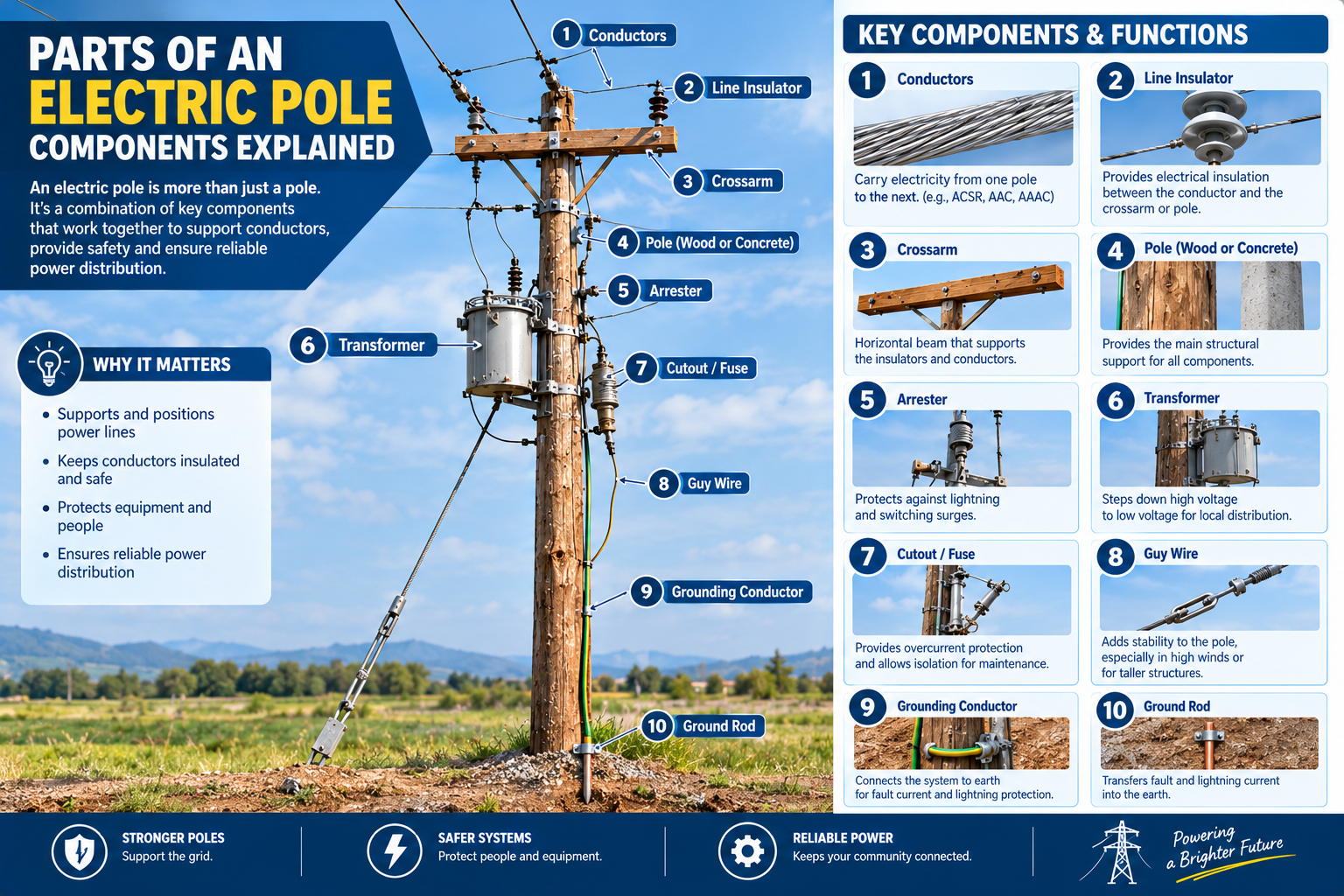
The main parts of an electric (utility) pole are the pole itself, the crossarm that holds the conductors out, the insulators that isolate the energized conductors, the conductors (power lines) and their clamps, the guy assembly that braces the pole at angles and dead-ends, the pole-mounted equipment (transformers, cutouts, arresters) where present, the secondary/service hardware for low-voltage lines, and the grounding system. Each part has a specific job in carrying power safely along the line.
Look up at a power pole, and you’ll see a collection of components, each with a name and a purpose. This guide names and explains the main parts of an electric pole, a reference for anyone learning the hardware.
1. The Pole
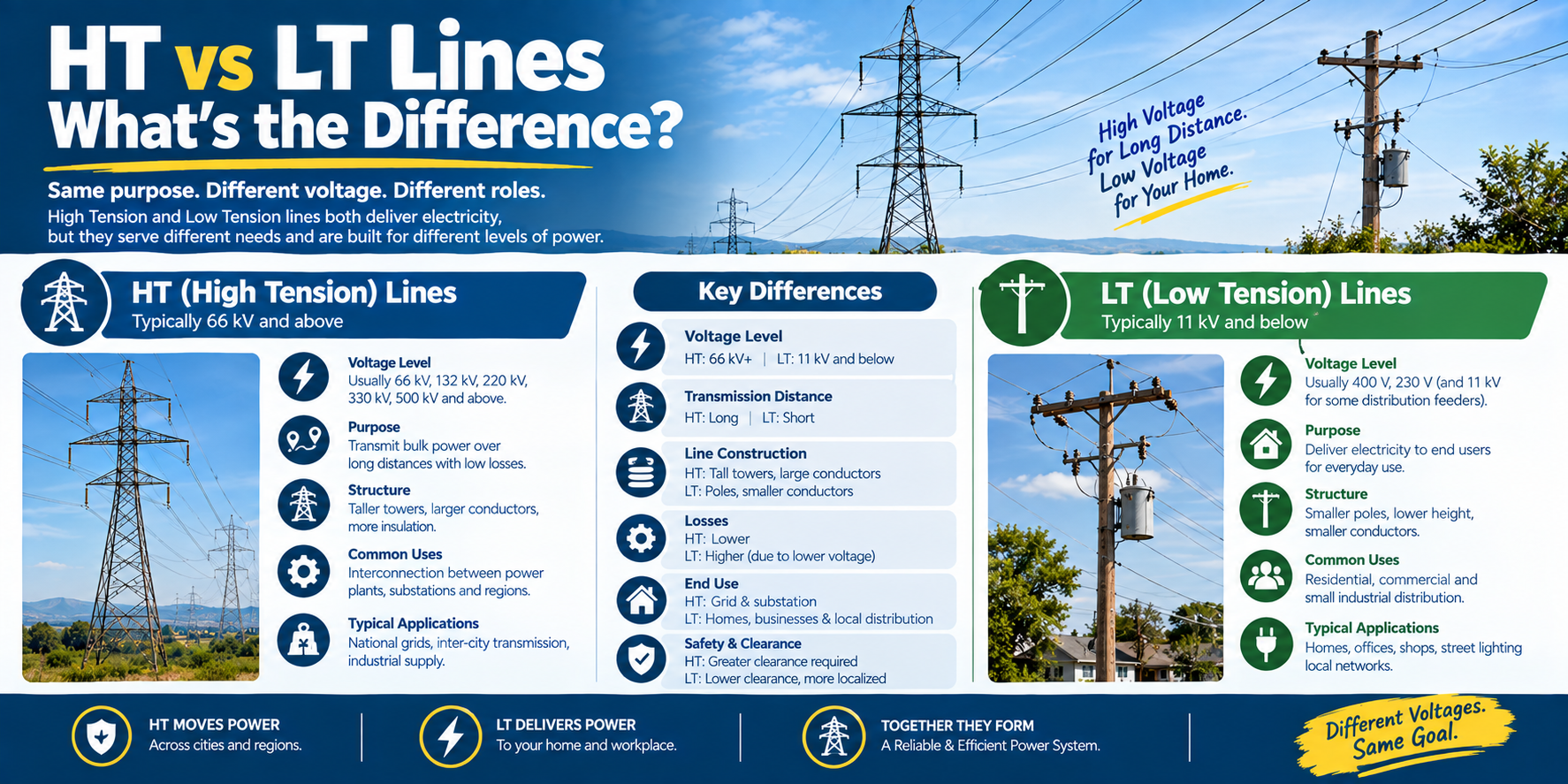
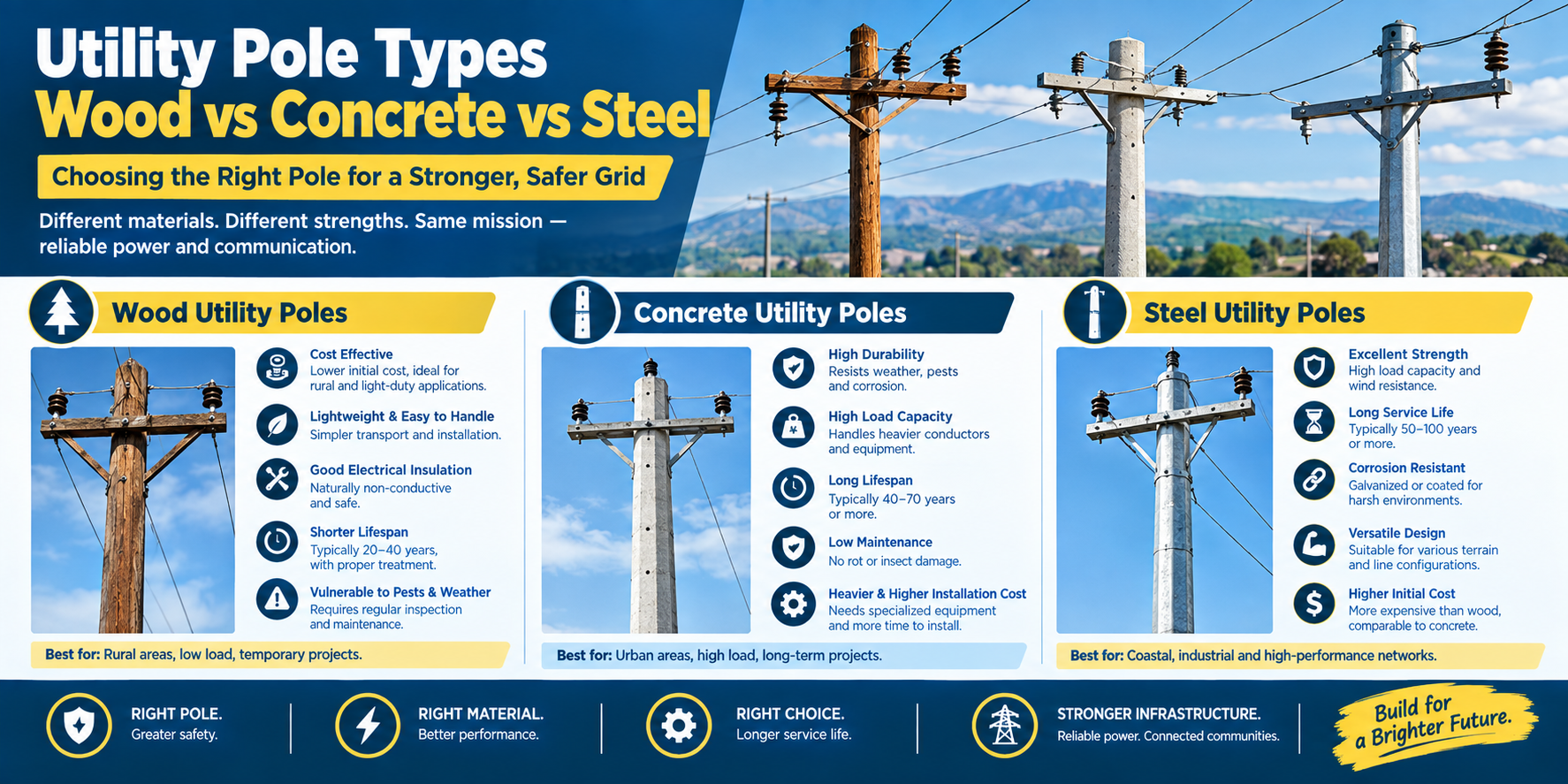
The pole is the structure itself wood, concrete, steel, or composite that raises the conductors to a safe height and carries all the other hardware. (See our utility-pole-types guide for wood vs concrete vs steel.) Everything else mounts to it.
2. The Crossarm
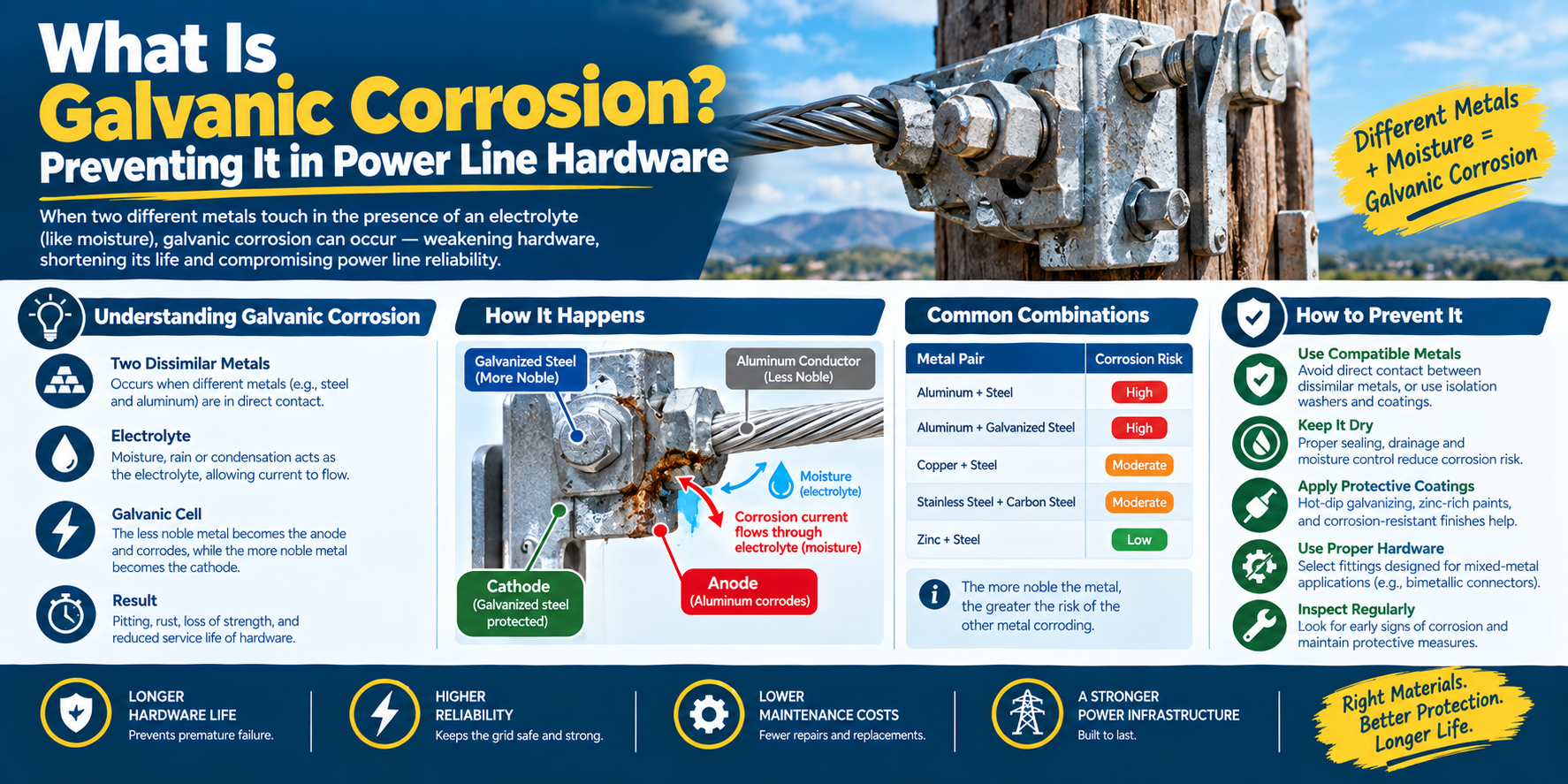
The crossarm is the horizontal member (often steel) that holds the conductors out and apart from the pole. It comes in types electrical (EC) and power-pole (SA) for symmetric structures, V-type for heavier duty, and alley arm for restricted clearance and is mounted with a pole band and bolts, braced with a flat crossarm brace.
3. The Insulators
The insulators isolate the energized conductors from the earthed crossarm and pole. On distribution poles these are rigid pin or post insulators mounted on pins; on transmission, hanging suspension insulator strings. (See our types-of-insulators guide.) Low-voltage secondary conductors use spool insulators.
4. The Conductors and Their Clamps
The conductors are the power lines carrying the current. They’re held to the insulators or structure by conductor fittings: a suspension clamp supports them on a straight run, and a strain clamp or dead-end grip terminates them at angles and dead-ends. Taps and joints use parallel-groove clamps, and armor rods protect the conductor at supports.
5. The Guy Assembly
Where the line pulls the pole sideways (angles, dead-ends), a guy braces it. The guy assembly runs from the pole (via a guy hook) down a guy wire to a ground anchor (via an anchor rod), terminated with a guy grip or guy clamp. Where the guy runs near conductors, a guy-strain insulator isolates it. (See our guy/stay-assembly guide.)
6. Pole-Mounted Equipment (Where Present)
Some poles carry equipment: distribution transformers (stepping voltage down for customers), fuse cutouts (protecting a section), surge arresters (limiting overvoltage see our lightning-protection guide), and switches. These are mounted on the pole with brackets and bands. (DAPENG makes the mounting hardware and fittings; the transformers and electrical devices are separate equipment.)
7. Secondary & Service Hardware
Below the primary line, the secondary/service conductors run to premises, carried on a secondary rack or D-bracket with spool insulators. A street light arm may carry a luminaire.
8. The Grounding System
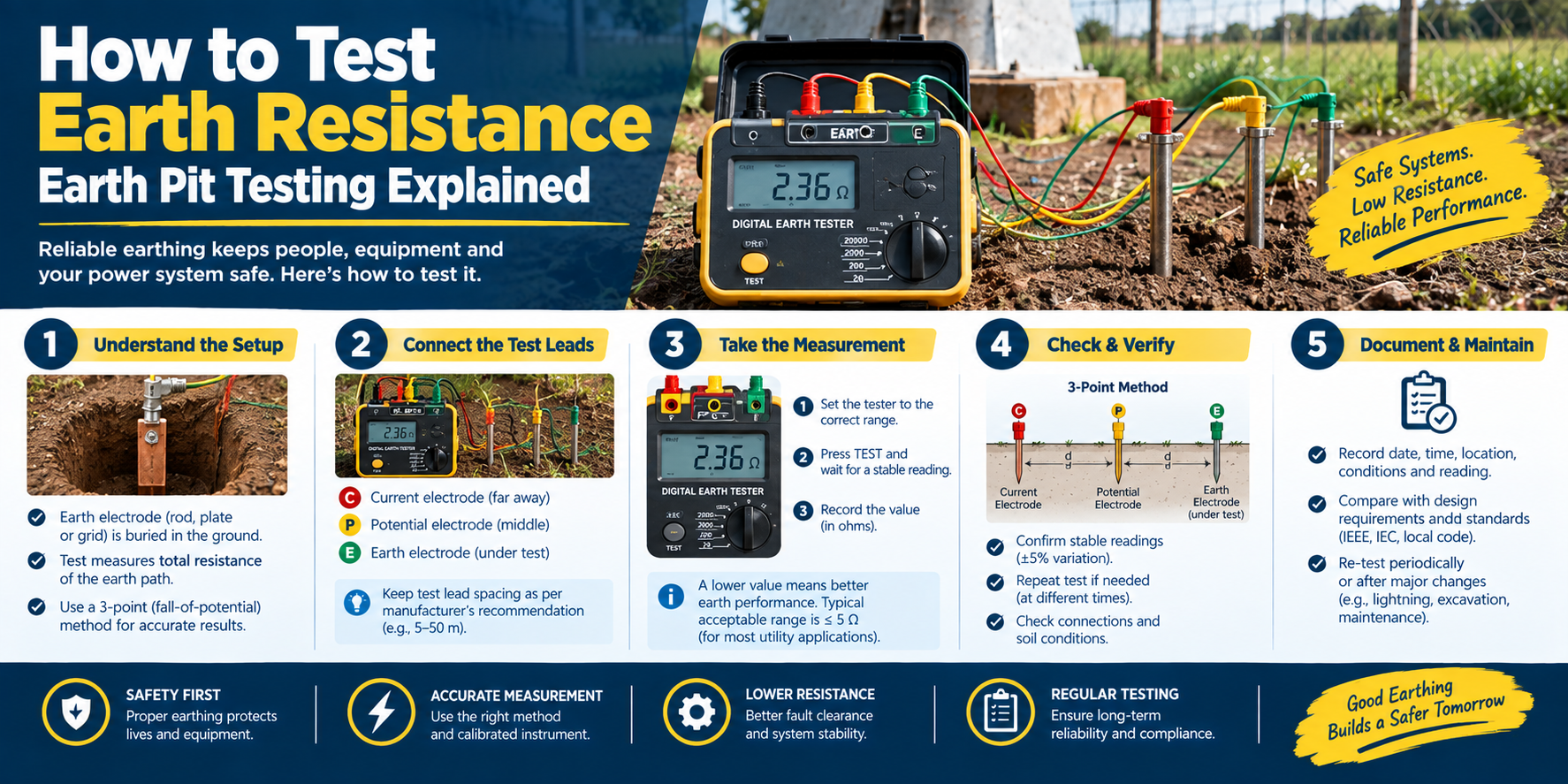
The pole is earthed for safety: a ground rod driven into the soil, bonded with a ground rod clamp, connecting the equipment and (where present) the shield wire to earth. (See our how-to-ground-an-overhead-line guide.)
Parts of an Electric Pole at a Glance
| Part | Function |
|---|---|
| Pole | Raises and carries everything |
| Crossarm | Holds conductors out and apart |
| Insulators | Isolate energized conductors |
| Conductors + clamps | Carry and terminate the power lines |
| Guy assembly | Braces the pole at angles/dead-ends |
| Equipment | Transformers, cutouts, arresters |
| Secondary hardware | Carries service conductors |
| Grounding | Earths the pole for safety |
Parts of an Electric Pole: FAQ
What are the main parts of an electric pole? The pole, the crossarm (holds conductors out), the insulators (isolate the conductors), the conductors and their clamps, the guy assembly (braces the pole), pole-mounted equipment (transformers, cutouts, arresters where present), secondary/service hardware, and the grounding system. Each has a specific job in carrying power safely.
What is the crossarm on an electric pole? The crossarm is the horizontal member (often steel) that holds the conductors out and apart from the pole. It carries the insulators and is mounted with a pole band and bolts, braced with a crossarm brace. Types include standard, V-type, and offset alley arms.
What are the insulators on a power pole for? Insulators isolate the energized conductors from the earthed crossarm and pole, preventing the current from flowing to earth through the structure. Distribution poles use rigid pin/post insulators; transmission uses hanging suspension strings; secondary conductors use spool insulators.
What is a guy wire on an electric pole? A guy wire is part of the guy assembly that braces the pole against the sideways pull of the line at angles and dead-ends. It runs from the pole to a ground anchor and is terminated with a grip or clamp. Without it, the pole would lean or fall under the unbalanced load.
How is an electric pole grounded? With a ground rod driven into the soil near the pole, bonded to the earth conductor with a ground rod clamp, connecting the equipment and shield wire (where present) to earth. This gives fault and lightning current a safe path to ground.
What equipment is mounted on an electric pole? Where present, distribution transformers (step voltage down for customers), fuse cutouts (protect a section), surge arresters (limit overvoltage), and switches mounted with brackets and bands. Not every pole has equipment; many just carry and support the conductors.
The Bottom Line
An electric pole is an assembly of named parts pole, crossarm, insulators, conductors and clamps, guy assembly, equipment, secondary hardware, and grounding each with a specific job in carrying power safely along the line. Knowing the parts is the first step to specifying or maintaining a pole.
DAPENG Power (DP Power Fitting) manufactures the hardware for every part of the pole crossarms, insulators, conductor fittings, guy and anchor hardware, secondary hardware, grounding, and fasteners. Tell us your pole and voltage, and we’ll specify the complete hardware.