In the landscape of global infrastructure—spanning North American data centers, European power grids, and Southeast Asian manufacturing hubs—the integrity of an electrical system is only as reliable as its weakest mechanical link. I-Beam Grounding Clamps engineered in China have emerged as the strategic choice for procurement officers and lead engineers, delivering the optimal convergence of high-conductivity metallurgy and high-torque mechanical grip.
By bridging the gap between GB/T standards and stringent ASTM/IEC compliance, these critical-path components ensure electrical system integrity in heavy industrial environments. This comprehensive guide explores why precision-machined grounding hardware has become the gold standard for achieving superior Total Cost of Ownership (TCO) and 25-year lifecycle reliability.
What is an I-Beam Grounding Clamp?
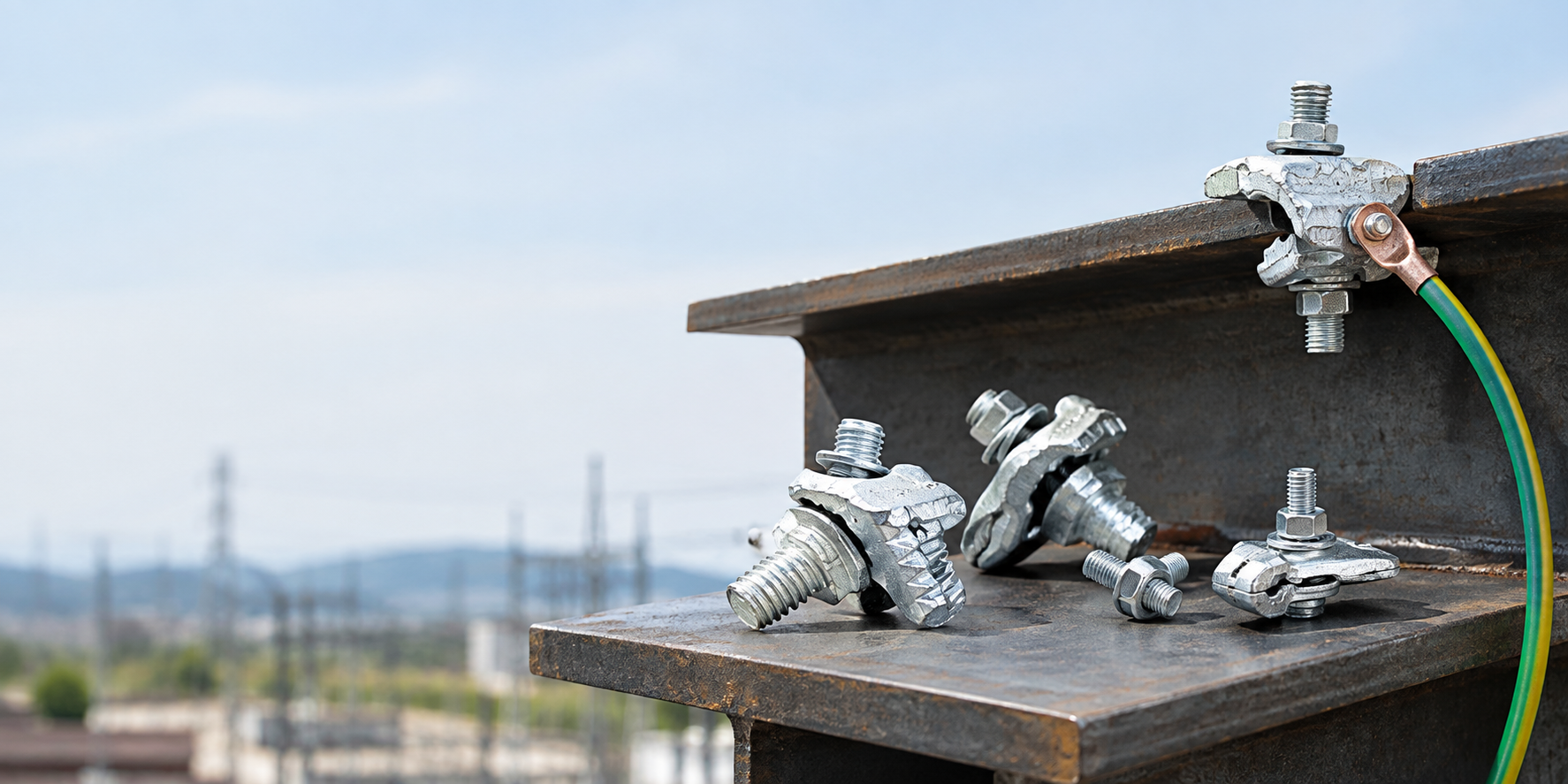
An I-Beam Grounding Clamp (also known as a structural steel Earth bond) is a heavy-duty mechanical and electrical connector designed to bond grounding conductors directly to the flange of structural steel I-beams or H-beams.
Core Functionality
Unlike traditional methods that require drilling or welding—which can compromise the structural integrity of the steel—these clamps utilize specialized serrations and high-torque bolts to “bite” into the beam. This creates a gas-tight, low-resistance electrical path that ensures fault currents are safely dissipated into the building’s structural framework, protecting both equipment and personnel.
Primary Applications Across Industries
| Industry | Application |
|---|---|
| Power Substations | Protecting sensitive transformers and switchgear |
| Telecom Towers | Grounding high-altitude equipment against lightning strikes |
| Renewable Energy | Securing solar racking and wind turbine bases |
| Industrial Plants | Ensuring safety in high-vibration manufacturing environments |
| Railway Electrification | Maintaining continuity across massive steel transit structures |
The Global Infrastructure Challenge: Why Grounding Reliability Cannot Fail
A grounding failure is rarely visible until a catastrophic event occurs. Inadequate bonding leads to:
-
Equipment Destruction: Fault currents bypassing the ground path to fry internal circuitry
-
Safety Hazards: Increased risk of lethal electrical shock to personnel
-
System Downtime: Lightning-induced failures causing millions in lost productivity
-
Regulatory Non-Compliance: Failure to meet NEC, IEC, or local safety codes, leading to legal liabilities
Strategically, the weakest point is often the connection interface, not the conductor itself. Modern Chinese manufacturing has shifted toward “Critical-Path” engineering, producing clamps that withstand thermal expansion, environmental oxidation, and seismic vibration—ensuring your entire Pole Line Hardware system remains uncompromised.
Metallurgy and Material Science: Engineering for Conductivity
The performance of a grounding clamp is dictated by its chemical composition. Leading manufacturers utilize alloys that align with international benchmarks to ensure seamless integration with your existing Grounding Anchors and Ground Rods.
Base Materials & Technical Properties
| Component | Material | International Equivalent | Key Property |
|---|---|---|---|
| Clamp Body (Copper) | High-Grade Copper Alloy / Bronze | ASTM B62 / B584 | ≥ 85% IACS Conductivity |
| Clamp Body (Steel) | Carbon Steel (Q235B / Q345B) | ASTM A36 / A572 Gr 50 | Yield Strength ≥ 355 MPa |
| Fasteners | Stainless Steel / HDG Steel | ASTM F593 / A153 | High Torque Retention |
| Interface | Electro-tinned Copper | IEC 62561-1 | Low Contact Resistance |
Mechanical & Electrical Performance Metrics
-
Electrical Conductivity: High-copper variants ensure minimal voltage drop across the connection
-
Clamping Force: Engineered to exceed 15 kN to maintain contact under severe vibration
-
Contact Resistance: Maintained at ≤ 100 µΩ to prevent localized heating and energy loss
-
Temperature Tolerance: Rated for extreme environments from -40°C to +150°C
Corrosion Resistance: The 1,000-Hour Benchmark
Corrosion is the primary threat to electrical continuity. In coastal or high-humidity industrial zones, standard hardware fails within years. Premium suppliers employ multi-stage surface treatments to guarantee longevity.
1. Hot-Dip Galvanization (HDG)
Processed per ISO 1461 or ASTM A123, providing a minimum average coating thickness of 85 μm. This metallurgical bond protects the steel even if the surface is scratched during installation—essential for outdoor utility projects where Steel Cross Arms and structural supports are exposed to the elements.
2. Electro-Tinning
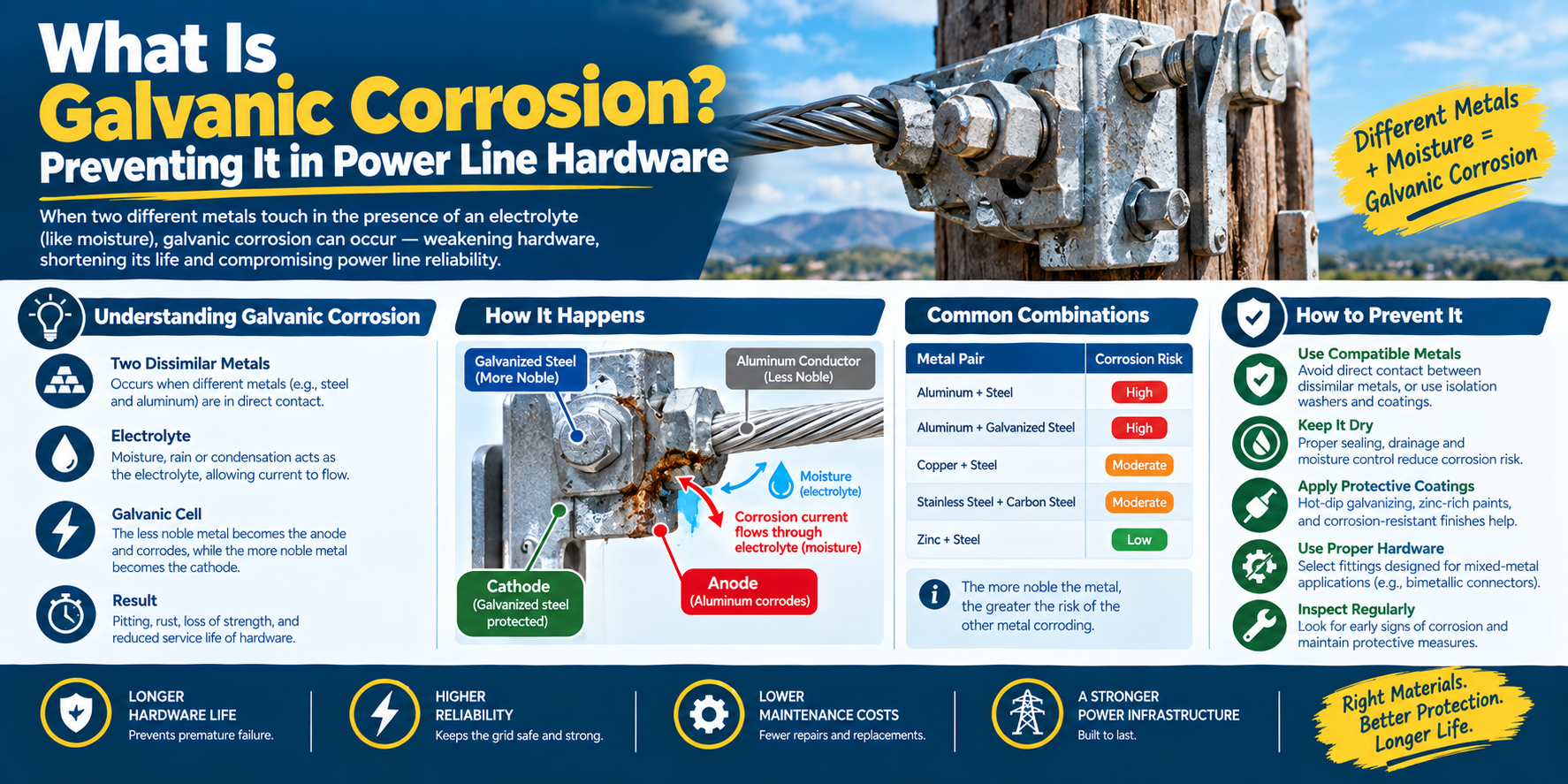
For copper components, tinning prevents the formation of copper oxide (which is semi-conductive) and mitigates galvanic corrosion when the clamp contacts dissimilar metals.
3. Salt Spray Excellence
Quality-controlled units undergo rigorous testing per ASTM B117, maintaining structural and electrical integrity for over 1,000 hours in concentrated salt chambers without red rust.
Precision Machining & Manufacturing Processes
The transition from “mass-produced” to “precision-engineered” is driven by advanced shop-floor technology.
CNC Machining & Casting
High-end clamps utilize CNC machining centers and precision casting molds to maintain tolerances within ± 0.05 mm. This ensures:
-
Perfect fitment on various I-beam flange thicknesses (3mm to 35mm)
-
Uniform pressure distribution across the conductor
-
Reduction of “hot spots” caused by uneven mechanical contact
Design Optimization Features
-
Serrated Contact Teeth: Specifically angled to penetrate paint and mill scale for a superior bite
-
Anti-Loosening Systems: Vibration-resistant bolts that maintain torque over decades
-
Adjustable Jaws: A single clamp model can accommodate a wide range of beam sizes, simplifying inventory for EPC contractors
Total Cost of Ownership (TCO): The Procurement Perspective
Smart procurement looks beyond the initial unit price. The “China Price” advantage is now bolstered by longevity and reduced maintenance, mirroring the reliability found in premium Strain Clamps and Suspension Clamps.
Lifecycle Comparison Table
| Factor | Low-Grade / Generic Clamp | Premium China-Engineered Clamp |
|---|---|---|
| Expected Lifespan | 3–5 Years | 20–25+ Years |
| Maintenance | Frequent Re-torquing | Minimal / Fit-and-Forget |
| Failure Risk | High (Oxidation/Loosening) | Negligible (Gas-tight Seal) |
| Overall Value | High Long-term Cost | Optimized TCO |
Strategic Sourcing Advantages
-
Scalability: Factories in hubs like Ningbo and Suzhou can scale from a 100-unit pilot to a 50,000-unit rollout without “scaling lag”
-
OEM/ODM Flexibility: Custom jaw widths or bolt lengths can be engineered to suit unique European or American structural profiles
-
Logistical Efficiency: Proximity to the world’s most efficient ports (Shanghai/Shenzhen) allows for Just-in-Time (JIT) delivery, reducing warehousing overhead
Quality Assurance: The “Trust but Verify” Model
Reliable sourcing depends on a transparent, multi-level inspection protocol—the same rigorous standards applied to our ADSS/OPGW Fittings and Preformed Line Products.
1. Chemical Composition Analysis
Using Spectrometer Testing to verify the exact alloy ratios (Copper, Zinc, Tin) to ensure conductivity and strength match the Material Test Report (MTR).
2. Mechanical & Ultrasonic Testing
Universal Testing Machines verify tensile strength, while Ultrasonic Testing (UT) detects internal voids or cracks in forged bodies that could lead to brittle failure.
3. Electrical Verification
Micro-ohm meters measure contact resistance to ensure the clamp meets the millivolt drop requirements of IEEE 837.
4. Third-Party Validation
Buyers can mandate pre-shipment inspections from global firms such as SGS, TÜV, or Intertek, eliminating risk before the container leaves the port.
How Chinese Precision Engineering Meets Global Standards
Interoperability is the cornerstone of international infrastructure. Chinese I-Beam Grounding Clamps are designed to align with:
-
UL 467: Grounding and bonding equipment (North America)
-
IEC 62561: Lightning protection system components (Europe/Global)
-
ANSI C119.4: Connectors for use between aluminum or copper conductors
-
ISO 9001:2015: Quality management system framework
This global compliance ensures seamless integration with other critical components like Parallel Groove Clamps and Hot Line Clamps used in your distribution network.
Pro Tip for Engineering Teams: Always request a CAD Drawing (.dwg or .step), a comprehensive Material Test Report (MTR), and a tiered FOB/CIF Price List during the RFQ stage to ensure full technical validation.
FAQ: Sourcing I-Beam Grounding Clamps
Q1: Can these clamps be used in UL-listed projects?
Yes. Many premium manufacturers produce clamps that meet or exceed UL 467 standards. Always verify the manufacturer’s UL file number or request a Certificate of Compliance (CoC).
Q2: What is the typical lead time for bulk orders?
Standard production for 1,000–5,000 units typically ranges from 15 to 25 days. Custom OEM designs may require an additional 10 days for tooling.
Q3: How do you prevent galvanic corrosion between a copper lead and a steel I-beam?
The most effective method is using tin-plated copper or bimetallic interfaces. The tin layer acts as a sacrificial buffer, preventing oxidation between the dissimilar metals.
Q4: Do these clamps support both solid and stranded grounding wires?
Yes. Most designs are engineered to accommodate a range from 16mm² to 240mm² (AWG 6 to 500 MCM), covering both solid rods and high-flexibility stranded cables.
Q5: What are the standard shipping terms?
Most suppliers offer flexible Incoterms, including FOB (Shanghai/Ningbo), CIF (Destination Port), and increasingly DDP for smaller, time-sensitive shipments.
Conclusion: Secure Your Infrastructure with Precision-Engineered Grounding
Electrical grounding is not an area for compromise. A single failed connection can jeopardize multi-million dollar assets and human lives. By partnering with a manufacturer that prioritizes metallurgical precision and transparent QA, you turn a commodity purchase into a strategic advantage.
When you build your grounding ecosystem, pair these high-performance clamps with robust Ground Rods, reliable Grounding Anchors, and high-strength Strain Clamps to create a fully integrated, fail-safe earthing system.
Ready to Upgrade Your Grounding Infrastructure?
Connect with our engineering team today to secure your project’s foundation with I-Beam Grounding Clamps designed for the global stage.
📞 Request a Bulk Quote & Technical Consultation