In the complex ecosystem of overhead power distribution and telecommunications infrastructure, reliability is measured not in years but in decades. Every component—no matter how seemingly modest—plays a critical role in maintaining grid stability, ensuring public safety, and minimizing lifecycle costs.
Guy Hooks and Secondary Racks represent two such foundational elements. Though they serve distinctly different functions, both are essential to the structural integrity and operational efficiency of utility pole networks worldwide.
Premium-grade Guy Hooks and Secondary Racks manufactured in China represent a strategic convergence of cost efficiency, advanced metallurgy, and global compliance. Designed to withstand extreme mechanical stress and environmental exposure, these components are essential for ensuring long-term reliability in overhead power distribution and telecommunications infrastructure.
Modern utility networks demand hardware that not only meets baseline standards but exceeds expectations in fatigue resistance, corrosion protection, and dimensional accuracy. Through the integration of high-grade carbon steel, automated forging technologies, and ASTM/ISO-compliant hot-dip galvanization processes, leading manufacturers deliver solutions that achieve a superior price-to-performance ratio.
This comprehensive guide equips procurement specialists, engineers, and project managers with critical technical insights, enabling informed sourcing decisions that minimize lifecycle costs and maximize grid stability.
What Are Guy Hooks and Secondary Racks?
Guy Hook: Structural Tension Anchor
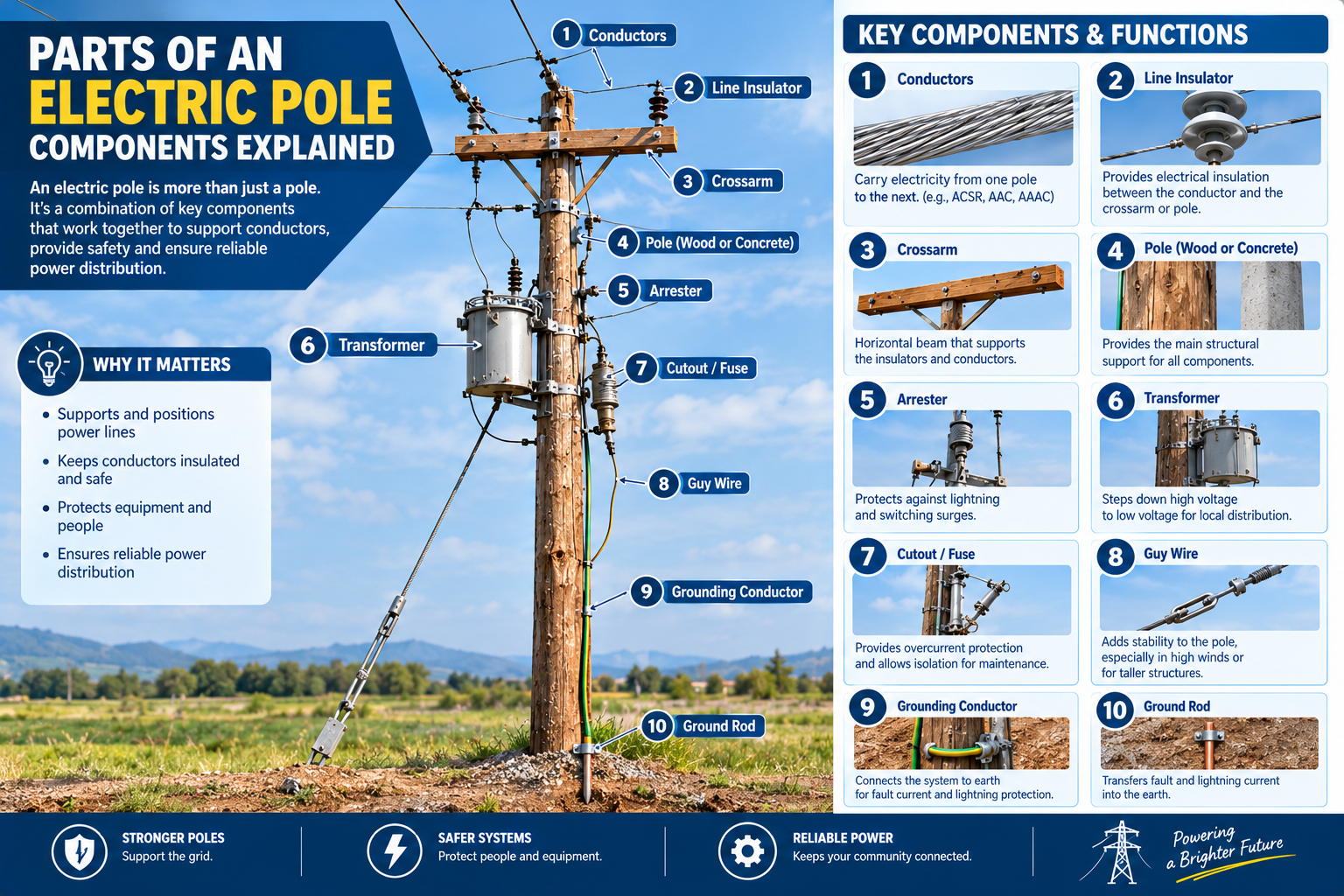
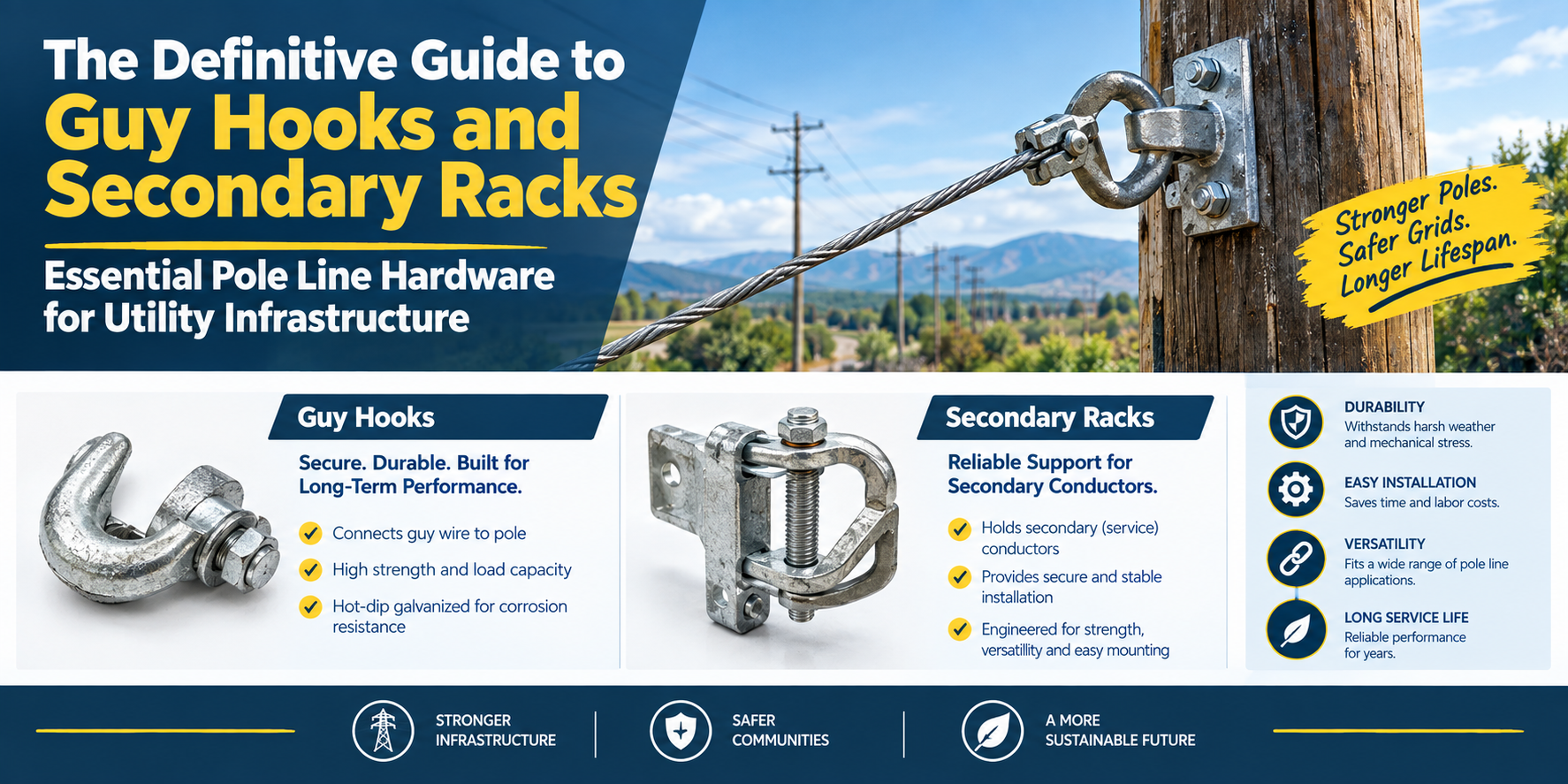
A Guy Hook is a load-bearing pole line hardware component engineered to anchor guy wires to utility poles. These wires counteract lateral forces caused by wind loads, conductor tension, and uneven terrain conditions.
Often referred to as a “ram’s head” due to its curved geometry, the Guy Hook is designed to:
-
Distribute tensile forces evenly across the pole surface
-
Prevent localized stress concentrations
-
Maintain structural equilibrium in high-load scenarios
Forged from high-strength carbon steel, Guy Hooks are critical in preventing pole tilting or collapse, especially in long-span transmission lines and storm-prone regions.
The hooked design holds and guides guy wire securely, installed with bolts, nuts, or threaded fasteners, and is compatible with standard guy wire sizes.
Secondary Rack: Conductor Support System
A Secondary Rack is a mounting bracket used to support low-voltage secondary conductors, typically in the 120/240V range. Installed on poles or building facades, these racks hold multiple spool insulators that:
-
Maintain proper conductor spacing
-
Prevent phase-to-phase contact
-
Reduce risk of electrical faults and flashovers
Secondary racks are available in configurations ranging from single-spool to multi-spool designs (2, 3, 4, and 5 positions), depending on network complexity.
Designed with a steel U-channel base, the secondary rack allows efficient distribution of electrical lines while preventing sagging and misalignment.
The Critical Role in Infrastructure Reliability
Failure of pole line hardware is not a localized issue—it can cascade into widespread outages and structural failures. For example, a single compromised Guy Hook during extreme weather conditions can initiate a domino effect, leading to:
-
Sequential pole collapses
-
Conductor breakage
-
Extended service interruptions
-
High emergency repair costs
Common Issues Without Proper Hardware:
-
Guy wire slippage or movement
-
Tension loss in guying systems
-
Reduced pole stability
-
Conductor sagging and poor cable alignment
-
Increased mechanical stress and safety hazards
In regions experiencing rapid electrification or grid modernization, the use of substandard hardware often results from procurement bottlenecks or lack of technical validation.
Strategically sourcing from advanced manufacturing ecosystems mitigates these risks by ensuring:
-
Consistent material quality
-
Scalable production capacity
-
Strict adherence to international standards
Metallurgy and Material Composition
Base Material Selection
Material performance is the foundation of hardware reliability. Guy Hooks and Secondary Racks must operate in harsh outdoor environments characterized by:
-
High humidity
-
Salt-laden coastal air
-
Industrial pollution
-
Temperature fluctuations
To withstand these conditions, high-grade carbon steels are utilized:
| Component | China Standard (GB/T) | International Equivalent | Key Property |
|---|---|---|---|
| Guy Hook Body | Q235B / Q345B | ASTM A36 / A572 Gr.50 | High Yield Strength |
| Secondary Rack | DX51D+Z | ASTM A653 / EN 10346 | Excellent Formability |
| Fasteners | Class 8.8 | ISO 898-1 | High Tensile Strength |
Material Options for Guy Hooks
Different applications require different material properties:
-
Galvanized Steel: Most common material for outdoor pole line use due to strength and corrosion resistance
-
Ductile Iron: Provides extra strength where heavier loads are present
-
Stainless Steel: Ideal for coastal or highly corrosive environments
-
Powder Coated Finishes: Enhance corrosion protection and aesthetic longevity
High-quality materials ensure that guy hooks withstand years of service.
Material Options for Secondary Racks
-
Galvanized Steel: Provides strength and corrosion resistance
-
Carbon Steel: Ensures high mechanical strength
-
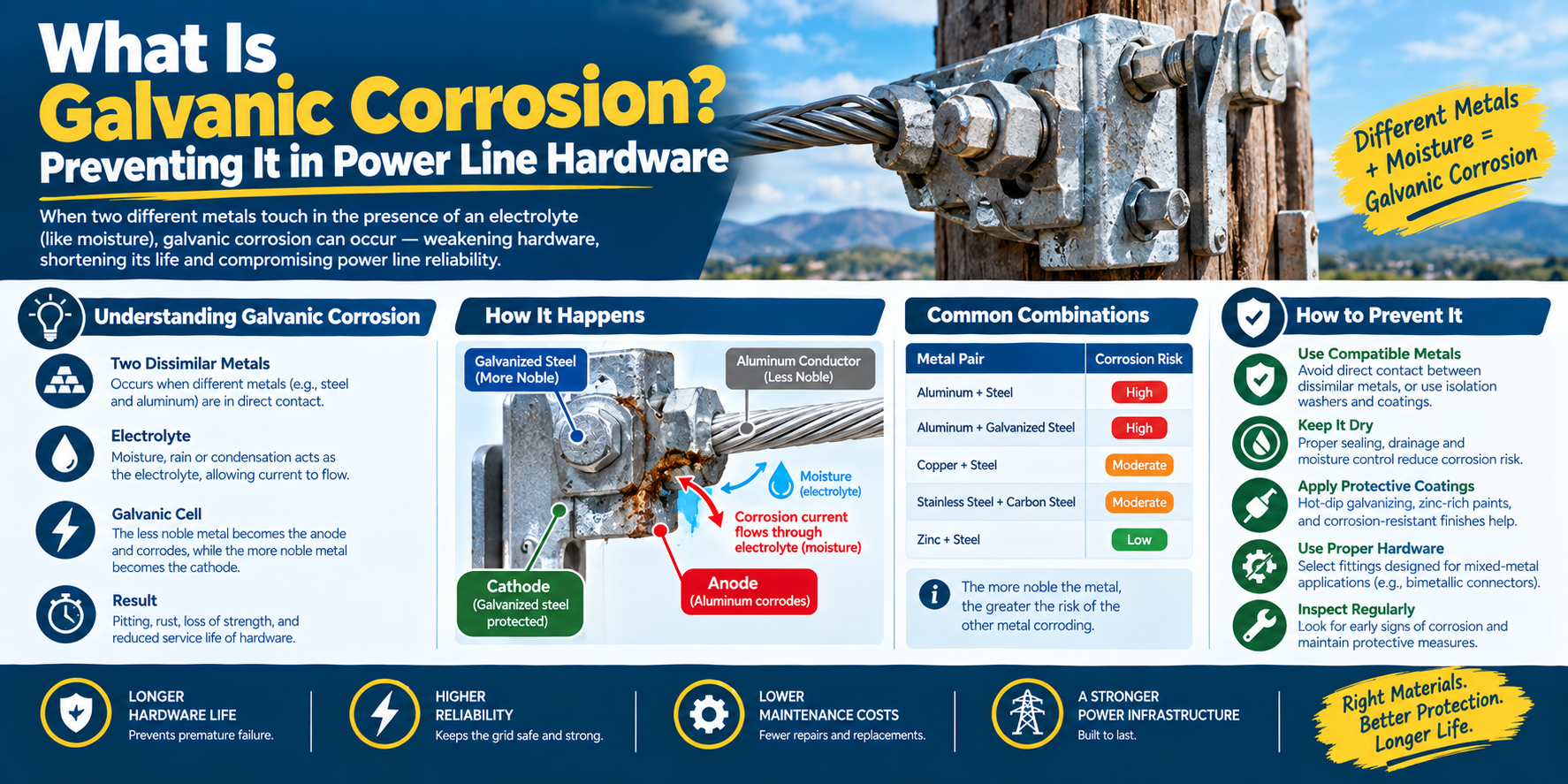
Hot-Dip Galvanized Coating: Protects against environmental damage and rust
Manufacturing Processes and Precision Engineering
1. High-Tonnage Forging (Guy Hooks)
Guy Hooks are produced using advanced hydraulic forging presses, which:
-
Eliminate internal voids and inclusions
-
Improve grain flow alignment
-
Enhance fatigue resistance
The forging process ensures structural integrity under repeated cyclic loading, making these components reliable partners for your Pole Line Hardware system.
2. Precision Stamping & Welding (Secondary Racks)
Secondary racks undergo automated stamping and robotic welding processes that deliver:
-
Consistent dimensional accuracy
-
Strong weld joints with minimal distortion
-
High repeatability for mass production
Tolerance control is maintained within ±0.5 mm, ensuring seamless field installation without modifications. Curved slots provide secure welding for curve racks, while 5/8″ studs with cotter pins protect insulators during stringing.
3. Hot-Dip Galvanization (HDG)
Corrosion resistance is a decisive factor in product lifespan.
The galvanization process complies with ASTM A153 and ISO 1461 standards, offering:
-
Coating Thickness: ≥ 610 g/m² (≈ 86 microns)
-
Salt Spray Resistance: Up to 1000 hours
-
Surface Finish: Smooth, uniform, and drip-free
This zinc coating forms a metallurgical bond with the steel, providing long-term protection even in aggressive environments.
Engineering Compliance and Global Standards
Interoperability with global utility systems is essential for international projects.
Chinese-manufactured Guy Hooks and Secondary Racks are engineered to align with:
-
ANSI C135.1 (Pole Line Hardware Dimensions)
-
ANSI C135.7 (Secondary Rack Specifications)
-
NEMA PH10 / PH1 (Guy Attachments & Secondary Supports)
-
IEEE 1213 (Mechanical Reliability)
-
ASTM A123 (Hot-Dip Galvanizing Standards)
-
ASTM A153 (Hardware Galvanizing)
-
GB/T 2694 (Chinese Transmission Standards)
-
ISO 9001:2015 (Quality Management)
Design Optimization Features
Guy Hook Design Features:
-
Curved Seat Geometry: Maximizes pole contact area and distributes shear loads
-
Reinforced Hook Profile: Prevents deformation under extreme tension
-
Optimized Hole Alignment: Ensures compatibility with standard bolt sizes (5/8″ and 3/4″)
Secondary Rack Design Features:
-
U-shaped steel channel design for structural rigidity
-
Mounted using bolts and nuts for secure attachment
-
Supports multiple conductors (typically 2–4)
-
Compatible with spool insulators
-
Rounded insulator post struts to prevent insulation damage during stringing
This allows seamless integration into existing infrastructure without redesign.
Types and Configurations
Guy Hook Types
| Type | Description | Best Application |
|---|---|---|
| Standard Guy Hook | Basic heavy-duty hook | Conventional utility applications |
| Threaded Guy Hook | Threaded end for secure bolting | Permanent installations requiring high security |
| Eye-Type Guy Hook | Closed connection for rings or attachments | Applications requiring swivel or pivot connections |
| Weld-On Guy Hook | Direct welding to brackets or plates | Custom fabrication projects |
| Swivel Guy Hook | Allows rotation to align with changing angles | Dynamic tension environments |
Secondary Rack Configurations
| Configuration | Spool Positions | Best Application |
|---|---|---|
| 1 Spool | Single | Light-duty telecom applications |
| 2 Spool | Dual | Parallel conductor support |
| 3 Spool | Triple | Common in distribution systems |
| 4 Spool | Quad | Heavy-duty setups with multiple conductors |
| 5 Spool | Five | High-density utility applications |
Key Features and Performance Metrics
Guy Hook Features
-
High-Strength Construction: Engineered to handle heavy loads from tensioned guy wires
-
Corrosion Resistance: Galvanized or coated surfaces protect against environmental wear
-
Secure Attachment: Hooked design locks the guy wire into place under tension
-
Ease of Installation: Simple fastening with bolts or threaded connections
-
Long Service Life: Able to withstand years of outdoor exposure without performance loss
Secondary Rack Features
-
High Load Capacity: Supports multiple conductors effectively
-
Corrosion Resistance: Galvanized coating ensures long-term outdoor use
-
Strong Structural Design: Maintains alignment under tension
-
Easy Installation: Simple bolt-on mounting system
-
Long Service Life: Designed for extended use in harsh environments
Applications Across Industries
Guy Hook Applications
-
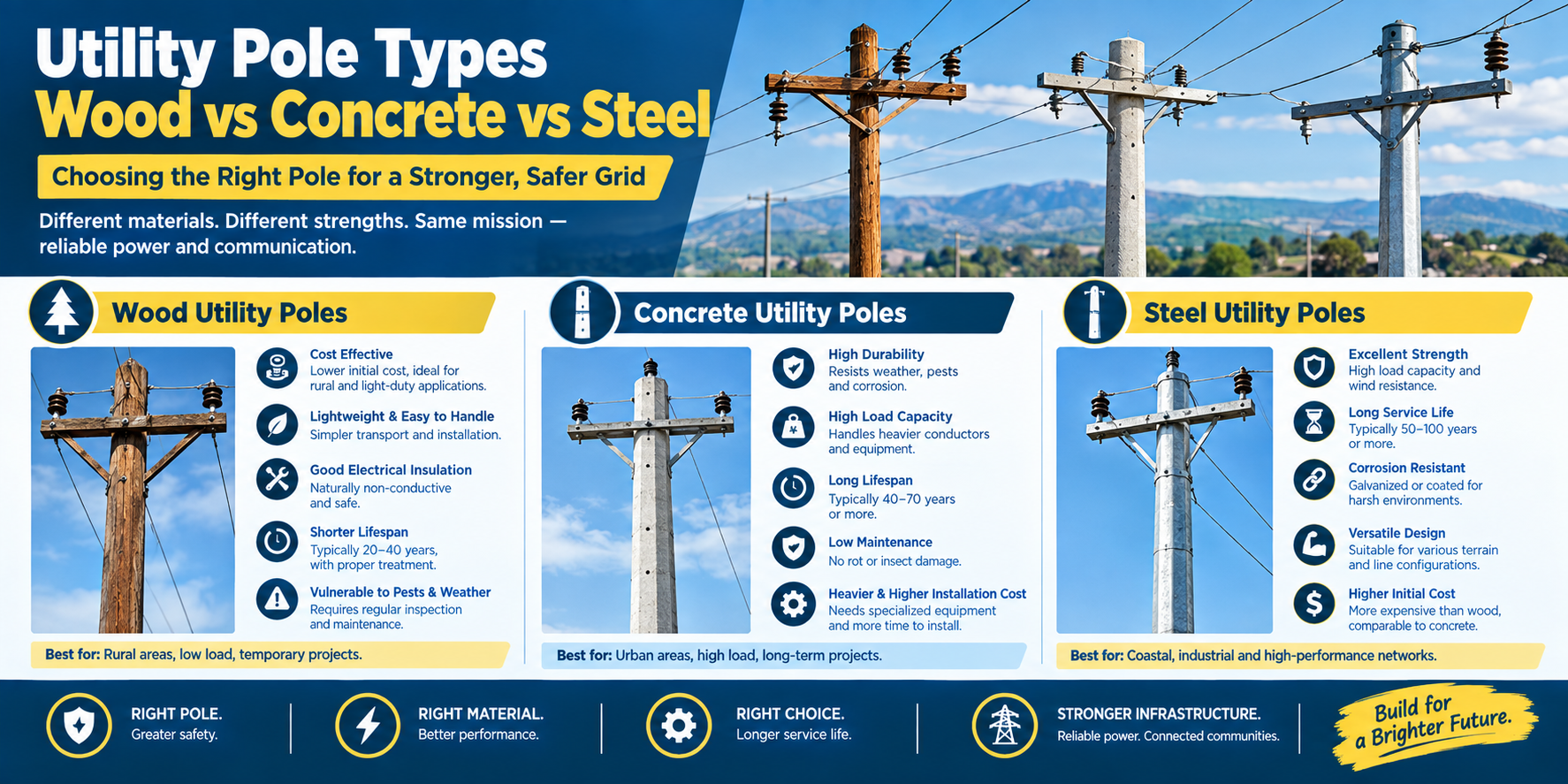
Utility Distribution Systems: Secure guy wires on wooden, steel, or concrete poles
-
Telecom Infrastructure: Stable wire attachment for telecom towers and structures
-
Transmission Line Structures: Supports higher tension guy wires in high-voltage networks
-
Street Lighting & Sign Poles: Keeps lighting and signage stable against winds
-
Industrial and Infrastructure Projects: Used wherever guying systems are required
Secondary Rack Applications
-
Power Distribution Systems: Supports conductors on utility poles
-
Telecom Networks: Cable management and support
-
Transmission Lines: Ensures proper conductor alignment
-
Railway Electrification: Supports overhead electrical systems
-
Rural Electrification Projects: Provides reliable infrastructure in developing regions
Total Cost of Ownership (TCO)
While initial purchase cost is often a deciding factor, long-term performance defines true value.
Cost Comparison Scenario
| Factor | Low-Quality Hardware | Premium Hardware |
|---|---|---|
| Initial Cost | Low | Moderate |
| Lifespan | 3–5 Years | 15–25 Years |
| Maintenance | High | Minimal |
| Failure Risk | High | Very Low |
A marginal saving of $0.50 per unit can result in thousands of dollars in replacement and labor costs over time.
Fatigue Resistance Advantage
Using Q345B steel (ASTM A572 equivalent), premium hardware exhibits superior resistance to:
-
Thermal expansion cycles
-
Wind-induced oscillations
-
Mechanical vibration
This significantly extends the installation-to-failure cycle.
Quality Assurance and Inspection Protocols
A robust QA framework ensures product consistency and reliability.
Testing Procedures
1. Chemical Composition Analysis
Spectrophotometry verifies elemental composition to ensure conductivity and strength match the Material Test Report (MTR).
2. Mechanical Load Testing
Destructive pull tests confirm Rated Ultimate Strength (RUS), ensuring components meet or exceed minimum ultimate strength values.
3. Coating Thickness Measurement
Magnetic gauges ensure uniform galvanization per ASTM A153 standards.
4. Salt Spray Testing
Conducted according to ISO 9227 to verify corrosion resistance.
Third-Party Verification
Independent inspections can be conducted by globally recognized agencies such as:
-
SGS
-
TÜV
-
Intertek
This ensures transparency and eliminates procurement risk.
Logistics and Supply Chain Efficiency
Strategic Manufacturing Locations
Facilities located near major export hubs such as Ningbo and Shanghai enable:
-
Faster port access
-
Reduced inland transportation delays
-
Efficient container loading
Production & Delivery Timelines
-
Standard Lead Time: 21–30 days
-
Prototype Development (ODM): 7–10 days
-
Bulk Orders: Scalable to national grid requirements
Packaging Standards
To prevent damage during transit:
-
Reinforced wooden crates
-
Steel pallet packaging
-
Anti-abrasion separators
These methods protect the galvanized surface from scratches and corrosion.
OEM and Customization Capabilities
Modern projects often require tailored solutions.
Manufacturers offer:
-
Custom spool spacing (8″, 10″, 12″)
-
Modified hook radii
-
Special coating thickness requirements
-
Private labeling (OEM branding)
Rapid tooling adjustments allow quick adaptation to project specifications.
Addressing Global Sourcing Challenges
International buyers often face concerns such as:
-
Lack of transparency
-
Inconsistent quality
-
Communication barriers
These challenges are mitigated through:
-
Detailed documentation (CAD drawings, MTR reports)
-
Real-time production updates
-
Pre-shipment inspection reports
-
Clear Incoterms (FOB, CIF, DDP)
Sustainability and Environmental Considerations
Modern manufacturing also emphasizes sustainability:
-
Recyclable steel materials
-
Environmentally controlled galvanization processes
-
Reduced waste through automated production
This aligns with global ESG (Environmental, Social, Governance) requirements.
Future Trends in Pole Line Hardware
The industry is evolving with advancements such as:
-
Smart grid integration
-
Higher load capacity requirements
-
Corrosion-resistant alloy coatings
-
Digital quality tracking systems
Manufacturers are investing in R&D to meet these future demands.
FAQs
Q1: Are these products compatible with US infrastructure?
Yes, they conform to ANSI standards and match standard pole drilling patterns.
Q2: What is the difference between a guy hook and a guy clamp?
A guy hook provides an anchor point for the guy wire, securing it to the pole. A guy clamp secures and tensions the guy wire itself, often used in conjunction with guy hooks.
Q3: What zinc coating thickness is guaranteed?
Minimum 86 microns (610 g/m²) as per ASTM A153 Class B requirements.
Q4: How is hydrogen embrittlement prevented?
Through controlled heat treatment and post-pickling baking processes.
Q5: Can products be customized?
Yes, full OEM/ODM services are available.
Q6: What documentation is provided?
MTR reports, inspection certificates, and compliance documentation.
Q7: What is the typical spacing between insulators on a secondary rack?
Standard secondary racks provide 8″ spacing between insulators.
Conclusion: Strengthening the Global Grid
As global energy demand increases and infrastructure expands, the importance of reliable pole line hardware cannot be overstated.
Guy Hooks and Secondary Racks are not just components—they are foundational elements of grid stability. Choosing the right supplier ensures:
-
Long-term operational reliability
-
Reduced maintenance costs
-
Enhanced safety standards
By leveraging advanced manufacturing capabilities, buyers gain access to high-performance hardware that meets the world’s most stringent engineering requirements.
Ready to Upgrade Your Pole Line Hardware Infrastructure?
Explore our complete range of utility pole components:
-
Guy Hook – Secure guy wire anchoring for utility poles
-
Secondary Rack – Reliable insulator and conductor support
-
Pole Line Hardware – Complete solutions for utility pole construction
-
Stay Rods – Stabilize utility poles under heavy tensile loads
-
Ground Anchors – Reliable anchoring for poles and structures
-
Insulators – Electrical isolation for conductors
-
Steel Cross Arms – Structural support for conductors
Need help selecting the right hardware for your project? Our engineering team is available for technical support and product recommendations. Contact us today to discuss your specific requirements.Secure your supply chain with precision-engineered solutions designed for durability, compliance, and scalability.