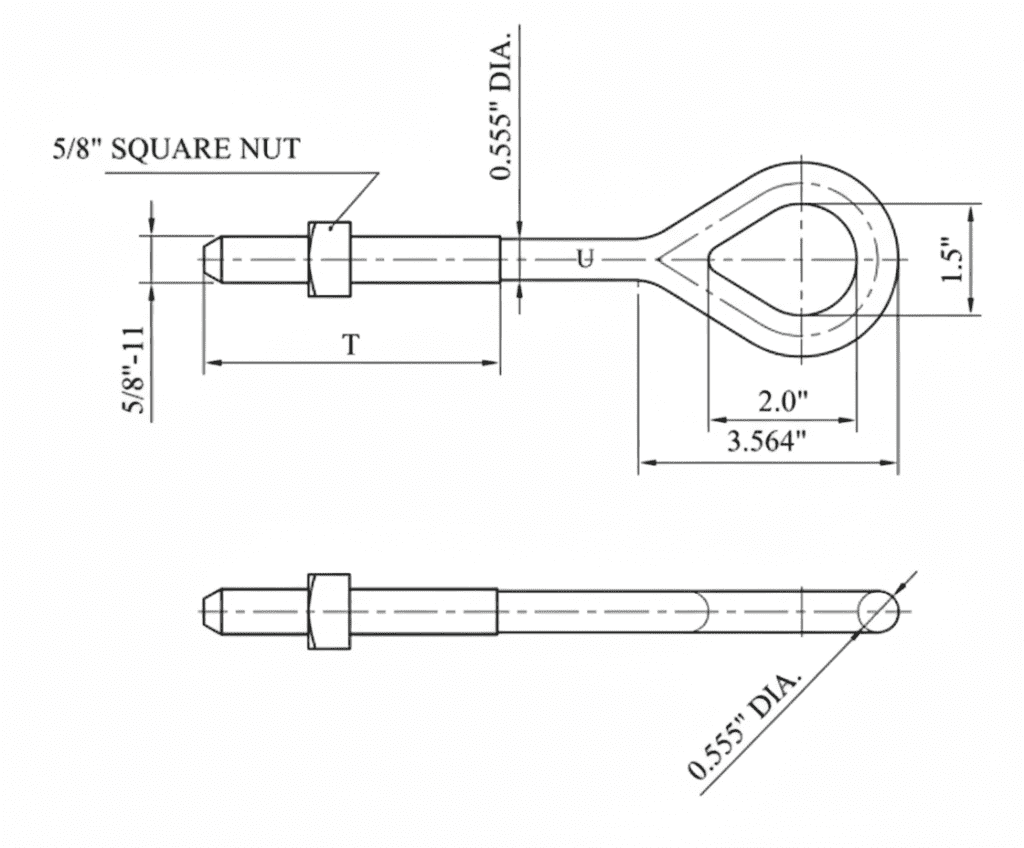


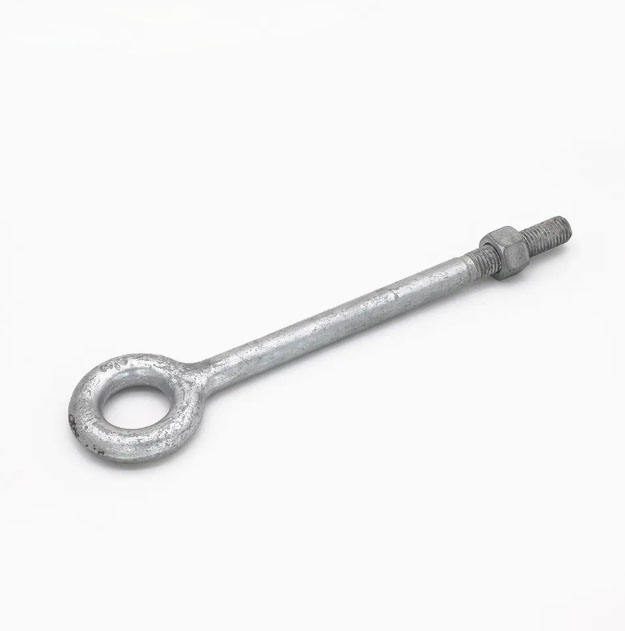
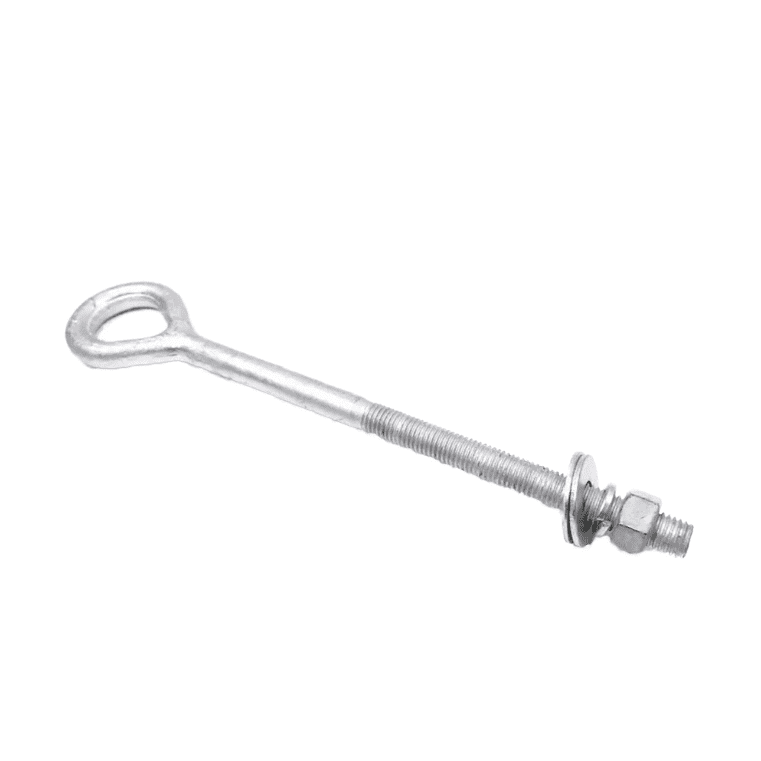
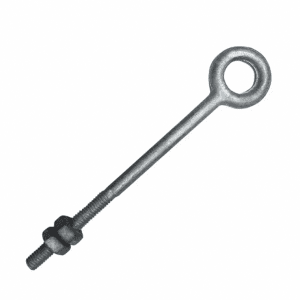
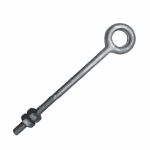
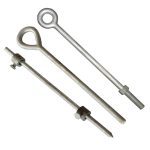
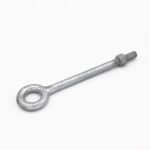
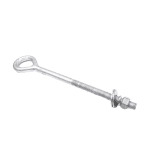
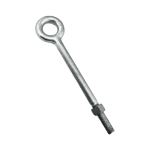
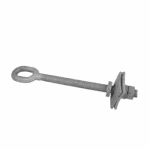
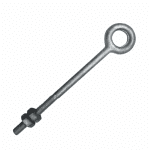
Description
Why “Forged” Is the Word That Matters on an Eye Bolt
An eye bolt is simple to picture: a bolt with a loop at one end. But how that loop is made decides whether it holds, and on a load-bearing line, it’s the whole specification.
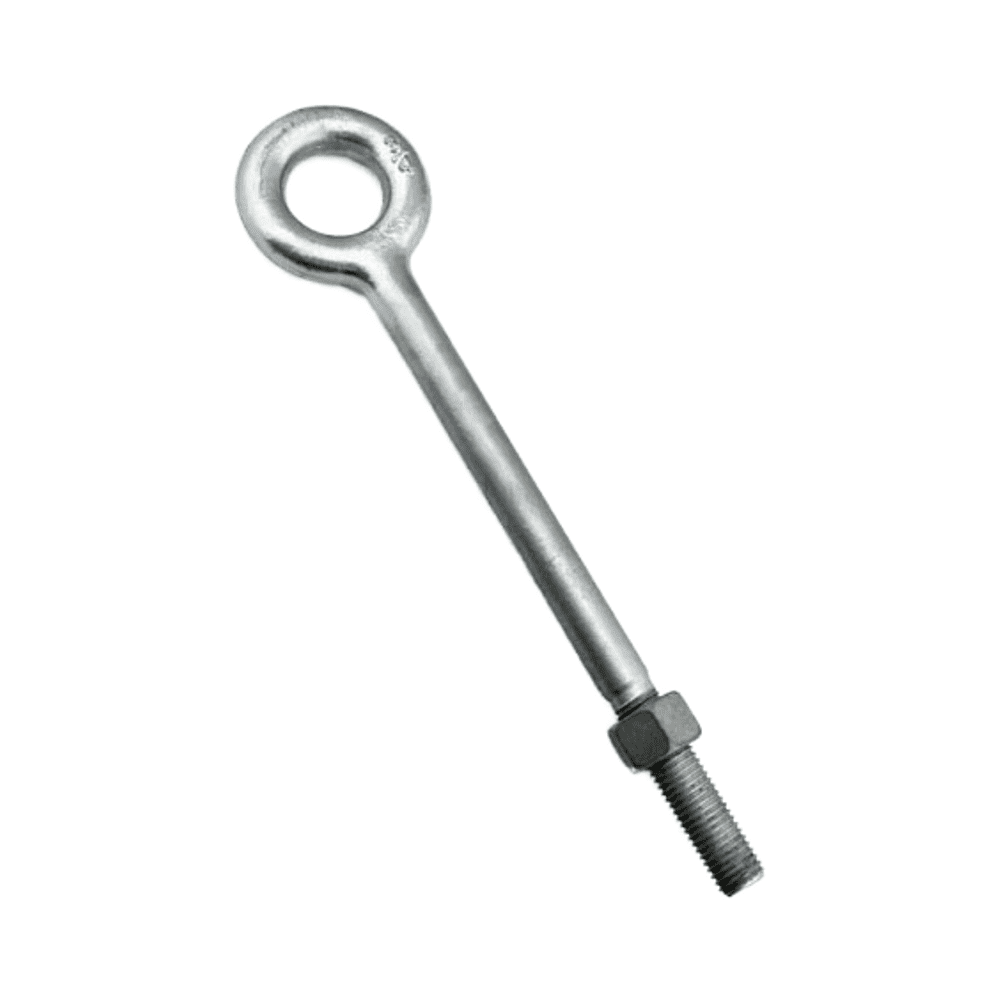
An eye can be forged hot-formed from the shank’s own metal so the loop is one continuous piece with the bolt, or it can be cut/bent from bar or, worse, welded closed. Only the forged eye keeps the metal’s grain flowing unbroken around the loop. A cut or bent eye severs that grain; a welded eye puts a joint exactly where the load concentrates. Under tension, cut and welded eyes fail at the eye; a forged eye carries the load through continuous, aligned metal.
That’s why load-bearing line hardware specifies forged eye bolts. This page covers them for pole-line use: why forged wins, the eye forms available, and how to specify.
Forged vs Cut vs Welded: The Difference That Decides
The eye of a bolt carries the full load applied to it, so how the eye is made is not cosmetic:
- Forged eye hot-worked from the parent metal, grain flow continuous around the loop, no joint. Strongest, and the standard for structural line hardware.
- Cut or bent eye formed by cutting or bending bar; the grain is severed or sharply distorted at the loop, creating a weaker section.
- Welded eye a loop welded closed; the weld is a discontinuity precisely at the highest-stress point, and a potential failure origin.
For a bolt that anchors a guy, connects a link, or carries a fitting under load, forged is the construction that earns the specification and it’s the same principle behind our upset bolts (upset-forged heads) and thimble eye bolts (forged eye with a thimble groove): the load path runs through formed, continuous metal, not through a cut or a weld.
Why Buyers Choose DAPENG Forged Eye Bolts
- Forged eye, continuous grain: The eye is forged in one piece with the shank no cut section, no weld, at the point that carries the load.
- Hot-dip galvanized for the connection’s life: Galvanized to ISO 1461 / ASTM A153 class coatings, matched to the hardware the bolt connects.
- Sized to your assembly: Diameter, length, thread, and eye opening to the link, guy, or fitting it connects with the eye sized to what passes through it.
- Supplied complete: Kitted with the nuts, eye nuts and washers the connection needs.
- Volume for the build: Cartons counted and marked by size, batched to your programmer.
Use-Case Deep Dive
What is a forged eye bolt used for on a pole line?
Providing a load-bearing eye an anchor loop where hardware, a link, or a guy connects to a structure. Common uses: an anchor point for guy and stay hardware; a connection eye for links and fittings; a mounting eye for equipment that hangs or pulls. The forged eye takes the load a plain bolt head couldn’t, through a loop strong enough to carry the connection. Where a wire loop bears directly on the eye and needs protecting from kinking, the thimble eye bolt (grooved eye) is the better choice; where hardware or a link pins to the eye, the forged eye bolt is right.
How do I specify a forged eye bolt?
Four things. Eye opening to what passes through it (the pin, link, shackle, or hardware). Diameter and length to the connection’s load and the structure it fixes to. Thread for the nut projection your standard wants. Coating (hot-dip galvanized for outdoor service). Send what connects to the eye and what the bolt fixes into, and we return it sized to both.
Forged eye, thimble eye, or oval eye which do I need?
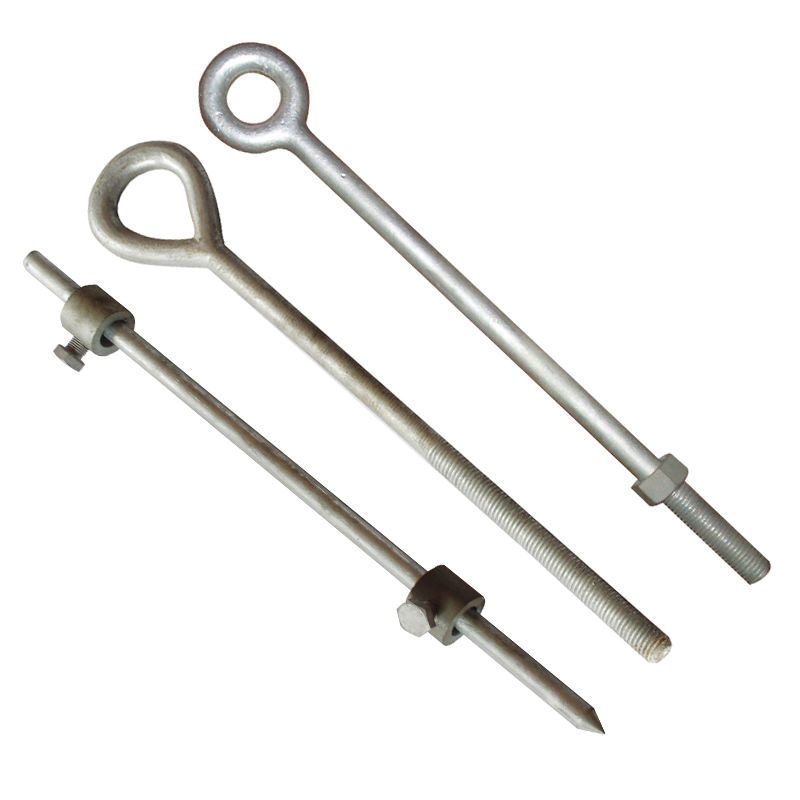
- Forged (round) eye bolt a plain forged loop for connecting hardware, links, and fittings that pin or shackle to it.
- Thimble eye bolt a forged eye with a thimble groove to protect a wire loop under tension (guy and drop-wire anchoring).
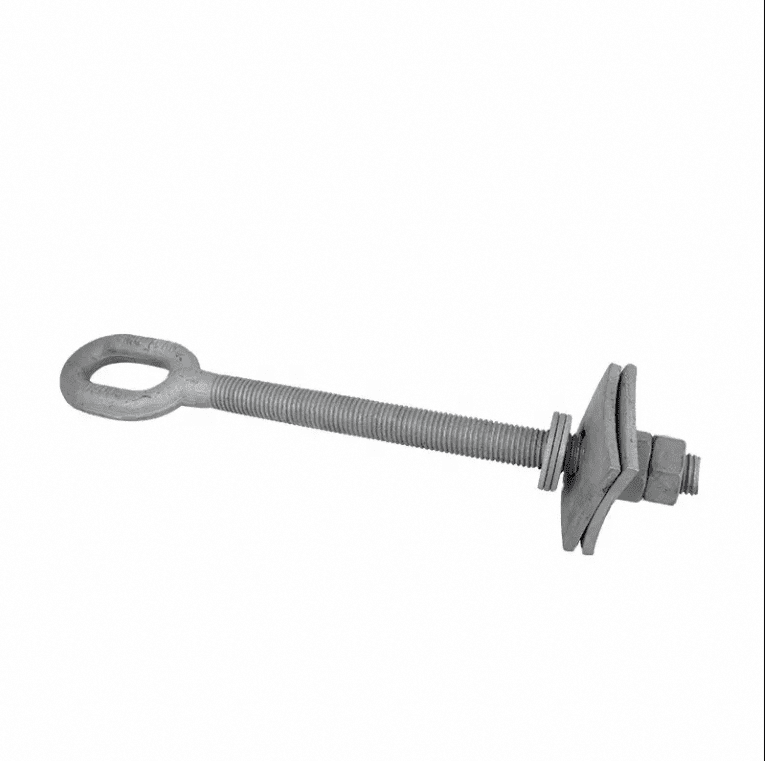
- Oval eye bolt (EB series) a forged oval eye suiting particular link and coupling geometries.
If hardware pins to the eye, forged round; if a wire bears in it, thimble; if the geometry wants an oval, the EB oval eye. All are forged the eye form follows the connection. Tell us what connects and we confirm.
Specifications and What They Mean for You
| Specification | What we supply | What it means for the buyer |
|---|---|---|
| Eye | Forged in one piece | Load through continuous grain; no cut or weld to fail |
| Material & coating | HDG to ISO 1461 / ASTM A153 class | Matches the hardware’s corrosion life |
| Sizes | Diameter, length, eye opening to your assembly | Fits what pins through and what it fixes to |
| Threads | Cleared, nut run before packing | Installs on site after galvanizing |
| Pairing | Nuts, eye nuts, washers matched | Connection assembles complete |
| Verification | Batch testing, material certificates | Grade and strength on tested figures |
Straight Answers to Common Buyer Concerns
“How do I know the eye is forged, not cut or welded?” Ask for the manufacturing description on the quotation and check a sample: a forged eye shows continuous formed metal around the loop with no weld seam and no sheared bar face. Material certificates confirm the grade; batch tests confirm the strength. On a load-bearing eye bolt, how the eye is made is the specification a supplier who can’t state it is one to question.
“Can you match a utility standard or a legacy eye bolt?” Send the standard reference, the eye and shank detail, or a sample. Manufacturing forged eye bolts to a utility’s specification (eye form and opening, diameter, length, thread, grade, marking) is routine export work, with confirmation before production.
“We need volume handled?” Yes a volume item, quoted and packed as one, cartons marked by size, kitted with nuts and washers if you want the connection complete off the pallet.
Complete the Assembly
- Thimble eye bolts the grooved-eye version for wire loops under tension
- Eye nuts the eye-form nut counterpart
- Hex bolts and nuts, square washers the nuts and washers that complete the bolt
- Square head machine bolts, double arming bolts, upset bolts, U bolts, pigtail bolts the wider bolt range
- Guy grips, guy clamps, stay rods the guy/stay hardware a forged eye anchors
- Pole line hardware and all overhead line fittings
Get a Connection-Matched Quote Within 24 Hours
Send what connects to the eye (pin, link, shackle, or wire), what the bolt fixes into, and your sizes and quantities or the standard you build to. Our team returns forged eye bolts sized to the connection, in the eye form and coating your project needs, kitted with nuts and washers, typically within one working day.
After You Order
Size and eye-form confirmation before production, material certificates with shipment, threads run and cleared, cartons marked by size and kitted with the assembly hardware, and an engineering contact who answers quickly because the eye carries the connection, and a supply question on it shouldn’t hold up the hardware it anchors.