
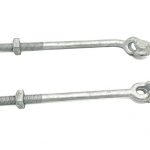
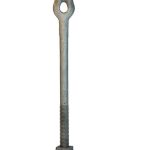
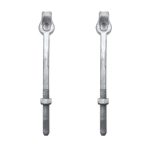
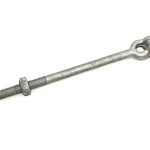
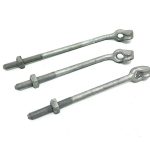
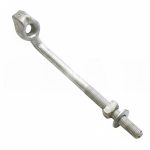
Description
The Anchor That Holds a Wire Without Cutting Into It
At the end of every guy stay and every drop-wire span, the wire has to be anchored to something solid a pole, a wall, a structure. The bolt that does it faces a quiet mechanical problem: a wire loop pulled tight over a plain, sharp-edged eye kinks at the bend. Under tension and years of wind, the strands at that kink work-harden and crack, and an anchor rated for tonnes slowly loses strength at the one point no one inspects.
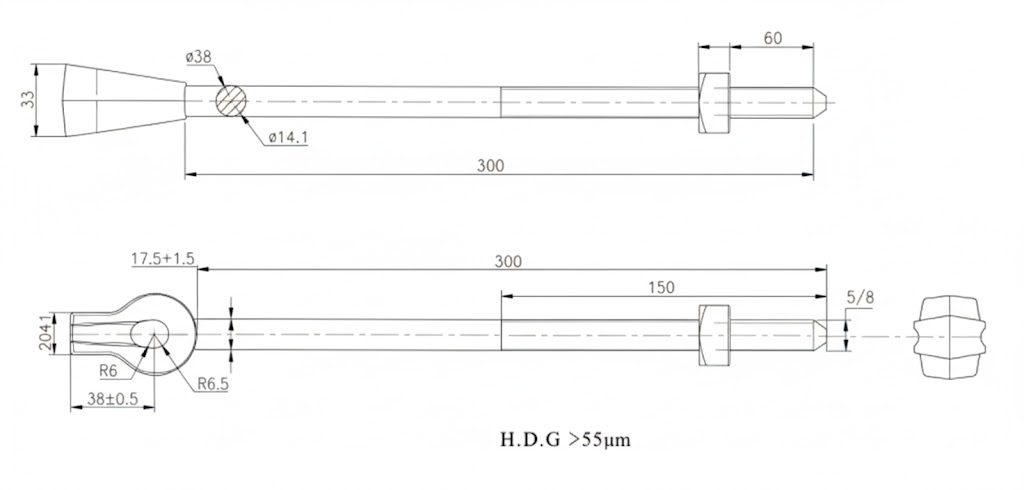
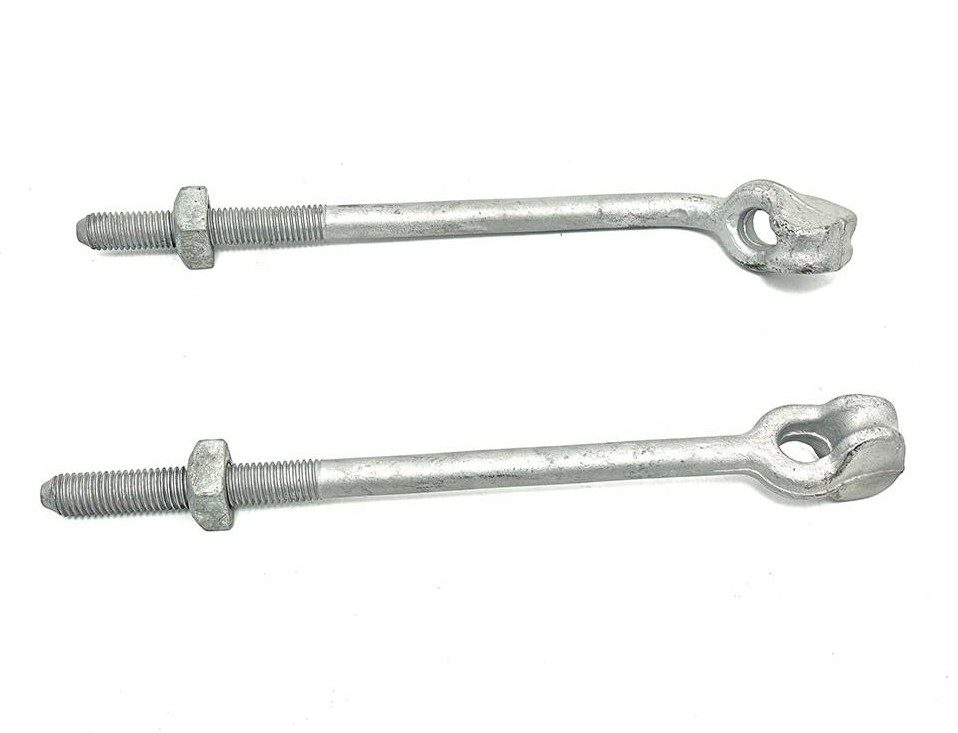
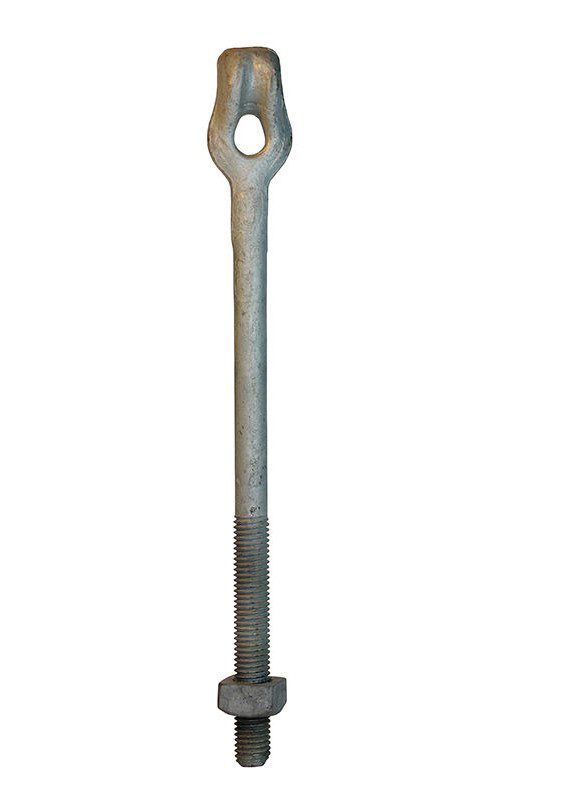
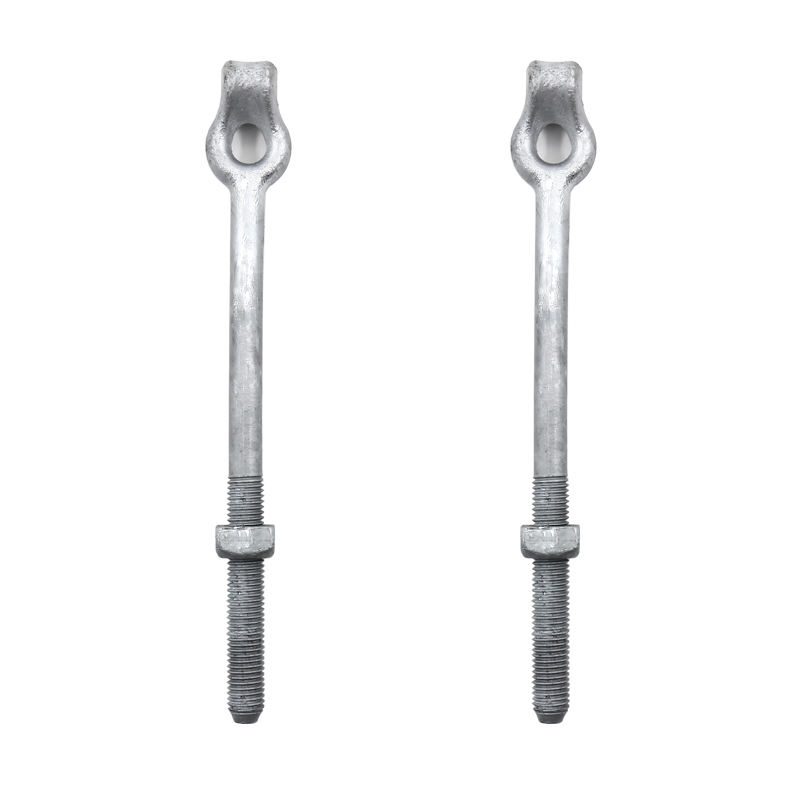
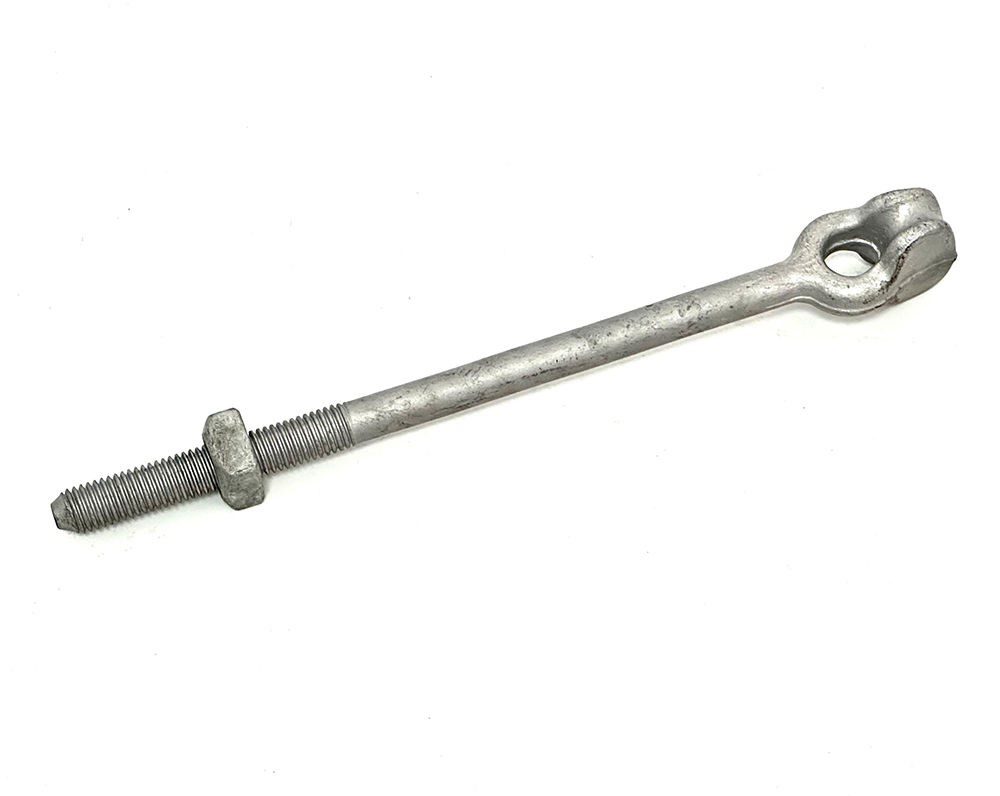
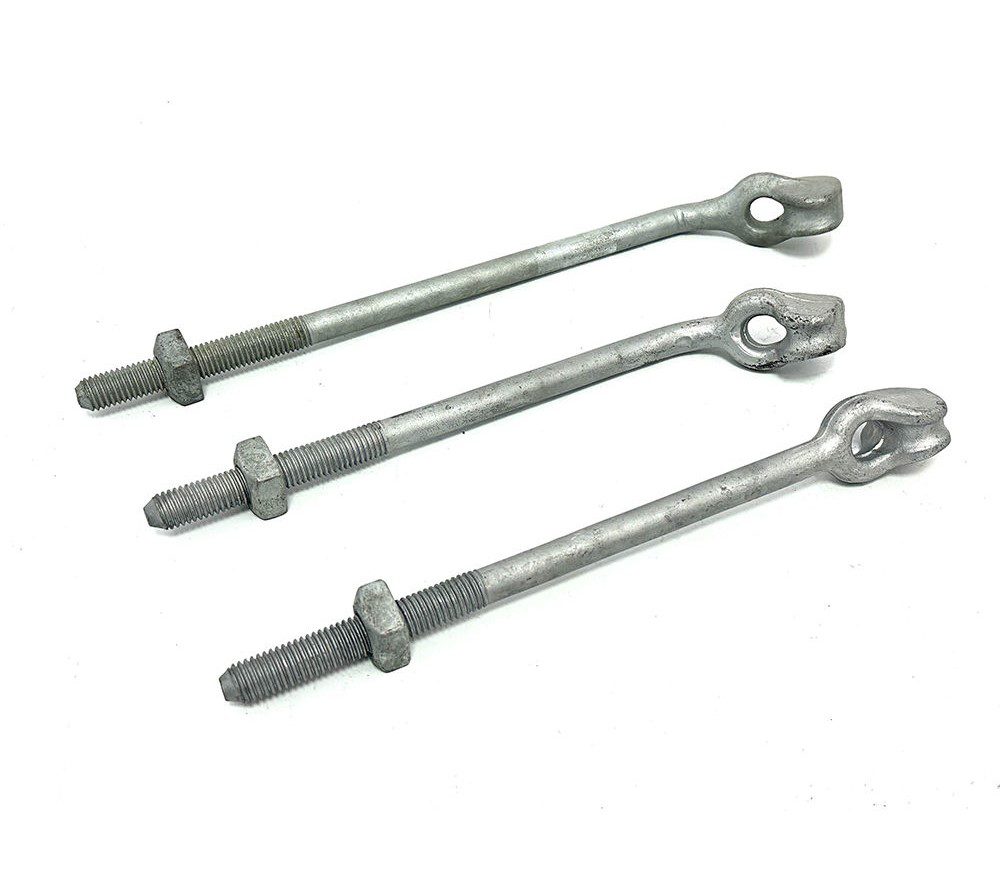
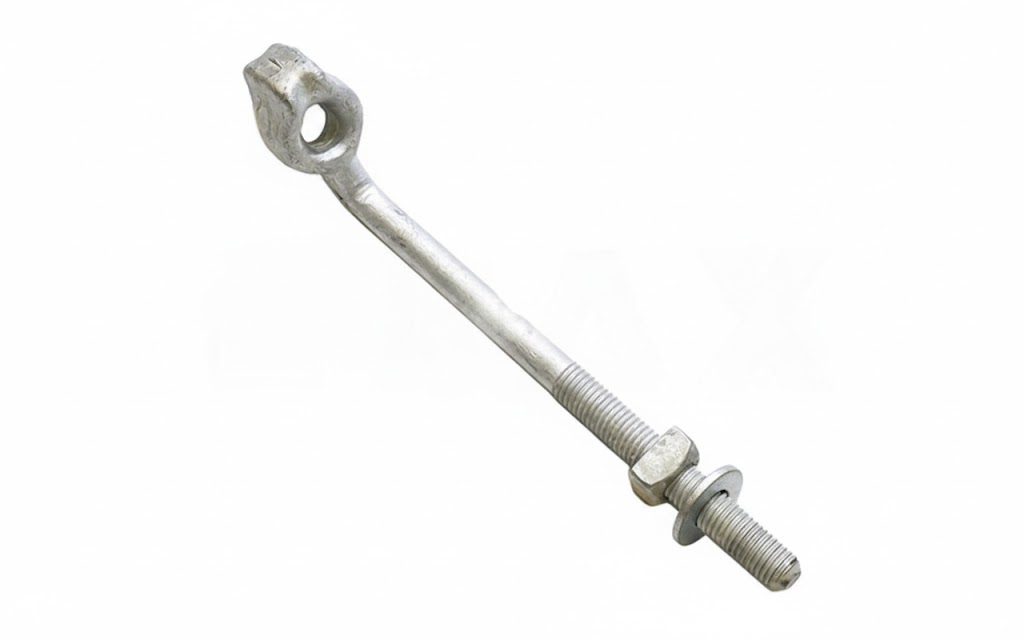
The thimble eye bolt solves it by building the protection into the bolt. Its eye carries an integral thimble groove a smoothly curved seat that supports the wire loop over a broad radius instead of a sharp bend, spreading the bearing so every strand is protected. The threaded shank fixes the bolt to the structure; the grooved eye holds the wire the way the wire needs to be held.
This page covers thimble eye bolts for guy and drop-wire anchoring: what the thimble does, where the bolt belongs, and how to size it.
Why the Thimble Groove Matters
The groove is the whole point of the product, and it does the same job as a separate galvanized thimble dropped into a wire eye but built into the bolt as one forged piece:
- It supports the loop over a curve, not an edge. A wire loop bearing on a broad radius distributes stress along the strand; a loop bent tight over a sharp eye concentrates it at one point and fatigues there.
- It protects the wire from the anchor. Metal-to-metal at a sharp edge saws; the thimble’s smooth seat cradles.
- It’s one part, not two. No separate thimble to source, stock, or fumble at height the seat is part of the bolt, so the assembly is simpler and nothing falls from a lineman’s hand up the pole.
It’s the same principle as our thimble clevis: protect the wire where it bears, and the connection outlives the strand instead of failing before it.
Why Buyers Choose DAPENG Thimble Eye Bolts
- Forged eye with a true thimble seat: The eye and its groove are forged as one with the shank no weld, and a groove radius sized to seat the strand it carries.
- Hot-dip galvanized for the anchor’s life: Galvanized to ISO 1461 / ASTM A153 class coatings, at a fitting that carries full stay or drop tension permanently, often at a wall or pole face exposed to everything.
- Threads that fit the structure: Shank length and thread sized to the pole, wall fixing, or plate it anchors into, with the nut run and cleared before packing.
- Rated for the load it anchors: The bolt’s rating meets or exceeds the strength of the wire it terminates, so the anchor is never the weak link.
- Supplied with the assembly around it: Thimble eye bolts ship with the guy grips, drop wire clamps, nuts and washers they work with matched and kitted.
Use-Case Deep Dive
What is a thimble eye bolt used for?
Anchoring a wire under tension to a structure, with the wire loop protected by the thimble seat. Two main jobs:
- Guy and stay anchoring at the pole or structure end of a guy wire stay, the thimble eye bolt provides the fixed anchor point the guy grip or guy clamp loop seats into, protecting the stay wire at the termination.
- Drop-wire anchoring at the building or pole end of a telecom or service drop, the thimble eye bolt is the wall/pole anchor the drop wire clamp hangs from, setting and holding the drop’s tension.
In both, the thimble seat protects the most vulnerable point the wire loop at the anchor from the fatigue a plain eye would cause.
How do I size a thimble eye bolt?
Three things. The thimble groove should suit the wire or loop it carries the strand size or the grip loop that seats on it. The shank diameter and length must suit the structure it anchors into (pole thickness, wall fixing depth, or the plate it passes through) and give proper nut projection. The rated load must meet or exceed the rated strength of the wire it terminates, with your standard’s margin the anchor bolt should never be the weak point of a stay you won’t inspect for years. Send the wire size, the structure it anchors to, and the stay or drop tension, and we return the bolt matched to all three.
Thimble eye bolt, forged eye bolt, or oval eye bolt which do I need?
The eye form decides it. A thimble eye bolt has the grooved thimble seat choose it where a wire or strand loop bears on the eye and needs protecting (guy and drop-wire anchoring). A forged eye bolt has a plain round eye for connecting hardware, links, or fittings that don’t need a thimble seat. An oval eye bolt suits particular link and coupling geometries. If wire bears directly on the eye, you want the thimble; if hardware pins to it, a plain eye usually serves. Tell us what seats in the eye and we’ll confirm we make the range, so the answer is about the application, not the sale.
Specifications and What They Mean for You
| Specification | What we supply | What it means for the buyer |
|---|---|---|
| Eye form | Forged thimble-grooved eye | Protects the wire loop from kinking and fatigue |
| Material & coating | HDG to ISO 1461 / ASTM A153 class | Decades of service at a full-tension anchor |
| Groove | Radius sized to the strand/loop | The wire beds on a curve, not an edge |
| Shank & thread | To the structure and load | Anchors securely with proper nut projection |
| Rated load | Meets/exceeds the wire’s strength | The anchor is never the weak link |
| Pairing | Kitted with grips, clamps, nuts, washers | The anchor assembly arrives complete |
Straight Answers to Common Buyer Concerns
“Why not use a plain eye bolt and a separate thimble?” You can, and sometimes a separate galvanized thimble in a plain eye is exactly right. But the integral thimble eye bolt is one part instead of two nothing to source separately, stock separately, or drop at height with the groove already sized and positioned. Where the connection is standardized (guy and drop-wire anchors usually are), the one-piece bolt is simpler to specify, stock, and install correctly. Where flexibility matters, the plain-eye-plus-thimble route stays open, and we supply both.
“How do we know the eye won’t fail at full stay tension?” Because it’s forged in one piece and tested: the eye and groove are formed with the shank so the load runs through continuous metal, rated loads are batch-verified with reports supplied, and galvanizing is checkable with a gauge on arrival. On an anchor bolt carrying a stay you won’t revisit for years, the eye’s construction is the specification and ours is forged, not cut or welded, at exactly that point.
“Can you match a utility standard or a legacy anchor?” Send the standard reference, the wire size, and the structure detail or a sample of the bolt you’re replacing. Manufacturing thimble eye bolts to a utility’s specification (eye form, groove, shank, thread, marking, grade) is routine export work, with confirmation drawings before production. A stay designed to a standard deserves the anchor bolt that standard specifies.
Complete the Assembly
- Guy grips, guy clamps, guy wire – the guy/stay the thimble eye bolt anchors
- Drop wire clamps – the drop the thimble eye bolt anchors at the building end
- Galvanized thimbles and thimble clevises – the separate-thimble and clevis alternatives
- Forged eye bolts and eye nuts – plain-eye fittings for hardware connections
- Stay rods, stay plates, anchor rods – the ground-anchor end of the stay
- Hex bolts and nuts, square washers – the nuts and washers that complete the anchor
- Pole line hardware and all overhead line fittings
Get a Wire-Matched Quote Within 24 Hours
Send the wire size the eye will carry, the structure it anchors to (pole, wall, or plate), the stay or drop tension, and your quantities. Our team returns thimble eye bolts matched to the wire and the structure, in the coating your project needs, kitted with the grips, clamps, nuts and washers of the assembly, typically within one working day.
After You Order
Size and eye-form confirmation before production, material certificates and batch load-test reports with shipment, threads run and cleared, cartons marked by size and kitted with the assembly hardware, and an engineering contact who answers quickly because anchors are where a stay’s tension lives, and a supply question on the anchor bolt shouldn’t hold up the stay.