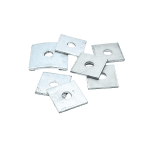
Description
A Small Fitting That Stops Two Specific Problems
A square washer isn’t a fitting anyone writes home about until you’ve seen what happens without the right one. Two problems, both quiet, both expensive over a line’s life:
A bolt head or nut sinking into timber. Tighten a machine bolt against a wooden crossarm and the concentrated load crushes the wood fibres; the joint loosens as the timber compresses and weathers, and a connection that was tight on installation day is slack a season later. A washer spreads that load over a wider area so the timber holds.
A washer that turns. A round washer can rotate as the nut is tightened, and on some fittings that rotation lets the assembly work loose or bind. A square washer seated against a square-shouldered bolt, a channel, or a flat that stops it turning stays put while the nut does the moving.
That is the entire job, and it is why pole-line hardware specifies square washers where it does: spread the load, resist the rotation. This page covers sizing them to your bolts and the pole-line applications they belong in.
Why the Square Shape Matters
The shape is the specification. A square washer does two things a round one can’t do as well:
- It resists rotation. Seated against a square bolt shoulder, inside a channel, or against another square feature, the flat sides stop the washer spinning as the nut is torqued keeping the clamping load where it was set.
- It spreads load over a larger, flatter footprint particularly valuable on timber, where a bigger bearing area means less crushing of the wood and a joint that stays tight as the timber seasons.
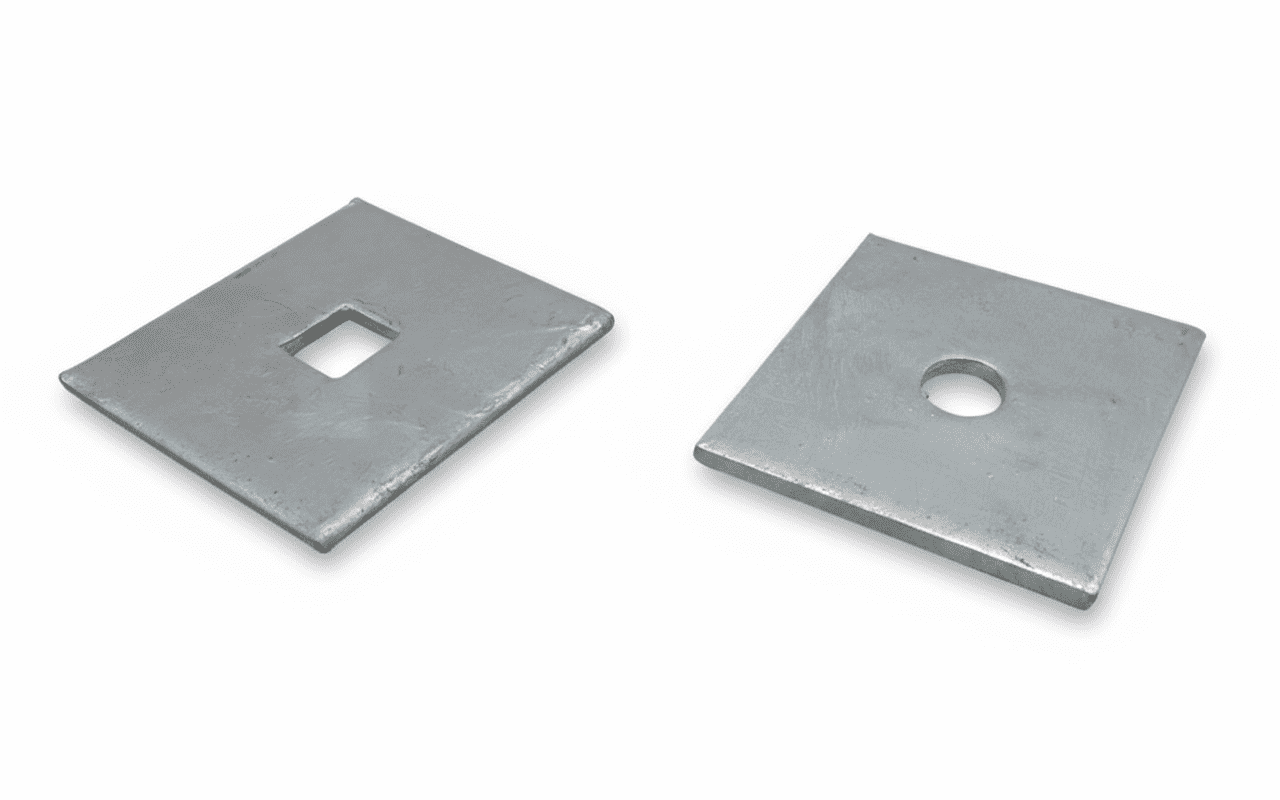
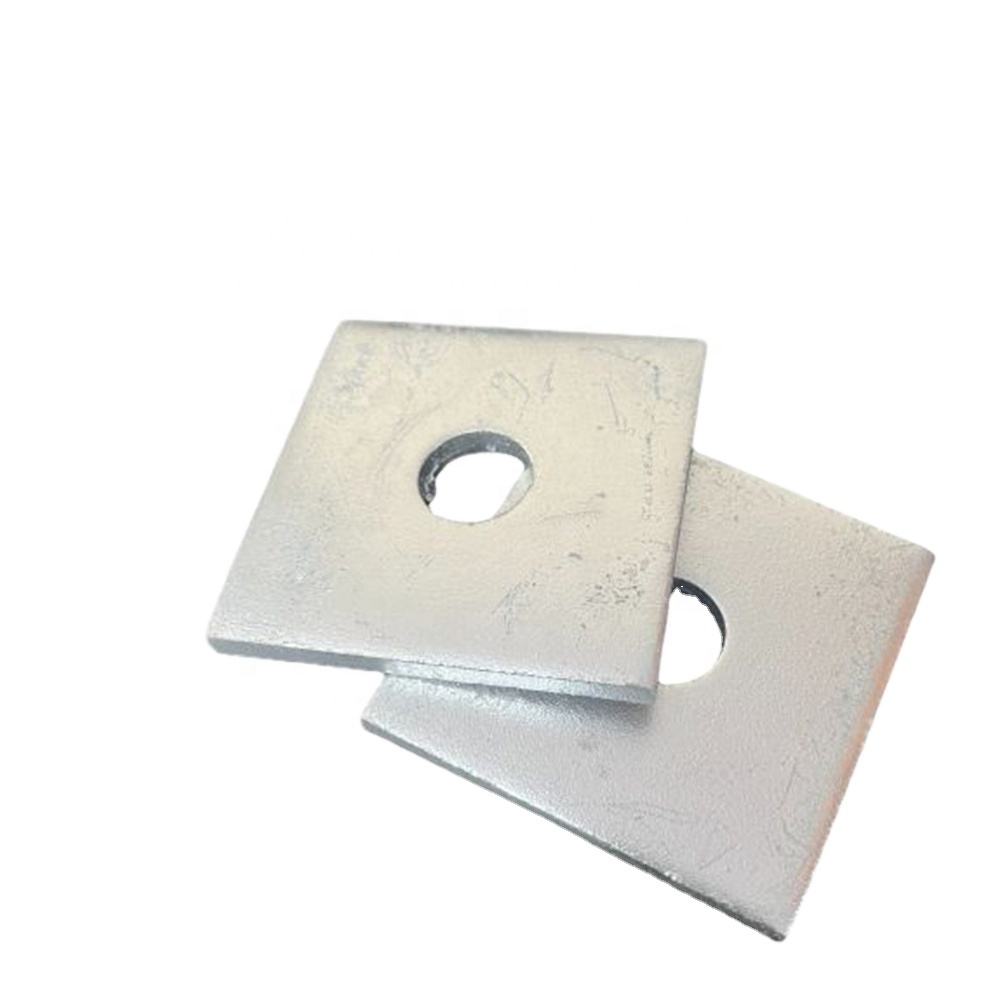
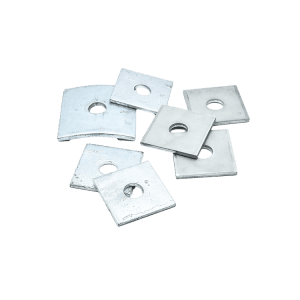
On curved (round-hole) square washers, the bearing face is shaped to sit against a round pole or a curved crossarm surface, so the washer beds properly instead of rocking on an edge.
Why Buyers Choose DAPENG Square Washers
- Hot-dip galvanized for the life of the joint: Galvanized to ISO 1461 / ASTM A153 class coatings, because a washer is buried in the joint where nobody re-coats it and its corrosion resistance has to match the bolt it serves.
- Sized to your bolts, not to a generic pattern: Hole diameter, washer size, and thickness matched to the machine bolts, arming bolts, and other fasteners they pair with a washer whose hole is a hair too small stops an assembly at the crossarm.
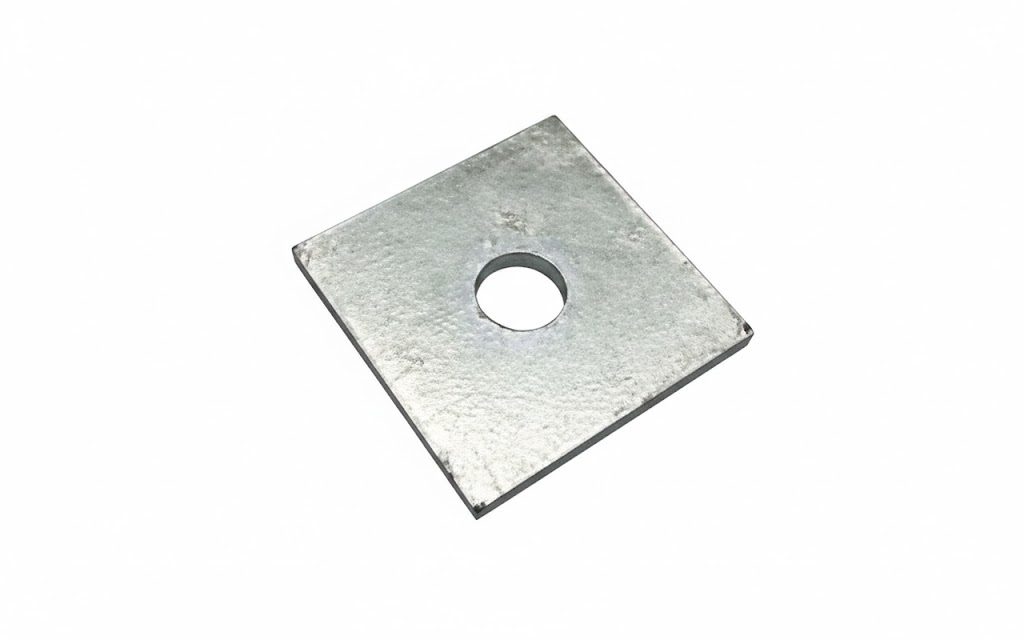
- Flat and true: Pressed and finished so the washer beds flat and spreads load evenly rather than bearing on one edge the small manufacturing detail that decides whether the load actually spreads.
- Volume that matches the project: Square washers are consumed by the thousand alongside their bolts; cartons counted and marked so stores issue the right size, production batched to your programmer.
- Kitted with their bolts from one factory: Washers ship with the square head machine bolts, double arming bolts, and other bolts and nuts they pair with matched sizes, kitted per assembly, so a crew isn’t hunting for the right washer at the pole.
Use-Case Deep Dive
What is a square washer used for on a pole line?
Wherever a bolt bears on timber or needs to be stopped from turning. The classic applications: under the head and nut of machine bolts and double arming bolts through wooden crossarms; on through-bolted crossarm and brace connections; and anywhere a channel or square feature calls for a non-rotating washer. The square washer spreads the bolt’s clamping force across the timber so the wood doesn’t crush and the joint doesn’t loosen as it weathers. On steel structures the load-spreading still helps; the anti-rotation feature earns its place wherever the assembly geometry allows the washer to turn.
How do I size a square washer to my bolt?
Two dimensions decide it: the hole diameter must match the bolt’s shank (or its square shoulder, on square-shouldered bolts), and the washer size and thickness should suit the load and the material it bears on larger and thicker for timber, where spreading load matters most; standard for steel-to-steel. Tell us the bolt sizes in your schedule (and whether the bearing surface is timber, channel, or flat steel) and we return the matching washer per bolt. Sizes outside the standard range are made to your drawing.
Flat or curved which do I need?
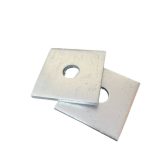
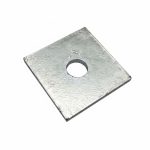
Flat square washers for flat bearing surfaces steel plates, flat crossarm faces, channel. Curved square washers where the washer bears on a round pole or a curved surface, so it beds against the curve instead of rocking on an edge and losing contact. If your assemblies mix both flat crossarms and round poles on the same line order both, and we mark them distinctly so a crew fits the right one.
Specifications and What They Mean for You
| Specification | What we supply | What it means for the buyer |
|---|---|---|
| Shape | Square (flat and/or curved) | Resists rotation; beds against flat or curved surfaces |
| Material & coating | HDG to ISO 1461 / ASTM A153 class | Corrosion life matched to the bolt it serves |
| Hole diameter | Matched to your bolt shank/shoulder | Fits the fastener first time at the crossarm |
| Size & thickness | To load and bearing material | Spreads load properly on timber and steel |
| Finish | Pressed flat and true | Beds evenly; the load actually spreads |
| Packing | Counted, marked by size; kitted with bolts | Right washer to the right crew, every time |
Straight Answers to Common Buyer Concerns
“It’s a washer. Why not buy the cheapest available?” For a genuinely non-structural spacer, you often can. But a pole-line square washer earns its specification in two places a cheap generic washer fails: the galvanizing (a washer that rusts in the joint stains and seizes the assembly it sits in, and a mismatch in coating life to the bolt undermines both), and the flatness and sizing (a washer that bears on one edge doesn’t spread load, and one with a wrong hole stops the assembly). Both are checkable coating class with a gauge, dimensions against your bolt and both are why utility work specifies proper hardware washers rather than the bin at the merchant.
“Can you match washers to bolts we’re buying elsewhere?” Yes send the bolt sizes and shoulder detail and we match washers to them. But the simpler answer is usually to buy both together: washers kitted with their machine bolts from one factory arrive matched and sorted, which removes the most common site delay the right bolt with the wrong washer, or no washer at all.
“We need large volumes for a build. Is that a problem?” The opposite square washers are a volume item and quoted as one. Give us the schedule and quantities and the price and packing reflect the volume, with cartons marked by size for stores issue and batched to your programmer.
Complete the Assembly
- Square head machine bolts – the bolts these washers most often serve
- Double arming bolts – through-bolted crossarm connections
- U bolts, hex bolts and nuts, eye nuts – the wider bolt, nut and washer range
- Steel cross arms and pole line hardware – the structures the washers help assemble
- Browse all overhead line fittings
Get a Bolt-Matched Quote Within 24 Hours
Send your bolt schedule sizes, shoulder detail, and whether the bearing surface is timber, channel, or flat steel and the quantities. Our team returns square washers matched per bolt, in the grade and coating your project needs, kitted with the bolts if you want them, typically within one working day.
After You Order
Size confirmation before production, material certificates with shipment, cartons marked by size and kitted with their bolts where requested, and an engineering contact who answers quickly because washers are a volume consumable, and a supply question on the small parts shouldn’t hold up the big ones.