

Description
The Link Between the Anchor and the Guy
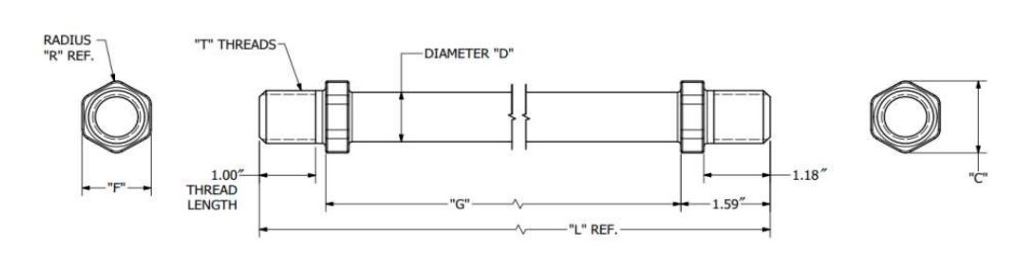
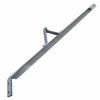
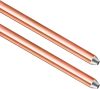
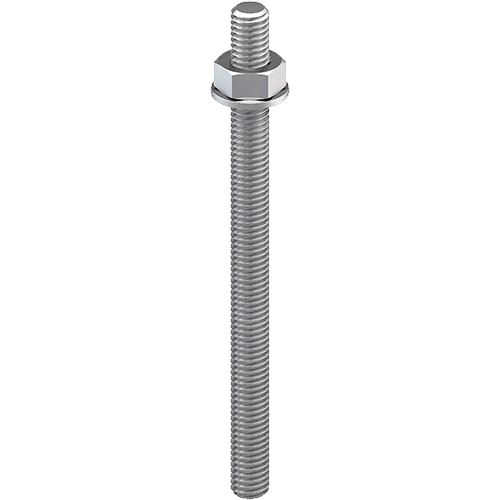
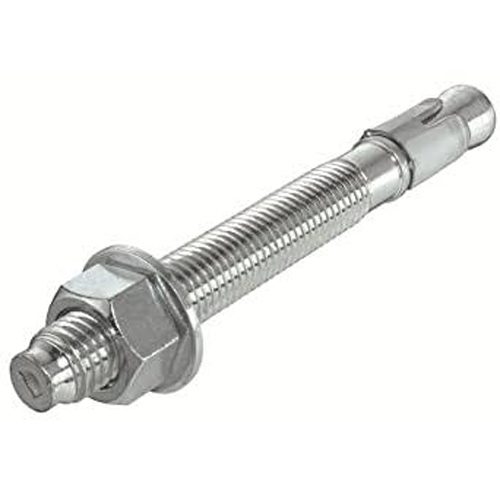
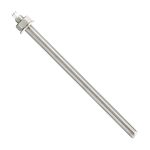
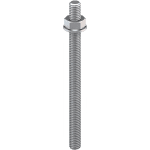
A guy anchor holds the pole, but it does its work below ground, and the guy strand it resists is above ground. Something has to connect the two, carrying the guy’s full pull from the surface down to the anchor. That’s the anchor rod: a galvanized steel rod, with a formed eye at the surface end for the guy hardware, that connects to the anchor below and transfers the pole-holding load into it.
It’s a simple part in a critical load path. The whole stay’s job of holding the pole runs through this rod, from the guy strand at the eye, down the rod, into the anchor in the ground. So the anchor rod has to be as strong as the load it carries and last as long, buried, as the anchor it serves. This page covers anchor rods: what they connect, how to size one, and how they complete the stay.
What the Anchor Rod Connects
The anchor rod is the load-transfer link of the stay:
- At the surface end a formed eye (a forged or twisted eye, or a thimble-eye) takes the guy hardware: the guy grip or clamp that terminates the strand, often via an eye nut or thimble.
- At the buried end the rod connects to the anchor a drive/plate anchor, rock anchor, disk anchor, or screw anchor either as the anchor’s own integral rod or coupled to it.
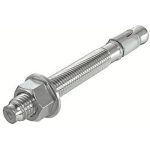
- In between where the anchor is set deep, the rod is extended to reach the surface with a cable extension bolt or coupling.
So the anchor rod is what makes the buried anchor usable at the surface the connection the guy actually attaches to. Its strength must match the anchor’s holding capacity and the guy’s tension, so the rod isn’t the weak link.
Anchor Rod or Stay Rod?
You may see both “anchor rod” and “stay rod” they describe the rod from the anchor to the guy/stay, and are closely related (often the same product under two names, by region or emphasis):
- Anchor rod (this page) emphasis on the anchor-end connection (the rod into/onto the anchor).
- Stay rod emphasis on the stay it serves (a near-synonym, common in some markets).
If your specification uses one term, order by it; we supply the correctly-rated rod either way. If your spec distinguishes a particular form under one name, tell us and we’ll match it.
The Critical Requirement: Strong Enough, Long Enough, Lasting Enough
An anchor rod has three things to get right:
- Strong enough its strength must exceed the guy’s working tension (and match the anchor’s holding capacity) with your standard’s margin, because the pole-holding load runs through it.
- Long enough long enough to reach from the anchor’s set depth to the surface with the eye clear for the guy hardware; deep anchors need a longer rod or an extension.
- Lasting enough hot-dip galvanized for the buried, at-grade environment where it corrodes hardest (the soil-air interface), so it lasts as long as the anchor and guy.
Get those three right strength above the load, length to the surface, coating for the ground and the rod does its job for the life of the stay.
Why Buyers Choose DAPENG Anchor Rods
- Strength matched to your guy and anchor: Rated above the guy tension and to the anchor’s capacity with your margin never the weak link.
- Eye to your guy hardware: Forged, twisted, or thimble-eye to take your guy grip/clamp and eye nut.
- Length to your anchor depth: Sized to reach the surface from the anchor’s set depth, or extended with a cable extension bolt for deep sets.
- Hot-dip galvanized for buried service: Galvanized to a class suited to the at- and below-grade environment.
- Matched to the anchor and stay: Anchor rods with the anchors, guy wire, grips, and eye nuts matched and kitted as a stay.
Use-Case Deep Dive
How do I size the anchor rod?
By the guy tension, the anchor’s holding capacity, and the set depth. The rod’s strength is chosen above the guy’s working tension (and to suit the anchor’s capacity) with your margin, so it’s never the weak link; its length is set to reach the surface from the anchor’s depth with the eye clear. Send the guy tension, the anchor type and depth, and your margin, and we confirm the rod’s diameter, strength, and length.
What if the anchor is set deep?
Then the rod is extended to reach the surface with a cable extension bolt or coupling that adds length between the anchor and the eye, keeping the eye at the right height above grade for the guy hardware. Deep sets (for capacity or clearance) are common, so extension is a standard part of anchor-rod supply. Tell us the set depth and we’ll supply the rod and any extension to reach the surface.
How does the rod connect to the anchor and the guy?
At the buried end, to the anchor as the anchor’s integral rod or coupled to it. At the surface end, the eye takes the guy: a guy grip or clamp terminates the strand to the eye, often via an eye nut or thimble. We supply the rod matched to both ends the anchor it serves and the guy hardware it takes so the load path is continuous from strand to ground.
Specifications and What They Mean for You
| Specification | What we supply | What it means for the buyer |
|---|---|---|
| Function | Connects anchor to guy strand | Transfers the pole-holding load to ground |
| Strength | Above guy tension / anchor capacity | Never the weak link in the stay |
| Eye | Forged/twisted/thimble | Takes your guy hardware |
| Length | To anchor depth (+ extension) | Reaches the surface, eye clear |
| Coating | HDG to class | Survives buried, at-grade |
| Connection | To anchor + guy | Continuous load path strand-to-ground |
Straight Answers to Common Buyer Concerns
“How strong does the anchor rod need to be?” Strong enough that its strength exceeds the guy’s working tension and suits the anchor’s holding capacity, with your standard’s margin because the pole-holding load runs through it, so it must never be the weak link. Send the guy tension and the anchor and we confirm the rod’s diameter and strength on datasheet figures.
“Anchor rod or stay rod which do we order?” They’re closely related the rod from the anchor to the guy/stay, under two names. Order by your specification’s term; we supply the correctly-rated rod either way, and if your spec means a specific form, tell us and we’ll match it.
“Our anchor is set deep how does the rod reach the surface?” With an extension a cable extension bolt or coupling adds length between the anchor and the eye so the eye sits at the right height above grade. Deep sets are common; extension is standard. Tell us the set depth and we’ll supply the rod and extension to reach the surface.
Complete the Stay
- Ground anchors the anchors the rod connects to
- Drive/plate anchors, rock anchors, disk anchors, screw anchors the anchor types
- Cable extension bolts, eye nuts extension and connection hardware
- Stay rods the closely-related rod
- Guy wire, guy grips, guy clamps the guy the rod takes
- Browse all pole line hardware and overhead line fittings
Get a Stay-Matched Quote Within 24 Hours
Send your guy tension, the anchor type and set depth, the eye/guy hardware you use, your standard, and quantities. Our engineers confirm the rod’s diameter, strength, eye, and length (and any extension), and return a factory-direct quotation with the anchor and stay hardware alongside, typically within one working day.
After You Order
Strength, eye, and length confirmation before production, documentation with shipment, rods matched to their anchors and guy hardware and kitted as stays, and an engineering contact who answers precisely because the anchor rod carries the pole-holding load from the guy into the ground, and getting its strength, eye, and length right is what keeps that load path solid.